
A standard dustproof shoe rack typically holds between 10 and 60 pairs of shoes, but the actual capacity depends heavily on your footwear types, rack design, and household size. For a single resident or a couple, a compact rack holding 12 to 20 pairs is usually sufficient. A small family of three to four people generally requires a capacity of 24 to 40 pairs to accommodate diverse footwear types, from children’s sneakers to formal wear. Large households with five or more members often need heavy-duty storage solutions capable of holding 50 or more pairs.
However, the advertised capacity of a shoe rack is almost always based on standard, flat men’s dress shoes or slim women’s flats. When you introduce bulky sneakers, high heels, platform shoes, or boots, the actual capacity can drop by 20% to 40%. Choosing the right dustproof shoe rack requires looking beyond the manufacturer’s listed pair count and evaluating the physical dimensions, shelf adjustability, and the specific footwear profile of your household. By understanding how dustproof mechanisms and shelf configurations impact usable space, you can select a storage unit that keeps your entryway organized and your footwear pristine.
Why Actual Capacity Differs from Advertised Pair Counts
When browsing for a shoe rack dustproof model, the first detail you likely notice is the advertised capacity, often stated as a specific number of pairs. This number is typically calculated under ideal, uniform conditions that rarely reflect a real-world household. Manufacturers usually base these estimates on standard, low-profile footwear lined up perfectly side-by-side. In reality, a typical family collection is a diverse mix of shapes, heights, and widths that do not fit into neat, identical slots.
Products mentioned in this guide
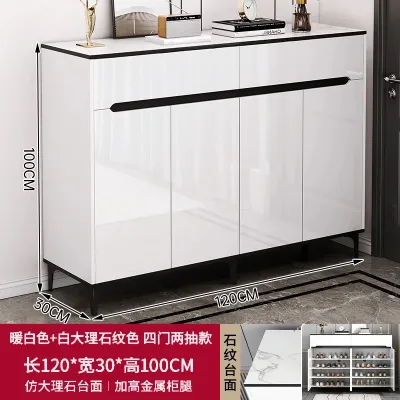
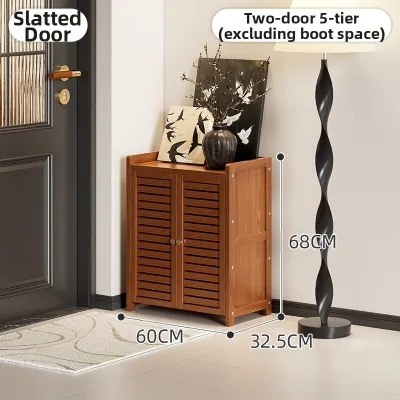
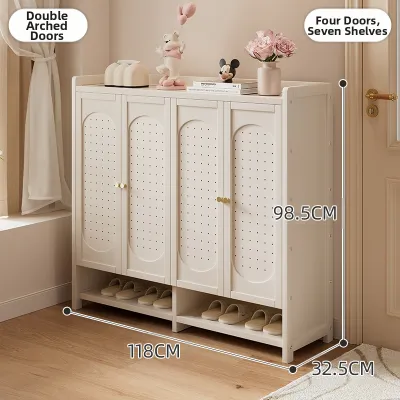
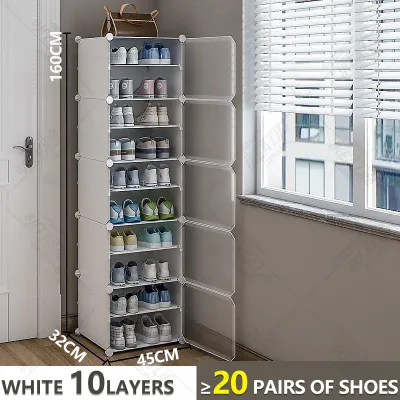
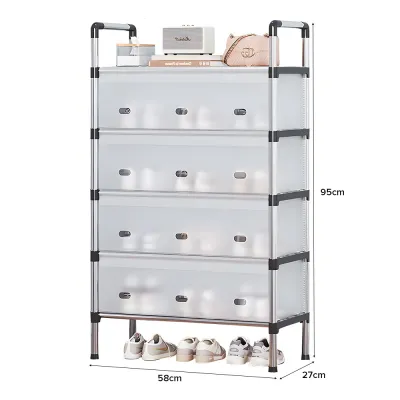
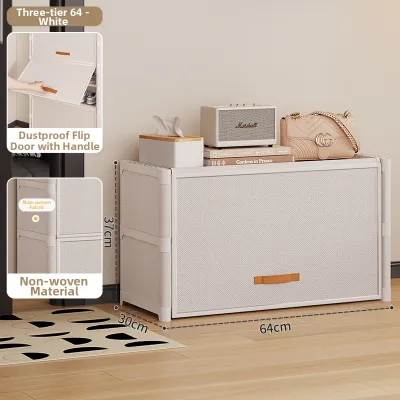
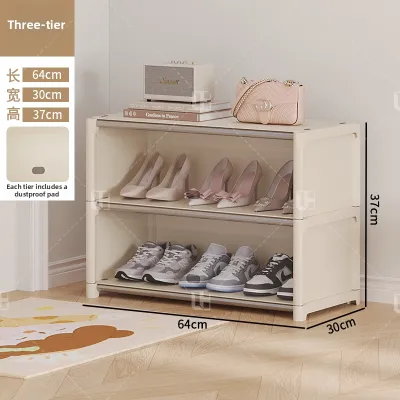
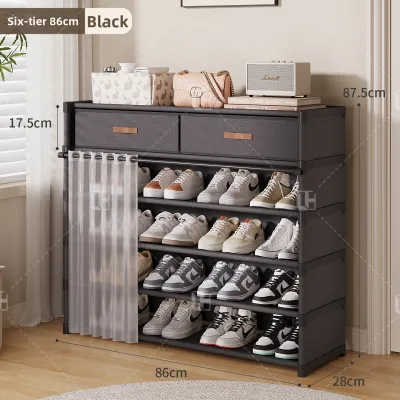
Prices are valid at publication and may change. Please refer to the product page for the latest price.
Footwear profile variations play a massive role in reducing the usable space inside a cabinet. Chunky running shoes, basketball sneakers, high-top boots, and high heels require significantly more vertical and horizontal clearance than flat sandals or canvas slip-ons. A single pair of wide-soled sneakers can easily occupy the horizontal space of one and a half pairs of standard dress shoes. If your collection consists of bulky or structured footwear, you must expect the actual capacity of the rack to be lower than the advertised number.
Fixed versus adjustable shelf heights further complicate vertical stacking efficiency. Many budget-friendly dustproof shoe cabinets feature fixed shelves with a standard clearance of 15 to 18 centimeters. While this height is perfect for flats and low-top sneakers, it leaves a large amount of wasted vertical space above shorter shoes, while failing to accommodate ankle boots or high heels at all. To store taller shoes in a fixed-shelf unit, you may have to lay them on their sides, which immediately doubles the horizontal space they consume and slashes the overall capacity of the rack.
The internal space consumed by dustproof mechanisms is another often-overlooked factor. Unlike open shoe racks, dustproof models require doors, frames, and sealing mechanisms to keep out dust, moisture, and pests. Sliding doors, rolling shutters, hinged panels, and magnetic flaps all require structural tracks or frames that protrude into the interior cabinet space. For instance, a rolling tambour door needs a track and a roll-up canister at the top or sides, which reduces the usable depth and height of the shelves. Hinged doors require clearance for the hinges, which can block the outer edges of the shelves, preventing you from sliding shoes all the way to the sides.
How to Calculate Your True Shoe Storage Needs
To avoid purchasing a dustproof shoe rack that quickly overflows, you should calculate your household’s true storage needs before looking at product listings. This process begins with a thorough physical count of every pair of shoes currently owned by each household member. Group the footwear into categories such as daily wear, seasonal items, formal shoes, and specialty sports gear. This audit will give you a clear picture of not just the total number of shoes, but also the physical variety of your collection.

Do not forget to account for items that are not strictly personal footwear but still require storage near the entrance. Guest slippers, outdoor sandals, and occasional-use items like hiking boots or golf shoes must be factored into the total count. If you prefer to store shoe care kits, extra laces, or small outdoor gear like umbrellas inside the same cabinet, you will need to dedicate at least one shelf or drawer to these accessories, reducing the space available for shoes.
A critical step in this calculation is allowing a 10% to 20% buffer for future purchases and proper air circulation. Packing a dustproof shoe cabinet to its absolute maximum capacity is counterproductive. When shoes are crammed tightly together, they trap moisture and odors, which can lead to mold growth—a common issue in humid climates. Leaving a small gap between pairs allows air to circulate, keeping your footwear fresh and making it much easier to retrieve and store shoes daily.
Furthermore, a buffer ensures that your storage solution remains viable as your household’s needs evolve. Children grow quickly, and their shoe sizes—and the physical space their shoes occupy—will increase over time. A family that is currently comfortable with a 30-pair rack may find it completely inadequate within two years as children transition to adult-sized footwear. Planning for this growth now saves you the cost and hassle of replacing the cabinet prematurely.
Sizing Guidelines by Household Size
Selecting the right dustproof shoe rack requires balancing the total volume of your footwear collection with the physical constraints of your home. Different household dynamics dictate how you should prioritize accessibility, cabinet depth, and overall footprint to ensure the unit integrates seamlessly into your daily routine.
Singles and Couples (1–2 Residents)
For single individuals or couples, footwear collections are typically more streamlined, making compact and efficient storage the primary goal. The target actual capacity for a one-to-two-person household generally ranges from 12 to 24 pairs of shoes. This capacity can usually be achieved with a rack featuring four to six shelves, depending on the width of the unit.
The recommended form factors for smaller households include slim vertical towers or narrow two-door cabinets. Slim vertical towers utilize vertical wall space, making them excellent for tight corners or narrow hallways. Narrow two-door cabinets offer a classic look while keeping the depth of the unit to a minimum, often around 30 to 35 centimeters. These designs provide sufficient dust protection without dominating the entryway.
Before purchasing, it is essential to perform space checks to ensure the cabinet fits your entryway without blocking walkways or doors. In typical apartments, such as HDB flats or compact condominiums, the foyer area can be narrow. Measure the clearance when the cabinet doors are fully open; hinged doors require significant swing space, which can obstruct the main path of travel. If space is exceptionally tight, consider a cabinet with sliding doors or tilting shoe drawers, which do not require outward clearance to access.
Small Families (3–4 Residents)
A small family of three to four residents introduces a wider variety of shoe sizes and styles, requiring a more versatile and spacious storage solution. The target actual capacity for this household size is typically between 24 and 40 pairs of shoes. To accommodate this volume, a shoe rack generally needs six to eight shelves, or a wider multi-compartment layout.
The recommended form factors for small families are wide three-door cabinets or modular stackable units. Wide cabinets provide a generous horizontal layout, allowing family members to have designated sections for their shoes. Modular stackable units offer excellent flexibility, allowing you to add more storage capacity vertically as your children grow or your collection expands, without requiring additional floor space.
Effective organization strategies are crucial for maintaining order in a shared family shoe cabinet. Dedicating the lower shelves to children’s shoes makes it easy for young kids to reach and put away their own footwear, encouraging independence and keeping the entryway tidy. Upper shelves can be reserved for adult footwear, formal shoes, or less frequently worn items. This division of space ensures that daily-use shoes are always easily accessible.
Large Households (5+ Residents)
Large households with five or more residents face the challenge of managing a massive volume of footwear while keeping the entryway organized and dust-free. The target actual capacity for a large household starts at 50 pairs and can easily exceed 70 pairs. This volume requires a substantial storage system, typically featuring ten or more shelves or multiple coordinated units.
The recommended form factors for large households include floor-to-ceiling wardrobes or dual-column storage systems. Floor-to-ceiling units maximize vertical space, turning an entire wall into an organized storage zone. Dual-column systems provide two side-by-side columns of shelves, which can help separate different categories of shoes or divide storage space among different branches of the family.
With such large and heavy units, stability checks are an absolute safety priority. A tall, heavily loaded shoe cabinet carries a significant risk of tipping over, especially if children are in the home or if the weight is distributed unevenly. It is critical to verify the manufacturer’s instructions regarding anti-tip wall anchoring. Ensure that the unit can be securely fastened to the wall using appropriate brackets and wall plugs suitable for your wall material, whether it is concrete, drywall, or brick.
Space and Usability Checks Before You Buy
Before finalizing your purchase of a shoe rack dustproof model, you must conduct several physical and practical checks to ensure the unit will function well in your specific living space. Begin by measuring the designated floor space with high precision. Do not rely on visual estimates; use a measuring tape to map out the width, depth, and height of the area where the cabinet will stand.
When measuring, you must account for the clearance required by the cabinet’s doors. Hinged doors need ample space to swing open fully, which can be a major obstacle in narrow corridors. If your entryway is a high-traffic zone, a tambour door that rolls up or a sliding door system is often a much better choice, as they do not project into the walking path. Additionally, check for any wall baseboards, light switches, electrical outlets, or intercom units that the cabinet might block or interfere with.
Ventilation is another critical factor for dustproof shoe cabinets. While the primary goal is to keep dust out, completely sealing shoes in an airtight container can trap moisture, leading to mold, mildew, and unpleasant odors. Look for cabinets that feature subtle ventilation gaps, mesh back panels, or breathable materials that allow air exchange while still preventing dust accumulation. If you choose a highly sealed unit, you may need to place moisture absorbers or charcoal deodorizers inside to maintain a fresh environment.
Finally, evaluate the shelf material and load-bearing limits specified by the manufacturer. Shoes, especially heavy boots or structured leather dress shoes, can add up to a significant amount of weight when stored in large numbers. Shelves made of thin plastic or low-grade particle board may sag or warp over time under a heavy load. Look for sturdy materials such as solid wood, thick engineered wood, or reinforced metal wire shelves. Checking these specifications beforehand ensures that your dustproof shoe rack remains stable, functional, and visually appealing for years to come.
Frequently Asked Questions (FAQ)
Can I place a dustproof shoe rack outside my apartment door?
In Singapore, placing a shoe rack in the common corridor of an HDB flat or condominium is subject to strict regulations. You must check the specific guidelines set by the Housing & Development Board or your condominium’s Management Corporation Strata Title by-laws. Generally, fire safety rules require a minimum clear escape passage of 1.2 meters along the common corridor. No objects, including shoe racks, should block this pathway or obstruct fire escape routes. Additionally, some condominium management committees prohibit any personal belongings in common areas for aesthetic and safety reasons. Always verify these local rules before setting up a cabinet outside your unit.
How do I clean and maintain the dustproof doors?
Maintaining the doors of your dustproof shoe rack is essential for keeping the unit looking clean and ensuring the doors operate smoothly. For PVC, acrylic, or glass panels, use a soft microfiber cloth slightly dampened with water or a mild, non-abrasive soap solution to wipe away dust and fingerprints. Avoid using harsh chemical cleaners, alcohol-based solvents, or abrasive scrubbing pads, as these can scratch or cloud transparent surfaces. For sliding tracks or magnetic seals, regularly vacuum or wipe away accumulated dust and debris to prevent the doors from sticking or failing to close tightly.

Community discussion
Share your experience or ask a question. Comments are reviewed before publication.