
Finding the right bedroom sofa bed for a compact Singapore bedroom requires balancing daytime seating comfort with nighttime sleeping space. The ideal size depends on your room’s exact floor dimensions, the clearance required by the specific folding mechanism, and the preservation of a functional walkway. By systematically measuring your space, calculating deployment clearances, and selecting a compatible mechanism, you can integrate a versatile bedroom sofa without restricting daily movement or blocking essential pathways.
Measure Your Room and Calculate Usable Space
To find the maximum footprint for a bedroom sofa, start by measuring the total length and width of the room at floor level using a reliable tape measure. Do not rely on developer floor plans alone, as actual baseboard-to-baseboard dimensions can vary.
Identify and subtract the footprint of all permanent fixtures. In typical Singapore apartments, this includes built-in wardrobes, structural columns, and wall-mounted air conditioning units that might restrict vertical clearance.
Products mentioned in this guide
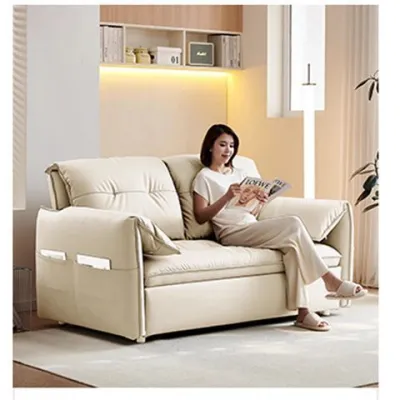
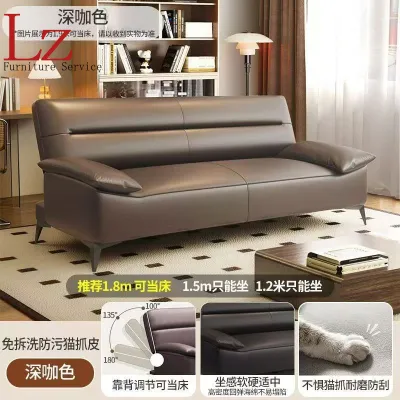
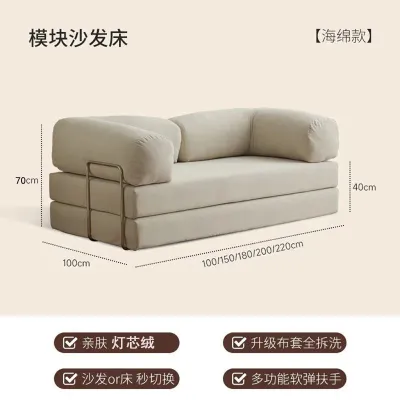
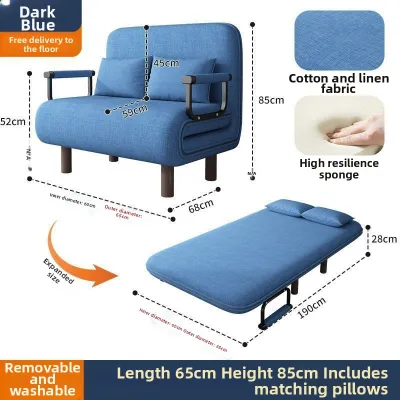

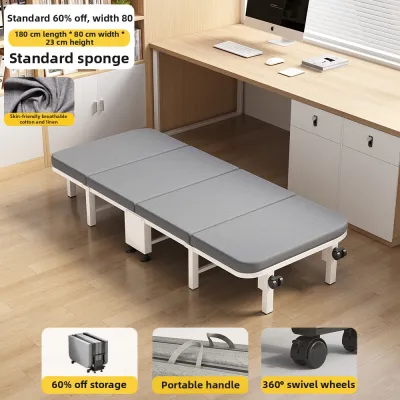
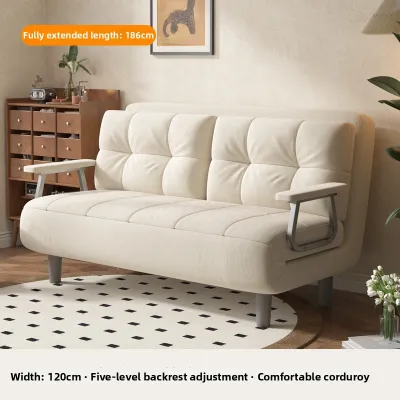
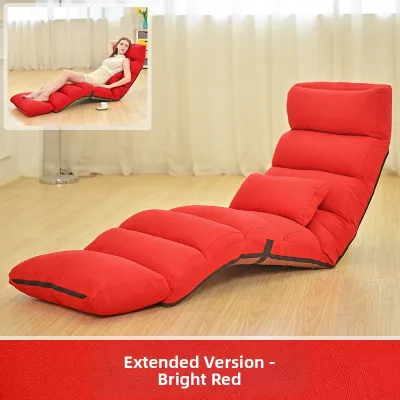
Prices are valid at publication and may change. Please refer to the product page for the latest price.
Account for the swing radius of the bedroom door and wardrobe doors. Measure how far these doors extend into the room when fully opened, and mark this zone as unusable for furniture placement. Also, check the height of window sills to ensure the back of the sofa does not block natural light or ventilation.
Sketch a simple floor plan on grid paper or a digital app. Label the exact dimensions of the remaining open area to visualize where the bedroom sofa can sit when both folded and fully deployed.
Determine Minimum Walkway and Clearance Requirements
Maintaining clear circulation paths is essential for a comfortable bedroom layout. For primary walkways—such as the path from the bedroom door to the bed—aim for a minimum clearance of 60 to 75 centimeters. Secondary pathways, such as the space between the side of the bed and the wall, can be slightly narrower but should still allow comfortable passage.

Ensure there is sufficient clearance to open wardrobe doors and pull out drawers completely. If your wardrobe has hinged doors, you will need at least 50 to 60 centimeters of open space in front of them to stand and access your clothes comfortably. Sliding wardrobe doors are highly recommended for tight spaces as they eliminate this swing clearance requirement.
When the sofa bed is fully deployed, you must still be able to get in and out of bed without climbing over other furniture. Verify that there is at least 50 centimeters of walking space on at least one side of the extended mattress.
Never position a bedroom sofa where it blocks emergency exit routes or prevents the main bedroom door from opening fully. Keeping these pathways unobstructed is a critical safety consideration for any home layout.
Match Sofa Bed Dimensions to Your Room Layout
When shopping for a bedroom sofa, you must compare two sets of dimensions against your floor plan: the closed seating dimensions and the fully open sleeping dimensions. A sofa that fits perfectly against the wall when folded may completely block the room once extended.
Consider the trade-offs between seating capacity, sleeping surface area, and room circulation. A larger sofa bed offers more comfort for guests but will significantly reduce the remaining floor space, potentially turning a bedroom into a cramped storage area during use.
Pay close attention to the mechanism type, as it dictates how the bed deploys. Some designs fold forward into the room, while others unfold sideways or require the backrest to drop backward. The mechanism type directly determines which direction you need to allocate clearance.
Single and Super Single Sofa Beds
Single and super single sofa beds are highly efficient options for narrow bedrooms, study rooms, or home offices that double as guest spaces. With a typical sleeping width of 90 to 107 centimeters, these compact units require minimal lateral space, leaving more room for walkways and other furniture.
These smaller sizes are ideal for single-occupancy rooms or dedicated guest spaces where a larger bed is unnecessary. They allow you to maintain a spacious feel during the day while providing a functional sleeping surface at night.
However, single sofa beds have clear limitations. They are generally unsuitable for couples and may feel restrictive for taller or larger individuals. If comfort for adult guests is a priority, verify the mattress length before purchasing.
Double and Queen Sofa Beds
Double and queen-sized sofa beds offer a larger sleeping surface, typically ranging from 135 to 150 centimeters in width. These units require a substantial amount of open floor space to deploy safely, making them better suited for slightly larger master bedrooms or spacious common rooms.
To prevent these larger units from blocking main walkways when folded out, position them against the longest uninterrupted wall. Ensure that the extended mattress projects into the widest part of the room rather than toward a doorway or wardrobe.
To save precious centimeters in a tight layout, look for streamlined designs. Choosing a bedroom sofa with thin, space-saving armrests or a backless daybed design can reduce the overall width by 10 to 20 centimeters without sacrificing the actual sleeping surface area.
Check Doorways, Delivery Routes, and Mechanism Clearance
Before finalizing your purchase, verify that the bedroom sofa can actually be delivered into your room. Measure the width and height of all hallways, stairwell turns, lift doors, and bedroom door frames along the delivery route.
Calculate the diagonal depth of the sofa to ensure it can navigate tight corners. Many delivery failures occur because a sofa cannot clear the turn from a narrow hallway into a bedroom doorway, even if the room itself has plenty of space.
Check the exact forward projection of the mattress when the bed is fully extended. Measure from the back wall to the foot of the bed to ensure it does not collide with opposite walls, dressers, or built-in cabinetry.
Verify that nearby furniture, such as bedside tables, floor lamps, or study desks, will not interfere with the folding mechanism. You may need to choose lightweight, easily movable accent furniture that can be set aside when the bed is deployed.
Common Sizing Mistakes to Avoid
One of the most common errors is measuring only the closed sofa dimensions and assuming the bed will fit. Always plan your layout around the fully extended footprint of the sofa bed to avoid finding yourself trapped in the room when the bed is open.
Do not assume that standard mattress sizes match the external frame dimensions of the sofa bed. The frame, armrests, and folding mechanism often add significant width and depth to the overall unit. Always check the manufacturer’s detailed specification sheet for exact external dimensions.
Avoid placing the sofa bed directly beneath low-hanging ceiling fans, pendant lights, or very low window sills. Ensure there is adequate vertical clearance so that guests can sit up in bed safely without hitting fixtures.
Finally, remember to account for the thickness of bedding, duvets, and pillows. Some sofa beds cannot be folded away with sheets and blankets still on them, meaning you will need to allocate nearby storage space for bedding when the unit is used as a sofa.
Frequently Asked Questions (FAQ)
Can I use a sofa bed as my primary bed in a small bedroom?
While using a sofa bed as a primary bed saves space during the day, it requires daily effort to fold and unfold the mechanism, as well as to store and arrange bedding. For daily use, look for high-quality mechanisms designed for frequent operation and check that the mattress provides adequate support. Over time, a standard bed frame with a dedicated mattress generally offers superior ergonomic support compared to most convertible mechanisms.
How much space do I need behind a sofa bed for it to fold out?
The required rear clearance depends entirely on the mechanism design. Pull-out and roll-out sofa beds extend forward, meaning they can sit flush against the wall with zero rear clearance. However, click-clack, futon, and fold-down styles require the backrest to drop backward, which typically demands 15 to 30 centimeters of clearance between the back of the sofa and the wall. Always consult the manufacturer’s deployment diagram to verify if the unit must be pulled away from the wall before opening.

Community discussion
Share your experience or ask a question. Comments are reviewed before publication.