
Finding the right storage solutions for Singapore’s Housing & Development Board (HDB) flats often requires looking at underutilized spaces, such as narrow gaps between appliances or the recessed areas along external corridors. Folding narrow cabinets offer a highly flexible way to reclaim these tight spots, allowing you to expand your storage capacity when needed and collapse the unit when you require clear floor space. However, choosing the ideal cabinet is not just about finding a slim frame; it requires a careful evaluation of local fire safety regulations, precise spatial measurements, and structural stability. By focusing on how these units fold, how they handle Singapore’s humid climate, and how they secure your items, you can transform awkward gaps into highly functional storage zones without compromising safety or accessibility.
Assessing Your HDB Corridor and Gap Dimensions
Before purchasing any narrow cabinet, you must conduct a thorough spatial audit of the intended placement area. For indoor gaps—such as the space between your refrigerator and the kitchen wall, or the sliver of space next to your washing machine—you need to measure the width, depth, and height with absolute precision. Use a metal measuring tape rather than a soft sewing tape to ensure accuracy, and measure at three different points: the front, the middle, and the back of the gap. Walls and large appliances are rarely perfectly straight, and a gap that measures 15 centimeters at the front might taper to 14 centimeters near the back wall, which could prevent a rigid cabinet from sliding in smoothly.
When planning to place a folding cabinet along an external HDB corridor, spatial measurements must be balanced with strict regulatory compliance. The Singapore Civil Defence Force (SCDF) maintains clear guidelines regarding corridor clearance to ensure safe evacuation routes during emergencies. Generally, a minimum clear escape passage of 1.2 meters must be maintained along the corridor at all times. This means that if your corridor is 1.5 meters wide, any furniture or storage unit you place against the wall must not exceed 30 centimeters in depth when fully opened or in use. Additionally, no items should be placed within escape staircases or their landings, and you must ensure that your cabinet does not block access to dry risers, hose reels, or utility meters.
Products mentioned in this guide
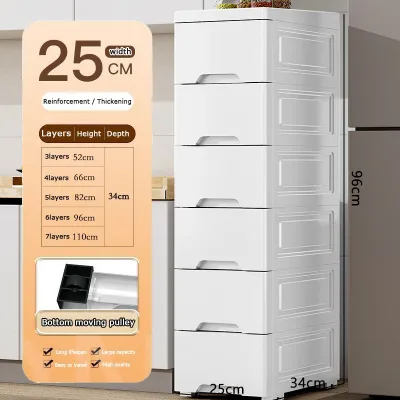
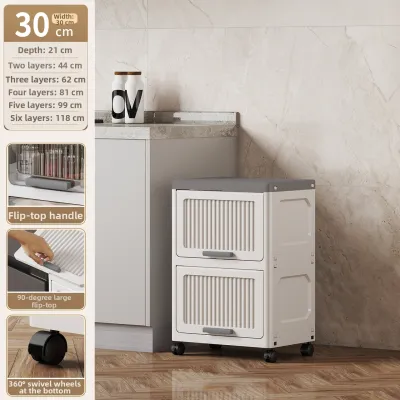
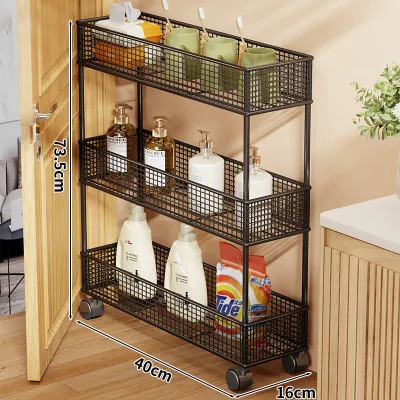
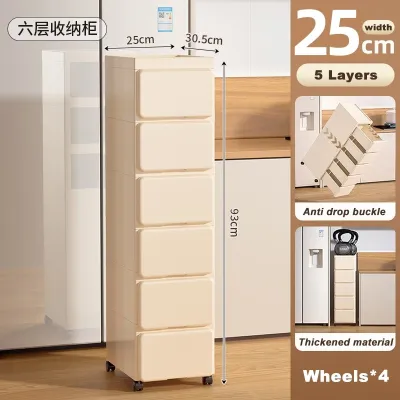
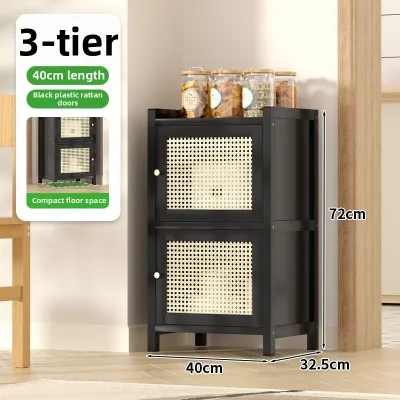
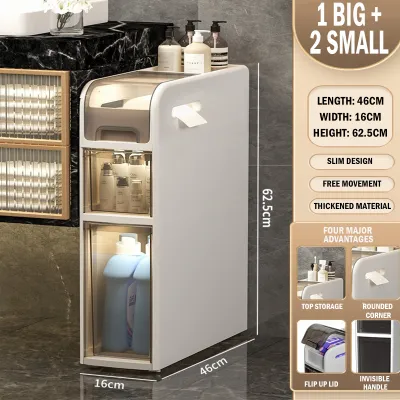
![[TheGoodFurniture] Plastic Cabinet. Personal Locker. Storage System. Multipurpose Cupboard. cupboard storage Washable and Durable. Slim and Tall Cabinet.*FAST DELIVERY*](https://img.lazcdn.com/g/p/123dc66709979b8b69307856305381b0.jpg_400x400q80.jpg_.webp)
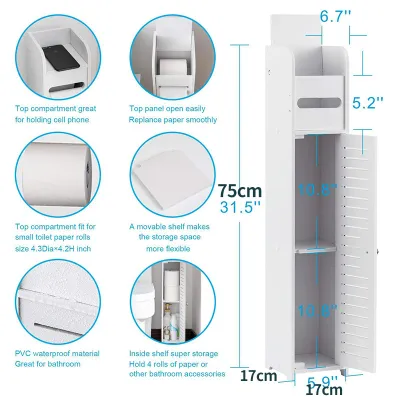
Prices are valid at publication and may change. Please refer to the product page for the latest price.
Beyond the basic width and depth, you must account for minor physical obstacles that can easily disrupt your installation plans. Look closely at the floor level for skirting boards, which typically protrude one to two centimeters from the wall and can prevent a cabinet from sitting flush against the vertical surface. Check for electrical trunking, water pipes, gas lines, or low-hanging wall switches that might restrict the height or depth of your cabinet. Door swings—both from your main gate and from neighboring units—must also be mapped out to ensure that opening a cabinet door or expanding a folding shelf does not cause a collision. Finally, many older HDB corridors have slightly sloped floors designed to drain rainwater away; you must verify if your chosen cabinet has adjustable feet or leveling mechanisms to compensate for these uneven surfaces.
Key Features to Evaluate in Folding Narrow Cabinets
The utility of a folding narrow cabinet depends heavily on its mechanical design and how easily it transitions between its open and collapsed states. There are several common folding mechanisms available on the market, each presenting distinct functional trade-offs. Bi-fold doors are excellent for tight corridors because they fold back on themselves, requiring only half the clearance space of a standard swinging door to access the cabinet’s contents. Drop-leaf shelves or collapsible frames allow you to expand the unit’s surface area when sorting items and fold it flat against the wall when not in use. While highly convenient, these moving joints and hinges represent potential wear points, so you should look for heavy-duty steel hinges and smooth track systems that do not stick or wobble during operation.

Given Singapore’s tropical climate and high relative humidity, material selection is critical to ensuring your cabinet does not warp, swell, or degrade over time. If you are opting for engineered wood products like medium-density fibreboard (MDF) or particleboard, you must inspect the quality of the edge banding and surface finishes. Unsealed edges easily absorb moisture from the air or from wet mopping, leading to unsightly swelling and structural weakening. For high-moisture areas like kitchens, bathrooms, or semi-exposed corridors, powder-coated steel, heavy-duty plastics, or treated bamboo are often more resilient alternatives. When evaluating metal frames, check that the powder coating is uniform and free of chips, as any exposed metal can quickly succumb to rust when exposed to humid air or corridor cleaning washdowns.
Mobility is another key feature that defines the usability of narrow gap cabinets, especially those designed to slide in and out of tight spaces. Many slim utility carts and folding cabinets are equipped with wheels or casters to facilitate easy access. When evaluating these wheels, prioritize dual-wheel casters made of polyurethane or rubber, which glide quietly and smoothly over ceramic tiles or concrete screed without leaving scuff marks. It is equally important to verify that at least two of the casters feature robust locking mechanisms. Locking the wheels ensures the cabinet remains stationary when you are retrieving items or when the unit is subjected to accidental bumps, preventing it from rolling unexpectedly into pathways or against appliances.
Matching Cabinet Designs to Specific Storage Needs
To select the most effective folding narrow cabinet, you must align its internal configuration with the physical characteristics of the items you intend to store. If your primary goal is to organize tall, lightweight household tools such as brooms, mops, vacuum attachments, or ironing boards, you will require a cabinet with a tall, open vertical compartment. Conversely, if you plan to store heavy, compact items like canned food, laundry detergents, or bottled cleaning agents, you must prioritize structural load capacity over vertical height. Storing heavy liquids on flimsy, unsupported shelves can cause the shelves to bow or collapse, potentially damaging your items and creating safety hazards.
The choice between open shelving and enclosed folding doors depends on your aesthetic preferences and the environmental conditions of the storage location. Open shelving units provide immediate visibility and quick access to frequently used items, making them highly efficient for active kitchen gaps. However, open shelves leave your items exposed to dust, cooking grease, and, if placed in a corridor, outdoor elements like wind-blown rain and dust. Enclosed cabinets with folding or sliding doors offer a cleaner visual profile, hiding clutter from view and protecting your belongings from environmental exposure. For corridor storage, enclosed units are generally preferred as they present a neat, uniform appearance that respects the shared visual environment of the estate.
Before finalizing your purchase, verify the adjustability and load-bearing limits of the internal shelves. Fixed shelves limit your storage flexibility, forcing you to lay tall bottles on their sides or leaving large gaps of wasted vertical space. Look for cabinets that feature adjustable shelf pegs or modular shelving tracks, allowing you to customize the interior layout as your storage needs evolve. Always check the manufacturer’s specifications for the maximum weight limit per shelf. A well-designed narrow cabinet should distribute weight even, and understanding these limits prevents overloading, which is a primary cause of structural failure in slim furniture profiles.
Safety, Stability, and HDB Compliance Checks
Tall, narrow furniture naturally possesses a higher center of gravity, making it inherently more susceptible to tipping over if bumped, overloaded, or pulled incorrectly. To mitigate this risk, you must evaluate the cabinet’s stability features before installation. When loading the cabinet, always place the heaviest items—such as large detergent bottles, water cartons, or heavy tools—on the bottommost shelves. This simple practice lowers the overall center of gravity and significantly improves stability. If the cabinet design allows, and if your wall type and HDB renovation guidelines permit, utilize anti-tip straps or wall anchors to secure the top of the cabinet to a solid wall, especially if you have children or pets in the home.
Compliance with HDB estate rules is not just a legal obligation but a vital component of community safety and neighborly consideration. When placing any storage unit in a common corridor, you must ensure it does not obstruct the path of travel or block access to essential services. Never place cabinets in front of dry risers, fire alarm panels, water meters, or electrical switch boxes, as technicians and emergency responders must have instant, unhindered access to these utilities. Additionally, ensure that the cabinet does not block the natural light or ventilation flowing into your neighbors’ windows. Maintaining a clean, compliant corridor fosters a safer living environment and prevents the need for forced removal or fines during routine town council inspections.
To ensure long-term safety, always cross-reference the product labels and manufacturer specifications for maximum load-bearing capacities. Do not rely on visual assessments or assume that a metal frame can automatically support heavy loads. Manufacturers typically specify both the individual shelf capacity and the total weight limit for the entire unit. If you are purchasing a folding cabinet that requires assembly, ensure that all structural screws, bracing bars, and locking pins are installed exactly as directed in the manual. Omitting a single support bracket or failing to tighten a hinge can compromise the structural integrity of the entire cabinet, leading to premature wear or sudden collapse under load.
How to Build Your Shortlist When Shopping Online
Shopping for folding narrow cabinets on online marketplaces requires a strategic approach to filter out low-quality products and find the exact fit for your space. When searching, avoid relying solely on generic keywords like “narrow,” “slim,” or “space-saving,” as these terms are subjective and can refer to a wide range of dimensions. Instead, use the platform’s search filters to input your exact maximum width and depth requirements. Many advanced search tools allow you to specify dimensions down to the centimeter, helping you quickly isolate products that will actually fit into your measured gap or corridor space.
Once you have filtered the options by size, dedicate time to analyzing user reviews and photo feedback left by previous buyers. Pay close attention to comments regarding the durability of the folding mechanisms, the ease of opening and closing the doors, and the actual assembled dimensions, which sometimes differ slightly from the seller’s listing graphics. Look for real-life photos uploaded by customers to assess the true color, material finish, and overall sturdiness of the cabinet in a home setting. Reviews that mention wobbling, difficult alignment during assembly, or rapid rusting in humid conditions are valuable warning signs that can help you avoid poor-quality purchases.
Finally, always verify the seller’s return policies and the delivery dimensions of the package before placing your order. Even if a cabinet is designed to be narrow when assembled, the flat-pack packaging or pre-assembled frame might arrive in a large, awkward box that is difficult to transport up the lift or through your front door. Confirm whether the delivery service includes transport directly to your doorstep or if it only covers drop-off at the ground floor. Understanding the return policy is equally crucial; if the cabinet arrives with warped panels, missing hinges, or does not fit your gap due to a minor measurement discrepancy, a clear and hassle-free return process will save you significant time and expense.
Frequently Asked Questions (FAQ)
Do folding narrow cabinets require complex assembly?
The complexity of assembling a folding narrow cabinet depends largely on whether the product is delivered as a pre-assembled collapsible unit or a traditional flat-pack kit. Many modern folding cabinets are designed with pre-assembled, accordion-style metal frames that simply unfold out of the box, requiring you only to snap the shelves into place and attach the wheels. On the other hand, wood-composite flat-pack units usually require full assembly, involving numerous screws, dowels, hinges, and alignment steps. Before purchasing, carefully read the product description to identify the assembly type, check if the necessary tools and hardware are included, and estimate the setup time based on customer feedback.
How can I prevent a tall narrow cabinet from tipping over?
Preventing a tall, narrow cabinet from tipping over requires a combination of smart weight distribution and physical securing methods. Always load the heaviest items on the lowest shelves to create a low center of gravity, keeping lighter items near the top. If the cabinet is positioned against a concrete or brick wall, using wall anchors, L-brackets, or heavy-duty adhesive anti-tip straps is the most effective way to secure the frame. For units placed in gaps where drilling is not possible, ensure the cabinet is wedged securely between stable structures, or choose a model with wide, stable base feet or locking casters that prevent sudden shifting.

Community discussion
Share your experience or ask a question. Comments are reviewed before publication.