
Accurately measuring your corner space is the most critical step before purchasing a corner bookcase. By systematically capturing wall lengths, usable depth, and vertical clearance, you can confidently match your room’s physical constraints to product specifications, ensuring a seamless fit and avoiding costly return processes. Taking the time to map out your space prevents common installation headaches, such as units that block doorways or fail to sit flush against the wall.
Essential Tools and Preparation for Measuring Your Corner
Before browsing online catalogs, gathering the correct tools ensures your measurements are highly accurate. A standard metal tape measure is indispensable for capturing distances along the walls and baseboards. For rooms with high ceilings, a laser measure can provide a precise vertical reading without the need for a ladder. Keep a notepad and a pencil nearby to sketch a quick overhead diagram of your corner, which makes recording multiple dimensions much easier.
Preparing the physical space is just as important as having the right tools. Clear the target corner of any existing furniture, floor lamps, decorative items, and loose debris. Having an unobstructed view of the floor-to-wall joints allows you to place your measuring tape directly against the surfaces, eliminating guesswork.
Products mentioned in this guide
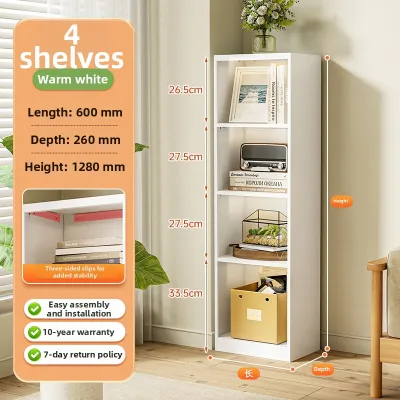
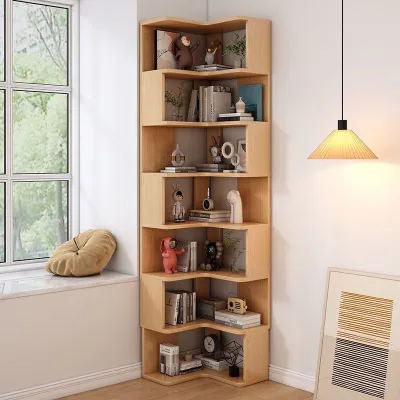
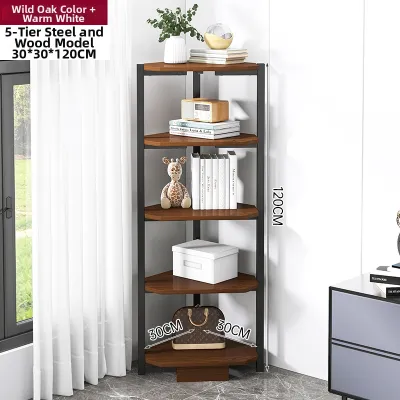
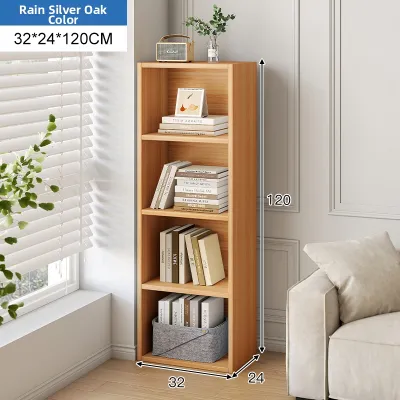
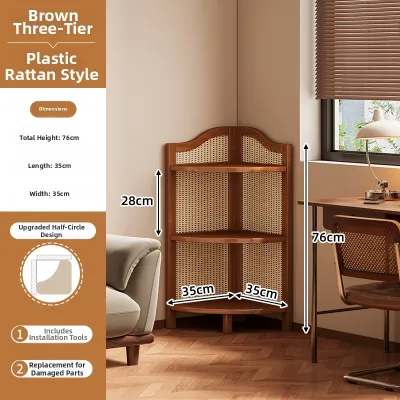

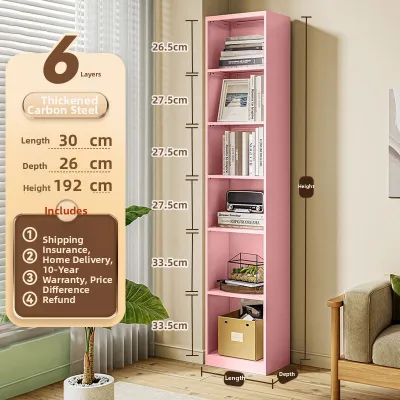
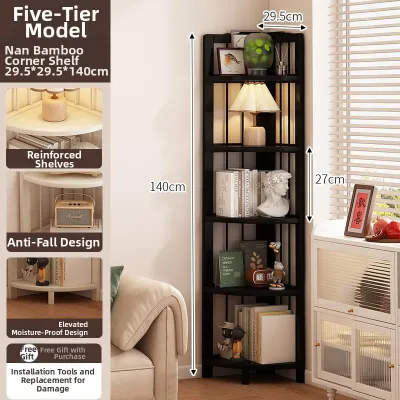
Prices are valid at publication and may change. Please refer to the product page for the latest price.
Do not assume your walls are completely straight or that your floor is entirely level. Older buildings and even modern apartments often feature slight structural shifts or uneven plastering. To account for these variations, always measure your corner at three distinct heights: the floor level, the midway point, and near the ceiling. Recording the smallest of these three measurements ensures your new bookcase will fit even at the tightest point of the wall.
Step-by-Step Guide to Measuring Corner Dimensions
To find a corner bookcase that fits your room like a custom built-in, you must break down the measuring process into three primary spatial dimensions. These include the horizontal wall lengths extending from the corner, the usable depth protruding into the room, and the total vertical clearance.

When recording these dimensions, stick to a single, consistent unit of measurement, such as centimeters or millimeters. Mixing units can lead to calculation errors when you begin comparing your notes against manufacturer specification sheets. Write down each dimension clearly on your sketch, labeling the left wall, right wall, depth, and height separately.
Measuring Wall Lengths and Corner Depth
To determine the maximum width of the bookcase, place your tape measure directly in the apex of the corner where the two walls meet. Extend the tape outward along the left wall to the point where you want the bookcase to end, then repeat this process along the right wall. These two numbers represent your maximum wall length limits; any bookcase you choose must have side dimensions that fall within these boundaries.
Next, evaluate the maximum depth the bookcase can project into the room. Measure from the corner apex straight out into the living space to see how far the unit can extend without disrupting foot traffic or blocking walkways. If the bookcase is placed near a high-traffic corridor or a doorway, a unit that is too deep will make the room feel cramped and may cause accidental bumps.
You must also account for baseboards, skirting boards, or quarter-round moldings running along the bottom of your walls. Because these moldings protrude from the wall, they prevent furniture from sitting completely flush against the plaster. Measure the thickness and height of your baseboards so you can check if the bookcase features a baseboard cutout on its rear panels, or if you need to subtract this thickness from your usable wall depth.
Checking Ceiling Height and Vertical Clearance
To find the maximum height for your bookcase, measure the distance from the floor to the ceiling directly in the corner apex. It is also wise to take this vertical measurement a few centimeters out from the corner, where the front edge of the bookcase will stand, as ceilings can sag or slope slightly.
Look upward and check for any overhead obstacles that could interfere with a tall piece of furniture. Crown moldings, ceiling fans, light fixtures, air conditioning units, and ventilation grates can easily block a tall bookcase or create safety hazards. Ensure your planned bookcase footprint leaves ample clearance around these fixtures.
Additionally, remember that many flat-pack or pre-assembled bookcases require extra vertical clearance to be raised from a horizontal assembly position on the floor to an upright position. If your ceiling height is exactly the same as the bookcase height, you may not have enough diagonal clearance to stand the unit up. Always leave a safety buffer of at least several centimeters to allow for comfortable assembly and maneuvering.
Accounting for Clearance, Obstacles, and Delivery Routes
Measuring the final resting spot of your corner bookcase is only half the battle; you must also ensure the furniture can physically reach that spot. Map out the entire delivery route from your building’s entrance to the target room. Measure the width and height of all doorways, narrow hallways, stairwells, and elevator cabins to confirm the packaged boxes or pre-assembled frame can pass through safely. This is particularly crucial in high-rise apartments or HDB flats where lift dimensions and tight corridor turns can severely limit the size of incoming furniture.
Once inside the room, identify any wall-mounted obstacles that the bookcase might cover or obstruct. Look for power outlets, light switches, thermostat controls, internet ports, and window sills. If a bookcase covers an outlet, you may lose access to essential plugs, or the unit might sit unevenly against the wall. Plan to position the bookcase so these utilities remain accessible, or select a modular unit with an open back.
Finally, check the operational clearances of surrounding items. Ensure that opening the doors or drawers of the bookcase will not block adjacent room doors, wardrobe doors, or window frames. If the bookcase is placed next to a doorway, verify that the room’s main door can swing fully open without striking the side of the furniture.
Matching Your Measurements to Corner Bookcase Sizes
Once you have recorded all your room dimensions, you can begin comparing them to product specifications on online marketplaces or furniture retail sites. It is vital to understand the difference between your room’s available space and the bookcase’s actual physical footprint. Manufacturers typically list the outer dimensions (width, depth, and height), but corner units often have unique shapes—such as L-shapes, pentagons, or triangular designs—that distribute their footprint differently along the walls.
When looking at product specifications, compare your measured left and right wall lengths against the bookcase’s side panel lengths. Always allow a small buffer of one to two centimeters on each side to accommodate wall imperfections and to make installation easier. If a bookcase matches your maximum wall measurements exactly, you may struggle to slide it into place without scratching your walls.
Evaluate the bookcase’s depth specification against your room’s traffic patterns. A deeper shelf holds larger books and storage bins but consumes more floor space. If your corner is tight, look for a shallow unit or a tapered design that narrows toward the front to preserve open floor space.
If standard pre-made sizes do not align well with your measurements, consider alternative configurations. Modular corner units allow you to mix and match individual sections to fit your exact wall lengths. Alternatively, look for bookcases with adjustable shelving to maximize vertical storage, or units that can be fitted with scribe molding to cover any remaining gaps between the furniture and uneven walls.
Common Measuring Mistakes to Avoid
One of the most frequent errors is assuming that your walls form a precise 90-degree angle. In reality, settling foundations and plastering variations mean most corners are slightly wider or narrower than a right angle. Failing to verify this can result in a bookcase that wedges tightly before reaching the corner or leaves an unsightly, uneven gap.
Another common oversight is forgetting to account for baseboards and wall trim. If you measure only the wall space above the baseboards, your bookcase may stick out further than expected at the bottom, throwing off your depth calculations and blocking nearby walkways. Always measure the floor footprint with baseboard thickness factored in.
Lastly, avoid relying on visual estimates or standard dimensions listed on architectural floor plans. Floor plans show nominal dimensions and do not account for post-construction finishes, radiator pipes, or wall outlets. Taking physical measurements of the actual, completed space is the only way to guarantee a proper fit.
Frequently Asked Questions (FAQ)
What if my corner is not a precise 90-degree angle?
If your corner is out of square, you can check the angle using a carpenter’s square or by measuring diagonal distances across the corner. To accommodate slight structural deviations, look for corner bookcases with adjustable leveling feet, which allow you to stabilize the unit on uneven floors. You can also use scribe molding or filler strips to cover any gaps between the side of the bookcase and an uneven wall, creating a clean, built-in appearance.
How much space should I leave between the bookcase and the wall?
It is generally recommended to leave a small buffer of about one centimeter between the bookcase and the wall to allow for natural airflow, wall imperfections, and easy cleaning. However, you must always check the product manual for specific clearance and installation instructions. This is especially important for tall corner bookcases, which require secure anchoring to the wall studs using anti-tip brackets to ensure stability and prevent accidental tipping.

Community discussion
Share your experience or ask a question. Comments are reviewed before publication.