
Choosing the right dustproof bookshelf requires balancing your room’s physical limits with the storage needs of your book collection. Unlike open bookcases, a dustproof model features glass or solid doors that require extra clearance to operate, making precise measurements essential before purchasing. By systematically measuring your wall space, checking your home’s entry paths, and calculating your collection’s volume, you can select a cabinet that fits your room precisely while keeping your books pristine and free from dust.
Step 1: Measure Your Available Space and Delivery Path
To find the ideal spot for your dustproof bookshelf, start by measuring the exact width, height, and depth of the designated wall area. Use a metal measuring tape for accuracy, and measure at multiple points along the wall to account for uneven floors or plaster. Be sure to subtract the thickness of any baseboards, as they prevent the back of the bookshelf from sitting completely flush against the wall. You must also note the locations of power outlets, light switches, and air conditioning vents to ensure the cabinet does not block access or disrupt airflow.
Vertical clearance is equally critical, especially if you are considering a tall unit that reaches near the ceiling. Measure the height from the floor to the lowest ceiling point, keeping an eye out for overhead obstructions such as ceiling fans, light fixtures, or decorative cornices. If your room has a low ceiling, you will need to leave enough overhead clearance to lift and position the bookshelf during assembly.
Products mentioned in this guide
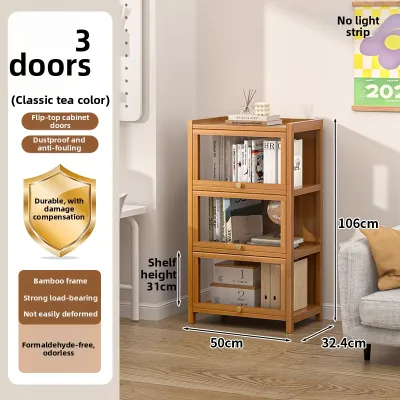
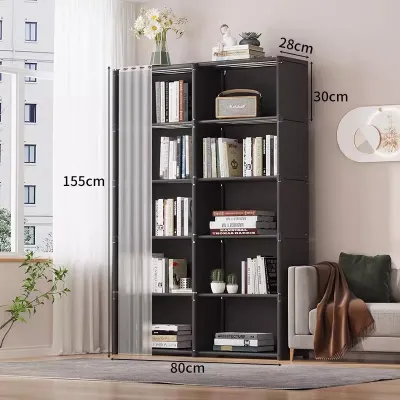
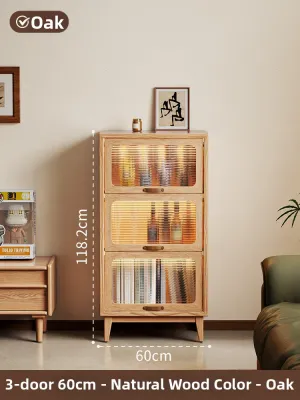
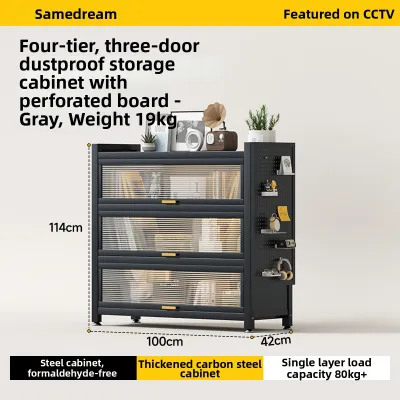
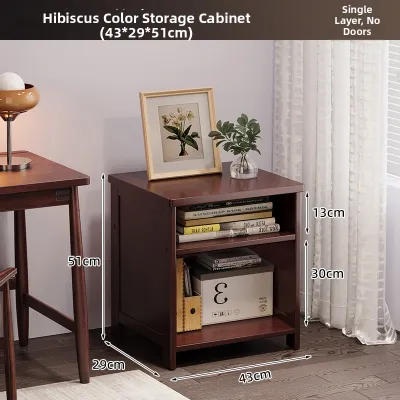
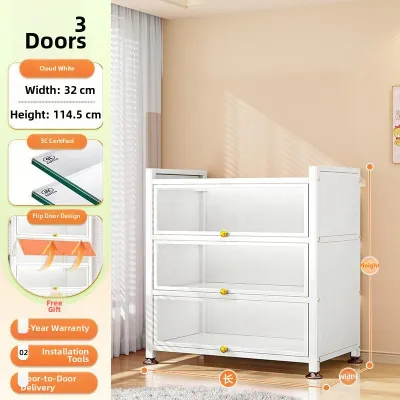
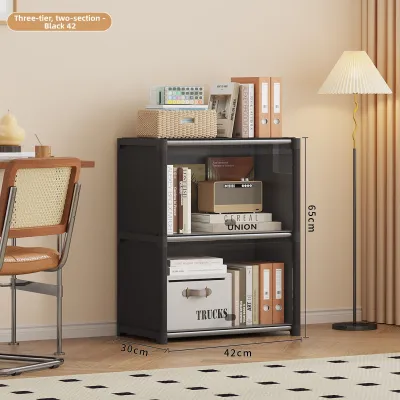
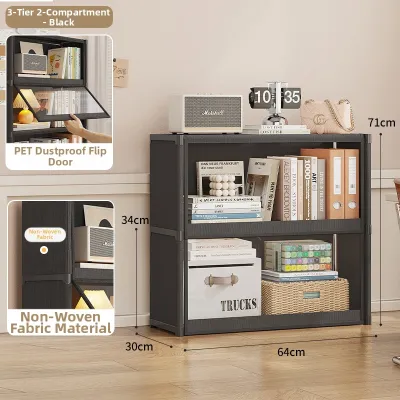
Prices are valid at publication and may change. Please refer to the product page for the latest price.
Finally, verify the delivery path from your building’s entrance to the final room. Measure the height, width, and diagonal clearance of all entry points, including building elevators, stairwells, narrow hallways, and the final room door. Many pre-assembled or flat-packed dustproof bookshelves are exceptionally heavy and tall, meaning they cannot negotiate tight corners or low doorways. Checking these dimensions beforehand prevents the frustration of receiving a delivery that cannot physically enter your home.
Step 2: Calculate Your Storage Capacity Needs
Before looking at external dimensions, you need to determine how much internal storage your book collection actually requires. Gather a representative sample of your books, grouping them by category such as standard paperbacks, hardcovers, and oversized art books or binders. Measure the height and depth of the largest books in each group to establish the minimum shelf depth and the necessary vertical spacing between shelves.

Next, calculate your total linear shelf space by placing your books side-by-side on a flat surface or measuring your current shelves. If you have 100 books and they average 2.5 centimetres in spine thickness, you will need at least 250 centimetres of linear shelf space. It is wise to add a buffer of 15 to 20 percent to this total to accommodate future acquisitions, preventing your new cabinet from becoming instantly overcrowded.
You should also evaluate whether your collection requires specialized storage zones within the bookshelf. For instance, heavy encyclopedias or photo albums are best placed on lower shelves to maintain the unit’s stability, while delicate collectibles or rare editions can occupy eye-level display shelves. Understanding these layout needs helps you choose a bookshelf with the right mix of adjustable shelves, fixed partitions, and lower cabinet space.
Step 3: Match Dimensions to Dustproof Bookshelf Configurations
Once you have your space and capacity measurements, you can match them to the right dustproof configuration and door mechanism. The choice between hinged doors and sliding doors depends heavily on the clearance space directly in front of the bookshelf. Hinged doors swing outward, requiring a clear radius equal to the width of the door panel so you can access your books without hitting nearby furniture. Sliding doors, on the other hand, operate within the frame’s footprint, making them ideal for narrow hallways or tight bedrooms, though they require a wider overall frame to accommodate the overlapping door tracks.
The material of the doors also affects both the room’s visual weight and your maintenance routine. Glass-fronted doors offer excellent visibility, allowing you to display your collection while keeping dust out, but they require regular cleaning to remove fingerprints and smudges. Solid doors conceal cluttered shelves and mismatched book spines, creating a cleaner look, but they can make a small room feel more enclosed and visually heavy.
If your available wall space is fragmented or limited, consider modular or corner configurations. Modular dustproof bookshelves allow you to start with a single unit and add matching cabinets side-by-side as your collection grows, adapting easily to changing room layouts. Corner units utilize underused corner spaces, wrapping around architectural features to maximize storage without consuming valuable floor space in the center of the room.
Step 4: Verify Load Capacity and Installation Safety
Books are surprisingly heavy, and a fully loaded dustproof bookshelf can put immense stress on its frame and shelves. You must cross-reference the estimated weight of your collection with the manufacturer’s specified maximum load capacity per shelf and for the entire unit. Standard particleboard shelves may sag over time under the weight of heavy hardcovers, so look for reinforced materials or thicker shelves if you have a substantial collection.
Safety is paramount when installing tall or heavy storage units, making anti-tip wall anchoring a necessity. This is especially critical for tall, narrow dustproof bookshelves or in households with children and pets who might attempt to climb the furniture. Check the manufacturer’s instructions to see what anchoring hardware is included, and verify that your wall type—whether concrete, drywall, or brick—can securely support the anchoring screws and brackets.
Finally, review the assembly requirements before making your purchase. Some large dustproof bookshelves must be assembled flat on the floor before being raised into position, which requires a clear floor area larger than the bookshelf’s final dimensions. If the unit features complex dust-sealing mechanisms, soft-close hinges, or heavy tempered glass doors, consider hiring a professional installer to ensure the doors align correctly and seal out dust effectively.
Common Sizing and Measurement Mistakes to Avoid
One of the most common mistakes is forgetting to account for the swing radius of hinged doors or the pull-out distance of integrated drawers. If you place a coffee table or armchair too close to the bookshelf, you may find yourself unable to open the doors fully, rendering the storage space impractical. Always map out the door swing on your floor plan using painter’s tape before finalizing the bookshelf’s position.
Another frequent error is assuming standard shelf depths will fit all your books. Oversized textbooks, art portfolios, and binders often protrude past the front edge of standard shelves, which prevents the dustproof doors from closing completely. When doors cannot close fully, the dust seal is broken, defeating the primary purpose of buying a dustproof cabinet.
Lastly, avoid overloading shelves beyond their rated weight capacity. Overloaded shelves will sag, which not only compromises the structural integrity of the bookshelf but can also warp the frame. A warped frame prevents the doors from aligning properly, creating gaps that allow dust to enter and settle on your valued collection.
Frequently Asked Questions (FAQ)
How much clearance should I leave around a dustproof bookshelf for ventilation?
You should always check the manufacturer’s installation manual for specific clearance recommendations. Generally, leaving a gap of one to two centimetres at the back and sides of the bookshelf allows for adequate air circulation, which is particularly important in humid climates or air-conditioned rooms to prevent moisture buildup inside the enclosed cabinet.
Do adjustable shelves affect the dustproof seal of the bookshelf?
Internal adjustable shelves do not compromise the external dustproof seal, as the seal relies entirely on how flush the doors close against the outer frame. However, you must ensure that the shelves are positioned so that no books protrude past the front edge, as any protruding items will prevent the doors from closing fully and break the dust barrier.

Community discussion
Share your experience or ask a question. Comments are reviewed before publication.