
Finding the right balance between entryway organization and spatial constraints is a common challenge for homeowners in Singapore. A bamboo shoe rack offers a lightweight, sustainable, and visually warm solution for managing footwear clutter. However, selecting the ideal size involves more than a quick visual estimate. To choose a rack that integrates seamlessly into your home, you must measure your physical space, calculate the storage capacity required for your footwear collection, and account for the specific architectural layout of your entryway. By taking precise measurements and understanding how exterior dimensions translate to usable shelf space, you can avoid common purchasing mistakes and select a durable, stable organizer that keeps your home safe and tidy.
How to Accurately Measure Your Entryway or Hallway
Before browsing online marketplaces or local furniture showrooms, you must establish the exact physical boundaries of your designated storage area. Grab a high-quality metal tape measure—avoid flexible sewing tapes, which can stretch—and measure the maximum available width, depth, and height of the spot where you plan to place the bamboo shoe rack. To ensure a perfect fit, always measure at the exact height where the rack will sit, as walls in many residential units are not perfectly plumb.
It is vital to account for fixed architectural features that might obstruct the rack or prevent it from sitting flush against the wall. Take close note of skirting boards, which typically protrude 1.5 to 2 centimeters from the wall. If your measurements do not account for this gap, a rack with a tight clearance might block adjacent walkways or fail to fit into a recessed niche. Additionally, locate all electrical outlets, light switches, fiber termination points, and DB (distribution board) boxes. Placing a tall shoe rack directly in front of these utilities can restrict emergency access or make daily tasks highly inconvenient.
Products mentioned in this guide
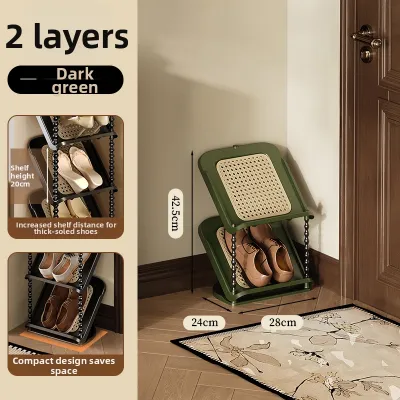
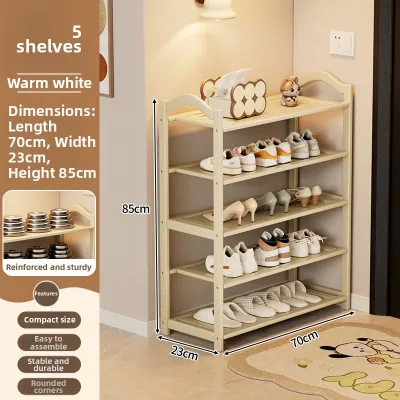
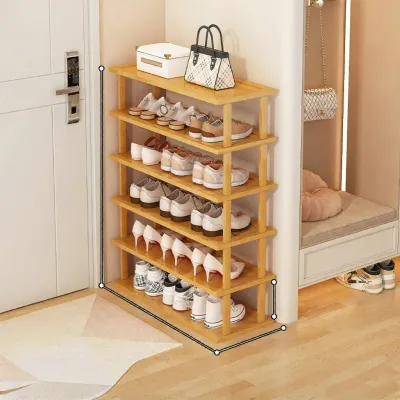
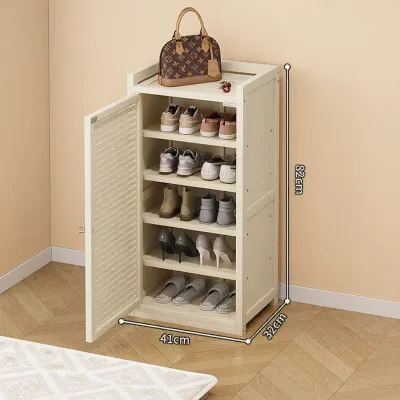
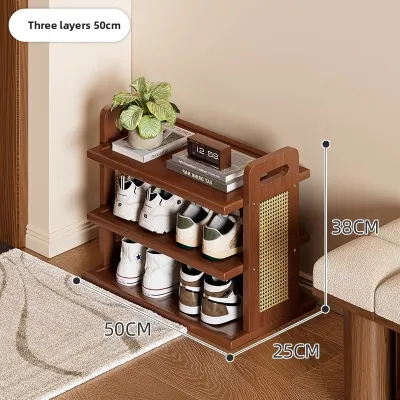
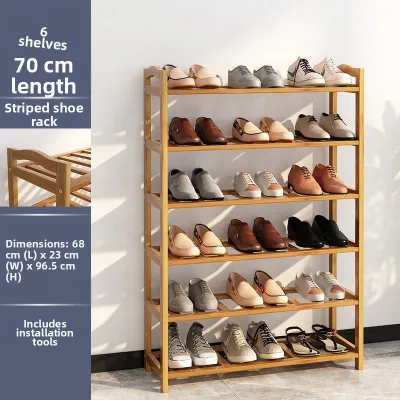
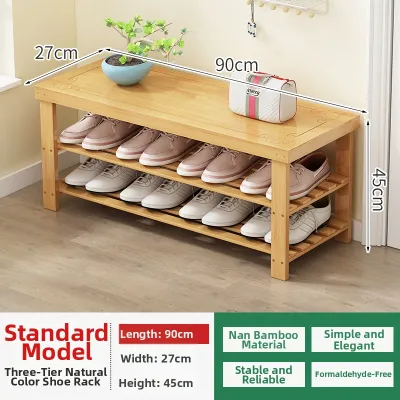
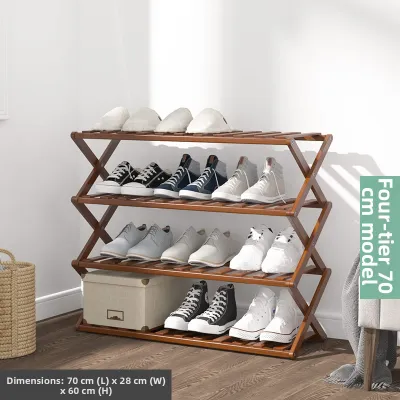
Prices are valid at publication and may change. Please refer to the product page for the latest price.
Another critical factor is the swing radius of your main entrance door and security gate. Open both fully and measure the clearance zone. A shoe rack placed too close to the door hinge or swing path can cause collisions, resulting in chipped paint, damaged footwear, or restricted entry. Mark out the door’s arc on the floor with painter’s tape to visualize the boundary clearly.
Finally, calculate the remaining walkway width to ensure comfortable passage. In Singapore, fire safety regulations set by the Singapore Civil Defence Force (SCDF) mandate a minimum clear escape passage of 1.2 meters along common HDB corridors. Inside your home, maintaining a walkway width of at least 90 centimeters is highly recommended to allow two people to pass each other comfortably and to facilitate the movement of large items like groceries, strollers, or suitcases.
Translating Bamboo Shoe Rack Dimensions into Shoe Capacity
Once you have determined the maximum physical footprint your entryway can accommodate, the next step is translating those external dimensions into actual shoe storage capacity. A common source of frustration is buying a rack that fits the room perfectly but fails to hold your family’s footwear.

Width and Tier Configurations
The horizontal width of a shelf is the primary factor determining how many pairs of shoes can sit side-by-side. On average, a standard pair of adult shoes requires a horizontal width of 20 to 25 centimeters. Using this baseline, you can estimate the capacity of various standard rack widths:
- 50 to 60 centimeters wide: Best suited for tight spaces, accommodating approximately 2 pairs of adult shoes per tier.
- 70 to 80 centimeters wide: A versatile mid-size option that comfortably fits 3 pairs of standard adult shoes per tier.
- 90 to 100 centimeters wide: Ideal for larger families, holding up to 4 pairs of adult shoes per tier.
While increasing the width is the most stable way to boost capacity, limited floor space often forces homeowners to look upward. Adding tiers—such as opting for a 5-tier or 6-tier rack instead of a low 2-tier or 3-tier model—maximizes vertical storage efficiency. However, raising the height significantly shifts the center of gravity. Bamboo is naturally lightweight, and a tall, narrow structure fully loaded with heavy shoes can become top-heavy. If you choose a vertical configuration taller than 80 centimeters, you must plan for proper wall-anchoring to prevent the unit from tipping forward when shoes are retrieved.
Depth Requirements for Different Shoe Types
The depth of your bamboo shoe rack determines which types of footwear can be stored without protruding into your living space. Standard shoe racks typically feature an exterior depth of 25 to 30 centimeters. This depth is perfectly adequate for flat shoes, sandals, slippers, and standard women’s heels.
However, if your household includes individuals with larger shoe sizes (such as UK size 10 or above), standard athletic sneakers, or bulky work boots, a shallow rack will cause shoes to overhang. Overhanging shoes not only look untidy but also present a tripping hazard in narrow hallways. For larger footwear, look for racks with a minimum depth of 32 to 35 centimeters.
Additionally, pay close attention to the shelf design. Many bamboo racks utilize a slatted design with open gaps between the wooden bars to encourage airflow and prevent odors. While this is excellent for ventilation in tropical climates, wide gaps can be problematic. Thin stiletto heels, narrow soles, or small children’s shoes can easily slip through the slats, causing them to fall or sit at awkward angles. If you plan to store high heels or very small shoes, verify the slat spacing before purchasing, or consider placing a rigid, breathable plastic liner over the slats to create a flat surface.
Matching Rack Sizes to Typical Singapore Home Layouts
Residential layouts in Singapore vary widely, from compact HDB flats to spacious condominiums and landed properties. Choosing the right size bamboo shoe rack requires matching the furniture’s proportions to your specific home layout.
Narrow HDB Corridors or Recessed Areas
For homes with narrow entryways or those utilizing the external corridor space, spatial efficiency is paramount. To comply with local safety guidelines and keep common pathways clear, select a slim-depth bamboo shoe rack with a depth of 25 centimeters or less. Tall, narrow vertical towers (such as a 6-tier rack with a width of 50 centimeters) are excellent for these configurations. They utilize the vertical wall space efficiently while keeping the floor footprint to an absolute minimum. Ensure that the rack does not obstruct access to dry risers, hose reels, or fire escape routes.
Condo Foyers or Wider Hallways
If your home features a dedicated foyer, a wider entryway, or a spacious hallway, you have the flexibility to choose a multi-functional furniture piece. A low-profile bamboo shoe bench is an exceptional choice for these layouts. These units typically measure 80 to 100 centimeters in width and around 30 to 35 centimeters in depth, featuring a reinforced top surface designed to serve as a seat. This layout allows family members and guests to sit comfortably while putting on or removing their footwear. The lower tiers provide storage for daily-wear shoes, maintaining an uncluttered, welcoming entrance.
Beside Existing Built-in Shoe Cabinets
Many modern Singaporean homes are equipped with full-height, built-in laminate shoe cabinets. While these cabinets offer massive storage capacity, opening and closing heavy doors multiple times a day can be cumbersome. Furthermore, storing damp or sweaty shoes directly inside an enclosed wooden cabinet can lead to mold growth and unpleasant odors due to the high humidity. Placing a small, open-sided 2-tier or 3-tier bamboo shoe rack immediately adjacent to the main cabinet or entrance door solves this issue. It serves as a temporary landing zone for your most frequently used daily shoes, allowing them to air out completely before they are transferred to long-term enclosed storage.
Common Sizing and Placement Mistakes to Avoid
Even with careful planning, several easily overlooked details can lead to purchasing a shoe rack that does not function as intended. Awareness of these common pitfalls will save you time, money, and the hassle of returning bulky items.
First, many shoppers forget to measure the actual shoes they own, relying solely on standard sizing charts. A running shoe with a thick, cushioned sole or a pair of high-top hiking boots can be significantly longer and taller than a standard dress shoe of the same size. Before finalizing your rack dimensions, physically measure your bulkiest and longest pairs of shoes from heel to toe, and from the sole to the highest point of the ankle. Compare these measurements against the clearance height between the rack’s tiers to ensure your shoes will fit without being squished.
Second, do not confuse exterior dimensions with interior usable space. Product listings on e-commerce platforms almost always specify the maximum exterior dimensions, which include the thickness of the bamboo legs, frame, and decorative side panels. The actual usable shelf width can be 4 to 6 centimeters narrower than the listed exterior width. If you have calculated that a shelf will tightly fit four pairs of shoes based on exterior dimensions, the frame’s thickness might reduce the space just enough to accommodate only three pairs, leaving one shoe stranded. Always look for detailed structural diagrams or ask the manufacturer for the clear internal shelf dimensions.
Third, overlook assembly and placement clearance at your own peril. Flat-packed bamboo furniture requires physical space to assemble. If you choose a rack that fits perfectly into a tight alcove with zero clearance on either side, you may find it impossible to tighten the side screws during assembly. Additionally, if you plan to use wall-anchoring brackets for a tall rack, you must leave a small gap of 1 to 2 centimeters behind the rack to accommodate the hardware. Failing to account for this minor clearance can prevent the rack from fitting into your designated space.
Verifying Bamboo Stability and Care Requirements
Before making your final decision, you must evaluate the structural integrity and finish of the bamboo shoe rack to ensure it can withstand daily use in Singapore’s tropical climate.
Start by verifying the manufacturer’s specified weight capacity per tier. While bamboo is celebrated for its impressive tensile strength, the actual load capacity depends heavily on the construction quality. Racks made from thin, hollow-core bamboo or poorly laminated slats can sag or warp over time under the weight of heavy boots or multiple pairs of leather shoes. Look for solid bamboo construction with reinforced joints and sturdy metal hardware.
Next, assess the surface treatment of the wood. Singapore’s high humidity levels can easily encourage the growth of mold and mildew on raw, untreated organic materials. Ensure the bamboo shoe rack has been treated with a protective lacquer, polyurethane coating, or water-resistant varnish. This finish is especially critical if the rack will be placed in an open-air HDB corridor, near a window exposed to rain splashes, or in ground-floor units where dampness is common. Check the manufacturer’s care instructions; most treated bamboo surfaces simply require a periodic wipe-down with a damp cloth followed by immediate drying. Avoid using harsh chemical cleaners that can strip the protective finish.
Finally, prioritize safety by addressing stability. If your selected bamboo shoe rack is tall, narrow, or has a high center of gravity, check if the package includes an anti-tip kit. If it does not, plan to purchase compatible wall-anchoring brackets separately. Securely anchoring the unit to your entryway wall is a highly effective way to prevent accidental tipping. If you are unsure about drilling into your walls or if your home’s guidelines prohibit wall modifications, opt for a wider, lower-profile model that naturally offers a more stable base. Always refer to the manufacturer’s official assembly guidelines and safety warnings before installing any anchoring hardware.

Community discussion
Share your experience or ask a question. Comments are reviewed before publication.