
Finding the right book shelf rack cabinet requires balancing your storage needs with the physical limits of your room. To avoid overcrowding your living space, you must measure the designated wall area precisely, account for architectural obstacles, and verify that the unit’s depth, width, and height align with your daily movement patterns. Taking these steps beforehand ensures your new furniture fits seamlessly into your home layout without blocking pathways or access points.
Assess Your Room and Wall Space
Measuring the wall width and floor-to-ceiling height using a reliable metal measuring tape is the essential first step. Do not rely solely on architectural floor plans, as actual finished dimensions often vary slightly after plastering, painting, or drywall installation. Take measurements at three different points—top, middle, and bottom—because walls are rarely perfectly straight or plumb, and even a minor slope can prevent a tight-fitting cabinet from sliding into place.
Pay close attention to skirting boards or baseboards at the bottom of the wall, as well as any cornices or crown molding at the top. These architectural features project outward from the wall, meaning a bookshelf cannot sit completely flush unless you account for this offset. Measure the thickness of your skirting boards and subtract this from your available floor depth to ensure the unit does not protrude unexpectedly into your walking path.
Products mentioned in this guide
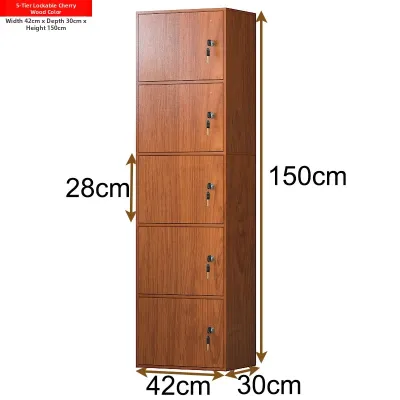
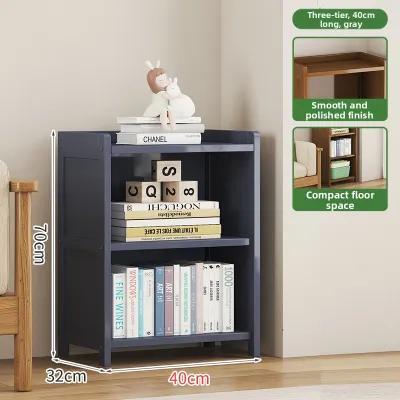
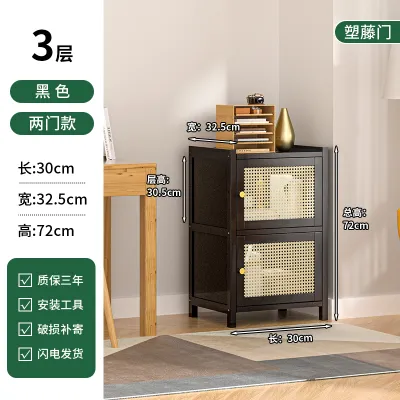
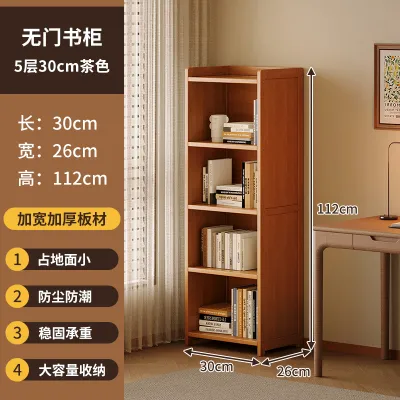
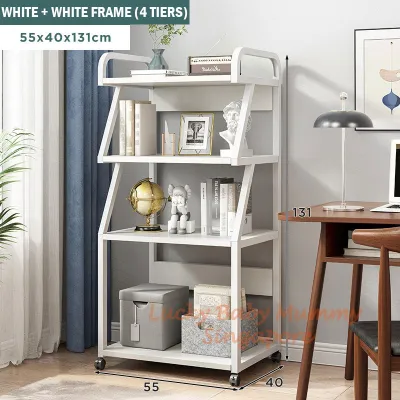
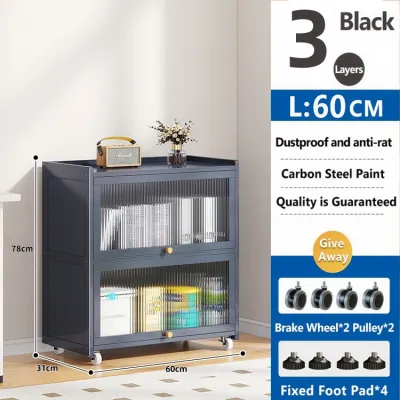
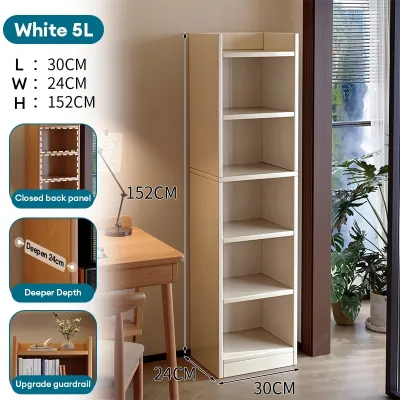
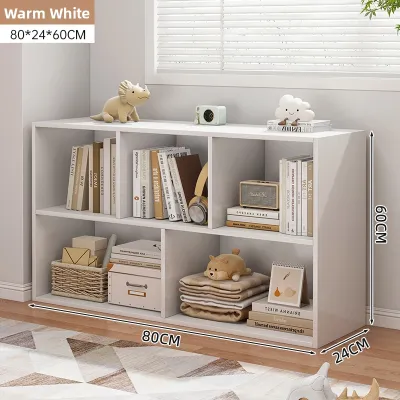
Prices are valid at publication and may change. Please refer to the product page for the latest price.
Identify any fixed obstacles along the wall that could interfere with the placement of your book shelf rack cabinet. Look for electrical outlets, light switches, internet data ports, air conditioning conduits, and window sills. If you plan to place the cabinet over an outlet, ensure the back panel of the furniture has a pre-cut cable management hole, or choose an open-backed design that allows easy access to plugs without pushing the unit away from the wall.
Determine whether you are placing a freestanding unit or fitting a bookshelf into an alcove or recessed niche. For alcoves, measure the width at the front, middle, and back of the recess. Use the smallest measurement as your absolute maximum width limit, leaving a clearance gap of at least 1 to 2 centimeters on each side to allow you to slide the unit into place without scraping the walls or damaging the plaster.
Determine the Ideal Bookshelf Width, Height, and Depth
Selecting the correct depth depends heavily on what you plan to store. Standard novels and paperbacks typically require a shelf depth of 20 to 25 centimeters, while larger textbooks, art albums, and storage baskets need 30 to 35 centimeters. If you are storing deep storage bins or office files, check the manufacturer’s specifications to ensure the interior shelf depth accommodates these items without them hanging over the edge and disrupting the visual line of the room.

When choosing the height of your book shelf rack cabinet, consider both your ceiling height and your physical reach. In typical residential apartments with ceiling heights of 2.6 to 2.8 meters, a tall bookshelf of 2 meters or more offers excellent vertical storage but may require a step stool to access the top shelves safely. Ensure there is enough clearance at the top to lift and slide items off the highest shelf without hitting the ceiling or scraping the paint.
Balance the width of the unit to maintain visual proportion within the room. A single, massive bookshelf can easily overwhelm a small study or living room. If you have a wide wall, consider placing two smaller modular units side-by-side rather than one giant cabinet; this setup is often easier to transport, assemble, and rearrange if you move homes in the future.
Check Clearance, Pathways, and Delivery Access
Before finalizing any purchase, you must plan the delivery route from the building entrance to the final room. For high-rise apartments, measure the height, width, and diagonal clearance of the passenger or service lift. Also, check the clearance of tight corners in your corridors, stairwells, and entry doorways to ensure the flat-pack boxes or fully assembled units can pass through safely without causing damage to the building or the furniture.
Maintain comfortable walking pathways around the furniture. As a general rule, leave at least 70 to 90 centimeters of clear walkway space in front of the bookshelf. If the book shelf rack cabinet features hinged glass doors or pull-out drawers, measure the full extension of these components to ensure they can open completely without striking coffee tables, sofas, or adjacent walls.
In humid tropical climates, leaving a small gap between the back of the bookshelf and the wall is highly recommended. A gap of 2 to 3 centimeters promotes proper air circulation, which helps prevent moisture buildup and reduces the risk of mold or mildew developing on your books and the back panel of the cabinet. This simple precaution is especially important for solid wood or veneered engineered wood furniture placed against external walls.
Evaluate Weight Capacity and Structural Stability
Books are surprisingly heavy, so verifying the load capacity of each shelf is critical to prevent bowing or structural failure. Check the manufacturer’s product specifications for the maximum weight limit per shelf, which is often listed as a uniformly distributed load. Avoid overloading shelves, and place your heaviest items, such as encyclopedias or storage boxes, on the bottom shelves to lower the unit’s center of gravity and improve overall stability.
Tall or narrow book shelf rack cabinets present a tipping hazard, especially in homes with active pets or young children. Look for units that include wall-anchoring hardware, and verify the type of wall you have. Concrete or brick walls require masonry plugs and sturdy screws, while drywall or partition walls require toggle bolts or anchoring directly into the wooden or metal studs behind the plasterboard.
Examine the material thickness and support mechanisms of the shelves. Thicker shelves made of solid wood, plywood, or reinforced metal resist sagging much better over time than thin particleboard. If you are opting for adjustable shelves, check that the support pegs are made of metal rather than plastic, and ensure they fit snugly into the pre-drilled holes to prevent accidental shelf collapse.
Finalize Your Book Shelf Rack Cabinet Shortlist
Create a comparison checklist of your top choices by cross-referencing your measured space limits with the exact product dimensions provided by the retailer. Double-check that the external width, height, and depth of the unit fit comfortably within your measured boundaries, keeping your clearance buffers in mind. This step prevents the frustration of ordering a piece of furniture that is only a few millimeters too wide for its designated spot.
Review the assembly requirements and delivery conditions for each option. Some large bookcases are delivered fully assembled, while others require extensive self-assembly. If you choose a flat-pack option, ensure you have the necessary tools, such as a rubber mallet, screwdriver, and spirit level, and check if the retailer offers professional installation services if you are uncomfortable assembling the unit yourself.
Finally, balance your functional needs with aesthetic preferences. Look for features like adjustable shelving, which allows you to customize the height of individual compartments as your book collection changes. If you want to keep dust off your items, prioritize models that support optional glass door attachments, ensuring the doors fit your specific unit model and have high-quality hinge mechanisms.
Frequently Asked Questions (FAQ)
How much space should I leave between a bookshelf and the ceiling?
It is advisable to leave at least 10 to 15 centimeters of clearance between the top of the bookshelf and the ceiling. This gap provides sufficient space to wipe away dust, allows air to circulate freely, and ensures you can easily lift decorative items or storage boxes off the top surface. If your room has low ceilings, leaving a larger gap can also prevent the space from feeling visually cramped and dark.
Can I place a bookshelf in front of a window or radiator?
Placing a bookshelf directly in front of a window or heating source is generally not recommended. Direct sunlight from windows can cause book covers to fade and materials to degrade over time, while blocking a window restricts natural light and ventilation. If you must place a unit near a window or radiator, ensure there is a generous clearance gap to allow heat to dissipate safely and use UV-blocking window films to protect your collection from sun damage.

Community discussion
Share your experience or ask a question. Comments are reviewed before publication.