
To choose the right bomb shelter rack size, you must measure the absolute minimum width, depth, and height of your household shelter while accounting for structural obstructions like ventilation sleeves, light switches, and the door’s swing path. Subtracting a safety clearance of at least 5 cm to 10 cm from these minimum dimensions ensures your freestanding rack fits securely without blocking emergency access or violating housing regulations.
Because these spaces are constructed with reinforced concrete to serve as civil defence shelters, they feature unique structural elements that cannot be altered. Maximising this storage area requires a careful balance between storage efficiency and regulatory compliance. By taking precise measurements and selecting a compatible freestanding storage system, you can transform this utility space into an organised pantry or household archive without compromising its protective function.
Understand Household Shelter Restrictions First
Before planning any storage layout or purchasing shelving, you must understand the strict safety and compliance boundaries set by housing authorities in Singapore. The household shelter is designed to protect occupants during emergencies, meaning its structural integrity must never be compromised. This structural requirement directly influences the types of storage systems you can install and where you can place them.
Products mentioned in this guide
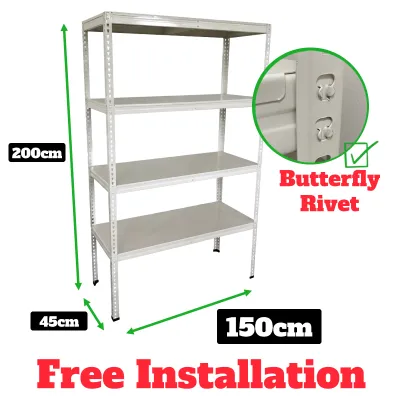
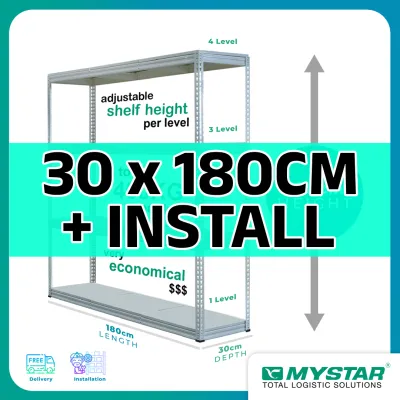
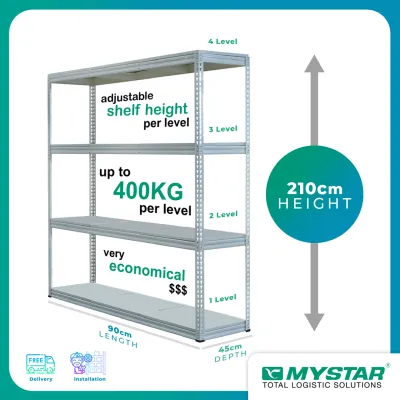
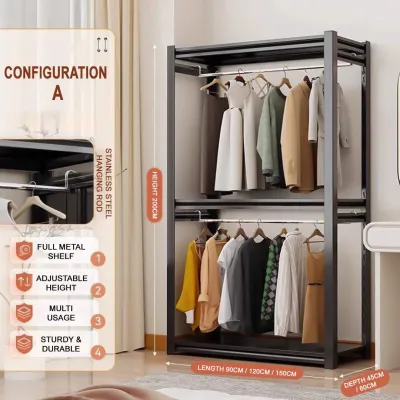
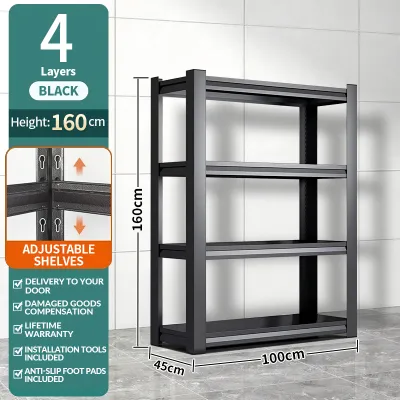
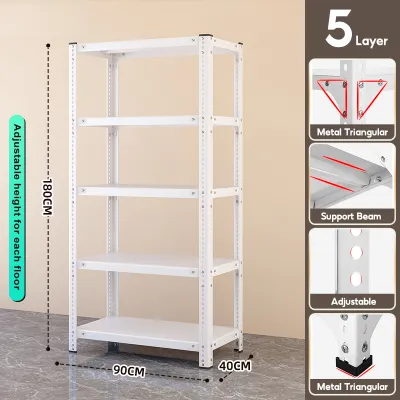
Prices are valid at publication and may change. Please refer to the product page for the latest price.
Certain areas within the shelter are strictly designated as restricted zones. These include the ventilation sleeves, the blast door frame, the gas-tight escape hatch (if present in your unit), and the structural walls themselves. You must keep the ventilation sleeves completely clear to ensure proper air circulation, and nothing should ever block or hang from these openings.
Additionally, the heavy blast door must remain fully operational at all times. The door must be able to open and close to its full design angle without hitting any stored items or shelving frames. Any layout that restricts the door from sealing completely is a safety hazard and a violation of local housing guidelines.
Finally, drilling into the reinforced concrete walls, floor, ceiling, or the steel blast door is strictly prohibited. Because you cannot use traditional wall-anchored screws or brackets, you must rely entirely on freestanding or non-penetrating storage setups. Any rack you choose must be completely self-supporting and stable on its own footprint.
Prepare Your Measuring Tools
Accurately measuring a compact, reinforced concrete room requires the right tools. Because bomb shelters often have minor structural variations, relying on visual estimates or standard floor plans can lead to purchasing a rack that is slightly too large to fit through the door or stand upright.

Essential Measuring Tools:
- Steel Measuring Tape: A high-quality, locking metal measuring tape is essential. Avoid soft fabric sewing tapes, as they sag over longer distances and lead to inaccurate horizontal measurements.
- Notepad or Digital Device: Prepare a sketch of your shelter's floor plan to record multiple measurements at different heights and depths.
- Spirit Level or Straight Edge: Use this to check for uneven floors, skirting boards, or slightly sloping walls that could cause a rigid metal rack to lean.
- Flashlight: Many bomb shelters have limited built-in lighting, making a portable light source helpful for reading tape measurements in dark corners.
Taking the time to gather these tools prevents installation headaches later. A rigid steel tape allows you to measure vertical heights independently, ensuring you capture the exact distance from the floor to the lowest ceiling obstruction.
Measure the Usable Space Step-by-Step
Measuring a household shelter requires more than a single wall-to-wall reading. Because concrete casting can result in slight wall irregularities, and because skirting boards or conduits project into the room, you must measure multiple points to find the true usable volume.
Step 1: Measure the Width at Three Heights
Begin by measuring the horizontal width of the back wall where you plan to place the rack. Take three separate measurements: one at floor level (above any skirting boards), one at chest height, and one near the ceiling. Wall surfaces are rarely perfectly parallel, and recording these three points ensures you identify the narrowest point of the wall. Use the smallest of these three measurements as your maximum width limit.
Step 2: Determine the Usable Depth and Door Path
Measure the depth from the back wall to the front wall. If your rack will sit adjacent to the door, you must measure from the back wall to the inner edge of the door’s swing path. Open the blast door completely and observe how far it swings into the room. Mark this boundary on the floor. Your shelving must sit entirely outside this swing path to ensure the door can close and latch securely without interference.
Step 3: Measure the Vertical Height and Identify Obstructions
Measure the height from the floor to the ceiling in at least two different corners. Do not assume the ceiling height is uniform throughout. Next, look upward and locate any protruding elements. Note the exact height and depth of ventilation sleeves, light fixtures, electrical junction boxes, and surface-mounted wire conduits. If a conduit runs along the top of the wall, your rack’s height must be low enough to sit safely beneath it.
Step 4: Record the Absolute Maximum Footprint
Once you have gathered all measurements, review your notes and highlight the smallest numbers for width, depth, and height. This set of dimensions represents the absolute maximum boundary for any storage system. Any rack you purchase must have outer dimensions smaller than these figures to physically fit into the space.
Translate Measurements Into the Right Rack Size
With your absolute maximum dimensions recorded, you can now calculate the actual rack size you should purchase. You cannot buy a rack that matches your maximum dimensions exactly; you must incorporate clearance margins to allow for safe assembly and installation.
Key Clearance and Selection Steps:
- Deduct Assembly and Installation Clearance: Subtract at least 5 cm from your maximum width and depth measurements, and at least 10 cm from your maximum height. This buffer space prevents the metal frame from scratching your shelter walls during assembly and gives you room to maneuver the pieces into place.
- Compare Against Standard Sizes: Compare your adjusted dimensions against standard freestanding shelving sizes available from furniture retailers. Common widths for boltless storage racks often come in increments of 90 cm, 100 cm, 120 cm, or 150 cm. Choose the standard size that fits comfortably within your safe clearance zone.
- Evaluate the Assembly Method: Because you cannot drill into the walls, select a highly stable freestanding system. Boltless metal shelving units are excellent for bomb shelters because they use interlocking steel beams that distribute weight evenly across the floor without requiring wall anchors.
- Check Floor Load and Weight Distribution: Review the manufacturer's load capacity specifications. Ensure the weight of your stored items is distributed evenly across the shelves. Avoid top-heavy arrangements by placing your heaviest items on the bottom shelves to maintain a low center of gravity.
By choosing a rack that is slightly smaller than the room’s physical limits, you ensure a smooth installation process and maintain access to all sides of the shelter for cleaning and maintenance.
Verify Clearance and Safe Installation
Once your chosen rack arrives, the installation process must prioritize safety and accessibility. A poorly positioned rack can compromise the function of the civil defence shelter, even if the dimensions are technically correct.
During assembly, position the rack so that it does not touch the structural walls directly. Leaving a small gap of 2 cm to 3 cm between the rack frame and the concrete walls prevents moisture buildup and protects the wall finish. Ensure the rack is perfectly level; use shims or adjustable feet if your shelter floor has a slight slope.
After assembly, perform a physical test of the blast door. Close and lock the door completely from the inside and outside to verify that the handle, hinges, and rubber seals do not contact any part of the shelving unit. The door must latch smoothly without requiring force.
Finally, conduct a visual inspection of the ventilation sleeves. The openings must remain entirely unobstructed, allowing air to flow freely. If your rack blocks even a portion of a vent, slide the unit aside or adjust the shelf heights to restore complete clearance. Keeping these pathways clear ensures your shelter remains compliant with local housing regulations and fully prepared for any emergency.
Frequently Asked Questions (FAQ)
Can I drill into the HDB bomb shelter walls to mount a heavy rack?
No, you must not drill, nail, or puncture the walls, floor, ceiling, or door of an HDB bomb shelter. These surfaces are made of specially reinforced concrete designed to withstand high pressure and external impacts. Drilling into them can weaken the structural integrity of the shelter and damage the internal steel reinforcement bars. Additionally, making unauthorized modifications to a household shelter violates local housing regulations. To store heavy items safely, you should use freestanding, heavy-duty boltless racks that stand firmly on the floor without requiring wall penetration.
What type of rack is best for a small household shelter?
Tall, narrow freestanding boltless metal racks are highly suitable for small household shelters. These units allow you to maximize vertical storage space without taking up excessive floor area, keeping the center of the room clear for door movement. Look for racks with adjustable shelf heights, which allow you to position shelves around protruding ventilation sleeves, conduits, or light fixtures. Additionally, choose racks with a durable, rust-resistant finish, such as powder-coated steel, to withstand the ambient humidity levels common in utility spaces.

Community discussion
Share your experience or ask a question. Comments are reviewed before publication.