
Finding the perfect drawer with wheels to slide under your bed seems like a straightforward task, but it often ends in frustration when the drawer jams, scrapes your flooring, or refuses to slide in completely. To ensure a drawer with wheels fits underneath your bed frame, you must measure the absolute lowest point of the frame’s structure, identify the clear horizontal width between the legs, and calculate the maximum usable depth while accounting for baseboards and wall outlets. Subtracting a safety buffer of at least 2 to 3 centimetres from these raw measurements is essential to accommodate frame flexing, uneven floors, and wheel rotation. By taking precise measurements before you shop, you can confidently select under-bed storage that maximizes your space without damaging your furniture or flooring.
Why Guessing Bed Clearance Leads to Storage Failures
Guessing or estimating your bed clearance is one of the most common pitfalls in home organization. Under-bed storage is a dynamic system where a drawer with wheels must travel smoothly across a floor surface. Unlike static storage boxes that you slide in once and leave undisturbed, a wheeled drawer is designed for frequent access. If your measurements are off by even a few millimetres, the drawer can scrape against the underside of your bed slats, causing permanent scratches to both the drawer and the bed frame.
Furthermore, wheels require a completely unobstructed path. In many Singapore homes, flooring transitions—such as the threshold between laminate bedroom flooring and hallway tiles—can create minor height variations. If a drawer is sized too tightly to the frame, these tiny floor rises will cause the drawer to wedge firmly under the bed. Additionally, external dimensions provided by manufacturers often represent the storage box itself, ignoring the protruding wheels or handles. This discrepancy can lead to a drawer that physically cannot clear the side rails or one that sticks out into the bedroom’s walking path, creating a tripping hazard in compact spaces.
Products mentioned in this guide

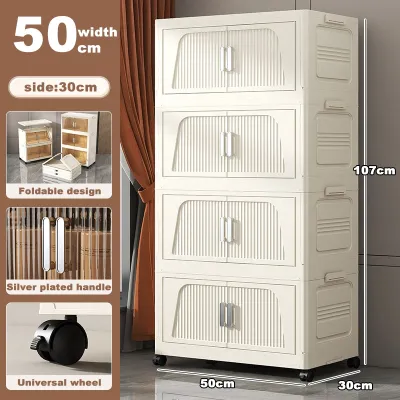
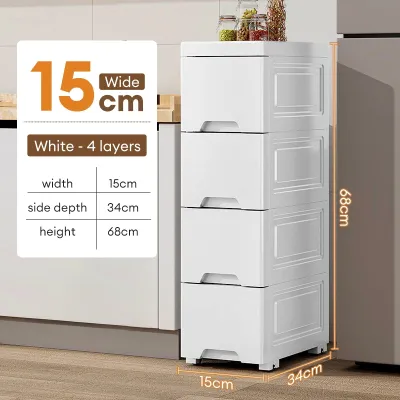

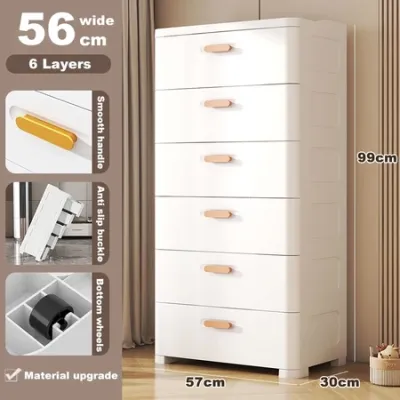
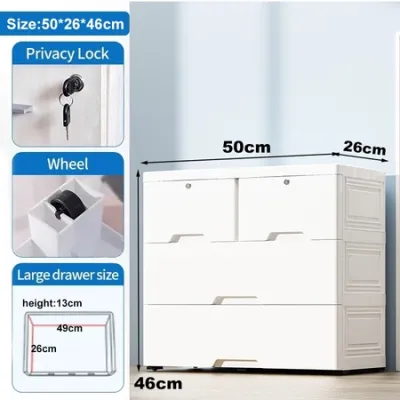
Prices are valid at publication and may change. Please refer to the product page for the latest price.
Tools You Need Before Measuring Under-Bed Space
Achieving the precision required for a perfect fit demands the right tools. Do not rely on flexible fabric sewing tapes, as they easily sag over long spans and can introduce errors of several centimetres. Instead, use a rigid metal tape measure that can extend straight across the floor without bending.

Because the space beneath a bed is naturally dark and filled with shadows, a strong LED flashlight or a headlamp is essential. This light will help you spot hidden obstructions, such as central support legs, sagging slats, or low-hanging assembly hardware, which are easily missed in the dark. You should also keep a notepad or a smartphone handy to record multiple measurements immediately; relying on memory often leads to confusion when comparing product specifications later. Finally, a small spirit level is highly recommended. Placing the level on the floor beneath the bed will reveal if your floor slopes. An uneven floor means the clearance height will vary from one side of the bed to the other, which directly impacts how smoothly your drawer with wheels will operate.
How to Measure Height, Width, and Depth Accurately
Height Clearance: Finding the True Lowest Point
To find the true vertical clearance, you must measure from the hard floor surface up to the absolute lowest point of the bed frame’s underside. This is rarely the bottom of the decorative side rails that run along the exterior of the bed. In most modern wooden and metal bed frames, the structural components—such as the support slats, metal corner brackets, center support rails, or reinforcement bolts—hang significantly lower than the outer frame. If you only measure the height of the side rail, you run a high risk of buying a drawer that collides with these internal supports.
Position yourself on the floor so your eyes are level with the underside of the bed. Take height measurements at three distinct locations: near the headboard, in the exact middle of the bed, and near the footboard. Floors are rarely perfectly level, and bed frames naturally sag over time in the areas that support the most weight. Once you have gathered these three measurements, record the lowest figure as your absolute maximum allowable height. This ensures that the drawer with wheels will clear the frame at its lowest, most restricted point.
Width and Depth: Navigating Legs and Baseboards
Measuring the horizontal footprint is equally critical to prevent your drawer from getting wedged between structural obstacles. To measure the usable width, locate the inner edges of the bed legs. This represents the clear horizontal opening available for your drawer. If your bed frame is a queen or king size, it likely features one or more center support legs to distribute weight safely. These center legs divide the under-bed space into distinct, smaller bays. You must treat each bay as an independent storage zone and measure the width of each bay separately, rather than measuring the entire width of the bed.
For depth, measure from the outer edge of the bed frame inward toward the wall or headboard. You must account for architectural features common in Singapore bedrooms, such as skirting boards (baseboards) and wall moldings. If your bed frame is pushed flush against the wall, the skirting board will prevent the frame from touching the wall directly, but it can also block a deep drawer from sliding all the way back. Additionally, check for wall-mounted power outlets, light switches, or bedside tables that might block the drawer’s exit path. The drawer must be shallow enough to slide out completely without colliding with these fixtures or blocking the walkway.
Factoring in Clearance Allowances and Wheel Height
Once you have recorded your raw physical measurements, you must translate them into safe purchasing dimensions by applying practical tolerances. The most common error is assuming the manufacturer’s listed “box height” represents the total space the drawer will occupy. In reality, a drawer with wheels has a “total operational height” that includes the height of the casters. Always check the product specifications carefully for the total height including wheels. If this detail is missing, you must add the height of the wheels—which typically range from 3 to 5 centimetres—to the height of the drawer box itself.
Beyond the physical dimensions of the product, you must build in a safety clearance buffer. We recommend leaving a vertical buffer of at least 2 to 3 centimetres between the top of the drawer and the lowest point of the bed frame. This buffer is crucial because bed frames and slats flex downward when weight is applied to the mattress, such as when someone sits or sleeps on the bed. Without this buffer, a drawer that fits perfectly under an empty bed may become trapped when the bed is occupied. For horizontal clearance, leave a buffer of at least 2 to 3 centimetres of wiggle room on either side of the drawer. This allowance accommodates minor steering deviations when you pull the drawer out, preventing it from scraping against the bed legs or binding if it is pulled at a slight angle.
Common Measurement Mistakes That Ruin the Fit
Avoiding simple oversights during the measuring process will save you the hassle of returning ill-fitting storage.
- Measuring the mattress instead of the frame: Many homeowners make the mistake of measuring from the edge of the mattress. Mattresses often overhang the frame slightly or have plush toppers that sag, leading to inaccurate depth and width readings. Always measure directly from the wooden or metal frame components.
- Ignoring the floor surface: If you measure your clearance on a bare parquet or vinyl floor but plan to place a rug under the bed later, you will lose valuable vertical space. The rug will raise the drawer's wheels, reducing the effective clearance height. Conversely, on soft carpeted surfaces, the wheels will sink, causing the bottom of the drawer to drag.
- Overlooking assembly hardware: Bed frames are reinforced with bulky metal brackets, bolts, or wooden corner blocks. These small components often protrude into the under-bed space, shaving off crucial centimetres of width and height that are easily missed if you only measure between the main legs.
- Assuming uniform clearance: Never assume the clearance is the same all around the bed. Dust ruffles, wall outlets, uneven floor slopes, or misaligned slats can create localized obstructions that block the drawer's path at the back or middle of the bed.
Frequently Asked Questions (FAQ)
Do thick rugs affect wheeled drawer clearance?
Yes, thick rugs and carpets significantly impact both vertical clearance and wheel mobility. When a drawer with wheels is loaded with heavy items, the wheels will sink into the soft pile of a rug or carpet. This sinking reduces the effective height of the drawer, which can cause the wooden or plastic bottom of the drawer to drag directly against the rug fibers, creating friction and making it difficult to pull out. If you plan to use under-bed storage on a rug, measure your vertical clearance from the top of the rug pile rather than the hard floor. Additionally, look for drawers equipped with larger, low-profile, hard-surface casters that are specifically designed to roll smoothly over carpet fibers without sinking.
How do I work around a center bed support leg?
Center support legs are essential for the structural integrity of larger bed frames, but they present a spatial obstacle for under-bed storage. These legs effectively divide the under-bed area into two or more separate zones. Instead of searching for a single, wide drawer with wheels that will inevitably collide with the center leg, the best solution is to purchase multiple narrower drawers. Measure the precise width of the open bays on either side of the center leg, leaving a 3-centimetre safety buffer on each side. By using two or more smaller drawers, you can maximize your storage capacity while ensuring each unit slides in and out smoothly without interfering with the bed’s structural support.

Community discussion
Share your experience or ask a question. Comments are reviewed before publication.