
Finding extra space in a Singapore apartment, whether a compact HDB flat or a modern condominium, often requires looking down. The gap beneath your bed frame is prime real estate for seasonal bedding, extra apparel, or household essentials. However, choosing the right under-bed storage cart is not as simple as guessing the height and ordering online. To ensure a seamless fit, you must measure the absolute lowest point of your bed frame—not the mattress—and compare it against the cart’s maximum exterior dimensions, including its wheels and handles. Leaving a safety margin of at least 2 to 5 centimeters will prevent your new organizer from scraping your floor or getting wedged under the frame.
Taking the time to measure your bed frame clearance accurately saves you the hassle of returning bulky items and protects your flooring from unsightly scratches. By understanding the unique structural elements of your bed and matching them to the physical specifications of a storage cart, you can maximize your bedroom’s storage capacity without compromising on aesthetics or convenience.
Tools You Need Before Measuring Your Bed Frame
Before you begin crawling under your bed, gathering the correct tools is essential for obtaining precise measurements. Using the wrong tools can lead to slight discrepancies that make the difference between a cart that rolls smoothly and one that does not fit at all.
Products mentioned in this guide
![[Ready Stock] 3-Tier Movable Storage Cart with Wooden Top | Multi-purpose Utility Trolley Rack Organizer with Wheels](https://img.lazcdn.com/g/p/f9391fc1022b300a377e3cf59bbdc77b.jpg_400x400q80.jpg_.webp)
![2/3/4 Tiers Kitchen Bathroom Organizer Trolley Shelf/Rack/ Storage/Utility Cart with Rollers Wide - White / Grey Color [Stock in SG]](https://img.lazcdn.com/g/p/c3b7bda38d6f5ae35cdc88c062c34715.jpg_400x400q80.jpg_.webp)
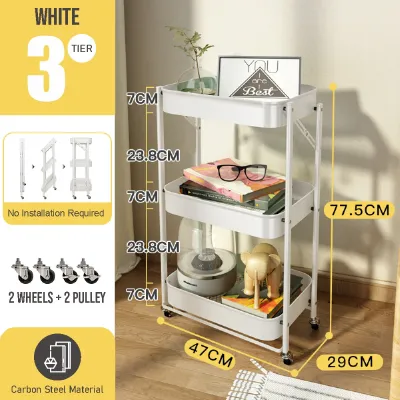
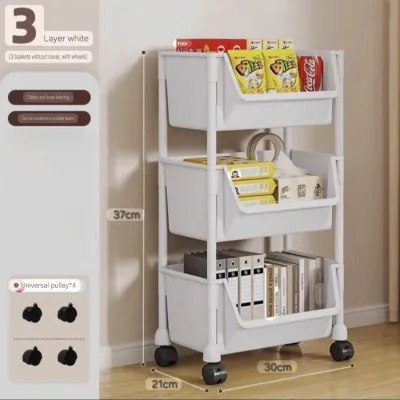
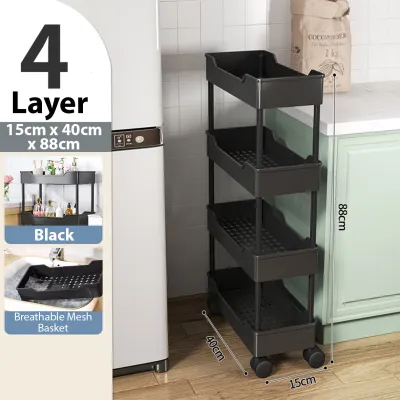
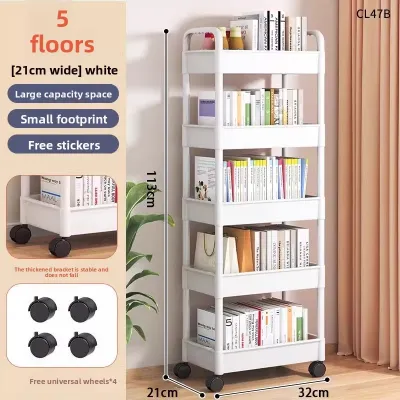
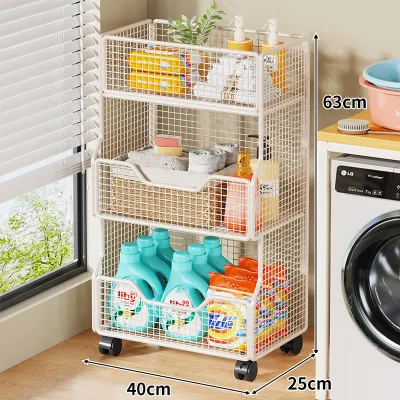
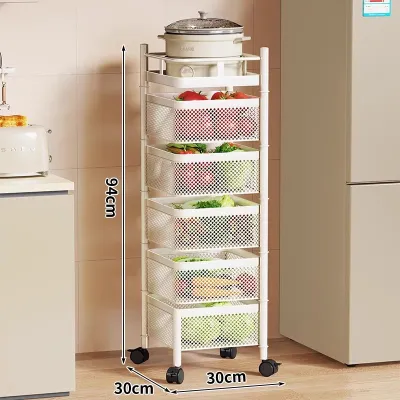
Prices are valid at publication and may change. Please refer to the product page for the latest price.
- Rigid Metal Tape Measure: Avoid using a flexible cloth tailor's tape measure. Cloth tapes easily sag, bend, or stretch, which can cause inaccurate height readings and lead you to buy a cart that is too tall for your clearance.
- Notepad or Smartphone Notes App: Keep a digital or physical notepad open to record multiple measurements immediately. Trying to memorize several different dimensions across multiple points of the bed frame often leads to confusion and errors.
- Flashlight or Smartphone Torch: The underside of a bed frame is notoriously dark. A bright light source helps you clearly see the lowest hanging hardware, center support beams, or structural brackets that might otherwise go unnoticed.
Having these tools ready at the start ensures you only have to measure once, preventing the need to repeatedly crawl under the bed frame to double-check missed details.
Step-by-Step Guide to Measuring Under-Bed Space
Measuring your under-bed space requires checking three distinct dimensions: height, width, and depth. To find the true usable space, you must focus entirely on the physical structure of the bed frame rather than the mattress or bedding, as the frame dictates the absolute boundaries of your storage area.

Step 1: Measure the Maximum Height Clearance
To determine the maximum height your storage cart can be, you must find the distance between the floor and the lowest structural point of the bed frame. This is rarely the bottom of the mattress. Instead, look for the lowest hanging element, which is typically the side rail, a center support beam, or the wooden slats supporting the mattress.
Because floors are rarely perfectly level and bed frames can sag over time under the weight of the mattress and sleepers, you must take height measurements at multiple points. Measure the vertical clearance at the front left, front right, back left, back right, and the absolute center of the bed. If your bed frame has sagged even slightly in the middle, the clearance there will be lower than at the corners.
Your flooring type also plays a critical role in these measurements. If your bedroom has a thick area rug and the storage cart will roll directly over it, place your rigid tape measure on top of the rug pile to get an accurate reading. If the cart will sit on a hard floor (such as parquet, vinyl, or tile) but must roll over the edge of a rug to be pulled out, measure from the hard floor but note the rug’s thickness as a potential obstacle for the cart’s wheels.
Once you have taken all height measurements, record the lowest number. This figure represents your absolute maximum height clearance, which you will use to filter out carts that are too tall.
Step 2: Measure the Usable Width and Depth
Next, you need to measure the horizontal dimensions to ensure the storage cart can slide in and out without hitting the bed legs or other furniture. Begin by measuring the usable width, which is the clear horizontal distance between the inner edges of the bed’s legs. If you plan to place multiple carts side-by-side, this total width will determine how many units can fit.
To measure the usable depth, place your tape measure at the outer edge of the bed frame and extend it straight back to the wall, the opposite side of the bed, or any central support legs. If your bed is pushed against a wall, look down at the floor to check for baseboards or skirting boards. A thick skirting board can prevent a tall cart from sliding all the way back, effectively reducing your usable depth by a centimeter or two.
Write down both the width and depth measurements clearly, noting any differences between the left and right sides of the bed if your room layout is asymmetrical or if nearby wardrobe doors limit how far a cart can be pulled out.
Spotting Bed Frame Obstacles and Hidden Constraints
Many bed frames feature structural elements that are invisible from a standing position but significantly reduce the usable space underneath. Identifying these obstacles early prevents you from buying a cart that gets blocked halfway through its entry path.
- Center Support Legs and Crossbeams: Larger bed frames, such as queen and king sizes, almost always feature one or more center support legs and longitudinal crossbeams. These split your under-bed space into separate compartments. You must distinguish between the "path of entry" (the clear opening at the side of the bed) and the "parking space" (the area further underneath). A cart must be narrow enough to clear the side opening and short enough to fit under any low-hanging crossbeams once parked.
- Hanging Hardware and Drawer Mechanisms: Inspect the underside of your frame for protruding bolts, brackets, or assembly hardware. On some wooden frames, the corner brackets protrude downward by several centimeters. If your bed has built-in drawer tracks or gas-lift mechanisms, these moving parts can change the clearance dynamically when the bed is operated.
- Floor Obstacles: Look closely at the floor area beneath the bed. Check for power cables, extension cords, floor vents, or uneven floor transitions. In Singapore homes, parquet-to-tile thresholds or slightly uneven floor tiles can snag small, cheap plastic wheels, making a fully loaded cart difficult to pull out.
If you have an adjustable bed frame, operate it through its full range of motion while observing the underside. The clearance may decrease significantly when the head or foot of the bed is elevated, meaning you will need a much lower profile cart to avoid damage to both the cart and the bed’s motor mechanism.
How to Match Your Measurements to Cart Specifications
Once you have your physical measurements, you can begin shopping for a storage cart. However, you should never buy a cart that matches your exact clearance dimensions. Doing so will result in a cart that scrapes against the frame, damages your floors, or becomes physically stuck.
To ensure smooth operation, subtract a safety margin of at least 2 to 5 centimeters from your measured height and width. For example, if your lowest measured height clearance is 20 centimeters, your target cart height should not exceed 15 to 18 centimeters. This buffer accounts for minor floor unevenness and prevents the cart from scraping the underside of the bed frame.
When reviewing product listings on online marketplaces or furniture sites, pay close attention to how the dimensions are stated. Listings typically provide exterior dimensions, which include the outermost points of the product. You must verify whether the listed height includes the wheels (casters) and any handles. Some manufacturers list the height of the storage bin alone, with the wheels adding an extra 3 to 5 centimeters of height in the fine print. If the cart features a fixed metal handle, ensure that handle height is factored into the total exterior height; if the handle folds down, check the folded clearance height.
Additionally, compare the cart’s internal dimensions against its external dimensions. If you plan to store bulky items like winter blankets, heavy comforters, or thick winter jackets, the internal height of the bin must be deep enough to hold these items without them spilling over the top and scraping against the bed slats.
Finally, consider the cart’s load capacity, stability, and assembly requirements. Ensure the cart’s frame and joints are sturdy enough to hold your intended items without sagging. If you are ordering a cart that requires assembly, verify that you have enough space in your bedroom to assemble it, or check that the finished dimensions can easily pass through your bedroom doorway.
Common Measurement Mistakes to Avoid Before Buying
Avoiding a few classic pitfalls during the measuring process will ensure your under-bed storage setup is successful on the first try.
- Measuring from the Mattress: Always measure from the structural wooden or metal frame. Measuring from the bottom of the mattress or the fabric box spring is a major mistake, as these materials sag when weight is applied, reducing your actual clearance.
- Ignoring Rug Thickness: If you plan to add a stylish area rug to your bedroom in the future, remember that a plush rug can reduce your vertical clearance by 1 to 2 centimeters and create rolling resistance for small wheels.
- Assuming the Floor is Level: Never assume your bedroom floor is perfectly flat. Slanted floors are common, especially in older buildings, and can cause a rolling cart to drift or jam if the clearance is too tight.
- Forgetting the Handle and Wheels: Always double-check that the product specifications explicitly state "total height including wheels and handles." If this is unclear, contact the seller to verify before purchasing.
Before finalizing your purchase, run through this quick mental checklist: Did you measure from the lowest physical point of the frame? Did you subtract a 2 to 5 cm safety margin? Did you account for any center support legs or skirting boards? If yes, you are ready to buy with confidence.
Frequently Asked Questions (FAQ)
How do I measure clearance for a bed with a fabric skirt or valance?
To measure clearance on a bed with a fabric skirt or valance, you must physically lift the fabric to expose the structural wooden or metal frame underneath. Measure from the floor to the lowest part of the rigid frame, ignoring the fabric drape. When selecting a storage cart for a bed with a skirt, look for a model with a low, smooth exterior profile and rounded corners. This design prevents the cart from catching, tangling, or tearing the fabric valance as you slide it in and out.
What if my bed frame has a center support leg in the middle?
If your bed frame has a center support leg, you cannot use a single wide cart that spans the entire width of the bed. Instead, measure the clear width on either side of the center leg. You should purchase two narrower storage carts that can slide in independently on either side of the support. Never remove or modify a center support leg to make room for a larger cart; doing so will void your bed frame’s warranty, compromise its structural stability, and likely cause the mattress to sag or the frame to collapse under weight.

Community discussion
Share your experience or ask a question. Comments are reviewed before publication.