
To choose the right width for a narrow storage drawer in your HDB flat, you must measure the narrowest point of your target gap and subtract a safety clearance buffer of at least 1 to 2 centimeters. Standard narrow drawers typically range from 15 to 30 centimeters in width, but because HDB walls, skirting boards, and adjacent appliances are rarely perfectly straight, relying on a single measurement can lead to a drawer that jams or blocks essential pathways. By identifying the exact dimensions of your tight space, accounting for heat dissipation from appliances, and verifying door swing clearances, you can select a slim storage solution that maximizes your home’s footprint without compromising safety or daily movement.
In compact Singapore apartments, every centimeter of floor space counts. Whether you are trying to utilize the awkward gap next to your kitchen refrigerator, slide a organizer between your bedroom wardrobe and the wall, or add storage to a tight bathroom corner, a narrow drawer unit is an excellent solution. However, purchasing a unit based on visual estimation or a single quick measurement often results in a frustrating misfit. Taking a systematic approach to measuring and evaluating your space ensures that your new furniture fits perfectly and functions smoothly.
How to Measure Irregular Gaps in Your HDB Flat
Walls and adjacent furniture in residential flats are rarely perfectly plumb. Plastering variations, structural columns, and slight settling can cause a gap to be wider at the top than it is at the bottom. To prevent buying a drawer unit that gets wedged halfway into the space, you must measure the width of the gap at three distinct heights: near the floor, in the middle, and at the top.
Products mentioned in this guide
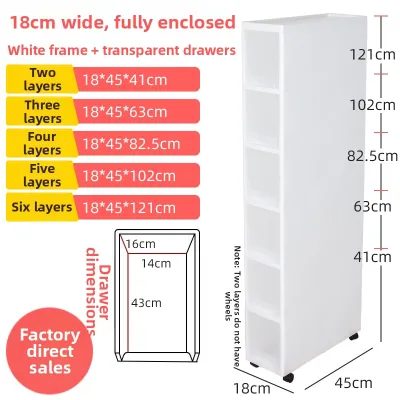
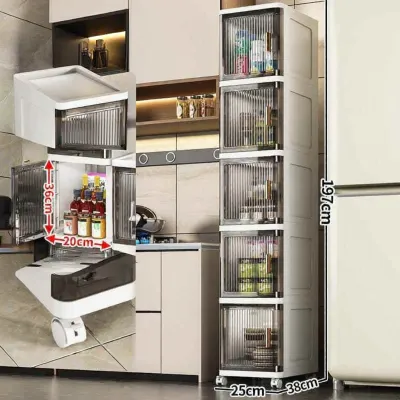
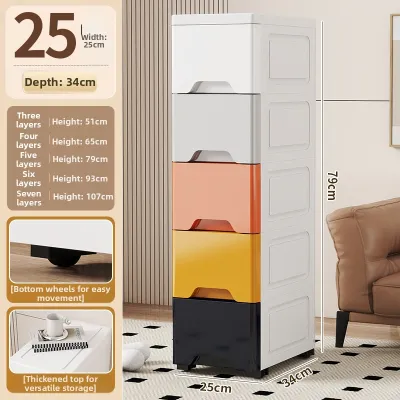
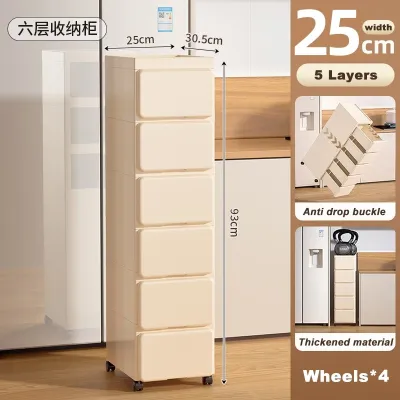
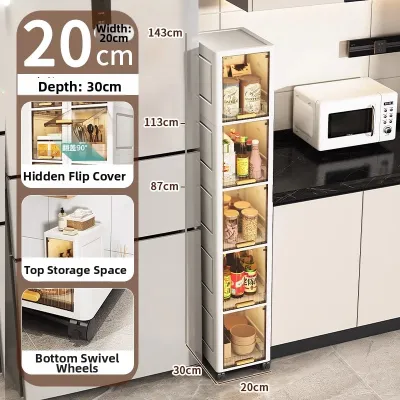
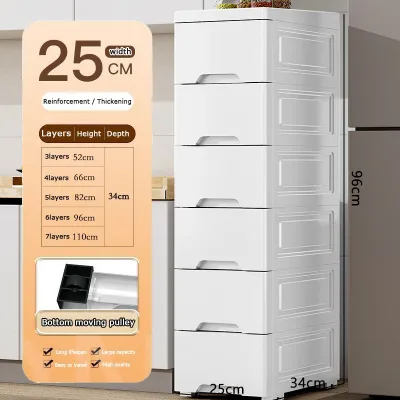
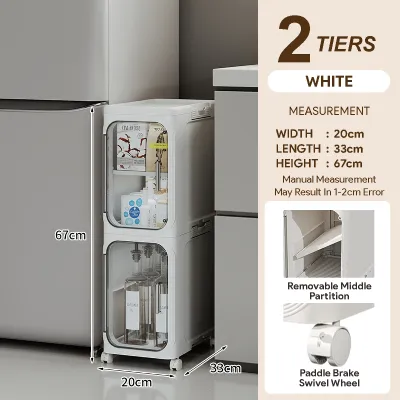
Prices are valid at publication and may change. Please refer to the product page for the latest price.
Skirting boards are another common obstacle that many homeowners overlook. In HDB flats, timber or tiled skirting boards typically protrude 1.5 to 2 centimeters from the wall. If your narrow storage drawer sits directly on the floor, the distance between the skirting board and the opposite surface—not the wall-to-wall distance—defines your true maximum width. Always measure from the innermost edge of the skirting board to get an accurate reading.
Beyond skirting boards, look out for other wall protrusions such as electrical trunking, power outlets, light switches, or door hinges. White plastic casing for electrical wiring is common in local homes and can easily shave a centimeter off your usable width. If any of these fixtures fall within the height range of your planned drawer, subtract their depth from your measurements. The smallest width recorded among all your checkpoints must serve as the absolute maximum width for your new storage drawer.
Matching Drawer Widths to Common Tight Spaces
Placing a narrow storage drawer next to kitchen appliances requires careful consideration of appliance safety and performance. Refrigerators, ovens, and washing machines generate heat and vibration during operation. Most refrigerator manufacturers specify a minimum side clearance—often between 2 to 5 centimeters—to allow for proper heat dissipation and ventilation. Jamming a plastic or wooden drawer tightly against a fridge can cause the appliance to overheat, reducing its efficiency and potentially shortening its lifespan. Always cross-reference your gap width with your appliance manual to ensure you preserve this vital ventilation zone.

In the bedroom, narrow drawers are frequently placed in the tight walkway between the bed frame and the wardrobe or wall. Before choosing a drawer width, calculate the remaining walkway space when the drawer is closed and when it is fully extended. You should be able to walk past the unit comfortably without bumping your shins. Additionally, ensure the placement leaves enough room for you to stand comfortably while making the bed or opening wardrobe doors.
Bathroom configurations in HDB flats present unique spatial challenges due to compact layouts and wet conditions. If you plan to place a slim drawer unit next to bathroom fixtures, verify that its width does not block access to essential plumbing panels, floor traps, or water shut-off valves. The drawer must also sit clear of the vanity cabinet door’s opening arc. Because bathrooms are high-humidity areas, ensure the drawer material is moisture-resistant and that the unit does not trap water against the wall, which can encourage mold growth.
Clearance, Stability, and Safety Checks for Narrow Drawers
A narrow drawer unit is only functional if you can actually open the drawers. Before finalizing your purchase, measure the depth of the gap and ensure there is ample clearance in front of the unit for the drawers to extend fully. If the drawer extends into a main household thoroughfare, such as a hallway or the entrance to the kitchen, an open drawer can create a serious tripping hazard.
Tall, narrow storage units have a high center of gravity and a very small footprint, making them inherently prone to tipping over. This risk increases significantly when multiple drawers are pulled out simultaneously or when heavy items are stored in the upper compartments. Check the manufacturer’s instructions to see if the unit requires anti-tip anchoring. If anchoring is required, verify that you can safely drill into the wall at that specific location without hitting concealed water pipes or electrical wiring.
Hardware protrusions can also cause issues in tight spaces. Drawer handles, knobs, or leather pulls that stick out even a few centimeters can catch on clothing or scratch adjacent surfaces in a narrow walkway. For tight gaps, look for drawer units with integrated recessed handles, cut-out pulls, or push-to-open mechanisms. These designs keep the front profile completely flush, minimizing snagging hazards and maximizing the usable walkway space.
Aligning Depth and Height With Your Specific Zone
While width is the primary constraint, the height and depth of your narrow storage drawer must also align with your specific room layout. If you are looking for under-bed storage, measure the vertical clearance from the floor to the lowest point of the bed frame. If the drawer unit comes with wheels or casters, make sure to include their height in your total calculation. You should also check that your flooring material, whether it is vinyl, laminate, or tile, allows the wheels to roll smoothly without dragging or scratching.
For kitchen and pantry gaps, try to match the depth of the drawer unit to the depth of your existing countertops, which is typically around 60 centimeters. A drawer unit that is too deep will protrude past the counter line, creating an unsightly edge and a physical obstacle in the kitchen. Conversely, a unit that is too shallow wastes valuable storage depth. Ensure the height of the unit does not interfere with overhanging countertops or block the hinges of adjacent upper cabinets.
Finally, evaluate the structural stability and weight capacity limits of the drawer unit before loading it with household items. Slim, tall configurations are best suited for lightweight items like toiletries, pantry packets, or cleaning cloths. If you must store heavier items like canned food, glass bottles, or laundry detergents, always place them in the bottommost drawers. This keeps the center of gravity low, significantly improving the stability of the unit and ensuring safe daily operation.
Frequently Asked Questions (FAQ)
Is it safe to place a narrow storage drawer next to a refrigerator?
It is safe only if you maintain the minimum clearance distances specified in your refrigerator’s user manual. Refrigerators require open space around their sides and back to vent heat efficiently. If you block this airflow with a tightly fitted storage drawer, the refrigerator will work harder to stay cool, which can increase your electricity consumption and wear out the compressor. Additionally, ensure the drawer is positioned so it does not interfere with the refrigerator door’s hinges, handle, or full opening angle.
What should I do if my gap is slightly wider than standard narrow drawers?
If your measured gap falls between standard drawer sizes, look for modular or stackable narrow storage systems that allow you to customize the configuration. Alternatively, you can combine a standard narrow drawer unit with a slim, open-shelving unit to fill the remaining space. Another practical solution is to install a filler panel or a custom spacer to close the gap cleanly, which prevents dust and small items from falling into the hard-to-reach space while keeping the drawer unit securely aligned.

Community discussion
Share your experience or ask a question. Comments are reviewed before publication.