
Finding the right slim drawer cabinet height requires more than a quick glance at your bed. To ensure a proper fit without the cabinet getting stuck or leaving wasted space, you must measure the exact bed frame clearance, account for floor and structural obstacles, and leave adequate operational gaps for smooth sliding. This guide walks you through the precise measuring process and selection criteria to maximize your under-bed storage safely and effectively.
In space-constrained homes, utilizing the void beneath the bed is an excellent way to organize seasonal clothing, extra bedding, or personal items. However, purchasing a slim drawer cabinet without precise measurements often leads to scratched floors or a unit that simply will not slide under the frame. By taking a systematic approach to measuring your bed frame and understanding the physical dynamics of your flooring, you can confidently select a storage solution that slides smoothly and protects your investment.
Step 1: Measure Your Bed Frame Clearance
To find a slim drawer cabinet that fits seamlessly, you must first determine the actual vertical clearance of your bed frame. This is the distance from the floor surface to the lowest structural point of the bed. Many homeowners make the mistake of measuring from the floor to the outer side rail, only to find that support beams or metal brackets underneath block the cabinet.
Products mentioned in this guide
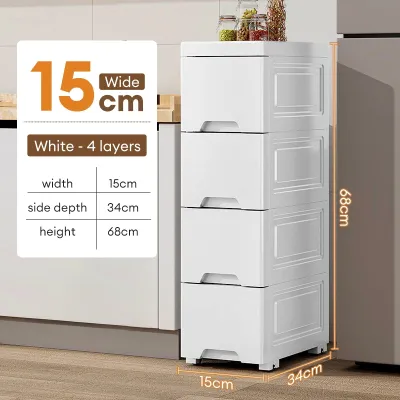
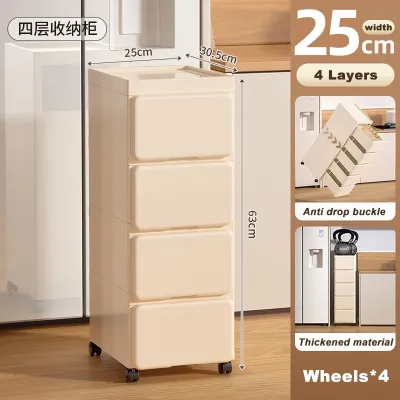
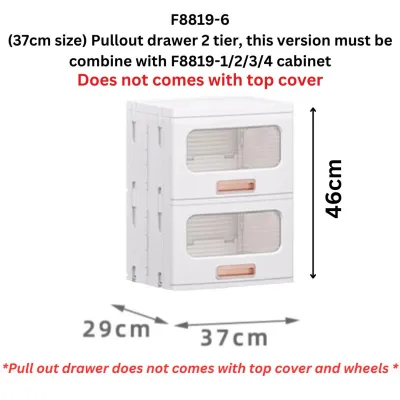

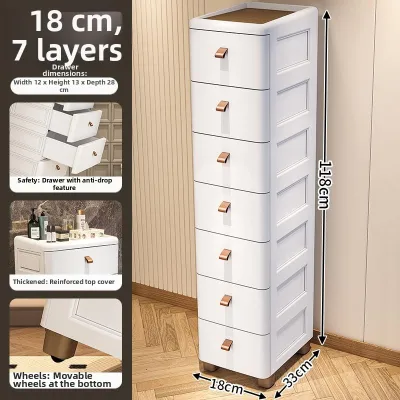
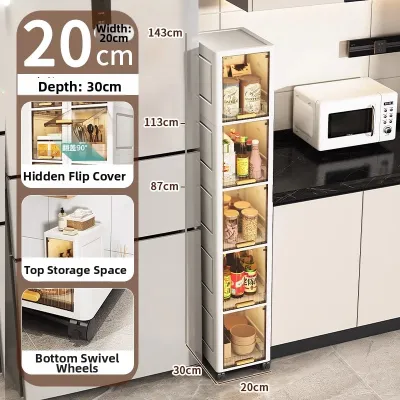
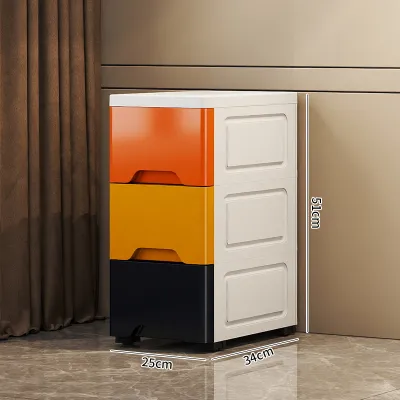
Prices are valid at publication and may change. Please refer to the product page for the latest price.
Begin by identifying the lowest physical components of your bed frame. Look beneath the bed with a flashlight to locate center support rails, hanging brackets, corner joints, or sagging wooden slats. These structural elements often sit several centimeters lower than the outer side panels. If your bed frame has a center support leg, this will also restrict the height and path of any sliding cabinet.
Next, take measurements at multiple points across the entire footprint of the bed. Do not rely on a single measurement at one corner. Floors are rarely completely level, especially across wide rooms. Measure the clearance at all four corners and at several points along the center. If you have a heavy mattress or a slatted base that flexes under weight, have someone sit on the bed while you measure to account for any downward deflection.
Record the absolute minimum clearance height you find during this process. If your measurements range from 18 centimeters at the corners to 16.5 centimeters near the center support beam, your baseline clearance is 16.5 centimeters. Using the absolute minimum ensures that the slim drawer cabinet can slide freely under any part of the bed without scraping the underside of the frame.
Step 2: Account for Floor and Bed Frame Obstacles
Measuring the vertical gap is only the first part of the equation; you must also evaluate the physical path the cabinet will travel. Real-world obstacles on the floor or along the bed frame can significantly reduce the usable height or block the cabinet entirely.

Start by examining the flooring material and any coverings. Thick pile rugs, carpet grippers, or transition strips between different flooring types can obstruct the wheels or base of a slim drawer cabinet. A rug not only raises the floor level, reducing your vertical clearance, but it also creates rolling resistance. If you plan to add a rug in the future, or if your current rug sits partially under the bed, measure the clearance from the top of the rug pile rather than the hard floor.
Next, identify structural obstacles built into the bed frame itself. Many modern bed frames feature center support legs, corner legs, or decorative baseboards that restrict entry. A cabinet might theoretically fit under the side rail but get blocked by a support leg when you try to slide it into its final position. Map out the intended path of the cabinet to ensure it has a clear, unobstructed route from the side of the bed to its storage spot.
Finally, consider potential changes to your room layout or flooring. If you are planning to transition from carpet to vinyl planks, these changes will affect how your cabinet sits and slides. Always measure the space in its current state, but keep future adjustments in mind so your storage solution remains functional over the long term.
Step 3: Select the Ideal Slim Drawer Cabinet Height
Once you have established your minimum clearance and identified potential obstacles, you can calculate the ideal height for your slim drawer cabinet. This step requires balancing maximum storage capacity with smooth, daily operation.
To ensure the cabinet slides without friction, apply the operational gap rule. Subtract a safety margin of at least 1.5 to 2 centimeters from your minimum clearance measurement. For example, if your lowest clearance point is 18 centimeters, the maximum height of your cabinet—including its wheels, casters, and hardware—should not exceed 16 to 16.5 centimeters. This gap accommodates minor floor unevenness, carpet compression, and any slight lifting of the cabinet when you pull it open.
While it is tempting to choose a cabinet that utilizes every millimeter of available height, doing so increases the risk of damage. A cabinet with too little clearance can scrape the bottom of your bed frame, leaving unsightly marks on wood or tearing fabric dust covers. Furthermore, dust, lint, and small debris naturally accumulate under beds; a tiny clearance gap means the cabinet will drag this debris along, potentially scratching your flooring or clogging the cabinet’s wheels.
When comparing cabinet options, always distinguish between exterior dimensions and interior drawer depth. The exterior height determines whether the unit will fit under the bed, while the interior depth determines what you can actually store inside. Slim drawer cabinets made of thick wood or heavy plastics may have robust frames but limited internal storage space. Check the manufacturer’s specifications to ensure the internal capacity meets your needs for items like folded clothes or linens, without requiring you to overstuff the drawer and force it shut.
Common Measuring and Sizing Mistakes to Avoid
Avoiding common pitfalls during the measuring and purchasing process will save you the hassle of returning bulky items or paying return shipping fees that can easily exceed S$20 to S$30 on online marketplaces.
One of the most frequent mistakes is measuring from the bottom of the mattress, mattress topper, or hanging bedding instead of the actual bed frame. Bedding is soft and compressible, but the wooden or metal frame is rigid. If your mattress sags slightly between slats, it can push down on the storage cabinet, preventing it from opening. Always measure to the lowest rigid structural element of the frame itself.
Another common oversight is ignoring the added height of the cabinet’s hardware. Many product listings state the height of the cabinet box itself, excluding the casters, feet, or protruding handles on top. When shopping, verify whether the listed height is the “total height” or just the “body height.” If the wheels or handles are sold separately or require assembly, add their dimensions to the overall height calculation before making a decision.
Lastly, do not forget to measure the horizontal dimensions: width, depth, and the diagonal clearance path. A cabinet might fit seamlessly under the bed vertically, but it may be too wide to slide between the bed legs, or too deep for your bedside table to remain in place. Ensure there is enough clearance in front of the bed to pull the drawer out fully. If your bedroom is narrow, you must have enough floor space to stand and access the drawer comfortably when it is completely extended.
Frequently Asked Questions (FAQ)
Can I use a slim drawer cabinet on a carpeted floor?
Yes, but carpeted floors present unique challenges that affect clearance and ease of movement. Thick carpet pile compresses under the weight of a loaded cabinet, effectively lowering the unit and reducing the clearance gap between the cabinet top and the bed frame. Additionally, standard small plastic wheels can sink into carpet fibers, making the drawer difficult to pull out and potentially damaging the carpet over time. If you have carpet, look for cabinets with larger, wide-tread casters designed for carpet use, or consider placing a low-profile protective mat under the bed to create a smooth sliding surface.
What if my bed frame clearance is too low for standard cabinets?
If your bed frame sits very low to the ground, standard slim drawer cabinets may not fit. One option is to use heavy-duty bed risers to elevate the entire frame, which can add several centimeters of valuable vertical space. However, before using risers, you must verify that your bed frame is structurally compatible and that the risers can safely support the combined weight of the frame, mattress, and sleepers. If risers are not suitable or safe for your bed type, alternative low-profile storage solutions like flexible fabric under-bed bags, vacuum-sealed storage packs, or custom-built low-profile rolling trays are excellent alternatives that conform to tight spaces.

Community discussion
Share your experience or ask a question. Comments are reviewed before publication.