
Fitting a wardrobe into a typical Singapore HDB bedroom requires balancing storage capacity with limited floor space. The key is matching the wardrobe’s external dimensions and door mechanics to your room’s layout, ensuring sufficient clearance to walk, open doors, and access your bed comfortably. By measuring your space accurately and choosing between sliding and swing doors based on your layout, you can maximize utility without making the bedroom feel cramped.
Quick Answer: Sizing Your Wardrobe for an HDB Bedroom
When planning an HDB bedroom layout, the wardrobe footprint must balance storage capacity with comfortable walking clearance. A standard wardrobe depth ranges from 50 cm to 65 cm, which directly impacts the remaining width of your room. If your bedroom is narrow, choosing a deeper wardrobe might restrict your walking path or prevent you from placing a queen-sized bed comfortably.
Freestanding modular units offer flexibility and are generally easier to install or move, making them a practical choice for temporary setups or budget-conscious homeowners. On the other hand, built-in or custom carpentry can maximize vertical space up to the ceiling, though it requires permanent installation and higher upfront costs.
Products mentioned in this guide
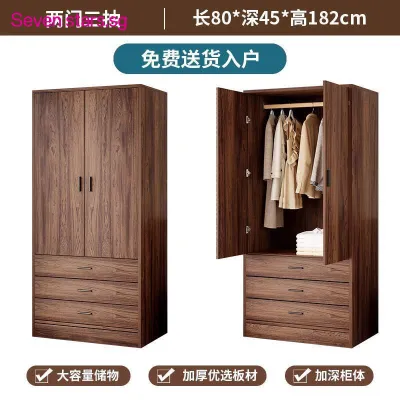
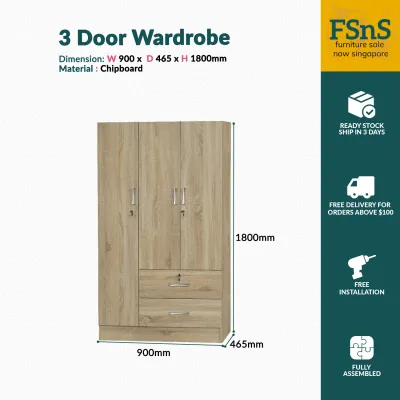
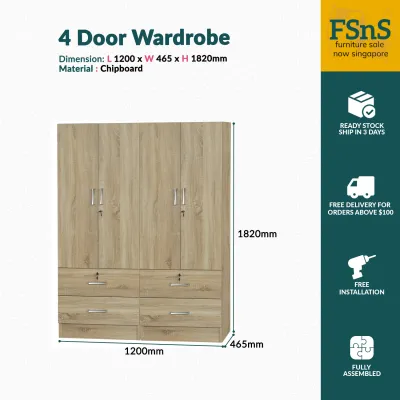
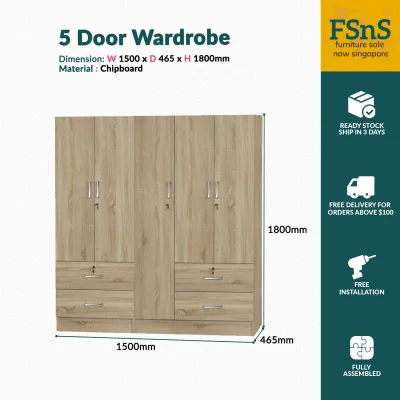
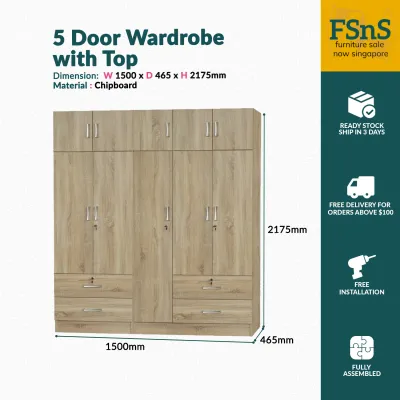
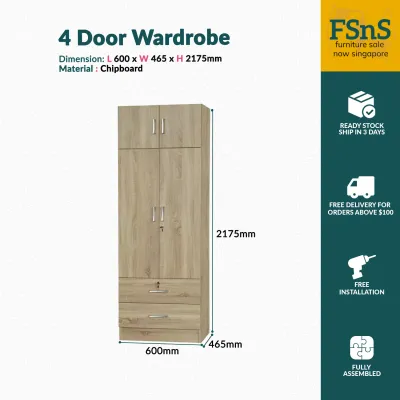
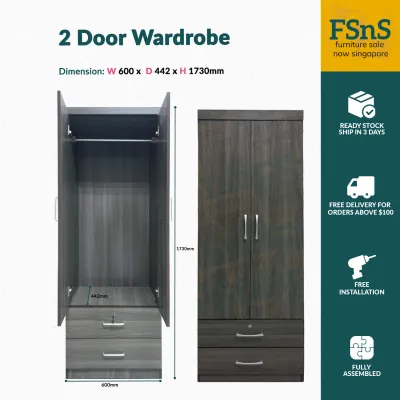
Prices are valid at publication and may change. Please refer to the product page for the latest price.
Before browsing furniture sales, it is beneficial to use online platforms like furnituresale.sg to filter available options by your precise measured dimensions. This helps you narrow down choices to units that physically fit your room’s footprint, saving time and preventing the frustration of purchasing a piece that is too large for your layout.
Step-by-Step Space Measurement for HDB Bedrooms
Accurate spatial measurement is the foundation of a successful wardrobe installation. Begin by measuring the exact floor footprint where you plan to place the wardrobe. Do not rely solely on floor plans; use a physical measuring tape to measure from wall to wall. Account for skirting boards, which can protrude by 1 cm to 2 cm, preventing a freestanding wardrobe from sitting completely flush. Additionally, check if your walls are completely upright, as uneven plastering can affect how a wide wardrobe fits into a tight alcove.

Next, measure the vertical clearance from the floor to the ceiling. Identify overhead obstructions like wall-mounted air-conditioning units, trunking pipes, ceiling fans, and light fixtures. Ensure there is sufficient clearance to access light switches and that the wardrobe does not block air conditioner airflow.
Calculating walking paths is crucial for maintaining a comfortable bedroom flow. Aim for a minimum walking clearance of 60 cm to 70 cm between the wardrobe and other furniture, such as the bed frame. This clearance ensures you can walk past and access your clothes without squeezing.
Finally, verify all door swing radiuses. Measure the swing path of the main bedroom door to ensure it does not collide with the wardrobe. If you are considering swing doors, map out their opening paths to ensure they open fully without striking the bedside table, mattress, or other furniture.
Sliding vs. Swing Doors: Space and Accessibility Trade-offs
Choosing between sliding and swing doors is a critical decision for HDB bedrooms. Swing doors require dedicated clearance in front of the wardrobe to open fully. Typically, you need at least 50 cm to 60 cm of open space in front of the wardrobe to swing the doors open, plus standing room. If your bed is positioned close to the wardrobe, swing doors may hit the mattress or bedside table, restricting access.
Sliding doors are a practical space-saving alternative because they do not require front clearance. However, they come with a spatial cost. Sliding door mechanisms require tracks, which typically consume about 5 cm to 10 cm of the wardrobe’s total external depth. This means a sliding wardrobe with an external depth of 60 cm may only offer an internal storage depth of 50 cm to 55 cm. Additionally, because the door panels overlap, you can never view the entire contents at once; one side is always covered.
Accessibility is another key differentiator. Swing doors allow you to open all compartments simultaneously, providing a full-width view of your entire wardrobe. This is convenient when organizing clothes. Sliding doors restrict you to partial access, requiring you to slide panels back and forth to access different sections.
Long-term maintenance should also influence your choice. Sliding door tracks accumulate dust and lint over time, which can cause the doors to glide unevenly if not cleaned regularly. Swing doors rely on hinges that may require occasional adjustment to maintain proper alignment, but they generally have fewer moving parts and are less prone to track-related obstructions.
Selecting Wardrobe Depth, Width, and Internal Configuration
Selecting the right external dimensions and internal configuration ensures your wardrobe is functional without overwhelming the bedroom’s visual space. For standard hanging garments, an internal depth of at least 55 cm is recommended to prevent hangers and sleeves from getting caught in the doors. If you primarily store folded clothes or accessories, a shallower depth of 40 cm to 45 cm can suffice, saving valuable floor space.
When evaluating modular wardrobes, look at the available width increments. Many modular systems are sold in standard widths, such as 50 cm, 100 cm, or 150 cm. Measure your available wall space carefully to see which combination of modules fits best. Leaving a small gap of 5 cm to 10 cm on either side can make installation easier and allow room for wall irregularities, whereas a tight fit might require custom filler panels.
The internal layout should be customized to your specific wardrobe needs and the room’s proportions. If you have limited floor space for a separate chest of drawers, integrate internal drawers directly into the wardrobe. Balance the ratio of hanging rods, shelving, and drawers based on your clothing collection. For instance, maximizing vertical hanging space is ideal for long garments, while adjustable shelving offers flexibility for folded items.
To prevent a large wardrobe from dominating a small bedroom visually, consider design elements that minimize its perceived bulk. Opting for light colors, such as white or light wood tones, helps the wardrobe blend into the walls. Incorporating mirrored doors can make the bedroom feel larger by reflecting light. Additionally, handle-less designs or integrated flush pulls create clean, uninterrupted lines that contribute to a spacious aesthetic.
Pre-Purchase Logistics and HDB Installation Checks
Before finalizing your purchase, plan for the logistics of delivery and installation within an HDB estate. Large wardrobe components, especially tall side panels, must fit through HDB lift doors and corridor turning radiuses. Measure your lift’s entrance height and internal depth, as well as any tight corners in your corridor, to ensure the delivery team can safely transport the packages to your unit.
Securing your wardrobe is a critical safety step, particularly for tall freestanding units. Identify the wall type in your bedroom to determine the correct anchoring hardware. Most HDB partition walls are made of drywall or lightweight concrete blocks, which require specialized wall plugs. Structural walls are typically solid concrete and require masonry drills and heavy-duty wall plugs. Always use the manufacturer-provided anti-tip kits to secure the wardrobe firmly to the wall.
HDB floors, especially in older estates, may not be completely level. An uneven floor can cause wardrobe doors to misalign, slide open on their own, or put stress on the joints. Check the floor level using a spirit level before assembly. If the floor is uneven, plan to use adjustable leveling feet or plastic shims under the base of the wardrobe to ensure the unit stands completely upright.
Finally, review the manufacturer’s assembly instructions to decide between DIY assembly and professional installation. While flat-pack wardrobes can be assembled as a DIY project, larger configurations or sliding door systems often require two people and specialized tools. Professional installation services, often available when purchasing through platforms like furnituresale.sg, ensure the wardrobe is assembled correctly, aligned properly, and safely anchored.
Frequently Asked Questions (FAQ)
Can I place a wardrobe in front of an HDB bedroom window?
Placing a wardrobe directly in front of an HDB bedroom window is generally not recommended. Doing so blocks natural light and restricts cross-ventilation, making the bedroom feel dark and stuffy. Furthermore, blocking a window increases the risk of moisture buildup and condensation behind the wardrobe, especially during humid rainy seasons. This trapped moisture can lead to mold growth on both the wall and the back panel of the wardrobe, potentially damaging your clothes. If you must place storage near a window, opt for low-profile chests of drawers or open shelving units that sit below the windowsill to preserve airflow.
Is it mandatory to anchor a freestanding wardrobe to the wall in Singapore?
While there is no specific law making it legally mandatory for homeowners, anchoring a tall freestanding wardrobe to the wall is strongly recommended as a critical safety practice. Tall, narrow, or heavily loaded wardrobes pose a significant tip-over risk, especially when multiple drawers are pulled out simultaneously. To secure the unit safely, identify whether your wall is solid concrete or drywall, and use the appropriate wall plugs and brackets. If you are unsure about the wall type or lack the necessary tools, it is best to hire a professional installer to handle the anchoring securely.

Community discussion
Share your experience or ask a question. Comments are reviewed before publication.