
Finding the right shoe rack cover is not as simple as matching a “6-tier” label on a box. While tier capacity gives you a starting point, actual furniture dimensions vary significantly across different brands and designs. A cover that is too small will strain the zippers and tear at the seams, while one that is too large will sag, pool on the floor, and create a messy appearance. To protect your footwear from dust, pests, and tropical humidity, you need a cover that aligns perfectly with your rack’s physical dimensions.
Why Tier Capacity Dictates Your Cover Dimensions
When you shop for a shoe rack, the capacity is usually advertised by the number of tiers—such as 4-tier, 6-tier, or 8-tier—or by the total number of pairs it can hold. This capacity directly influences the height of the frame. However, height is only one part of the sizing equation. The width and depth of the rack are determined by how many pairs of shoes are meant to sit side-by-side on each shelf and the average size of those shoes.
Relying solely on the tier count to buy a cover often leads to a mismatch. For example, a compact 4-tier rack designed for narrow entryways might only hold eight pairs of shoes, while a wide 4-tier rack could easily accommodate sixteen pairs. The wider rack requires a cover with significantly more horizontal fabric. Similarly, deep shelves designed for large athletic shoes or high heels demand extra depth clearance compared to slim racks built for flat sandals or slippers.
Products mentioned in this guide
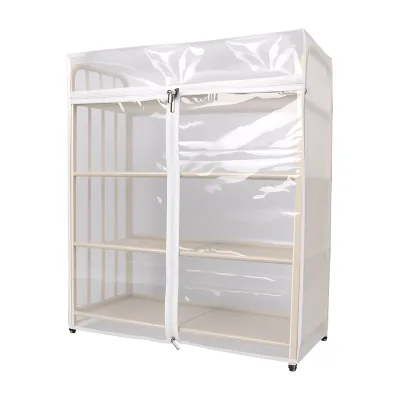
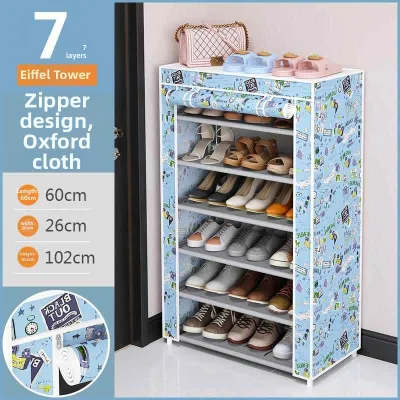
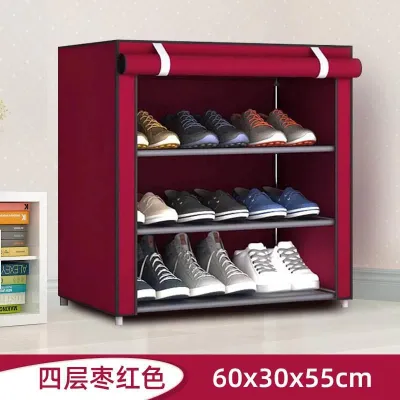
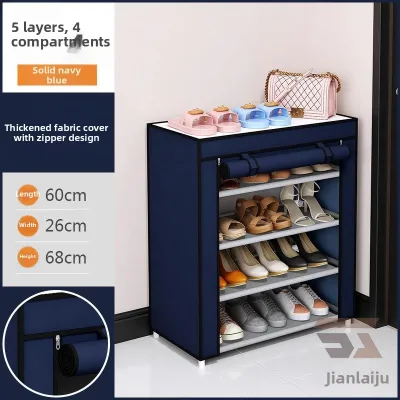
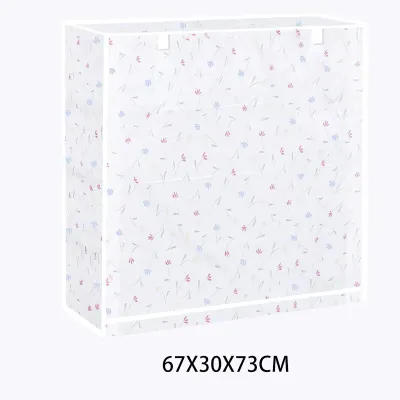
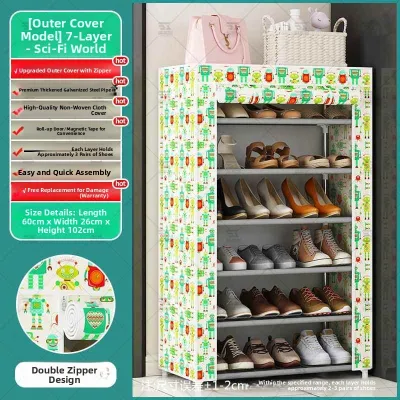
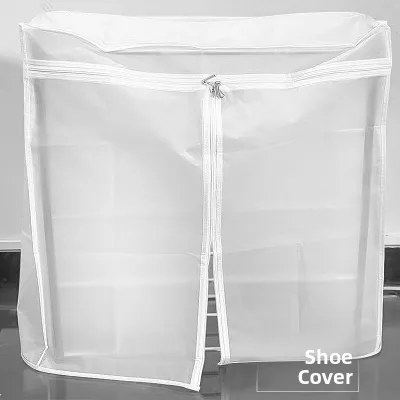
Prices are valid at publication and may change. Please refer to the product page for the latest price.
A proper cover does more than just hide clutter; it provides a full enclosure that seals out dust, deters curious pets, and keeps your living space looking tidy. In space-constrained homes, such as apartments and HDB flats, an open shoe rack can quickly become a visual distraction. A well-fitted cover creates a clean, minimalist exterior while keeping your footwear clean and ready to wear.
How to Measure Your Shoe Rack for a Perfect Fit
To find a cover that fits like a glove, you must take precise measurements of your shoe rack’s outer frame rather than relying on the manufacturer’s listed shelf dimensions. Grab a reliable measuring tape and record three essential dimensions: height, width, and depth.

First, measure the height from the very top of the frame down to the lowest point you want the cover to reach. If your rack has wheels or high decorative legs, decide whether you want the cover to drape all the way to the floor or stop just above the wheels to prevent the fabric from getting caught. Next, measure the width from the outermost edge of the left frame to the outermost edge of the right frame. Finally, measure the depth from the back of the frame to the front edge. It is crucial to measure the depth with shoes actually placed on the shelves, as bulky sneakers or heels often overhang the edge of the shelf, adding extra centimeters to the required depth.
Once you have these exact measurements, do not buy a cover with identical dimensions. You must add a small allowance for material thickness, frame joints, and zipper clearance. Adding 1.5 to 2 centimeters of wiggle room to the width and depth ensures that you can slide the cover on and off easily without tearing the seams. It also prevents the fabric from pulling too tight, which can cause zippers to split or fail prematurely.
In addition to measuring the furniture itself, assess the surrounding space where the shoe rack will stand. If you plan to place the rack in a narrow corridor, near a front door, or inside a tight entryway, measure the clearance around it. Ensure there is enough room to open the cover’s front flaps or unzip the panels without blocking foot traffic or hitting adjacent walls. If you live in an apartment with strict corridor guidelines, a bulky, poorly fitted cover that juts out can become an obstruction.
Pay close attention to the base of your rack. If your unit is equipped with casters for mobility, a cover that hangs too low will drag on the ground and interfere with the wheels. For mobile racks, select a cover that stops approximately 2 to 3 centimeters above the floor. If your rack sits flat on the ground and you want complete dust protection, choose a cover that extends fully to the floor, ensuring a tight seal at the bottom.
Matching Cover Sizes to Common Tier Capacities
While dimensions vary, shoe racks generally fall into standard size categories based on their tier capacity. Understanding these structural groupings helps narrow down your search for the right cover.
4-Tier and Compact Racks
Compact 4-tier racks are popular for small households, entryways, and under-window placements. Covers for these models are low-profile, typically ranging from 60 to 80 centimeters in height. When choosing a cover for a compact rack, the primary goal is to avoid excess fabric pooling on the floor. Loose, sagging material not only looks untidy but also presents a tripping hazard in busy entryways.
Width is the main variable to watch with 4-tier racks. A slim, two-pair-per-tier model requires a narrow cover of about 50 to 60 centimeters in width. In contrast, a wider four-pair-per-tier model will need a cover stretching 80 to 90 centimeters wide. Always verify the width of your specific model before purchasing, as a cover designed for a wide 4-tier rack will look incredibly sloppy on a narrow one.
6-Tier and Standard Racks
Standing at a mid-height of approximately 100 to 120 centimeters, 6-tier racks are the standard choice for average families. At this height, the weight of the cover material becomes a significant factor. Heavy fabrics like thick canvas or Oxford cloth can sag if the cover is too loose, putting downward pressure on the top corners of the rack.
To maintain structural stability and keep the rack looking neat, look for covers that feature internal ties or Velcro straps. These allow you to secure the cover directly to the frame poles, preventing the fabric from shifting or sliding down. Additionally, since a 6-tier rack holds a substantial number of shoes, look for covers with roll-up front doors or mid-height zippers. These features allow you to access the middle and lower shelves easily without needing to unzip and lift the entire cover every time you grab a pair of shoes.
8-Tier and High-Capacity Racks
High-capacity 8-tier racks are tall, vertical storage units that often exceed 140 centimeters in height. Because of their height, these racks can be top-heavy and prone to swaying if not balanced correctly. The cover you choose must not add unnecessary weight or pull unevenly on the frame.
For these tall units, look for covers with reinforced top panels or tensioned seams that distribute the weight of the fabric evenly across the top frame. The cover must also accommodate the wider and deeper bases often engineered into high-capacity racks to prevent tipping. If your tall rack is anchored to the wall for safety, ensure the cover has open back sections or flexible slits that allow the wall brackets to pass through without compromising the fit or leaving large gaps.
Accounting for Clearance, Access, and Placement
Choosing the right cover size is not just about matching the static dimensions of your shoe rack; you must also consider how the cover functions in your daily routine and physical environment.
Evaluate how the cover opens and closes. Most covers feature front flaps that roll up and secure at the top with straps or Velcro. Ensure that you have enough vertical clearance above the rack to roll the flap up comfortably. If your rack is tucked under a low shelf or a wall-mounted coat rack, a roll-up flap might be difficult to secure. In such cases, a cover with side-zippers that fold back like a curtain may be a more practical choice.
Wall proximity is another critical factor. If your shoe rack sits flush against a wall, a cover that requires you to reach behind to tie straps or buckle fasteners will be highly inconvenient. Look for designs that secure entirely from the front or sides. Furthermore, make sure the added bulk of the cover—especially thick seams or heavy zippers—does not obstruct nearby door swings, baseboards, or narrow walkways. Even a few extra centimeters of fabric bulk can cause a door to scrape against the cover every time it opens.
In humid climates, such as Singapore’s tropical environment, proper airflow is essential to prevent moisture buildup, mold, and unpleasant odors inside your shoe storage. A completely sealed, non-breathable plastic cover can trap humidity, creating an ideal breeding ground for mildew on leather and canvas shoes. To prevent this, choose a cover made from breathable materials like non-woven fabric or Oxford cloth, or look for models that feature mesh ventilation panels on the sides. Selecting a size that is slightly loose—rather than skin-tight—also promotes natural air circulation around your footwear.
Common Sizing Mistakes and How to Avoid Them
Avoiding common pitfalls during the selection process will save you the hassle of returns and ensure your shoes remain well-protected.
The most frequent mistake is purchasing an “exact fit” cover. If your shoe rack measures exactly 80 centimeters wide, buying a cover labeled exactly 80 centimeters wide is a recipe for frustration. Plastic corner connectors, metal frame joints, and screw heads often protrude slightly beyond the poles, making the frame wider than the shelves. A tight cover will put immense pressure on these friction points, leading to rapid wear, torn fabric, and broken zippers. Always allow a buffer of 1.5 to 2 centimeters.
Another common error is ignoring the depth of your shoes. Many people measure the depth of the empty rack frame but forget that adult shoes, especially athletic sneakers or men’s formal shoes, often overhang the front edge of the shelf by several centimeters. If you buy a cover based strictly on the frame depth, you will find that the front flap cannot close or zip shut once your shoes are on the rack. Always measure the depth with your largest shoes in place.
Lastly, do not overlook the height of the rack’s feet or base. Standard covers are designed for flat-bottomed racks. If your rack has high legs to allow for cleaning underneath, a standard cover might hang too low, dragging on the floor and collecting dust, or it might sit too high, leaving the bottom tier completely exposed.
Before making your final purchase, perform a quick verification check. Compare the manufacturer’s specified internal dimensions of the cover against your measured external dimensions of the rack (including shoe overhang). If the cover’s inner dimensions are smaller than or equal to your rack’s outer measurements, choose the next size up.
Frequently Asked Questions (FAQ)
Can I use a slightly larger cover for a smaller shoe rack?
Yes, you can use a slightly larger cover, and it is often easier to slide over the frame. However, excess material will pool on the floor, which can look untidy and create a tripping hazard. If you must use a larger cover, secure the excess fabric at the back or sides using safety pins, fabric clips, or elastic bands to keep it taut and off the floor.
Do shoe rack covers usually include a bottom panel?
Most standard shoe rack covers do not include a bottom panel; they are designed with an open bottom so you can easily slide them over the top of the rack. However, some premium, fully enclosed models feature a detachable floor mat or a zippered bottom panel. These fully enclosed designs offer superior protection against dust and pests but require more effort to assemble and clean.

Community discussion
Share your experience or ask a question. Comments are reviewed before publication.