
Selecting the right MUJI bookshelf for your HDB room is a balancing act between minimalist aesthetics and the physical realities of Singapore’s residential layouts. Because HDB bedrooms and living areas often feature compact footprints, structural columns, and fixed fixtures, choosing a bookcase requires careful spatial planning rather than visual guesswork. To find the ideal fit, you must systematically measure your room’s footprint, verify the exact specifications of the shelving unit, plan for delivery access, and prepare for secure installation. By taking these practical steps, you can ensure your new storage unit enhances your home without making the space feel cramped or unsafe.
Measure Your HDB Room for Bookshelf Placement
Before browsing any furniture catalog, you must establish the precise boundaries of your available floor and wall space. Start by measuring the exact width and depth of the floor area where you intend to place the bookshelf. It is crucial to measure along the floor itself rather than higher up the wall, as skirting boards can reduce the usable floor width by several centimeters. Additionally, take note of any wall-mounted obstacles such as power outlets, light switches, internet ports, and air-conditioning trunking, all of which can prevent a flat-backed bookshelf from sitting flush against the wall.
Next, calculate the necessary clearance zones around the proposed bookshelf location to maintain a functional room layout. A bookshelf should never obstruct the natural flow of traffic or block access to other essential furniture. Measure the swing arcs of bedroom doors, wardrobe doors, and windows to ensure they can open fully without striking the unit. If the bookshelf is placed near a bed, leave sufficient clearance for walking and making the bed comfortably, keeping in mind that a cramped layout can make a small HDB room feel significantly smaller.
Products mentioned in this guide
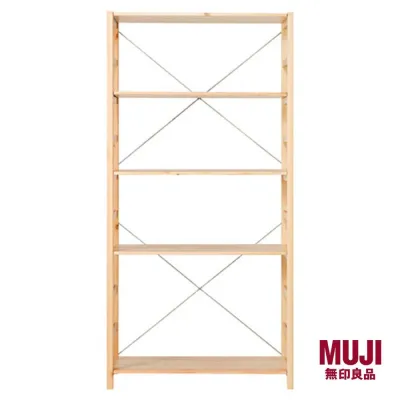
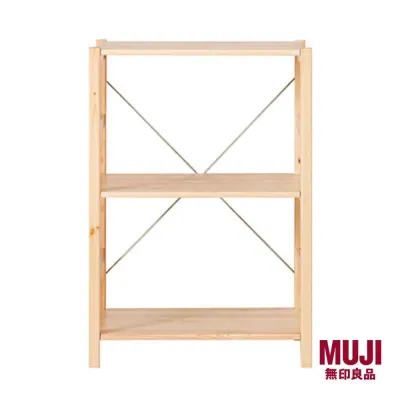
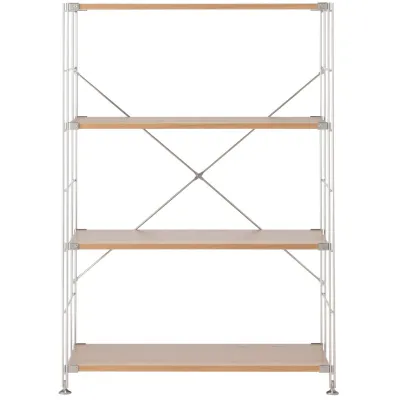
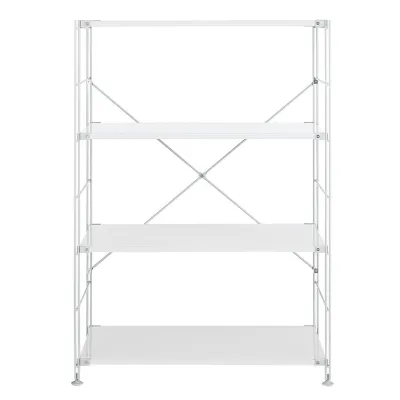
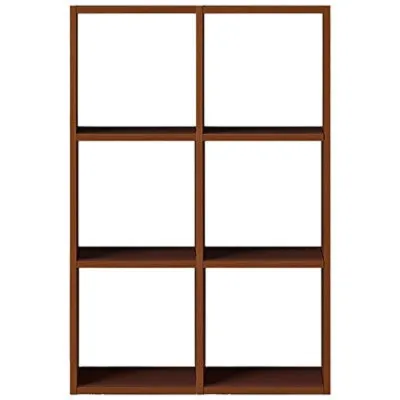
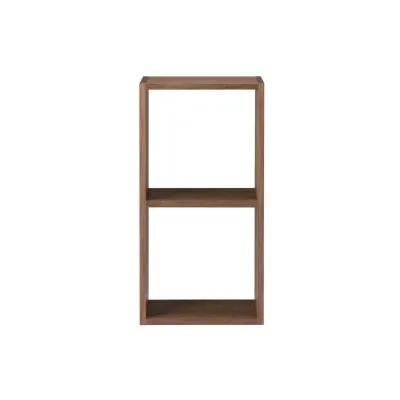
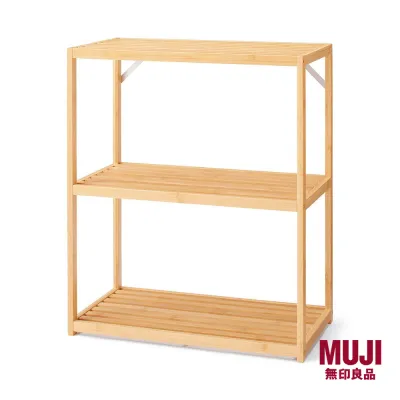
Prices are valid at publication and may change. Please refer to the product page for the latest price.
Vertical space requires equally careful evaluation, especially in newer HDB flats with standard ceiling heights. Measure the distance from the floor to the ceiling, and identify any overhead obstructions that could interfere with a tall shelving unit. Ceiling fans, light fixtures, curtain tracks, and wall-mounted air-conditioning units all impose strict height limits. Ensuring a safe distance between the top of the bookshelf and these fixtures prevents accidental damage and allows for adequate air circulation throughout the room.
Match MUJI Bookshelf Dimensions to Your Space
Once you have your room measurements, you can begin comparing them against official product specifications. Rather than relying on visual estimates from showroom displays or generic category names, always refer to the official product labels, tags, or manufacturer specification sheets. Showrooms are designed with high ceilings and open layouts that can make large furniture pieces appear smaller than they actually are. Verifying the exact width, height, and depth in millimeters ensures that the unit will physically fit into your designated alcove or wall space.

When planning the placement, remember to factor in top and side clearances rather than trying to fit the bookshelf perfectly flush into a tight space. Leaving a small gap on either side of the unit makes installation much easier and allows for future room reconfigurations. It also ensures that you can easily retrieve items stored on the outermost edges of the shelves. If you plan to place decorative items or storage boxes on the very top shelf, ensure there is enough vertical clearance between the top of the unit and the ceiling to access those items comfortably.
The depth of the bookshelf is another critical dimension that affects both functionality and room proportion. Standard books, binders, and decorative storage boxes require different shelf depths, so you should check that the internal shelf dimensions match your intended storage needs. A shelf that is too shallow will cause books to overhang, while a shelf that is too deep will unnecessarily consume valuable floor space. In a narrow HDB study or bedroom, choosing a shallower unit helps preserve precious floor area and keeps the room looking balanced and open.
Navigate HDB Access and Assembly Constraints
A common oversight when purchasing furniture is failing to consider how the item will travel from the delivery truck to its final position inside your home. To avoid delivery failures, you must measure the narrowest points of the journey through your building. This includes the width and height of the corridor, the lift lobby, the lift doors, and the interior of the lift cabin itself. Do not forget to measure your HDB flat’s main entrance door and any internal hallway doors that the furniture must pass through.
Once you have these access measurements, compare them directly against the packaging dimensions of the bookshelf, which are typically listed on the manufacturer’s website or product tags. Even if a bookshelf is sold flat-packed, the individual boxes can be exceptionally long or heavy, making them difficult to maneuver around tight corridor corners or inside small passenger lifts. If the packaged unit exceeds the clearance of your building’s lift or doorways, you may need to arrange for alternative delivery methods or select a different product size.
Additionally, you must ensure that the room where the bookshelf will be installed has enough unobstructed floor space for assembly. Flat-packed wooden shelving units require a clean, flat surface where you can safely lay out all the panels, shelves, and hardware. Assembling a large unit in a cramped space increases the risk of scratching the furniture or damaging your room’s walls and flooring. Clear out portable furniture and lay down protective cardboard or blankets to create a safe, spacious assembly zone before the delivery arrives.
Secure Tall Bookshelves Safely in HDB Flats
Ensuring the structural safety of your bookshelf is paramount, particularly when dealing with tall or top-heavy configurations. Any shelving unit that exceeds a certain height poses a potential tipping hazard if it is overloaded, unevenly loaded, or subjected to accidental pulling. This risk is significantly higher in households with young children or pets who might attempt to climb the shelves. To mitigate this, always plan to distribute weight evenly, placing heavier items like encyclopedias and photo albums on the bottom shelves to lower the unit’s center of gravity.
To secure a tall bookshelf permanently, you must identify the specific wall material in your HDB flat to select compatible anti-tip brackets and wall anchors. HDB walls are typically constructed from reinforced concrete, precast concrete panels, or lightweight drywall partitions, and each material requires a distinct fixing method. For instance, solid concrete walls require heavy-duty masonry wall plugs and a hammer drill, whereas drywall partitions require specialized hollow-wall anchors to grip the wall board securely. Using the wrong type of anchor can result in a weak connection that fails under tension.
Always follow the manufacturer’s official installation instructions regarding wall anchoring and safety hardware. If you are unsure about your wall’s material, or if you lack the specialized tools required to drill into tough HDB concrete, it is highly recommended to consult a qualified professional handyman or installation service. Properly securing the unit not only protects your household from accidents but also ensures the long-term stability and alignment of your shelving system.
Frequently Asked Questions (FAQ)
Can I combine multiple MUJI bookshelves in a small HDB bedroom?
Yes, you can combine multiple units to create a customized storage system, provided you plan the layout carefully. When placing units side-by-side, calculate the combined total width and ensure it does not block access to power outlets, light switches, or window handles. If you plan to stack units vertically to maximize your room’s height, you must use the manufacturer’s official, approved connecting hardware and strictly adhere to the specified weight limits. Never stack units that are not explicitly designed to be modular, as this can compromise structural integrity and safety.
Do I need to drill into HDB walls to secure a tall bookshelf?
Yes, drilling into the wall to install anti-tip brackets is highly recommended for any tall or top-heavy bookshelf to prevent tipping hazards. Because HDB flats often have solid concrete walls, you will need a hammer drill and appropriate masonry wall plugs to create a secure anchor point. If you are renting your flat or are restricted from drilling, you should opt for lower, wider shelving units that have a naturally stable center of gravity and do not require wall anchoring to remain safe.

Community discussion
Share your experience or ask a question. Comments are reviewed before publication.