
Integrating premium hardware like Blum into your custom kitchen cabinet design requires a systematic approach that bridges design intent with precise technical execution. To achieve a seamless fit, you must map out your kitchen’s functional zones, specify the correct runner and hinge models based on your storage loads, and coordinate closely with your cabinet maker using official technical templates. In space-constrained homes, such as Singapore’s HDB flats and condominiums, maximizing every millimeter is essential, making specialized narrow pull-outs and corner systems a vital part of the planning process.
Planning Your Cabinet Layout and Hardware Requirements
Designing an efficient kitchen layout begins with mapping your daily workflow into distinct functional zones. A standard kitchen layout typically features zones for consumables, non-consumables, cleaning, preparation, and cooking. By aligning your hardware choices with these zones, you ensure that items are stored exactly where they are used. For example, the preparation zone benefits from wide, easily accessible drawers for utensils, while the cooking zone requires deep, heavy-duty drawers directly beneath the hob to house pots and pans.
Evaluating your available space helps determine where to use standard drawer configurations versus specialized pull-out systems. While wide drawers maximize horizontal storage, compact kitchens often leave narrow, underutilized gaps near appliances or structural pillars. Identifying these tight spaces early in the design phase allows you to plan for narrow pull-out units that turn awkward gaps into highly functional storage zones.
Products mentioned in this guide


Prices are valid at publication and may change. Please refer to the product page for the latest price.
Before finalizing your layout, you must check the structural prerequisites of your cabinet carcasses to support heavy-duty drawer systems. High-load drawers require robust carcass materials and secure anchoring to prevent sagging or tipping over time. While plywood is a popular choice for custom cabinetry in humid tropical climates, its structural performance depends heavily on the quality of the core layers, the thickness of the panels, and the sealing of the edges. Ensure your cabinet maker uses panels of sufficient thickness, typically at least 18mm, to provide a secure bite for the hardware mounting screws.
Additionally, consider the physical delivery and assembly constraints of your home. If you are planning tall pantry units, such as the Space Tower system, verify that the pre-assembled cabinet carcasses can fit through your doorways, corridors, and lift access points. Measuring these clearances beforehand prevents costly on-site modifications during the installation phase.
Specifying Blum Drawer Systems and Hinges
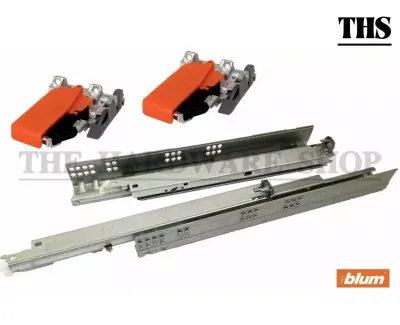
Selecting the right drawer boxes and runner systems requires matching the drawer side heights and load capacities to the specific items you plan to store. Shallow drawers with low side profiles are ideal for cutlery and spice jars, whereas deep drawers require high side profiles or gallery rails to prevent tall items from tipping over. You must also select runners with appropriate weight ratings; standard runners are typically rated for loads up to 30kg, while heavy-duty storage for cast-iron cookware or small appliances may require runners rated for 70kg. Remember that these weight ratings must account for the weight of the drawer box itself, not just the contents.

For cabinet doors, choosing the correct hinge mechanism is essential for long-term durability and smooth operation. Standard hinges are suitable for basic applications, but doors equipped with integrated soft-close mechanisms (such as Clip Top Blumotion) provide a quiet, controlled closing action that protects both the door and the cabinet frame. The weight and height of the door dictate the number of hinges required; taller or heavier doors, such as those finished with thick laminates or glass inserts, require additional hinge points to distribute the load evenly and prevent warping.
Verifying internal cabinet clearances is a critical step that must be completed before fabrication begins. Every runner system, whether concealed beneath the drawer or integrated into metal drawer sides, requires specific internal cabinet widths, depths, and heights to function correctly. For example, full-extension runners require a minimum installation depth that must be verified against the overall depth of your custom carcass, taking into account any plumbing pipes, electrical conduits, or gas lines running behind the cabinetry.
Incorporating Blum Twin Space and Narrow Pull-Outs
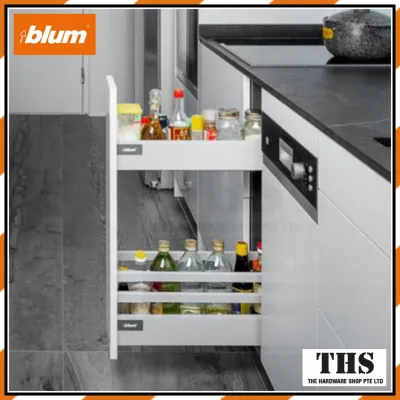
Awkward gaps of 150mm to 200mm next to ovens, sinks, or refrigerators are common design challenges in custom kitchens. Instead of covering these gaps with non-functional filler panels, you can integrate narrow pull-out systems, often referred to as twin space or Space Twin solutions. These specialized systems utilize diagonally offset runners to maximize the internal width of the drawer, allowing you to store baking trays, spice bottles, or cleaning supplies in spaces that would otherwise be wasted.
When planning these narrow pull-outs, you must carefully check the manufacturer’s technical specifications for minimum and maximum width constraints. A standard narrow pull-out typically requires a minimum internal cabinet width of 112mm to accommodate the runner hardware and the drawer sides safely. Ensuring your cabinet maker adheres strictly to these dimensional tolerances prevents the drawer from scraping against the carcass sides during operation.
Corner cabinets represent another area where space is frequently underutilized. To maximize these deep zones without compromising structural stability, consider specialized corner drawer systems or diagonal pull-outs. These systems allow you to pull the contents of the corner cabinet directly out into the room, eliminating the need to reach deep into dark corners. When designing corner solutions, ensure that the surrounding drawer fronts and handles have sufficient clearance to open fully without colliding with adjacent cabinets.
Commissioning and Communicating with Your Cabinet Maker
Clear communication with your carpenter, interior designer, or cabinet manufacturer is vital to ensure your hardware is integrated correctly. Do not rely on verbal agreements or generic descriptions like “soft-close drawers” in your renovation contract. Instead, specify the exact Blum product lines, runner types, and hinge models you want, and include these details in your written agreement.
To assist your cabinet maker, supply them with the official technical drawings, drilling patterns, and installation templates for the specific hardware models you have selected. These documents provide the exact dimensions for screw placements, runner positions, and front-panel drilling. Experienced cabinet makers will utilize specialized assembly devices and drilling jigs to ensure the hardware is mounted with absolute precision.
Confirm who is responsible for purchasing the hardware and verifying its authenticity. In some cases, homeowners prefer to purchase authentic hardware directly from authorized local distributors to ensure they receive genuine products backed by the manufacturer’s warranty. If your cabinet maker is sourcing the hardware, inspect the delivered components to ensure they bear the official brand markings and logos, protecting your investment from counterfeit or lower-grade alternatives.
Installation Checks and Final Verification
Once your custom cabinets are assembled and installed, conduct a thorough physical inspection to verify that all hardware is functioning smoothly. Begin by testing the drawer runner systems under load. Fully extend each drawer to ensure it glides smoothly without resistance, and check that the soft-close mechanism engages gently, pulling the drawer to a silent, complete close without bouncing back.
Next, inspect the alignment of all cabinet doors and drawer fronts. High-quality hinges feature three-dimensional adjustment screws that allow you to fine-tune the height, side-to-side position, and depth of the doors. Use these adjustment points to ensure that the gaps between all doors and drawer fronts are perfectly even, straight, and consistent across the entire kitchen run.
Finally, watch for common installation errors that can compromise the performance of your hardware. Check that the cabinet carcasses are perfectly level and plumb; if a cabinet is tilted, drawers may drift open or closed on their own. Ensure that mounting screws are driven straight and sit flush within the hardware brackets, as protruding screw heads can interfere with the smooth movement of the runners. If you notice any scraping sounds, resistance, or misalignment, request that your installer recalibrate the hardware before signing off on the project.
Frequently Asked Questions (FAQ)
Can I retrofit Blum hardware into my existing kitchen cabinets? (FAQ)
Retrofitting premium hardware into existing cabinetry is possible, but it depends heavily on the structural integrity and dimensions of your current cabinet boxes. You must measure the internal width, depth, and height of your existing carcasses with extreme precision, as modern runner systems require strict dimensional tolerances to operate smoothly. If your existing cabinets are made of sagging, water-damaged, or low-density particleboard, the wood may not hold new mounting screws securely. In such cases, replacing the entire cabinet carcass is recommended to ensure the hardware performs reliably and safely.
Do Blum drawer systems require special maintenance? (FAQ)
These drawer systems are engineered to be maintenance-free, but keeping the moving parts clean is essential for long-term performance. Regularly wipe the metal drawer sides and runner tracks with a soft, damp cloth to remove dust, crumbs, and kitchen grime, then dry them thoroughly. Avoid using harsh chemical cleaners, abrasive scrubbing pads, or liquid lubricants like WD-40 on the runner tracks, as these substances can strip the factory-applied grease and attract dirt, which will eventually degrade the smooth gliding action. If a drawer becomes misaligned over time due to heavy daily use, simply use the integrated adjustment dials located under or inside the drawer profile to restore perfect alignment.

Community discussion
Share your experience or ask a question. Comments are reviewed before publication.