
Finding the right Krafter mattress firmness is a highly personal decision that depends on aligning your primary sleeping position, body weight, and individual comfort preferences with the brand’s available support tiers. While firmness often feels subjective, selecting the correct level is actually a matter of physical mechanics and spinal alignment. By systematically assessing how your body interacts with a sleeping surface, you can confidently identify the ideal model to support your sleep health.
This self-diagnosis guide walks you through the essential steps to evaluate your physical needs, decode official product specifications, and verify your choice. Taking the time to analyze these factors before purchasing ensures your new bed provides the exact balance of pressure relief and structural support your body requires.
Assess Your Primary Sleeping Position for Spinal Alignment
Your dominant sleeping posture is the most critical factor in determining how much your mattress needs to contour or resist your body weight. The primary goal of any mattress is to keep your spine in a neutral, straight alignment from your neck down to your lower back. When a mattress is too hard or too soft for your position, it forces your muscles to work overnight, leading to morning stiffness and chronic discomfort.
Products mentioned in this guide
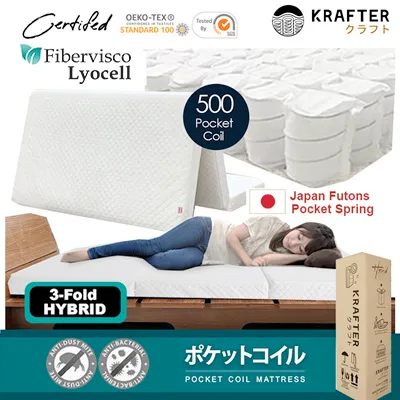
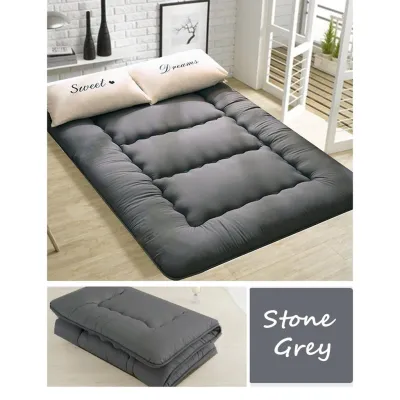
![【SG STOCK】Newest - Japan Krafter Tatami Mattress Cotton Zip-around Cover / Bedsheet [4 Bed sizes option]](https://img.lazcdn.com/g/p/900d7d8bf51d9807a06d3a9d132eb71e.jpg_400x400q80.jpg_.webp)
Prices are valid at publication and may change. Please refer to the product page for the latest price.
Side sleepers require a mattress that offers significant contouring, particularly around the shoulders and hips. Because these areas press deepest into the bed, a surface with sufficient cushioning is necessary to prevent painful pressure points and allow the spine to remain straight. If the mattress is too firm, it can cut off circulation and cause frequent tossing and turning throughout the night.
Back sleepers need a balanced surface that supports the natural curve of the spine. The mattress must be firm enough to keep the hips from sinking too deeply, yet soft enough to fill the gap in the lumbar region. A medium to medium-firm feel typically provides this optimal blend of structural support and surface cushioning.
Stomach sleepers require a flatter, much more supportive surface to keep their body in alignment. If a mattress is too soft, the pelvis sinks into the comfort layers, arching the lower back uncomfortably and straining the lumbar muscles. A firmer mattress is generally necessary to keep the hips level with the shoulders.
Combination sleepers, who shift between multiple positions during the night, need a responsive middle ground. A mattress that is too soft can make it difficult to roll over, leaving you feeling stuck in one spot. Opting for a medium-firm surface with resilient materials allows for effortless movement while accommodating various postures.
Factor in Your Body Weight and Build for Proper Support
Your body weight directly influences how deeply you compress the comfort layers and support core of a mattress. A mattress that feels perfectly medium to one person might feel incredibly firm to someone lighter or overly soft to someone heavier. Understanding this interaction helps you adjust standard firmness recommendations to match your physical build.

Lighter individuals, typically those weighing under 60 kilograms, exert less downward force on the mattress. As a result, standard firm mattresses may feel like a solid board, offering very little contouring or pressure relief. If you have a lighter build, you will often benefit from softer or more responsive comfort layers that cushion your joints under minimal weight.
Average-weight individuals, generally between 60 and 90 kilograms, tend to experience mattress firmness closest to the manufacturer’s stated ratings. If you fall into this category, you can safely align your choice with standard recommendations based on your sleeping position, focusing on how the materials contour to your shape.
Heavier individuals, particularly those weighing over 90 kilograms, compress mattress materials much more deeply. A soft mattress will often allow the hips and torso to sink too far, misaligning the spine and causing the mattress edges to collapse. To maintain proper alignment and ensure long-term durability, a firmer support core is usually required.
Before finalizing your purchase, always check the manufacturer’s weight limits and structural specifications. Some models are engineered with reinforced coil systems or high-density foam bases specifically designed to support heavier loads without sagging. Verifying these details ensures the mattress retains its supportive properties over years of daily use.
Evaluate Personal Comfort and Partner Preferences
When choosing a mattress, it is vital to distinguish between “support” and “comfort.” Support refers to the mattress’s underlying core structure, which keeps your spine aligned, while comfort refers to the immediate feel of the top layers against your skin. A mattress can have a highly supportive, firm core but still feel plush on top due to a thick comfort layer.
Sharing a bed introduces additional variables, such as motion transfer and edge support. If your partner tosses and turns, a mattress with poor motion isolation can disrupt your sleep. Look for pocketed coil systems or memory foam layers that absorb movement locally rather than transferring it across the entire sleeping surface.
If you and your partner have drastically different firmness preferences or body types, a single standard mattress may not satisfy both. In such cases, consider dual-firmness options or split configurations, which allow each side of the bed to be customized to individual needs. Alternatively, pairing a split setup with an adjustable base can provide personalized comfort without compromising either sleeper’s spinal alignment.
Specific physical conditions, such as chronic lower back pain, hip arthritis, or shoulder sensitivity, also dictate your comfort needs. Those with joint sensitivities often require targeted pressure relief from specialized comfort materials, even if their sleeping position otherwise suggests a firmer mattress. Balancing these health considerations with structural support is key to a restorative sleep environment.
Map Your Profile to Krafter Firmness Options
Once you have assessed your sleep position, weight, and comfort preferences, you can map this profile to Krafter’s official product specifications. Avoid making assumptions based solely on model names, as terms like “luxury” or “orthopaedic” do not always correspond to a specific firmness level. Instead, rely strictly on stated firmness ratings, typically presented on a scale from 1 to 10.
Review Krafter’s official firmness scale and tier descriptions to identify where each model sits. A rating of 3 to 4 generally indicates a plush or soft feel, 5 to 6 represents a balanced medium, and 7 to 8 indicates a firm surface. Match your self-assessment directly to these tiers, keeping in mind how your weight might shift your perception of these ratings.
Examine the product labels and official descriptions for the specific material layers used in each model. For instance, a model featuring a thick pillow top or Euro top will offer a softer, more contouring initial feel, even if the underlying support core is rated as firm. Conversely, a tight top design provides a more immediate, solid response with less surface sinkage.
In Singapore’s warm and humid climate, mattress breathability is crucial, as heat retention can make a mattress feel softer than intended. Look for models that incorporate gel-infused foams or open-cell structures to help dissipate heat and maintain a consistent firmness level throughout the night. Comparing these details helps you select the exact model engineered for your profile.
Test and Verify Your Choice Before Committing
No matter how thorough your research is, testing the mattress in person remains one of the most reliable ways to verify your choice. If possible, visit a physical showroom to lie on the mattress in your typical sleeping position. Spend at least 15 to 20 minutes on the bed to allow your muscles to relax and to gauge how the support layers respond to your body over time.
When purchasing online or directly from a showroom, always inquire about the available sleep trials, return policies, and exchange conditions. A brief test in a store cannot fully replicate the experience of sleeping on a mattress night after night. A trial period of at least 30 to 100 nights allows your body to adjust to the new support structure and ensures you can exchange the mattress if the firmness is not right.
Ensure your existing bed base is fully compatible with your chosen Krafter mattress. Placing a high-quality mattress on an unsupportive, sagging, or widely slatted base can significantly alter its perceived firmness and lead to premature wear. Check the manufacturer’s guidelines, as using an incompatible base can void your warranty and compromise the mattress’s structural integrity.
Finally, carefully review the warranty terms regarding sagging and structural defects. A comprehensive warranty should cover visible indentations beyond a certain depth, ensuring that any premature softening or loss of support is addressed. Additionally, when planning delivery, verify that the mattress dimensions fit through your doorways and lift access, and check if there are delivery fees or disposal charges, which are typically quoted in S$.
Frequently Asked Questions (FAQ)
Will a new Krafter mattress feel softer or firmer over time?
A new mattress will almost always feel slightly firmer when first unboxed compared to the model you tested in a showroom. This is because the brand-new foam cells and spring coils require a natural break-in period to loosen and adapt to your body weight. This adjustment process typically takes anywhere from two to four weeks of continuous nightly use. If the mattress still feels excessively hard after this period, or if you notice localized sagging rather than a uniform softening, check the structural integrity of your bed base or contact the manufacturer to rule out a manufacturing defect.
Can I change the firmness of my current mattress without buying a new one?
Yes, you can make noticeable adjustments to the feel of your current sleeping surface without purchasing an entirely new mattress. To soften a bed that feels too hard, adding a high-quality mattress topper made of memory foam, latex, or plush fiber can provide immediate pressure relief. If your mattress feels too soft or is starting to sag, first inspect your bed base to ensure the slats are not bowing or spaced too far apart, as adding a solid support board can instantly firm up the feel. Additionally, rotating your mattress 180 degrees every few months ensures even wear and prevents premature softening in high-pressure areas.

Community discussion
Share your experience or ask a question. Comments are reviewed before publication.