
Choosing the right mattress firmness requires balancing your primary sleeping position with your body weight to keep your spine in neutral alignment. A mattress that is too soft will cause heavier body parts to sink, leading to back strain, while an overly firm mattress will create painful pressure points at your shoulders and hips. By analyzing how your body weight interacts with different comfort layers and support cores, you can identify the ideal firmness level that promotes restorative sleep.
In Singapore’s warm and humid climate, mattress selection also involves understanding how environmental factors interact with mattress materials. High humidity and ambient heat can cause certain temperature-sensitive foams to soften more than they would in cooler climates. Consequently, a mattress that feels perfectly medium in an air-conditioned showroom might feel noticeably softer in a naturally ventilated bedroom. Selecting the correct firmness is not just about initial comfort, but about how the bed performs under local conditions over several years.
Understand the Difference Between Surface Feel and Structural Support
To make an informed decision, you must first distinguish between surface feel and structural support. Firmness refers to the immediate sensation of softness or hardness you experience when you first lie down on the mattress. This surface feel is determined by the comfort layers, which are typically made of materials like memory foam, latex, or fiber quilting. Manufacturers usually rate this feel on a scale of 1 to 10, with 1 being extremely plush and 10 being rock-solid.
Products mentioned in this guide
![[SG] NEXT DAY DELIVERY + FREE PILLOWS. Pocket Spring FIRM Mattress Luxury Memory Foam Single Super Single Queen King High Quality. Euro Design and High Quality. Comes in King Size Queen Super Single and Single Size Mattress. Free & Fast Delivery](https://img.lazcdn.com/g/p/f3daa9a9becc0782f477139f4696cded.jpg_400x400q80.jpg_.webp)
![[Bulky] DREAMAX Equinox Rest 8 Inch Comfort Pocket Spring Mattress / 20cm / Bed (SG) / sd](https://img.lazcdn.com/g/p/c25e074503162de8fade85f5c4b33c8d.jpg_400x400q80.jpg_.webp)
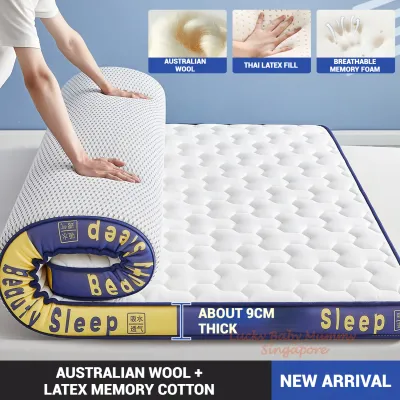
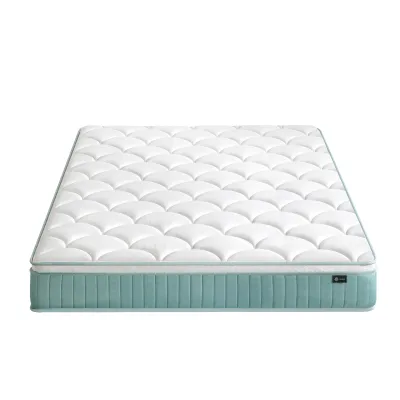
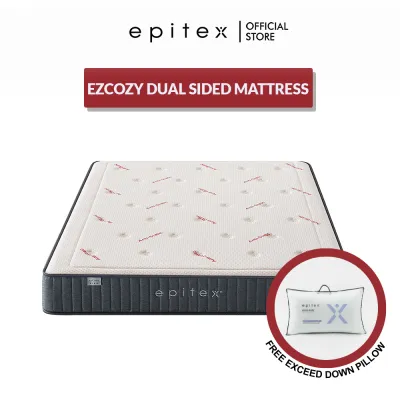
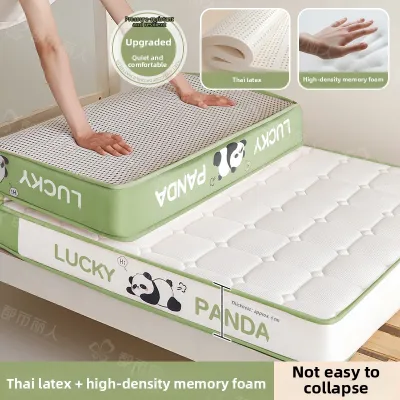
Prices are valid at publication and may change. Please refer to the product page for the latest price.
Support, on the other hand, refers to the mattress core’s ability to keep your spine in a neutral alignment throughout the night. This structural integrity is provided by the base layers, such as pocketed coils or high-density support foam. A mattress can have a very soft, plush comfort layer that cushions your joints while still utilizing a robust pocketed spring system that keeps your spine perfectly aligned.
Conversely, a mattress that feels incredibly firm on the surface is not guaranteed to provide proper support. If a bed is too rigid, it will fail to contour to your body’s natural curves, leaving a gap under your lower back and forcing your spine into an unnatural position. This concentrates your body weight onto high-pressure zones like your shoulders and hips, leading to chronic tossing and turning.
Match Surface Feel to Your Primary Sleeping Position
Your dominant sleeping posture dictates how your body weight is distributed, directly influencing the firmness you need. Side sleepers require significant contouring and pressure relief. When sleeping on your side, your shoulders and hips concentrate your weight onto a small surface area. A medium-soft to medium mattress allows these joints to sink just enough to keep the spine straight, preventing morning stiffness.

Back sleepers require a balanced surface offering both contouring and lift. Your mattress must fill the gap in your lumbar region while preventing your pelvis from sinking too deeply. A medium to medium-firm mattress typically provides this ideal compromise, cradling the lower back while maintaining a stable, supportive base.
Stomach sleepers face the greatest risk of spinal misalignment and require a firmer mattress. Sleeping on your stomach naturally coaxes the lower back into an exaggerated arch. If the surface is too soft, your hips and pelvis will sink deeply, placing severe strain on your lumbar muscles. A firm mattress keeps your hips elevated and aligned with your shoulders.
Combination sleepers, who rotate through multiple positions, need a highly responsive mattress that facilitates easy movement. If a mattress is too soft or slow-responding, you may feel “stuck” in a deep body impression, disrupting your sleep cycle. A medium to medium-firm mattress with active bounce—such as natural latex or pocketed springs—allows for seamless transitions.
Adjust Your Choice Based on Body Weight and Build
Your body weight is the primary force acting upon the mattress, meaning that people of different weights will perceive the exact same mattress firmness very differently. Lighter individuals, typically weighing under 60 kilograms, exert less downward pressure on the bed. On a standard medium-firm mattress, they may not sink deep enough to engage the comfort layers, causing the bed to feel exceptionally hard and unyielding. For lighter sleepers, a softer mattress is often necessary to achieve adequate contouring and pressure relief.
Average-weight individuals, falling between 60 and 80 kilograms, generally find that standard manufacturer firmness descriptions align well with their personal experience. A mattress marketed as “medium” will typically feel like a true medium to this group, providing an even balance of surface cushioning and deep support.
Heavier individuals, weighing over 80 kilograms, exert substantial downward force and will sink much deeper into any mattress surface. On a soft or standard medium mattress, they risk pushing completely through the comfort layers and bottoming out against the hard support core, a phenomenon known as “hammocking.” This deep sinking misaligns the spine and traps body heat. Consequently, heavier sleepers require firmer comfort layers and a highly robust support core—such as thick-gauge pocketed coils—to maintain a flat, supportive sleeping surface.
Because standard firmness scales are calibrated for average-weight sleepers, you should always adjust your target firmness based on your build. If you are on the lighter side, consider opting for a mattress one level softer than typically recommended for your sleeping position. If you are heavier, look for a mattress that is one level firmer, prioritizing models with reinforced edge support and high-density materials that resist premature sagging.
Refine Your Choice for Pain Relief and Partner Dynamics
If you suffer from chronic joint or back pain, your firmness choice must prioritize targeted pressure relief and spinal alignment. For lower back pain, a medium-firm mattress is often highly effective because it prevents the pelvis from sinking while still cushioning the shoulders and hips. For joint pain in the shoulders or hips, a slightly softer surface that cradles these sensitive areas can help distribute your body weight more evenly, reducing inflammation and improving circulation.
Partner dynamics also play a crucial role in mattress selection, especially when two sleepers have different firmness preferences or body weights. If one partner is a restless sleeper, a mattress with excellent motion isolation is essential to prevent disturbances. While softer memory foam mattresses excel at absorbing movement, they can sometimes feel too warm or restrictive. A medium-firm pocketed coil mattress topped with a responsive comfort layer can offer a balanced solution, isolating motion while maintaining ease of movement.
For couples with vastly different physical profiles, standard mattresses can force one or both partners to compromise on comfort. In such cases, dual-firmness or split mattresses offer an ideal solution. These designs allow each side of the bed to be customized with a different firmness level, ensuring both sleepers receive the exact support they need. Alternatively, pairing a split mattress with an adjustable base allows each partner to fine-tune their sleeping angle, further customizing their sleep environment.
Test and Verify Your Choice Before Buying
Before finalizing your purchase, it is vital to test and verify your choice using objective criteria rather than relying solely on marketing terms like “luxury firm” or “orthopaedic.” If you are testing mattresses in a showroom, do not simply sit on the edge or lie down for a few seconds. Spend at least 10 to 15 minutes resting in your primary sleeping position. Pay close attention to whether your shoulders and hips feel cushioned and whether you feel any tension in your lower back.
When purchasing a mattress online, prioritize brands that offer comprehensive sleep trials, which typically range from 90 to 120 nights. It takes your body approximately three to four weeks to adjust to a new mattress and break in the comfort layers, making a long trial period far more valuable than a brief showroom test. Always review the return policy details, checking for any hidden return fees, which are often processed in S$, and ensure the company handles the physical pickup of the mattress.
Additionally, examine the technical specifications of the mattress rather than relying on subjective descriptions. Check the density of the foam layers, as higher-density foams offer better durability and consistent support over time. For hybrid or innerspring mattresses, look at the coil gauge; a lower gauge number indicates thicker, stiffer wire, which translates to a firmer and more supportive feel.
Finally, consider the practical logistics of delivery and installation within your home. High-quality, supportive mattresses—especially those featuring heavy-gauge pocketed coils or dense natural latex—can be exceptionally heavy and rigid. Before ordering, measure your doorways, hallways, and lift dimensions to ensure the delivery team can safely transport the mattress into your bedroom. Confirming these physical dimensions and checking the manufacturer’s assembly and installation guidelines will prevent costly delivery failures and ensure your new mattress performs perfectly from night one.
Frequently Asked Questions (FAQ)
Can a mattress topper change the firmness of my current bed?
A mattress topper can effectively alter the surface feel of your bed, adding plushness to a mattress that is too firm or providing a slightly firmer initial layer. However, a topper cannot fix a sagging, worn-out, or structurally compromised mattress core. If the underlying support system of your mattress has failed, any topper you place on top will simply sink into the existing depression, failing to provide the necessary spinal alignment.
Is a firmer mattress always better for back pain?
No, a firmer mattress is not a universal cure for back pain. While an overly soft mattress can cause your spine to sag, an excessively firm mattress can be equally damaging by failing to contour to your body’s natural curves. This lack of contouring forces your spine out of alignment and concentrates pressure on your shoulders and hips. The most effective mattress for back pain is one that balances robust structural support with sufficient surface cushioning to relieve pressure points.
Community discussion
Share your experience or ask a question. Comments are reviewed before publication.