
Finding the right firmness level for a foldable mattress is the key to securing a comfortable night’s sleep, whether you are accommodating overnight guests, setting up a temporary bed, or maximizing space in a compact apartment. Unlike traditional mattresses that rely on thick spring coils, foldable mattresses depend almost entirely on foam layers to support your body weight. The ideal firmness for your setup is determined by a combination of your primary sleeping position, your body weight, and how you plan to use and store the mattress.
Because these mattresses are designed to fold and pack away, they have unique structural characteristics. Selecting the wrong firmness can lead to poor spinal alignment, morning aches, or the uncomfortable sensation of sinking straight through the foam to the hard floor. By understanding how foam density, thickness, and your personal sleep profile interact, you can make an informed choice that balances comfort and convenience.
Quick Diagnostic Matrix for Foldable Mattress Firmness
Foldable mattresses generally use a standard firmness scale from 1 to 10, where 1 is extremely soft and 10 is exceptionally firm. Because these mattresses must fold along specific seams, they rarely feature the ultra-soft, plush profiles of standard beds, as very soft foam lacks the structural integrity to hold its shape when folded. Most models on the market fall between a 4 (medium-soft) and an 8 (firm).
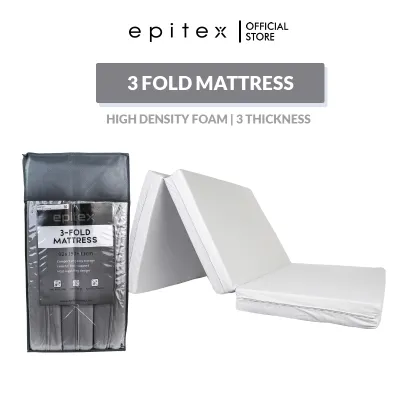
Products mentioned in this guide
![[1-2 day delivery] Foldable Foam Mattress 3-Fold Mattress](https://img.lazcdn.com/g/ff/kf/Se38f308a460b4ba3aef73a3da6703c621.jpg_400x400q80.jpg_.webp)
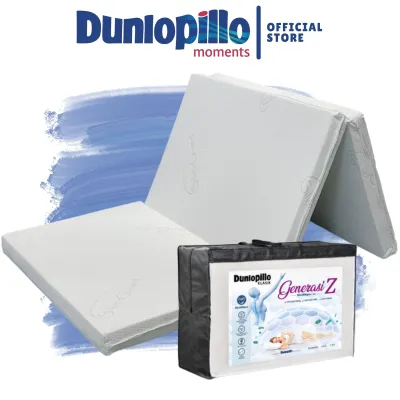
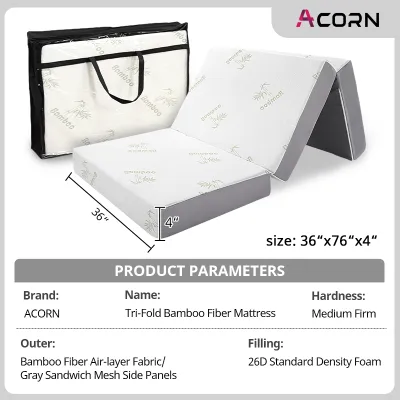

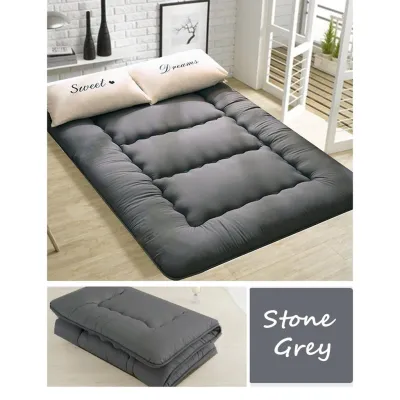
![[SG] | High Density Foam Mattress | Medium FIRM Mattress High Quality Euro Design. Single Super Single Queen King Mattress Quality assurance and deliver from Singapore](https://img.lazcdn.com/g/p/15d970bec0dfe895c5084c2e83f8c58e.jpg_400x400q80.jpg_.webp)
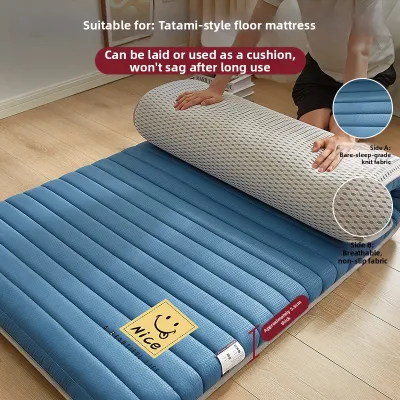
Prices are valid at publication and may change. Please refer to the product page for the latest price.
To help you narrow down your options quickly, use this diagnostic matrix to match your physical traits and sleeping style to a recommended firmness range:
| Sleeping Position | Body Weight Range | Recommended Firmness Level |
|---|---|---|
| Side Sleeper | Under 60 kg | Medium-Soft (4 to 5) |
| Side Sleeper | 60 kg to 80 kg | Medium (5 to 6) |
| Back or Stomach Sleeper | Under 60 kg | Medium (5 to 6) |
| Back or Stomach Sleeper | 60 kg to 80 kg | Medium-Firm (6 to 7) |
| Any Position | Over 80 kg | Firm (7 to 8) |
While this matrix provides a reliable starting point, remember that foldable mattresses rely heavily on high-density foam for their core support. This means that the overall thickness of the mattress and the density of the foam are just as critical as the subjective surface feel. A thin mattress with soft foam will compress completely under adult weight, making a medium-firm or firm option a safer baseline for most adult users.
Match Firmness to Your Sleeping Position and Body Weight
Your sleeping position dictates where your body exerts the most pressure on a mattress, while your weight determines how deeply you compress the foam layers. Balancing these two factors is essential to maintain a neutral spinal alignment throughout the night.

Sleeping Position Needs
Side sleepers require a mattress that offers sufficient give to cushion the shoulders and hips. If a foldable mattress is too firm, these protruding pressure points will bear the brunt of your body weight, leading to poor circulation, numbness, and frequent tossing and turning. Look for models that feature a dual-layer design, incorporating a softer comfort layer of memory foam or gel-infused foam on top of a supportive base layer.
Back and stomach sleepers need a much flatter, more resistant surface to keep the spine in neutral alignment. When sleeping on your stomach on a mattress that is too soft, your pelvis will sink into the foam, arching your lower back unnaturally and causing strain. A medium-firm to firm surface provides the necessary upward resistance to keep your hips aligned with your shoulders.
Body Weight and Compression
Your body weight directly influences how foam behaves under pressure. Lighter individuals (under 60 kg) do not exert enough force to compress firm foam, meaning a firm mattress may feel like a hard board, offering little to no contouring comfort. For these sleepers, a medium-soft to medium mattress is ideal to allow for gentle pressure relief.
Heavier individuals (over 80 kg) compress foam much more rapidly. On a soft or thin foldable mattress, a heavier sleeper is highly likely to bottom out, meaning the foam compresses completely and the sleeper feels the hard floor beneath. If you fall into this weight category, prioritize a firm rating and look for a mattress thickness of at least 10 cm to 15 cm to ensure adequate support.
The Compromise for Combination Sleepers
If you frequently change positions throughout the night, finding a single ideal firmness can be challenging. A medium mattress (around 5 to 6 on the scale) serves as the most versatile compromise. It provides enough surface cushioning to protect your shoulders and hips when you roll onto your side, while offering just enough structural resistance to support your lower back when you turn onto your back or stomach.
Adjust Your Choice Based on the Intended Use Scenario
How and where you plan to deploy your foldable mattress should heavily influence your firmness decision. A mattress used daily on a hard floor requires different specifications than one kept in a closet for occasional guests.
Occasional Guest Accommodations
When purchasing a foldable mattress to host visiting family or friends, versatility is your primary goal. Since you cannot predict the sleeping positions or weight profiles of future guests, a medium to medium-firm mattress is the safest choice. This range is widely accepted as comfortable by the majority of sleepers and prevents lighter guests from feeling like they are sleeping on concrete, while still offering decent support for heavier guests.
Floor Sleeping and Temporary Setups
In space-constrained homes, such as typical apartments, foldable mattresses are often laid directly on tiled, vinyl, or parquet floors. Unlike a bed frame with flexible wooden slats, a solid floor provides zero shock absorption. This makes the mattress feel significantly firmer than it would on a bed base. To prevent bottoming out against the hard floor, choose a firmer, thicker model (at least 10 cm) to guarantee a supportive buffer.
Travel, Camping, and Portability
If you plan to use your mattress for road trips, staycations, or temporary outdoor setups, portability becomes a major factor. Thinner, lighter models are much easier to pack into a car boot or carry up stairs, but they offer less material to support your weight. If you must choose a thin mattress (around 5 cm to 7.5 cm) for travel, select a firmer foam density to ensure you do not feel uneven ground, rocks, or floor joints beneath you.
Low-Impact Lounging and Play Areas
If the primary purpose of the mattress is to serve as a playroom floor mat for children or a casual daybed for reading and watching television, high-level spinal support is less critical. Children are lightweight and do not require the heavy-duty support systems that adults do. For these low-impact activities, a softer, thinner, and more flexible foldable mattress is perfectly adequate and often more comfortable for sitting and playing.
Verify Support and Specifications Before You Buy
Before finalizing your purchase on an online marketplace or at a local furniture retailer, look past subjective marketing terms like “extra supportive” or “orthopaedic.” Instead, verify the physical specifications of the product to ensure it meets your needs.
Check Foam Density and Thickness
Foam density is measured in kilograms per cubic metre (kg/m³) and is the truest indicator of support and durability. High-density foam (typically 30 kg/m³ and above) offers excellent resistance to sagging and maintains its firmness over years of use, whereas low-density foam will soften and flatten quickly. Pair high density with an appropriate thickness: a 10 cm to 15 cm profile is highly recommended for adult overnight sleep, while a 5 cm to 7.5 cm profile should be reserved for children or very short-term travel use.
Review Return Policies and Trial Periods
Because comfort is highly subjective, the only way to truly know if a firmness level works for you is to sleep on it. Check if the brand or retailer offers a trial period or a flexible return policy. Be sure to read the terms carefully, as some companies require the mattress to remain in its original vacuum-sealed plastic packaging to qualify for a return, while others may charge a collection or restocking fee.
Scan Reviews for Support and Durability
Customer reviews are an invaluable resource for identifying potential issues with foam quality. Search user feedback specifically for terms like “sank,” “softened quickly,” “bottomed out,” or “could feel the floor.” If multiple reviews from adult users mention that the mattress flattened out within a few weeks, it is a clear sign that the foam density is insufficient, regardless of the manufacturer’s advertised firmness rating.
Measure Your Space and Storage
Always measure your available floor space before purchasing to ensure the unfolded mattress fits comfortably without blocking doors, wardrobes, or walkways. Equally important is measuring your designated storage area, such as a wardrobe shelf, under-bed clearance, or storeroom. Ensure the folded dimensions of the mattress align with these storage limits so you can easily pack it away when not in use.
Frequently Asked Questions (FAQ)
Can I make a firm foldable mattress softer?
Yes, you can easily make a firm foldable mattress softer by adding a separate, removable mattress topper. A 5 cm topper made of memory foam, latex, or microfibre can provide the plush comfort layer your shoulders and hips need without compromising the supportive base of the mattress. Alternatively, using a thick, quilted mattress protector or placing a padded comforter beneath your fitted sheet can soften the surface feel. Avoid making any permanent alterations, such as cutting the foam or gluing layers together, as this will void your warranty and may damage the folding hinges.
Do foldable mattresses lose their firmness over time?
Yes, like all foam products, foldable mattresses will gradually soften and lose some of their original firmness over time. This natural compression is accelerated by frequent daily use, high humidity, or exceeding the manufacturer’s recommended weight limits. To maximize the lifespan of your mattress, rotate it end-to-end regularly so that your body weight is distributed across different foam sections. When storing the mattress, keep it in a dry, well-ventilated space, and avoid placing heavy objects on top of it while it is folded, as constant pressure can permanently deform the foam structure.

Community discussion
Share your experience or ask a question. Comments are reviewed before publication.