
The ideal firmness level for a thick tatami mattress depends heavily on your primary sleeping position, balanced with your body weight. Generally, side sleepers benefit from a medium to medium-soft feel to cushion shoulders and hips, back sleepers require a medium to medium-firm surface to support the lumbar curve, and stomach sleepers need a firm surface to prevent the lower back from sagging. Finding the right balance ensures your spine remains in a neutral alignment throughout the night, preventing chronic back pain and morning stiffness.
Understanding Thick Tatami Mattress Firmness
To choose the right firmness, it is essential to understand how modern thick tatami mattresses differ from traditional Japanese tatami mats. Traditional tatami is a firm, structured floor covering made of woven rush grass over a compressed straw core. It offers virtually no sinkage or cushioning, which can feel exceptionally hard to those unaccustomed to floor sleeping.
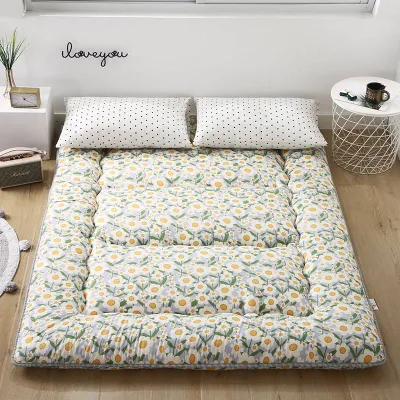
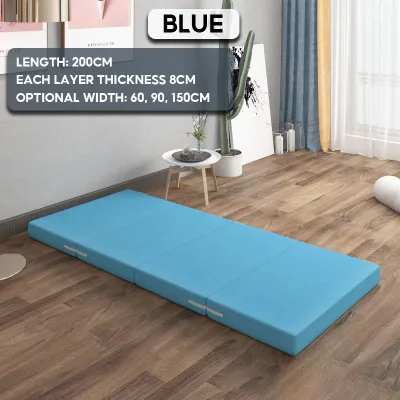
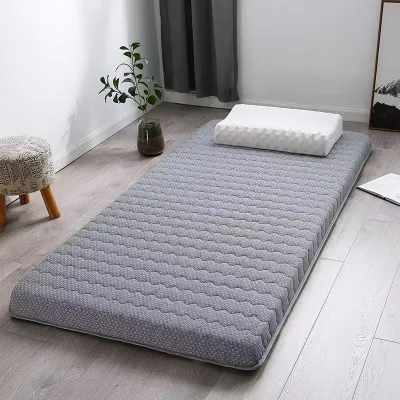
In contrast, a modern thick tatami mattress—often referred to as a thick futon or floor mattress—incorporates contemporary comfort layers. These mattresses typically range from 8 to 15 centimeters in thickness and feature internal cores made of polyurethane foam, memory foam, natural latex, or even micro-coils. This hybrid design attempts to preserve the low-profile, space-saving aesthetic of traditional floor sleeping while providing the pressure relief of a standard bed.
Products mentioned in this guide



Prices are valid at publication and may change. Please refer to the product page for the latest price.
When shopping, you will find that manufacturers describe firmness using standard industry terms: soft, medium-soft, medium, medium-firm, and firm. Because these mattresses are designed to be placed on hard surfaces like floors or platform beds, their overall thickness plays a crucial role. A thicker mattress provides better insulation against cold floors and ensures that heavier parts of your body do not sink all the way through to touch the hard ground beneath.
Matching Firmness to Your Primary Sleep Position
Your sleeping position is the most critical factor in determining the level of support you need from a thick tatami mattress. Each position distributes body weight differently, requiring specific zones of cushioning and resistance to keep the spine aligned.

Side sleepers require a medium to medium-soft thick tatami mattress. When sleeping on your side, your shoulders and hips bear the majority of your body weight. If the mattress is too firm, these areas experience high pressure, leading to restricted blood flow and joint pain. A softer surface allows these pressure points to sink in, keeping the spine straight from the neck to the pelvis.
Back sleepers generally find their ideal match in a medium to medium-firm mattress. This position requires a surface that supports the natural inward curve of the lower back while allowing the hips to sink slightly. If the mattress is too soft, the hips sink too deep, causing the spine to curve uncomfortably. If it is too firm, a gap forms under the lower back, leaving the lumbar muscles tense.
Stomach sleepers need a firm thick tatami mattress. Sleeping on your stomach is highly prone to causing lower back strain because gravity pulls the midsection downward. If the mattress has too much give, the pelvis sinks, hyperextending the lower spine. A firm, flat surface keeps the hips level with the shoulders, protecting the lower back from strain.
Combination sleepers, who shift between multiple positions, are best suited for a medium-firm mattress. This middle-ground firmness provides enough surface give for occasional side sleeping while offering the necessary resistance for back or stomach sleeping. It also offers better responsiveness, making it easier to turn over without feeling trapped.
Factoring in Body Weight and Type
While sleeping position provides a baseline, your body weight dictates how much you will actually sink into a thick tatami mattress, altering your perception of its firmness.
Lighter individuals, typically weighing under 60 kilograms, exert less downward force. A mattress labeled as “medium-firm” may feel completely rigid to them because they do not compress the comfort layers enough to experience contouring. For these sleepers, opting for a medium or medium-soft mattress is often necessary to achieve adequate pressure relief.
Average weight individuals, falling between 60 and 80 kilograms, generally experience mattress firmness exactly as advertised. A standard medium or medium-firm thick tatami mattress will provide them with the intended balance of support and cushioning, making manufacturer descriptions a reliable guide.
Heavier individuals, weighing over 80 kilograms, exert significant downward pressure. They will compress the comfort layers of a soft or medium mattress entirely, causing them to bottom out against the hard floor. To prevent this, heavier sleepers require a firm or extra-firm mattress, preferably one with a high-density foam core or a thicker profile (at least 12 to 15 centimeters) to ensure consistent support.
Self-Diagnosis: Signs Your Current Mattress Firmness Is Wrong
If you are unsure whether your current sleeping surface is suitable, your body and the mattress itself will provide clear warning signs.
Morning aches and pains are the most common indicators of a mismatch. If you wake up with a dull, aching sensation in your lower back that gradually fades after you stand up, your mattress is likely too soft, causing your spine to sag overnight. Conversely, if you wake up with stiffness or soreness in your shoulders or hips, your mattress is probably too firm, creating harsh pressure points.
Sleep disruptions are another telltale sign. If you find yourself waking up frequently to change positions, or if you wake up feeling tired despite spending eight hours in bed, your body is likely struggling to find a comfortable posture. This constant micro-tossing prevents you from entering deep, restorative sleep phases.
Finally, inspect the physical condition of your mattress. Look for visible sagging in the center, permanent body indentations, or soft spots where the internal foam has degraded. If you can easily feel the hard floor beneath you when you lie down, the mattress has lost its structural integrity and can no longer provide adequate support.
Next Steps: Adjusting or Upgrading Your Sleep Setup
If your self-diagnosis reveals that your mattress firmness is incorrect, you do not always have to purchase a brand-new setup immediately.
For a mattress that is too firm, adding a separate mattress topper is a highly effective and budget-friendly solution. A 5-centimeter topper made of natural latex or memory foam can add the necessary plushness without compromising the supportive core of your thick tatami mattress. However, if your mattress is too soft or sagging, a topper will not solve the problem, as it will simply follow the contours of the sagging mattress underneath.
Next, evaluate your foundation. In humid climates like Singapore, placing a thick tatami mattress directly on a tiled or vinyl floor can trap moisture and body heat, leading to mold growth and premature degradation of the internal foam. Ensure your mattress is placed on a clean, dry surface, and consider using a low-profile slatted bed base to improve airflow.
If you decide to upgrade, verify key specifications before making a purchase. Measure your available floor space and ensure the mattress dimensions match your room layout. If you live in an apartment, check that the packaged mattress can easily fit through your doorway and lift access. Always check the manufacturer’s specified weight capacity and look for brands that offer a trial period or a flexible return policy.
Frequently Asked Questions (FAQ)
Can I use a thick tatami mattress directly on the floor?
Yes, you can use a thick tatami mattress directly on the floor, but you must take steps to prevent moisture buildup. Because these mattresses sit close to the ground, they trap body heat and humidity, which can lead to mold and mildew on both the mattress underside and your flooring. To prevent this, regularly prop the mattress up to air out, vacuum the floor underneath, or place a breathable, slatted wooden base beneath it to facilitate continuous airflow.
Does a thicker tatami mattress always mean it is softer?
No, thickness does not equate to softness. The firmness of a thick tatami mattress is determined by the density and composition of its internal materials, not its height. A 15-centimeter mattress filled with high-density support foam or firm latex will feel significantly firmer than an 8-centimeter mattress filled with soft polyester fiber or low-density memory foam. Always check the manufacturer’s firmness rating and material specifications rather than assuming a thicker profile is softer.

Community discussion
Share your experience or ask a question. Comments are reviewed before publication.