
Finding the right firmness for a tatami foldable mat is the key to balancing space-saving convenience with restorative sleep. Unlike traditional thick spring mattresses, these low-profile mats rely on a compact core to distribute your weight. The suitable firmness depends on your sleeping position, body weight, and whether you plan to lay the mat directly on a hard floor or use it occasionally for guests.
Assess Your Body Weight and Sleeping Position
Your body weight is the primary force acting on a tatami foldable mat, determining how deeply you sink into the material. On a low-profile sleeping surface, weight distribution is critical because there are fewer layers of cushioning to absorb pressure. If a mat is too soft for your weight, your heaviest areas—typically the hips and shoulders—will press straight through the core, leading to spinal misalignment.
Sleeping positions dictate where you need support and where you need pressure relief. Side sleepers require a surface with enough give to accommodate the natural curves of the shoulders and hips. Without this contouring, the spine curves unnaturally, and pressure builds up on the joints, often leading to tossing and turning.
Products mentioned in this guide
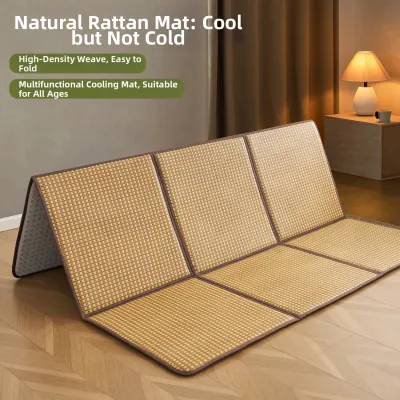
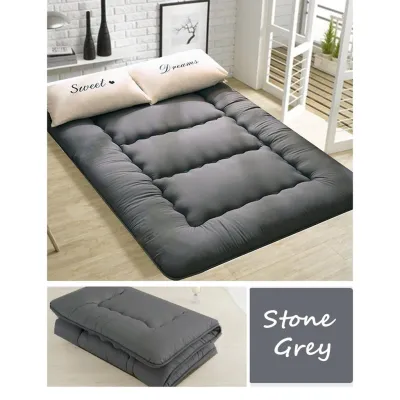

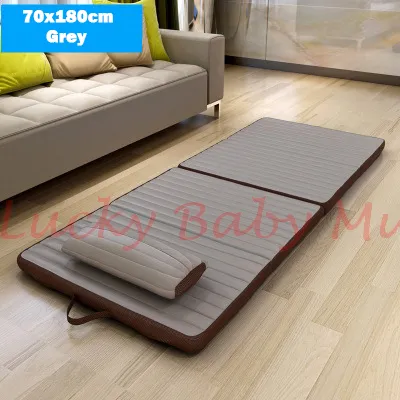

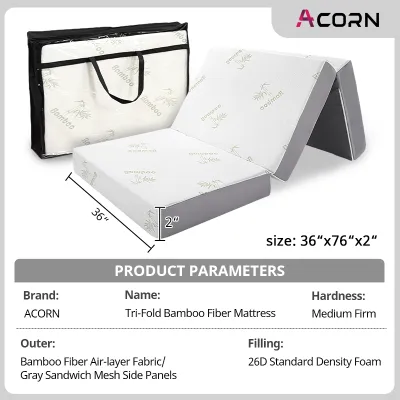
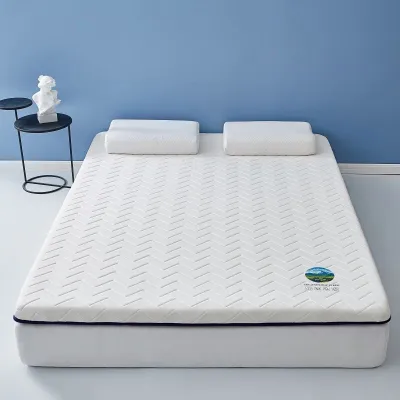
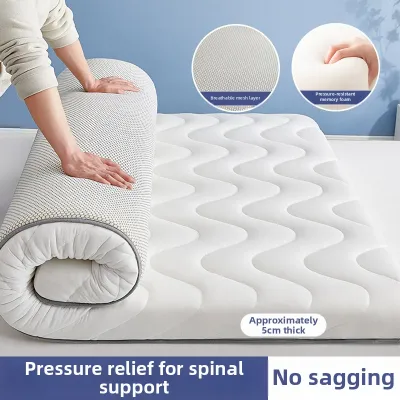
Prices are valid at publication and may change. Please refer to the product page for the latest price.
Back sleepers need a balanced surface that supports the lower lumbar spine while allowing the hips to sink slightly. If the mat is too firm, a gap forms under the lower back, leaving the muscles tense throughout the night. If it is too soft, the pelvis sinks too deep, creating a hammock effect that strains the spine.
Stomach sleepers require the firmest support of all. When sleeping on your stomach, a soft surface allows the pelvis to sink forward, arching the lower back into an unnatural position. A firm mat keeps the body flat and aligned, preventing chronic lower back strain.
Paying attention to how your body feels in the morning is an excellent way to assess your support needs. Waking up with stiffness, a dull ache in the lower back, or tingling in your arms suggests your current sleeping surface is failing to distribute your weight evenly. These physical cues are clear indicators that you need to adjust your firmness choice.
Determine Your Usage Frequency and Setup
How often you use your tatami foldable mat plays a significant role in determining the ideal density and firmness. A mat intended for daily use must withstand continuous compression without losing its supportive properties. High-density materials are essential for daily sleeping, as they maintain their structural integrity and prevent the mat from softening prematurely over months of use.

For occasional guest use, versatility is the priority. Since guests of various body types and sleeping preferences may use the mat, a medium-firm option is generally the safest choice. It provides a comfortable middle ground that offers sufficient support for back sleepers without being too punishing for side sleepers.
The surface beneath your mat also alters how firm it feels. Laying a tatami foldable mat directly on a hard tiled, concrete, or vinyl floor offers zero shock absorption from below, making the mat feel significantly firmer than it would on a flexible base. If you live in a home with hard flooring, you may need a slightly thicker or more cushioned mat to compensate for the unyielding ground.
Conversely, placing the mat on a slatted bed frame or a traditional woven tatami frame introduces a subtle amount of flex. This setup softens the overall feel of the mat, allowing you to opt for a slightly firmer core without sacrificing comfort.
Finally, consider your daily routine and storage constraints. High-density, firm mats are often heavier and stiffer, making them more challenging to fold and pack away. If you need to clear your floor space daily in a compact apartment, balancing the physical density of the mat with your ability to fold and lift it comfortably is a key practical consideration.
Match Your Profile to the Ideal Firmness Level
To find your suitable tatami foldable mat, you can match your physical profile and setup to a specific firmness category. Each level serves a distinct purpose, balancing support and pressure relief based on how your body interacts with the floor.
Soft tatami foldable mats are highly specialized and work best under specific conditions. They are ideal for lightweight individuals, typically those weighing under 60 kg, who do not exert enough force to bottom out. Side sleepers also benefit from a softer surface, as it provides the necessary contouring to cushion the shoulders and hips, preventing joint pain.
Medium-firm mats offer the most balanced performance and are highly recommended for the majority of sleepers. If you weigh between 60 kg and 80 kg, a medium-firm mat provides enough surface cushioning to relieve pressure points while maintaining a supportive core that keeps your spine aligned. This category is also the most practical choice for multi-purpose rooms and guest accommodations.
Firm mats are essential for individuals weighing over 80 kg, stomach sleepers, and those who prefer a traditional, solid sleeping surface. A firm mat ensures that your pelvis does not sink lower than your shoulders, maintaining a neutral spinal alignment. It also prevents you from feeling the hard floor underneath, even during long-term daily use.
To create your personal shortlist, combine your weight, primary sleeping position, and floor setup. For example, a lightweight side sleeper using a mat on a slatted frame will find comfort in a soft to medium mat. An average-weight back sleeper placing the mat directly on a hard floor will get the best results from a medium-firm option. A heavier stomach sleeper should look exclusively at thick, high-density firm mats to ensure lasting comfort and spinal health.
Signs Your Current Tatami Mat Firmness Is Incorrect
If you already own a tatami foldable mat, your body will quickly tell you if the firmness is incorrect. Waking up with localized pain is the most common physical warning sign. If you experience a dull ache in your lower back, the mat is likely too soft, allowing your midsection to sag. If you wake up with sore shoulders, hips, or neck stiffness, the mat is probably too firm, creating high-pressure zones that restrict blood flow.
You can also perform simple visual and tactile checks to evaluate your mat’s condition. Lay the mat flat on the floor and look for any visible sagging or permanent indentations in the areas where your body weight is concentrated. Press your hand firmly into the center of the mat; if it compresses easily to the floor with minimal resistance, the core material has degraded or was too soft to begin with.
Another clear sign of inadequate firmness is bottoming out while you sleep. If you can feel the hard floor beneath you when you turn onto your side, the mat is failing to provide sufficient suspension. This issue is common in low-quality or worn-out mats that lack the density required to support a concentrated load.
When your mat’s firmness is no longer suitable, you have several action paths. If the mat is too firm, adding a breathable, high-quality mattress topper can introduce the necessary surface comfort without requiring a brand-new mat. If the mat is too soft or sagging, placing a solid support board underneath can offer a temporary fix, but replacing the mat with a higher-density, firmer model is the only reliable way to protect your back over time.
Frequently Asked Questions (FAQ)
Can I use a soft tatami foldable mat directly on a hard floor?
Using a soft tatami foldable mat directly on a hard floor is generally not recommended. Because soft mats have lower density and less resistance, your body weight will easily compress the material completely. This causes you to bottom out, meaning your shoulders, hips, and knees will rest directly against the unyielding floor, leading to joint pain and poor sleep quality.
If you must place your mat directly on a hard floor, it is best to choose a medium-firm or firm option with a thickness of at least 8 to 10 centimeters. This ensures there is enough physical material to suspend your body comfortably above the ground, preventing any direct contact with the hard floor.
Does a firmer mat always mean better back support?
There is a common misconception that a firmer mat is always better for your back, but this is not the case. True back support relies on spinal alignment, which requires a balance of support and contouring. If a mat is excessively firm, it will not conform to the natural curves of your body, leaving your lower back unsupported and forcing your muscles to work overtime to maintain alignment.
For most sleepers, a medium-firm mat provides the optimal balance. It is firm enough to keep the spine from sagging while offering just enough surface yield to cushion the shoulders and hips. The right level of support is always personal and depends on your body weight and sleeping posture.
How do I test the firmness before buying online?
When shopping on an ecommerce platform where physical testing is not possible, you can evaluate firmness by looking closely at the product specifications. Pay attention to the core materials, such as high-density foam or natural coconut fiber, and check the density rating if provided. A higher density generally indicates a firmer, more supportive, and longer-lasting mat.
Additionally, look at the overall thickness of the mat, as thinner mats require higher firmness to prevent bottoming out. Reading customer reviews that specifically mention body weight and sleeping positions can provide valuable real-world insights, and choosing a seller with a flexible return policy or trial period offers peace of mind.
Community discussion
Share your experience or ask a question. Comments are reviewed before publication.