
When shopping for children’s furniture in Singapore, safety is the paramount concern for every parent. Platform beds have become an incredibly popular choice for kids’ bedrooms due to their space-saving designs, integrated storage options, and low-profile aesthetics that fit perfectly into modern HDB flats and condominiums. However, navigating the market to find a brand that truly prioritizes safety can be challenging. Many brands use appealing marketing terms like “child-safe,” “eco-friendly,” or “sturdy construction” without providing the concrete evidence to back up these claims. To make an informed and secure investment, parents must look past promotional language and understand how to evaluate a bed’s structural integrity, material safety, and compliance with recognized standards.
This guide provides a comprehensive framework for assessing kids’ platform bed brands available in Singapore. By understanding the baseline safety standards, utilizing a physical inspection checklist, verifying manufacturer certifications, and learning how to evaluate build quality, you can confidently select a platform bed that protects your child. Whether you are browsing local showrooms or evaluating options on online marketplaces, these verification steps will help you distinguish truly safe products from those that merely claim to be.
Understanding Baseline Safety Standards for Children's Furniture
To evaluate any children’s furniture brand effectively, you must first understand the regulatory landscape. In Singapore, Enterprise Singapore acts as the safety authority overseeing general consumer goods. While there is no single, mandatory local standard that dictates every dimension of a domestic children’s bed, products sold in the market are subject to the Consumer Protection (Safety Requirements) Registration Scheme and general safety guidelines. This means that high-quality brands operating in Singapore typically test their products against rigorous international standards to prove their safety credentials.
Products mentioned in this guide
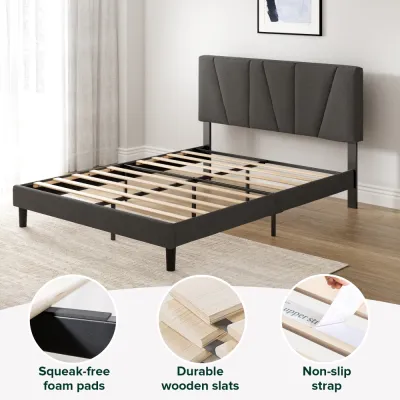
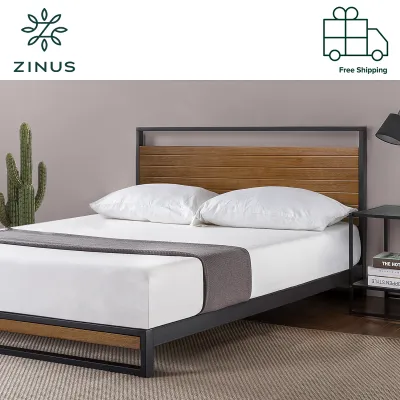
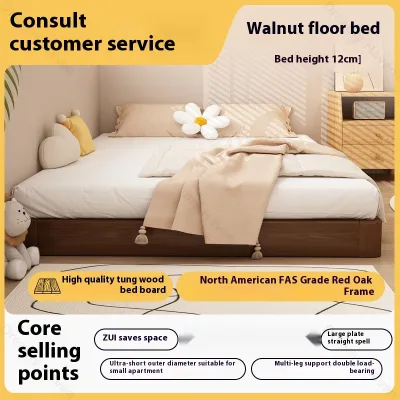
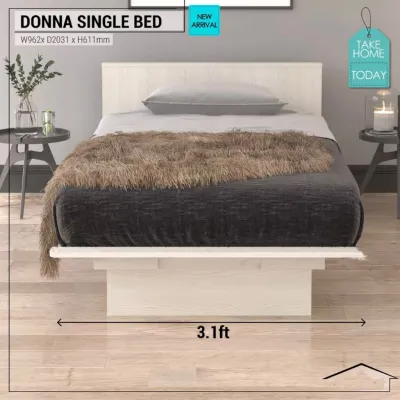
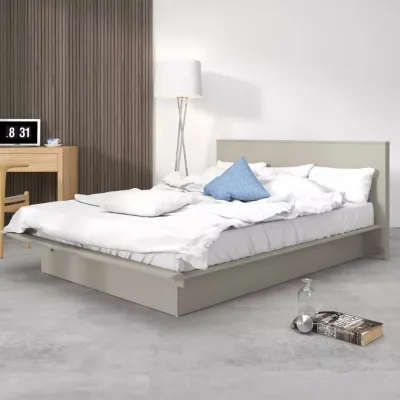
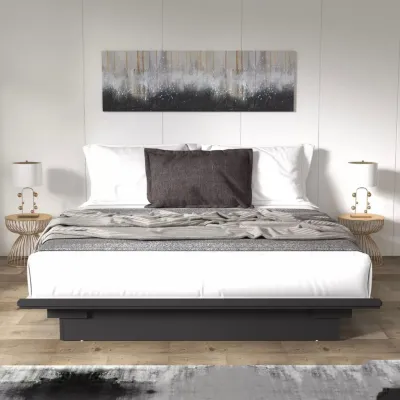
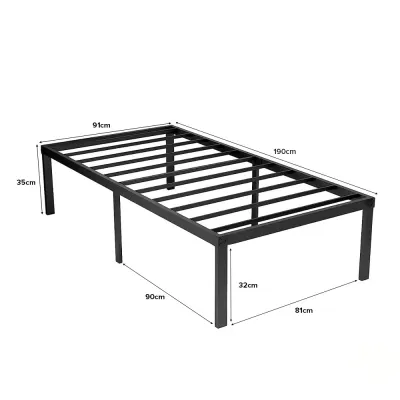
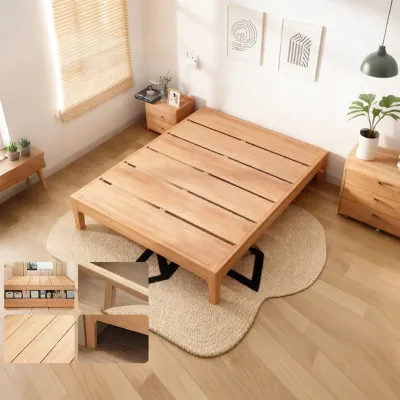
Prices are valid at publication and may change. Please refer to the product page for the latest price.
When reviewing a brand’s product specifications, look for compliance with established international benchmarks. For European markets, the key standards are EN 747 (which covers bunk beds and high beds but contains vital testing protocols for entrapment and structural strength) and EN 1725 (which specifies safety requirements and test methods for all types of domestic adult and children’s beds). In the United States, the American Society for Testing and Materials (ASTM) publishes ASTM F1427, a strict standard focusing on consumer safety specifications for children’s beds.
Children’s beds present specific physical hazards that these standards are designed to mitigate. The most critical risk areas include entrapment, falls, and structural collapse. Entrapment occurs when a child’s head, neck, or limbs become wedged in gaps between the mattress and the frame, or between guardrail slats. Falls can occur if guardrails are too low or structurally weak. Structural collapse is often the result of poor joint design or inadequate support systems failing under dynamic loads, such as a child jumping on the mattress.
Platform beds require unique safety considerations compared to traditional bed frames. The lack of a traditional box spring means the mattress sits directly on the platform, making precise mattress fit critical. If the platform frame has a recessed lip, any excess clearance between the mattress and the frame can create a dangerous entrapment zone. Furthermore, even with a low-profile platform bed, a fall onto hard Singapore flooring—such as ceramic tiles, marble, or polished parquet—can cause injury. Therefore, evaluating the height of the platform, the integration of safety rails, and the overall stability of the base is essential for younger children.
Physical Safety Checklist for Platform Bed Designs
A safe design relies on precise dimensions and structural choices that eliminate common hazards. Use the following checklist to evaluate any platform bed model you are considering.

First, examine the guardrails if the bed is intended for a toddler or a younger child. Even on low platform beds, guardrails provide essential protection against nighttime falls. A safe guardrail must extend at least 127 mm (approximately 5 inches) above the top surface of the mattress. This means you must consider the mattress thickness in tandem with the guardrail height; a mattress that is too thick will compromise the guardrail’s effectiveness. The spacing between the individual vertical slats of the guardrail, or between the guardrail and the bed frame, must be strictly controlled. To prevent head entrapment, these gaps must be less than 75 mm (approx. 3 inches).
Second, evaluate the slat spacing and the support mechanism of the platform base. Individual slats should be spaced no more than 60 mm to 75 mm apart. If the gaps between the slats are too wide, the mattress can sag into the spaces, leading to an uneven sleeping surface that can strain a child’s developing spine. Wide gaps also present a limb entrapment hazard if a child removes the mattress or jumps on the bed. The slats must be securely fastened to the side rails of the bed frame, preferably with screws, to prevent them from shifting or sliding out of place. For super single or queen-sized platform beds, ensure there is a robust center support rail equipped with adjustable support legs that contact the floor, preventing the center of the bed from bowing over time.
Third, inspect the edges, corners, and hardware of the bed frame. Children are naturally active and prone to bumps and scrapes. All exposed edges of the platform bed should be rounded or chamfered, with a radius of at least 2 mm to 5 mm, to minimize the impact of accidental bumps. Run your hand along the underside of the frame and the corners of the headboard and footboard to check for splinters, rough patches, or sharp joints. Furthermore, all assembly hardware—such as bolts, screws, and brackets—must be recessed or completely flush with the wood surface. Protruding bolt heads are a significant hazard, as they can snag a child’s clothing or bedding, posing a risk of scratches or, in extreme cases, strangulation.
Verifying Brand Safety Claims and Certifications
A brand may advertise its products as “certified safe” or “non-toxic,” but as a consumer, you must know how to verify these assertions. Legitimate brands that invest in safety testing are always willing to provide documentation to substantiate their claims.
The first step in verification is to request the official test reports from the retailer or the brand’s official store in Singapore. This report should be issued by an independent, internationally accredited testing organization such as TÜV SÜD, SGS, Intertek, or UL. When reviewing the report, verify that the product name and model number match the platform bed you intend to buy. Check the date of the report to ensure it is current, and confirm that the tests performed cover structural integrity, load capacity, and mechanical safety hazards.
Next, learn how to cross-reference certification marks with the issuing bodies’ databases. For example, if a brand claims its platform bed is certified for low chemical emissions under the GREENGUARD Gold program, they should be able to provide a registration or certificate number. You can visit the official UL SPOT database online, enter the registration number, and verify that the certification is active, valid, and specifically covers the product model in question.
Be highly alert to red flags in marketing language. A common tactic is the use of vague, self-declared terms that lack third-party oversight. Phrases like “tested to international standards” or “designed in accordance with safety guidelines” are often used when a product has not actually undergone independent laboratory testing. Designing a bed to a standard is not the same as having the finished product physically tested and certified. Another red flag is a brand’s inability or unwillingness to provide specific material specifications, such as the exact type of wood used, the country of manufacture, or the formaldehyde emission class of their engineered wood components. If a retailer evades these questions or claims the information is proprietary, it is best to look elsewhere.
Assessing Build Quality and Material Toxicity
A safe kids’ platform bed must be both structurally durable and chemically inert. Assessing the physical materials and chemical finishes of the bed frame is a critical part of the selection process.
Begin by evaluating the wood types and engineered board grades used in the construction. Solid wood is the gold standard for children’s furniture due to its natural strength, durability, and lack of added chemical binders. Common, reliable solid hardwoods used in Singapore include rubberwood, beech, birch, and oak. Rubberwood is particularly common in Southeast Asia; it is a dense, stable hardwood that resists warping in Singapore’s humid climate. If the platform bed incorporates engineered wood—such as medium-density fibreboard (MDF) or plywood—for panels or drawer bottoms, you must check the formaldehyde emission rating. Formaldehyde is a volatile organic compound (VOC) used in the glues that bind engineered wood. To protect your child’s respiratory health, ensure the engineered wood meets strict emission standards, such as CARB Phase 2 compliance, EPA TSCA Title VI, or European E1 or E0 standards. These ratings guarantee that formaldehyde off-gassing is kept to safe, minimal levels.
Next, examine the joinery methods and weight capacity specifications. Avoid beds that rely primarily on wood screws driven directly into the end-grain of the timber, as these joints can easily strip and loosen over time, leading to a wobbly frame. Instead, look for high-quality joinery such as mortise-and-tenon joints, or heavy-duty steel-on-steel connectors like barrel nuts and bolts. These metal-to-metal connections provide superior clamping force and can be retightened repeatedly without damaging the wood fibers. Additionally, verify the manufacturer’s stated weight capacity. A safe kids’ platform bed should have a static weight capacity of at least 100 kg to 150 kg. This ensures the bed can safely support the child, a heavy mattress, and a parent sitting on the edge during bedtime stories or comfort.
Finally, verify the safety of the paints, stains, and finishes applied to the bed. Young children often chew on bed frames, especially during teething, making non-toxic finishes non-negotiable. Look for brands that use water-based, lead-free paints and lacquers that comply with EN 71-3 (the European safety standard for toys, which restricts the migration of heavy metals and toxic elements). Natural oil or wax finishes are also excellent, safe alternatives. Ideally, the finish should be fully cured at the factory before delivery, but if you detect an odor, place the bed in a well-ventilated room with windows open and fans running for several days before allowing your child to sleep in it.
Installation, Maintenance, and Ongoing Safety Checks
Even the safest, highest-certified platform bed can become hazardous if it is assembled incorrectly or neglected over time. Ensuring long-term safety requires careful installation and a commitment to routine maintenance.
When assembling the platform bed, strictly follow the manufacturer’s step-by-step instructions. Use every single screw, dowel, washer, and locking nut provided in the assembly kit; manufacturers do not include “spare” parts that are optional for structural integrity. If the bed features a high headboard, integrated shelving, or a raised platform, use any provided wall-anchoring hardware to secure the unit to the wall, preventing tip-over accidents. If a bolt is missing or damaged during assembly, contact the brand’s local distributor in Singapore immediately to request an official replacement part.
Ongoing maintenance is essential because wood is a natural material that reacts to its environment. Singapore’s high relative humidity and temperature fluctuations can cause wood to expand and contract slightly. This natural movement, combined with the daily vibrations of a child climbing in and out of bed, can gradually loosen the assembly hardware. Make it a habit to inspect the bed frame two weeks after the initial assembly, and then schedule routine checks every six months. Use the appropriate tools to gently retighten all bolts, screws, and barrel nuts. Pay close attention to any new squeaks, creaks, or wobbles.
Knowing when to stop using the bed is just as important as regular maintenance. If you discover a cracked structural rail, a split support slat, or a stripped screw hole that can no longer hold a bolt securely, immediately discontinue use of the bed. Do not attempt temporary fixes with tape, glue, or non-standard brackets. Keep your child off the bed and consult the manufacturer or a qualified professional furniture repair service in Singapore to assess whether the component can be safely replaced or if the bed frame must be retired.
Frequently Asked Questions (FAQ)
Do platform beds need box springs for kids?
No, platform beds do not require box springs. They are specifically designed with a built-in slat system or a solid flat platform to support the mattress directly. For children’s beds, omitting a box spring is actually a significant safety advantage. A box spring adds substantial height to the bed setup, which can dangerously reduce the effective height of safety guardrails. To keep your child safe, the guardrail must always extend at least 127 mm above the top of the mattress. Using a mattress directly on the platform base keeps the sleeping surface lower, maintaining the protective barrier of the guardrails and reducing the potential fall distance if a child rolls out of bed. Always check the manufacturer’s guidelines for the recommended mattress thickness, which is typically between 15 cm and 20 cm for kids’ platform beds.
How do I check the weight limit for a growing child?
To verify the weight limit of a platform bed, consult the product’s official specification sheet or the safety label attached to the frame. Manufacturers typically specify two types of weight limits: static and dynamic. The static weight limit refers to a stationary load, while the dynamic weight limit accounts for the force of movement, such as a child sitting down heavily or shifting during sleep. When calculating whether a bed is suitable for your growing child, you must factor in the weight of the child, the weight of the mattress (which can range from 15 kg to over 30 kg depending on the material), all bedding, and the weight of a parent who may sit on the bed. If a brand does not clearly publish these weight limits, contact the retailer directly to request the certified load capacity before making your purchase.

Community discussion
Share your experience or ask a question. Comments are reviewed before publication.