
Selecting a sofa bed for daily use in Singapore requires a careful balance of mechanical durability, mattress support, and spatial efficiency. Unlike guest beds that are only deployed occasionally, a daily-use sofa bed undergoes constant mechanical stress and must serve as both a supportive daytime seat and an ergonomic nighttime sleeping surface. Because Singaporean homes often feature compact layouts, finding a brand that delivers on structural integrity without overwhelming your living space is essential for long-term satisfaction.
To make an informed investment, you must look beyond aesthetic appeal and evaluate the specific engineering behind each model. The most reliable brands prioritize heavy-duty frames, high-density cushioning, and breathable upholstery suited for the local tropical climate. By understanding the technical specifications of conversion mechanisms, weight capacities, and warranty terms, you can confidently identify a high-performing sofa bed that enhances your home’s functionality.
Key Multi-Functional Features for Daily Sofa Bed Use
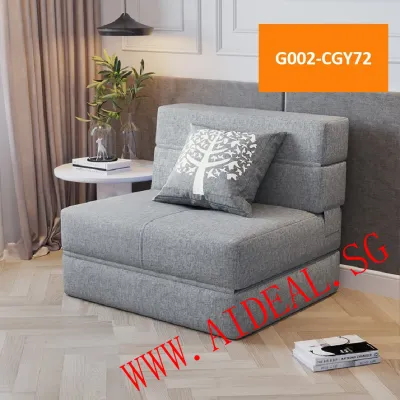
When evaluating sofa beds for daily conversion, the design of the opening mechanism is the single most critical factor determining longevity. Pull-out mechanisms, which typically feature a metal frame that rolls out from beneath the seat cushions, offer a traditional mattress feel but contain numerous moving joints that require regular inspection. Click-clack systems operate by folding the backrest flat; while mechanically simple with fewer points of failure, they often leave a noticeable seam down the center of the sleeping surface. Fold-down or book-style designs utilize a pivoting backrest that transitions smoothly but require a small clearance gap between the sofa back and the wall.
Products mentioned in this guide
![[SG] High Quality Fabric Sofabed | High Quality | Bedroom | Compact | Living Room | Fabric Sofa Bed | High-End | Comfortable | 3 Seater [SG OPEN BOX SALE]](https://img.lazcdn.com/g/p/5486a3bc39ec2ea9f6d992dfb470c94a.jpg_400x400q80.jpg_.webp)
![[Bulky] [SG SELLER] Quality Sofa Bed in Luxury Fabric + Free Bean Bag. Fabric Luxury Sofabed Grey (3 Seater) | High Quality | Bedroom | Compact | Living Room | High-End | Comfortable | Durable | Designer | Luxury | HomeAndStyle | Home And Style](https://img.lazcdn.com/g/p/96d1e6f369487ec9cf1fc2119d83d217.jpg_400x400q80.jpg_.webp)
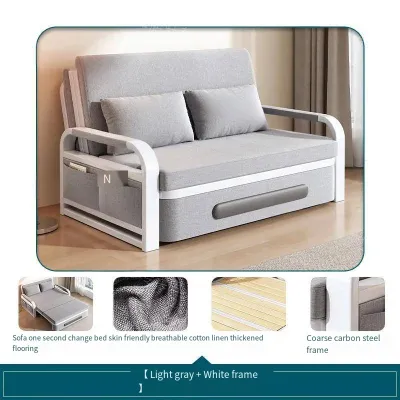
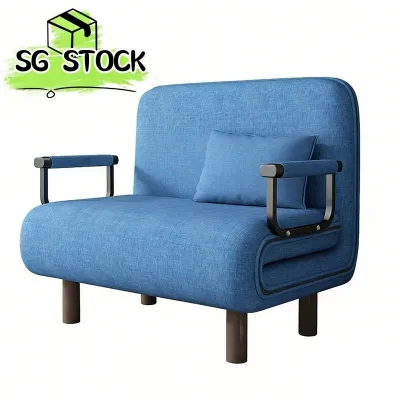
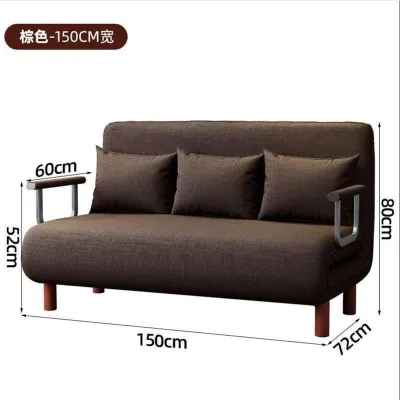
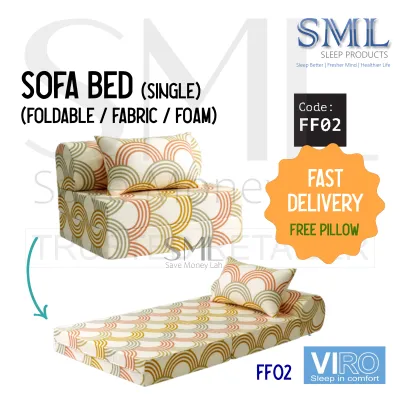
Prices are valid at publication and may change. Please refer to the product page for the latest price.
Integrated storage solutions are highly valuable for space optimization, allowing you to store pillows, bedsheets, and duvets directly within the unit. When comparing brands, check the weight limits of these storage compartments, which typically range from 15kg to 30kg. Gas-lift assist mechanisms are highly recommended for daily use, as they reduce the physical effort required to lift heavy seat frames to access the storage compartment. Ensure that the storage base is constructed from solid plywood or reinforced MDF rather than thin fiberboard, which can bow or crack under the weight of heavy bedding.
Cushion and mattress density directly dictate both sitting ergonomics and sleeping comfort. For daily sitting, look for high-resilient (HR) polyurethane foam with a density rating of at least 30 kg/m³ to 35 kg/m³ to prevent the cushions from sagging prematurely. For sleeping, a dedicated pocketed spring mattress or a high-density memory foam mattress with a thickness of at least 10cm to 12cm is ideal. Avoid thin, low-density foam mattresses (under 25 kg/m³), as they allow the sleeper to feel the metal support bars underneath, leading to poor sleep quality and accelerated wear.
Navigating Space and Environmental Constraints in Singapore Homes
Before purchasing a heavy or complex sofa bed, you must conduct precise physical measurements of your home and entry pathways. Singapore apartments, particularly HDB flats and condominiums, often feature tight corridors, sharp corners, and compact passenger lifts. Measure the height, width, and diagonal clearance of your building’s lift doors, as well as your apartment’s main entryway and hallway turns. When planning the room layout, ensure that the fully deployed bed length—which typically ranges from 200cm to 220cm—leaves at least 60cm of clear walking space around the perimeter so you can move comfortably at night.

Structural weight limits and floor protection are equally important considerations for heavy pull-out mechanisms. A robust daily-use sofa bed can easily weigh between 70kg and 100kg, and this concentrated weight can damage delicate flooring materials. If your home features vinyl wrap, engineered timber, parquet, or polished porcelain tiles, look for brands that utilize wide, rubberized casters rather than hard plastic wheels. Additionally, place heavy-duty felt pads under stationary support legs to distribute the weight evenly and prevent deep scratches or indentations when converting the unit.
Singapore’s high relative humidity, which frequently exceeds 80%, demands careful selection of upholstery materials to prevent mold, mildew, and premature degradation. Avoid cheap synthetic leathers like PU or PVC, which tend to hydrolyze, crack, and peel rapidly in warm, humid environments. Instead, prioritize highly breathable woven fabrics, linen-polyester blends, or high-performance synthetic fabrics treated with moisture-resistant coatings. Check the manufacturer’s material tag for the Martindale rub count; for daily residential use, a rating of 20,000 rubs or higher is recommended to withstand constant friction.
Assessing Brand Reliability and Retailer Support
Evaluating the warranty terms offered by a retailer provides a clear indication of a product’s expected lifespan and the brand’s confidence in their engineering. A standard furniture warranty often only covers the wooden frame against structural defects for 1 to 3 years. For a daily-use sofa bed, seek out brands that offer extended warranties of 5 to 10 years that explicitly cover the mechanical hinges, click-clack joints, gas-lift struts, and metal pull-out frames. Carefully read the warranty exclusions to ensure that “normal wear and tear” does not disqualify coverage for mechanical loosening or spring fatigue.
Because comfort is highly subjective, physical showroom testing is an indispensable step in the purchasing process. Avoid buying a daily-use sofa bed purely online without testing the mattress firmness and operating the conversion mechanism yourself. Verify the retailer’s return policies and trial periods; some brands offer a 30-to-100-night trial, but these often come with strict conditions, such as retaining the original packaging or paying a restocking and transport fee that can range from S$50 to S$200. Ensure the physical showroom allows you to fully deploy the bed so you can evaluate its real-world footprint.
Long-term maintenance requires a reliable supply of replacement parts and responsive customer service. Over several years of daily conversion, small components like plastic washers, tension springs, or caster wheels may wear out or break. Ask the retailer if they maintain a local inventory of spare parts in Singapore or if components must be imported, which can result in months of waiting. Choosing a brand with dedicated, in-house technicians rather than outsourced third-party contractors generally ensures faster and more precise repair services.
Building Your Sofa Bed Comparison Shortlist
To streamline your decision-making process, construct a structured comparison matrix of your candidate brands based on verified technical specifications. This matrix should include columns for the closed sofa dimensions, fully deployed bed dimensions, mechanism type, mattress thickness and material, warranty duration for moving parts, and fabric care requirements. By aligning these specifications side-by-side, you can easily filter out models that do not meet your spatial or physical requirements.
Identify potential dealbreakers early in your evaluation to avoid costly mistakes. A major dealbreaker for daily use is a non-removable fabric cover; daily sitting and sleeping inevitably lead to spills, sweat, and dust accumulation, making removable, dry-cleanable, or machine-washable covers highly desirable. Other dealbreakers include proprietary mattress sizes that cannot be replaced with standard bedding, or complex assembly requirements that demand specialized tools not provided by the manufacturer.
When visiting showrooms in Singapore, use a systematic testing checklist to evaluate each model in person. First, convert the sofa to a bed and back at least three times to assess the smoothness of the transition and check for any grinding, squeaking, or misalignment. Second, lie down on the mattress for at least ten minutes in your typical sleeping position to evaluate pressure relief and spinal alignment. Finally, sit directly on the edge of the deployed bed to test the edge support; a weak frame will sag or tip forward under your weight, indicating poor structural balance that is unsuitable for daily sleeping.
Frequently Asked Questions (FAQ)
How often should I rotate or flip a sofa bed mattress?
For daily use, you should rotate your sofa bed mattress head-to-toe once every three months to ensure even wear and prevent localized sagging. If the mattress is double-sided and designed to be reversible, flip it over entirely every six months in addition to the quarterly rotations. Always consult the manufacturer’s care label first, as some specialized memory foam or zoned pocket spring mattresses are one-sided and should only be rotated, never flipped.
Can I use standard bed sheets on a sofa bed mattress?
Whether you can use standard bed sheets depends entirely on the exact dimensions of your sofa bed mattress, which often differ from standard Singaporean mattress sizes. Sofa bed mattresses are typically thinner, ranging from 10cm to 15cm in depth, and may have non-standard widths or lengths to fit within the sofa frame. Measure your mattress dimensions precisely; if it is thinner than a standard mattress, you can use standard fitted sheets but may need to secure them underneath with sheet suspenders or elastic straps to prevent shifting.

Community discussion
Share your experience or ask a question. Comments are reviewed before publication.