
Finding a reliable outdoor shoe rack in Singapore requires balancing durability with practical value. Because outdoor furniture is constantly exposed to high humidity, intense tropical sunlight, and sudden downpours, standard indoor storage units will quickly degrade. A truly durable outdoor shoe rack must feature weather-resistant materials, robust structural stability, and excellent ventilation to protect your footwear from mold and moisture. To secure the best value, you must look beyond marketing buzzwords and verify specific product dimensions, load capacities, and manufacturer specifications.
How to Verify Weather Resistance and Material Durability
When shopping for an outdoor shoe rack, the materials used in its construction dictate how long it will survive the elements. Do not rely solely on a brand’s claim that a product is ‘outdoor-friendly.’ Instead, look for specific material treatments and finishes on the product label or manufacturer specification sheet. For metal shoe racks, verify that the steel or aluminum has been treated with a rust-proof coating, such as powder coating or hot-dip galvanization. Untreated metals will rapidly corrode when exposed to Singapore’s humid air and rain.
If you prefer plastic shoe racks, ensure the material is specified as UV-stabilized or UV-resistant polypropylene or high-density polyethylene. Standard plastics degrade quickly under direct sunlight, becoming brittle, fading in color, and eventually cracking under the weight of your shoes. For wooden options, look for naturally dense, oil-rich woods like teak or eucalyptus, or ensure the wood has been treated with a marine-grade protective sealant. Always check the manufacturer’s care instructions to confirm if the wood requires periodic resealing to maintain its water resistance.
Products mentioned in this guide
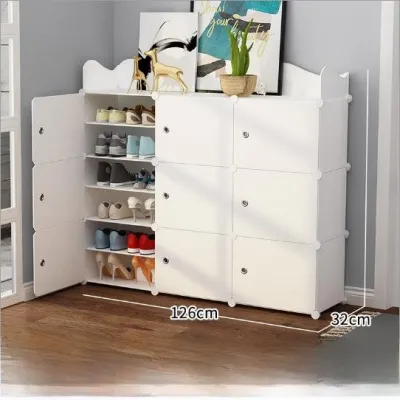
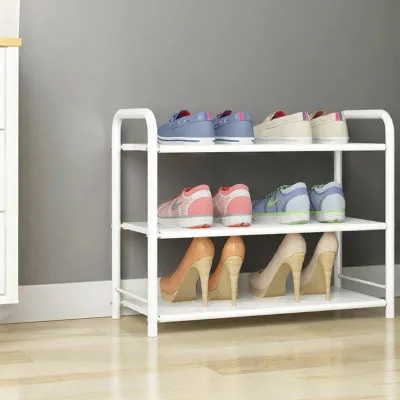
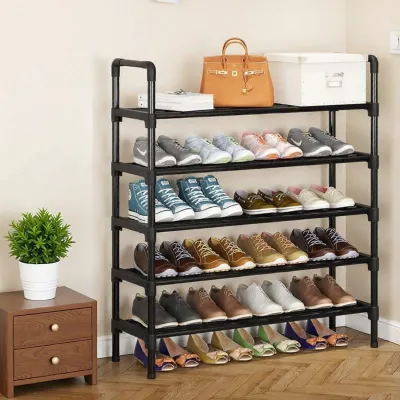
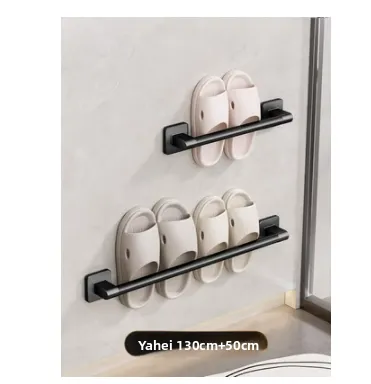
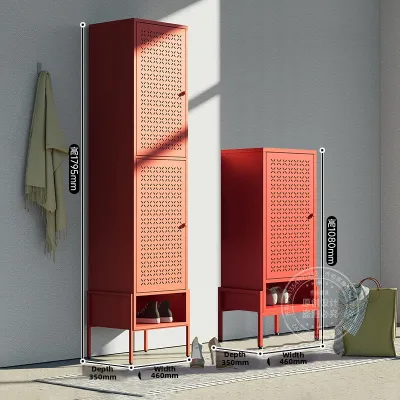
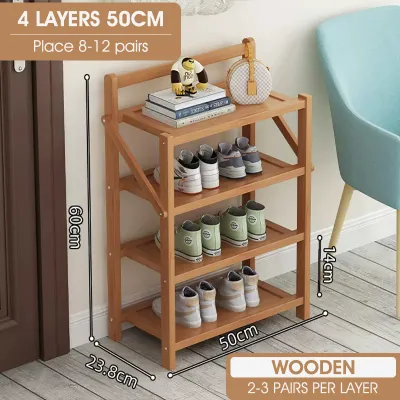
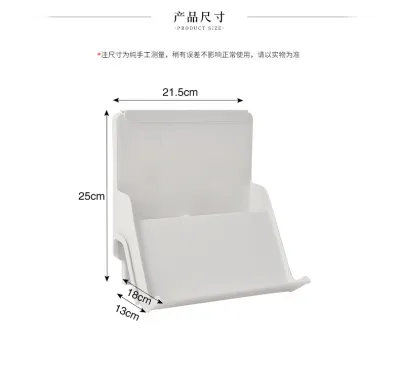
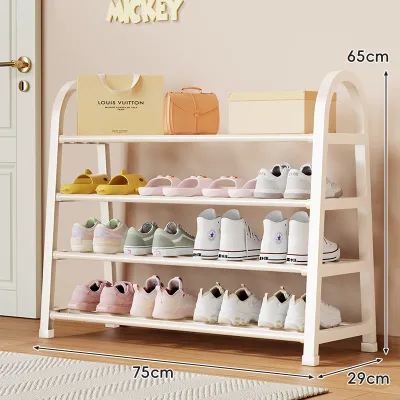
Prices are valid at publication and may change. Please refer to the product page for the latest price.
Ventilation and drainage are equally critical design features for any outdoor storage unit. Solid shelves act as trays that collect rainwater, dirt, and moisture from damp shoes, creating a breeding ground for mold, mildew, and bacteria. Prioritize shoe racks with slatted shelves, wire mesh grids, or open-back designs. These configurations allow water to drain away freely and promote continuous airflow, helping your shoes dry faster and preventing unpleasant odors from building up.
Finally, examine the joint and connection structures of the shoe rack. The points where shelves meet the frame are highly vulnerable to moisture accumulation and temperature fluctuations. Check if the assembly hardware—such as screws, bolts, and brackets—is made of corrosion-resistant materials like stainless steel or solid brass. Avoid units that rely heavily on simple glue joints, exposed staples, or thin plastic connectors, as these components tend to fail first when subjected to outdoor conditions.
Balancing Upfront Cost with Capacity and Long-Term Value
To determine the true value of an outdoor shoe rack, you must look past the initial price tag and calculate the cost-per-pair capacity. You can do this by dividing the total price of the rack by the maximum number of shoe pairs it can safely accommodate. For example, a basic S$40 rack that only holds six pairs of shoes costs about S$6.67 per pair, whereas a sturdier S$120 cabinet that holds twenty-four pairs costs S$5.00 per pair. This simple calculation helps you compare different sizes and styles on an equal footing.

Consider the trade-offs between modular, expandable designs and fixed-capacity units. Modular shoe racks allow you to add extra tiers or connect multiple units side-by-side as your household or shoe collection grows. This flexibility can save you money in the long run, as you will not need to replace the entire system when you run out of space. However, you must verify that the interlocking mechanisms of these modular systems are robust and do not compromise the overall stability of the rack when fully stacked. Fixed-capacity units, while less adaptable, often offer superior structural rigidity.
Be sure to identify and account for potential hidden costs before making your purchase. A low-cost shoe rack might seem like an attractive bargain, but it may not include essential accessories like wall-anchoring hardware, adjustable leveling feet, or specialized cleaning solutions. If you have to purchase these items separately, the total cost can quickly approach that of a premium model. A higher-priced unit that comes complete with heavy-duty mounting kits and a comprehensive manufacturer warranty often represents better overall value.
When deciding how much to invest, use a long-term replacement framework. Purchasing a cheap, low-quality rack for S$30 that warps, rusts, or breaks within six months means you could end up spending S$120 over two years on repeated replacements. Investing S$100 upfront in a high-quality, weather-treated unit designed to last for several years is not only more economical but also reduces waste and saves you the hassle of constant assembly and disposal.
Essential Space, Stability, and Sizing Checks Before You Buy
Before purchasing any outdoor shoe rack, you must carefully measure your designated outdoor space to ensure a proper fit. If you live in an HDB flat or a private apartment with shared common corridors, you must comply with local civil defence and town council safety regulations. These rules typically require a minimum clear escape passage width along the corridor. Ensure the depth of your chosen shoe rack does not encroach on this space or block access to fire hydrants, dry risers, or utility meters.
In addition to corridor clearance, measure the swing paths of your apartment doors, security gates, and nearby windows. The shoe rack must be positioned so that it does not obstruct any doors from opening fully, nor should it be placed where a swinging gate could repeatedly strike and damage the unit. Take note of the finished dimensions of the rack—including its height, width, and depth—and map them out on your floor using masking tape to visualize the physical footprint before buying.
Load capacity is another critical factor that directly impacts safety and durability. Footwear can be surprisingly heavy, especially when multiple pairs of adult shoes, wet sneakers, or heavy work boots are stored together. Check the manufacturer’s specifications for the maximum load capacity per tier and the overall weight limit of the rack. An overloaded shoe rack will begin to sag in the middle of the shelves, putting immense strain on the joints and significantly increasing the risk of a sudden structural collapse.
Stability is paramount for outdoor furniture, which is exposed to wind, uneven flooring, and accidental bumps. Tall, narrow shoe racks have a high center of gravity and are highly susceptible to tipping over. Prioritize units that come with dedicated wall-anchoring kits or feature wide, weighted bases. If you are renting or cannot drill into your outdoor walls, choose a low-profile, wide shoe rack that remains stable on its own. Always verify the packaged delivery dimensions as well, ensuring the box can easily fit through your building’s lifts, corridors, and doorways.
Where to Buy and How to Verify Manufacturer Claims
Sourcing your outdoor shoe rack from the right channel can make a significant difference in product reliability and customer support. Purchasing directly from official brand websites or established furniture showrooms generally offers the highest level of assurance. These retailers typically provide detailed product specifications, clear warranty terms, and reliable customer service. While online marketplaces and ecommerce platforms offer a wide variety of budget-friendly options, you must carefully verify the seller’s credentials and check if they are an authorized distributor to ensure your warranty is valid.
When evaluating a specific shoe rack, learn to read and interpret the manufacturer’s tags and product documentation. Look for explicit mentions of material certifications, weather-resistance ratings, and warranty coverage. A reputable manufacturer will clearly state what their warranty covers—such as structural defects, rust, or joint failure—and specify the duration of the coverage. Be wary of vague terms like ‘heavy-duty’ or ‘weatherproof’ if they are not backed up by concrete material specifications or testing standards in the product manual.
If you find a shoe rack you like but the product description lacks crucial details like load-bearing capacity, exact material composition, or outdoor suitability, do not make assumptions. Contact the seller’s or manufacturer’s customer service department directly to ask for these specifications in writing. If the customer support team cannot provide clear, documented answers to your questions, it is best to avoid the purchase and choose a brand that prioritizes transparency and product safety.
Finally, make use of user reviews, but read them with a critical eye. Filter reviews to look for feedback from customers who have used the shoe rack in an outdoor environment for at least six months. Pay close attention to any mentions of rust formation, color fading, material warping, or structural instability. Consistent complaints about these specific issues are strong indicators that the product may not be suitable for long-term outdoor use, regardless of what the marketing description claims.
Low-Risk Maintenance Steps to Extend Your Rack's Lifespan
To keep your outdoor shoe rack in optimal condition and extend its service life, establish a regular, low-risk maintenance routine. Clean the rack periodically to remove accumulated dirt, mud, dust, and organic debris, which can trap moisture against the surface and accelerate material degradation. Use a soft microfiber cloth or a gentle sponge dampened with plain water or a mild, pH-neutral soap solution. Avoid using abrasive scrubbing pads, steel wool, or harsh chemical cleaners, as these can scratch and strip away protective paint or rust-resistant coatings.
Perform a quick visual inspection of the shoe rack every few months to catch potential issues before they escalate. Look closely for early signs of rust on metal frames, hairline cracks in plastic joints, or peeling finishes on wooden surfaces. Check that all screws, bolts, and other fasteners remain tight and secure. If you notice any loose hardware, use the appropriate hand tools to gently tighten them; be careful not to overtighten, as this can strip the threads or crack the surrounding material.
If your visual inspection reveals significant structural damage—such as a severely bent frame, cracked load-bearing joints, or deep wood rot—stop using the rack immediately to prevent accidents. Do not attempt complex DIY structural repairs, welding, or major modifications unless you are qualified to do so. Instead, consult the manufacturer’s manual for approved repair procedures or contact a professional furniture repair service to determine if the unit can be safely restored to a stable condition.
For ongoing protection, follow any specific care guidelines provided by the manufacturer. If the assembly manual recommends reapplying a protective spray, wax, or oil (such as teak oil for wooden racks or a rust-inhibiting spray for metal frames) at regular intervals, follow those instructions precisely. Only use products that are explicitly approved by the manufacturer to avoid damaging the existing finish or voiding your warranty.
Frequently Asked Questions (FAQ)
Can I leave a standard indoor shoe rack outside if it is under a roof?
It is generally not recommended to use a standard indoor shoe rack in any outdoor or semi-outdoor area, even if it is fully sheltered under a roof or balcony ceiling. Covered outdoor spaces in Singapore are still subject to high ambient humidity, temperature fluctuations, blowing rain during storms, and indirect sunlight. Indoor furniture is typically constructed with adhesives, finishes, and hardware that are not formulated to withstand these conditions. Over time, an indoor rack placed outside will likely suffer from rapid wood warping, mold growth, rusted screws, or brittle plastic joints. Always check the manufacturer’s guidelines to confirm the intended use environment before placing any furniture outdoors.
How do I secure a tall outdoor shoe rack against strong winds?
To secure a tall outdoor shoe rack against strong winds and prevent tip-over accidents, you should always use the manufacturer-provided wall-anchoring kits or anti-tip brackets. These kits typically secure the top or back of the rack directly to a solid wall. If you are unable to drill into your outdoor walls due to rental agreements or structural constraints, prioritize buying a low-profile, wide shoe rack with a low center of gravity, or place heavy, stable items on the bottom shelves to lower the unit’s center of mass. Avoid making improvised structural modifications, such as tying the rack with ropes or using unapproved brackets, as these can compromise the rack’s integrity. Always consult the assembly manual for approved securing methods.

Community discussion
Share your experience or ask a question. Comments are reviewed before publication.