
Finding the right door hanging rack in Singapore requires looking beyond flashy brand names and focusing on structural integrity, material quality, and precise physical dimensions. In a market filled with various home organization options, the most reliable rack is one that matches your specific door thickness, supports your daily storage needs without bending, and preserves your door frame from scratches. By understanding how to evaluate material specifications, mounting systems, and installation clearances, you can confidently select a high-value product that offers long-term durability.
Defining Quality and Value in Door Hanging Racks
Many brands advertise high weight capacities, but these figures are often determined under static, laboratory conditions. To assess real-world durability, look closely at the material composition. Heavy-duty carbon steel, stainless steel, and thick-gauge aluminum are standard indicators of structural strength. Check the thickness of the metal brackets that hook over the top of the door; thin, flimsy metal will bend under the weight of heavy winter coats or bags, while excessively thick metal might prevent the door from closing. Plastic racks are lightweight and rust-proof but prone to snapping under heavy loads, while wooden racks offer a classic aesthetic but can warp if exposed to high humidity.
Design aesthetics and hook spacing play a critical role in space-saving efficiency. A well-designed rack features hooks spaced far enough apart to prevent items from overlapping and creating bulk. A rack with hooks spaced ten centimeters apart is much more functional than one with hooks spaced five centimeters apart, as it allows bulky items like winter coats, handbags, and umbrellas to hang side-by-side without pushing each other off. Look for staggered hook designs or double-hook configurations that maximize vertical space. The angle of the hooks should be steep enough to secure items during sudden door movements, preventing bags or coats from sliding off onto the floor.
Products mentioned in this guide
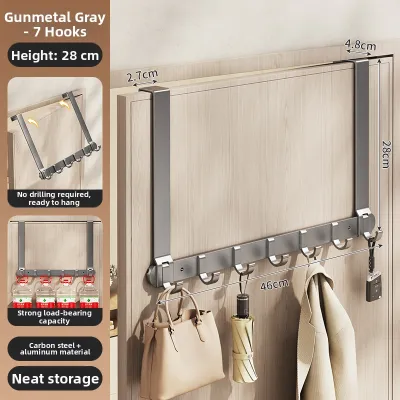
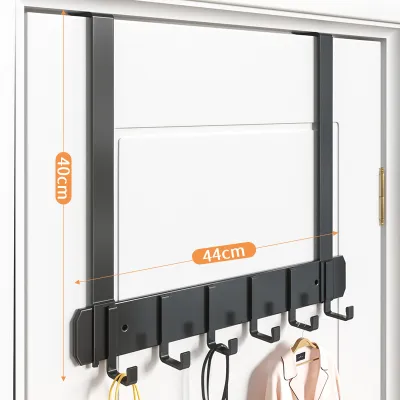
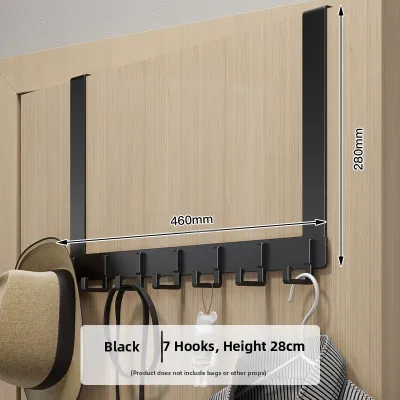
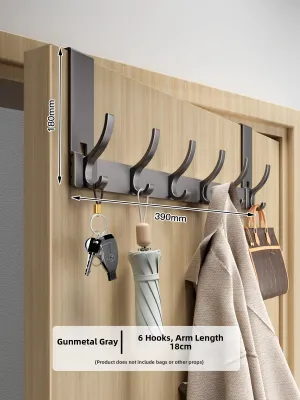
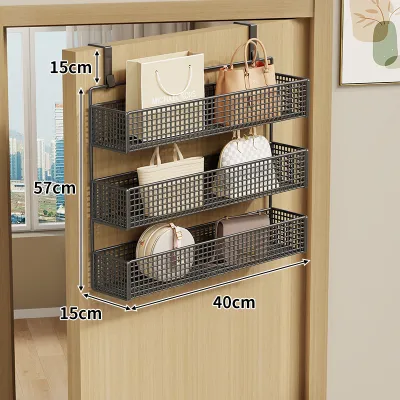
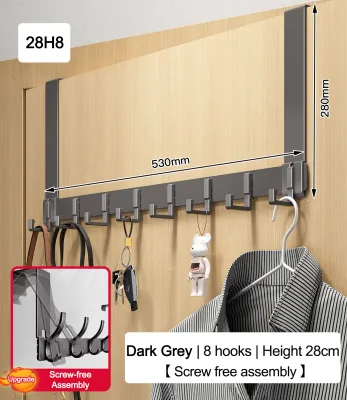
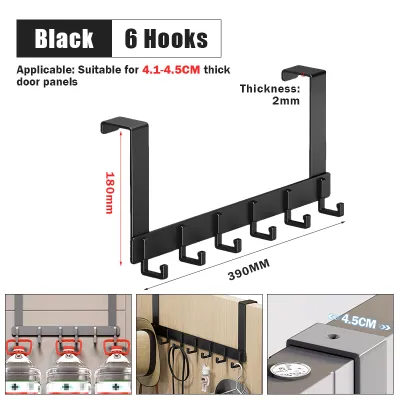
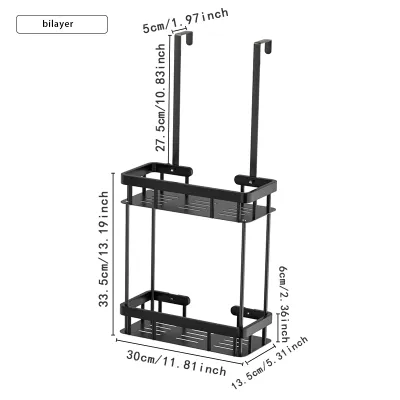
Prices are valid at publication and may change. Please refer to the product page for the latest price.
Evaluating the price-to-longevity ratio is far more practical than simply chasing the lowest upfront cost. A budget rack costing under S$10 might seem like a bargain, but if it rusts in Singapore’s humid climate or warps within months, the cost per use becomes high. Investing in a mid-range or premium rack priced between S$20 and S$50 often yields better value, as these products typically feature rust-resistant coatings, sturdier welds, and protective padding that prevents costly damage to your door frames.
Core Dimensions to Compare Across Brands
When comparing different brands, pay close attention to the hook design and weight distribution mechanisms. Racks that feature a single, solid horizontal bar connecting all the hooks tend to distribute weight more evenly across the top of the door frame. This minimizes localized stress on the door structure. Examine the weld points where the hooks meet the main frame; seamless or reinforced welds are less likely to snap under heavy loads compared to simple spot welds. Double-hook designs, which feature an upper and lower hook on each stem, double the storage capacity without taking up extra horizontal space, making them highly efficient for small entryways or bedrooms.

Mounting systems vary significantly across brands, and choosing the right one depends on your door thickness and usage scenario. Over-the-door brackets are the most common and require no drilling, but you must verify that the bracket depth matches your door thickness. Standard interior doors in Singapore typically measure between 35mm and 40mm, while main entrance doors can be thicker, often ranging from 45mm to 50mm. Some brands provide adjustable brackets or foam inserts to accommodate different door profiles. Alternatively, adhesive-mounted or screw-in racks offer alternative solutions for walls or solid wood doors where over-the-door brackets are not feasible.
Surface finishes are crucial for resisting daily wear and tear. Look for product labels that specify powder-coated steel, anodized aluminum, or electroplated finishes. These treatments provide a barrier against moisture, which is particularly important if you plan to install the rack on a bathroom or kitchen door. Care instructions that recommend simple wiping with a damp cloth rather than harsh chemical cleaners usually indicate a stable, durable surface finish that will not easily peel or discolor over time.
Space, Clearance, and Installation Checks
Before purchasing any door hanging rack, performing precise physical measurements is essential to avoid door jamming or frame damage. Start by measuring the gap between the top of the door and the upper frame. A reliable way to test this clearance is by placing a small coin, such as a S$1 coin, on top of the door and gently closing it. If the door closes smoothly without catching the coin, there is sufficient clearance (typically around 1.5mm to 2mm) for a standard metal bracket. If the gap is less than 1.5mm, an over-the-door rack might scrape the upper door frame, stripping the paint and eventually causing the door to stick.
Next, measure the thickness of the door using a tape measure or ruler. A bracket that is too wide for the door will wobble and slide every time the door is opened or closed, leading to unsightly scratches and annoying rattling noises. Conversely, a bracket that is too narrow will not slide over the door at all. Additionally, check the side margins and the hinge swing radius. Ensure that the items hanging from the rack will not strike adjacent walls, light switches, or furniture when the door is swung fully open. If a door opens against a wall, hanging bulky items like bags can prevent the door from opening fully, reducing the usable entry space of the room.
For renters, verifying that the installation is completely reversible and damage-free is a top priority. Over-the-door racks are generally rental-friendly, but they can still leave marks if they lack protective backing. Look for brands that include built-in EVA foam padding or felt strips on the inner surfaces of the brackets and the back of the main frame. This padding cushions the contact points, dampens noise when the door moves, and prevents the metal from rubbing against the door’s paint or wood veneer.
Navigating Brands and Retail Channels
Finding a reliable door hanging rack involves navigating various retail channels and verifying product quality through smart shopping strategies. Start by checking the manufacturer’s warranty and return policies. Reputable brands often provide a clear warranty period against manufacturing defects, which reflects confidence in their product’s structural integrity. A flexible return policy is also highly beneficial, allowing you to return or exchange the rack if it does not fit your door’s specific dimensions despite careful measurement.
Reading verified user reviews on major ecommerce platforms and home organization websites is an excellent way to gather long-term durability feedback. When analyzing reviews, look past the initial star rating and search for specific keywords such as “rust,” “bend,” “rattle,” or “scratch.” Pay attention to feedback from buyers who have used the product for several months, as this reveals how well the surface finish and structural joints hold up under daily use in Singapore’s humid environment. Look for reviews that mention the specific type of door the product was installed on to gain practical insights.
When deciding where to buy, compare the advantages of official brand stores versus authorized home organization retailers. Purchasing from official brand stores online or in physical showrooms ensures that you receive authentic products, full warranty coverage, and reliable customer support. On the other hand, visiting physical home organization retailers allows you to handle the product directly, inspect the weld quality, feel the weight of the metal, and verify the bracket dimensions in person before making a financial commitment.
Frequently Asked Questions (FAQ)
Can door hanging racks damage wooden or hollow-core doors?
Yes, door hanging racks can cause damage if they are installed incorrectly or overloaded. Hollow-core doors, which are commonly used for interior rooms, consist of a thin outer veneer over a honeycomb cardboard core. These doors have limited structural strength and can easily puncture or warp under concentrated pressure. Solid wood doors are much sturdier but are still susceptible to surface scratches and paint chipping from metal-on-wood friction.
To prevent damage, always use protective padding, such as felt strips or foam tape, on all contact points between the rack and the door. This cushions the pressure and prevents the rack from shifting. Additionally, monitor the weight of the items you hang; avoid placing heavy backpacks or wet towels on a single hook, as this localized stress can warp the door frame or loosen the door hinges over time.
How do I determine the maximum weight capacity for my specific door?
Determining the safe weight capacity requires evaluating both the rack’s specifications and the structural integrity of your door. First, consult the manufacturer’s specification label on the packaging to find the rack’s rated weight limit. Keep in mind that this rating assumes the weight is distributed evenly across all hooks rather than concentrated on one spot.
Next, assess the condition of your door hinges and frame. Check for any loose screws, rust, or gaps around the hinge plates. If the hinges are old or poorly secured, adding extra weight can cause the door to sag or misalign. To safely test the capacity, hang items incrementally, starting with lightweight clothing. Open and close the door slowly after adding each item, listening for any creaking noises and observing whether the door sags or scrapes against the floor or frame. If you notice any resistance or noise, reduce the weight immediately.

Community discussion
Share your experience or ask a question. Comments are reviewed before publication.