
Selecting the right provider for a custom kitchen sink cabinet in Singapore requires a systematic evaluation of technical capabilities rather than relying on generic brand promises. Because the under-sink area is the most high-risk zone in any kitchen—subject to constant humidity, potential plumbing leaks, and heavy structural loads—the ideal supplier is one that demonstrates precise engineering, material durability, and spatial adaptability. Homeowners must navigate a complex market of local carpentry workshops, interior design firms, and international modular kitchen brands. The decision ultimately hinges on how well a provider can customize the internal cabinet architecture to accommodate your specific plumbing layout, filtration systems, and countertop material while ensuring long-term moisture resistance.
Defining Your Customization Needs for Sink Cabinets
Before approaching any cabinet brand or carpenter in Singapore, you must thoroughly map out the physical and functional constraints of your kitchen space. Singaporean homes present unique structural challenges that directly influence cabinet design. For instance, Housing & Development Board (HDB) flats often feature prominent, exposed utility pipes, floor traps, and structural pillars that cannot be moved or altered. In contrast, private condominiums may have concealed plumbing but highly restrictive layouts with tight corners or specific load-bearing wall configurations. A successful custom sink cabinet must be designed around these fixed elements, ensuring that the back panel and internal shelving are strategically cut or recessed without compromising the structural stability of the entire cabinet unit.
Storage priorities represent another critical layer of customization. The space beneath a kitchen sink is no longer just a dark void for storing cleaning supplies; modern kitchens require this area to house sophisticated systems. You must decide if you need to integrate pull-out waste separation bins, heavy-duty drawer organizers, or dedicated compartments for water filtration units and instant-boiling water dispensers. Each of these additions demands specific spatial allocations, ventilation paths, and electrical access points. For example, a water filtration system with an instant-hot tank requires adequate clearance for ventilation to prevent heat buildup, alongside dedicated power sockets that must be kept safe from potential water exposure.
Products mentioned in this guide
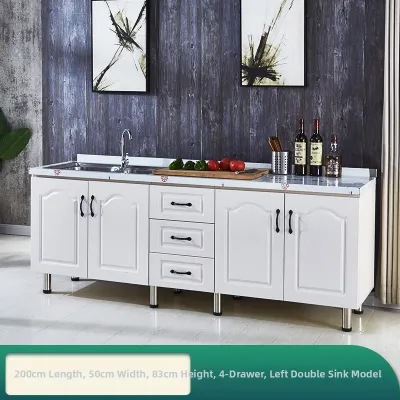
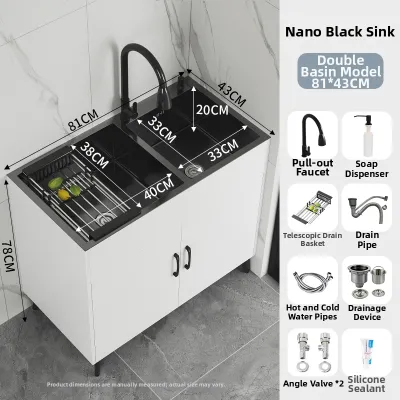
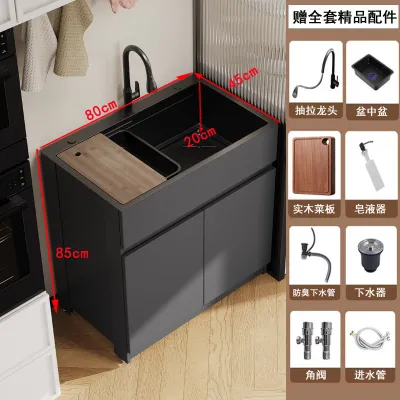
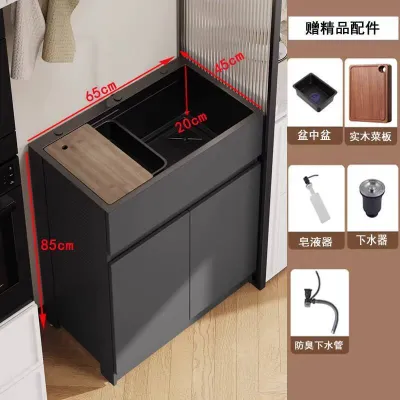
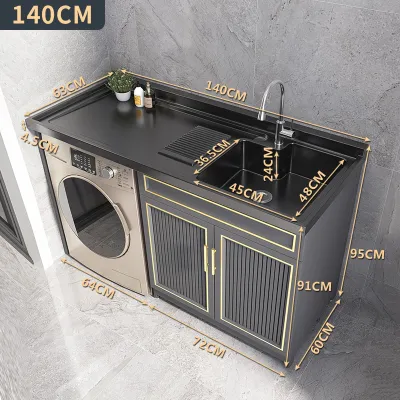
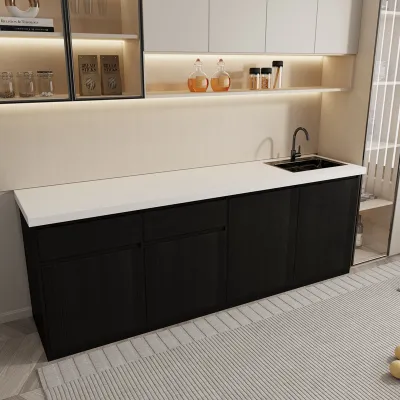
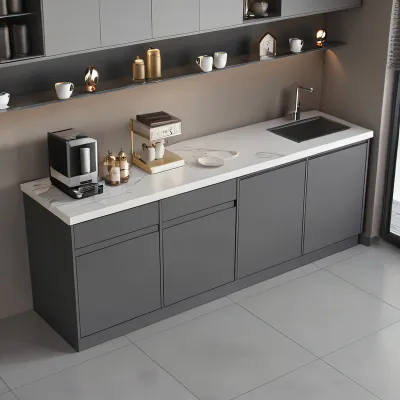
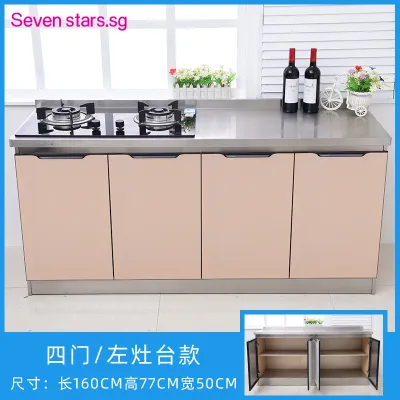
Prices are valid at publication and may change. Please refer to the product page for the latest price.
Furthermore, your choice of kitchen sink style dictates the internal engineering of the cabinet. A top-mount sink rests its weight on the countertop, requiring standard support, whereas an under-mount sink is suspended beneath the countertop, placing significant downward pressure on the cabinet frame. Heavy materials like granite composite, cast iron, or thick stainless steel bowls require robust internal reinforcement. If you opt for a farmhouse or apron-front sink, the cabinet face must be custom-cut to match the sink’s profile, and the internal support structure must be built to bear the weight of a fully filled basin. Understanding these structural demands beforehand allows you to ask suppliers precise questions about how they intend to reinforce the cabinet carcass to prevent sagging or structural failure over time.
Key Criteria for Evaluating Cabinet Brands and Suppliers
When assessing potential cabinet suppliers or carpentry services in Singapore, you need an objective framework to evaluate their technical execution. The first and most critical criterion is material and finish adaptability, particularly regarding moisture resistance. The under-sink area is highly susceptible to condensation and minor leaks. You should verify whether the supplier uses high-moisture-resistant (HMR) core boards, marine-grade plywood, or specialized PVC-based carcasses for the sink unit. Standard particleboard or low-grade medium-density fibreboard (MDF) will quickly swell and disintegrate when exposed to moisture. Additionally, inspect the edge banding technology used; laser-edged or PUR (polyurethane) adhesive-bonded edges provide a far superior barrier against water penetration compared to standard hot-melt glues, which can soften and peel in Singapore’s humid climate.

Hardware and structural integrity form the second pillar of your evaluation. The hinges and drawer slides used in a sink cabinet must withstand both heavy physical loads and corrosive, humid environments. Ask suppliers about the specific brands and grades of hardware they use, looking for soft-closing mechanisms with high corrosion resistance ratings. For drawers situated directly beneath or around the sink plumbing, inquire about the load capacity of the runners. A drawer carrying heavy pots, pans, or waste bins needs slides rated for at least 30kg to 50kg to ensure smooth operation without sagging. The internal reinforcement methods are equally vital; look for suppliers who install solid top rails, corner brackets, or aluminum support bars to distribute the weight of heavy stone or quartz countertops evenly across the cabinet walls.
Design consultation and technical planning capabilities separate amateur installers from professional cabinet makers. A reliable brand should not rely on rough hand sketches. They must provide detailed technical drawings and, ideally, 3D renderings that clearly illustrate how the cabinet interior will accommodate your plumbing lines, water inlets, and waste pipes. These drawings should show exact clearances, maintenance access panels, and the positioning of any electrical outlets. If a supplier cannot provide precise technical layouts that account for your specific sink model and plumbing configuration, it is a major red flag indicating that the final installation may rely on ad-hoc, messy on-site modifications.
Finally, scrutinize the warranty and after-sales support policies. A warranty is only as good as its specific coverage limits, especially in a wet zone. You must ask the supplier to clarify what is covered under their warranty terms. Does it cover water damage, structural warping, or hardware failure in the sink cabinet? Many standard warranties exclude water damage entirely, which leaves you unprotected if a minor pipe leak causes the cabinet base to swell. Look for brands that offer explicit, multi-year warranties on their cabinet carcasses and lifetime warranties on high-wear hardware like hinges and drawer runners, and ensure these terms are clearly documented in the contract.
Comparing Customization Approaches: Bespoke Carpentry vs. Modular Systems
Homeowners in Singapore generally choose between two primary paths for custom kitchen sink cabinets: bespoke local carpentry or highly configurable modular kitchen systems. Each approach offers distinct advantages and trade-offs in terms of design flexibility, installation speed, and overall cost structure.
Bespoke carpentry, typically executed by local woodworkers or coordinated through interior design firms, offers unparalleled design freedom. Because every panel is cut to order, a bespoke carpenter can build a cabinet that fits perfectly into awkward corners, wraps seamlessly around exposed HDB soil pipes, and utilizes every single millimeter of available space. You have unlimited choices of laminates, core materials, and internal configurations. However, the drawbacks of bespoke carpentry include longer lead times and variable finish quality. Because the fabrication is often done in local workshops or partially on-site, the precision of the edge banding and joint sealing depends heavily on the individual carpenter’s skill level.
On the other hand, modular kitchen brands utilize standardized, factory-manufactured cabinet units that can be configured in various ways to fit your kitchen layout. The primary advantage of modular systems is consistent, high-precision manufacturing quality. These cabinets are produced in highly automated factories using advanced machinery, resulting in perfect edge banding, precise pre-drilled holes, and highly reliable proprietary hardware. Installation is typically much faster than bespoke carpentry. However, modular systems operate on fixed width and depth increments (usually in steps of 10cm or 15cm). If your kitchen has non-standard dimensions or complex pipe configurations, a modular system may require filler panels, which can result in wasted space, or may require expensive custom modifications that compromise the factory finish.
Understanding the cost structures of these two approaches is essential for accurate budgeting. Bespoke carpentry in Singapore is typically priced on a “per foot run” basis, which makes it relatively straightforward to estimate costs based on the length of your kitchen counter. However, this pricing model can hide additional costs for specialized internal fittings, such as pull-out baskets, custom pipe boxing, or reinforced sink supports. Modular systems are priced per individual module, with hardware, doors, and internal accessories calculated separately. While the base modules may seem cost-effective, the total price can escalate quickly as you add specialized drawers, premium finishes, and custom corner solutions. Always request a fully itemized quote that includes all cutouts, plumbing integration fees, and installation charges to avoid unexpected costs.
Navigating the Selection Process: From Consultation to Installation
To ensure a successful custom sink cabinet project, you must approach the selection and installation process with a structured plan. The journey begins with preparing a comprehensive project brief before your first showroom visit or consultation. Gather exact dimensions of your kitchen space, noting the positions of water inlets, floor traps, electrical outlets, and any structural pillars. If you have already purchased your sink and faucet, bring their technical specification sheets, which detail the exact outer dimensions, bowl depth, and cutout requirements. Providing this detailed information upfront allows suppliers to give you highly accurate initial quotes and assess the technical feasibility of your design.
When visiting showrooms, do not just look at the aesthetic displays; perform a hands-on quality inspection. Open and close the sink cabinet doors and drawers repeatedly to feel the smoothness of the runners and the alignment of the hinges. Inspect the joints inside the cabinet carcasses to see if they are tightly sealed against moisture. Look closely at the edge banding on the doors and shelves—there should be no visible glue lines, gaps, or peeling edges. Ask the showroom consultants to show you physical samples of their core materials and look for verifiable moisture-resistance certifications or labels, such as Green Label certifications or specific HMR ratings, which prove the material’s suitability for Singapore’s humid environment.
Before signing any contract, carefully review the terms and conditions regarding site preparation, installation timelines, and responsibilities. The contract should clearly state who is responsible for disconnecting and reconnecting the plumbing, as many cabinet suppliers do not provide licensed plumbing services and require you to hire an independent plumber. Ensure there are explicit clauses covering site protection (to prevent damage to your existing flooring) and debris removal. The timeline should outline key milestones, including final on-site measurement (which must occur after floor tiling is complete), delivery, and installation, with clear penalties or recourse options if the supplier causes significant project delays.
Once the installation is complete, do not sign off on the project until you have conducted a thorough post-installation inspection. Use a systematic checklist to verify the quality of the work. Check that all cabinet doors are perfectly aligned and that the soft-close mechanisms function smoothly. Inspect the perimeter of the sink rim where it meets the countertop; there should be a continuous, neat bead of high-quality, mold-resistant silicone sealant to prevent water from seeping into the cabinet below. Open the cabinet and run the faucet for several minutes while checking all pipe connections, joint seals, and the cabinet base for any signs of water leakage. Finally, test all pull-out drawers and organizers under a realistic load to ensure they slide smoothly without catching on plumbing pipes or sagging.
Frequently Asked Questions (FAQ)
How far in advance should I order custom sink cabinets?
You should ideally begin consulting with cabinet brands or carpenters at least six to eight weeks before your planned installation date. For bespoke local carpentry, fabrication typically takes three to four weeks once on-site measurements are finalized. Modular kitchen systems, especially those imported from Europe or manufactured in regional factories, can have longer lead times ranging from six to twelve weeks. It is crucial to understand that final measurements for your custom cabinet cannot be taken until your kitchen floor tiling, wall plastering, and initial plumbing works are fully completed. Any changes to the floor height or wall thickness after measurement can cause the custom cabinet to fit incorrectly, leading to costly remakes and project delays.
What measurements are critical before consulting a brand?
When preparing for your initial consultation, you should measure the total available wall length where the sink cabinet will run, the height from the finished floor to the ceiling, and the distance from the nearest corner to the center of the main waste pipe. Additionally, note the height of any wall-mounted water inlets and the location of electrical outlets. You must also provide the exact dimensions of your chosen sink—including its width, depth, and height—along with the faucet specifications. Knowing the depth of the sink bowl is particularly critical, as a deep bowl reduces the available vertical space inside the cabinet, directly impacting where your plumbing traps, water filtration systems, or pull-out waste bins can be positioned.
Can I integrate specific plumbing or waste disposal units into custom cabinets?
Yes, you can integrate specialized appliances like water purifiers, instant-hot water dispensers, and waste disposal units, but this must be planned during the initial design phase. These appliances have specific spatial, electrical, and ventilation requirements. For instance, instant-hot water tanks generate heat and require adequate air circulation within the cabinet to prevent condensation and premature hardware wear; this often requires installing ventilation grilles in the cabinet plinth or doors. Waste disposal units are heavy and vibrate during operation, meaning the sink cabinet carcass and the sink mounting system must be structurally reinforced to absorb these vibrations without loosening the plumbing joints or damaging the cabinet frame.

Community discussion
Share your experience or ask a question. Comments are reviewed before publication.