
Finding a durable long hook hanger in Singapore requires looking past marketing claims to evaluate actual build quality, weight distribution, and spatial fit. Because specific brand performance and inventory fluctuate, this guide provides a practical framework to help you assess materials, verify structural integrity, and screen sellers on local e-commerce platforms to ensure your chosen hanger meets daily use demands.
In a humid tropical climate where space is often at a premium, a poorly constructed hanger can quickly become a frustration. Sagging hooks, rusting joints, and loose wall mounts are common issues when low-grade materials are subjected to the weight of heavy bags, wet umbrellas, or travel gear. By understanding the physical specifications of these storage solutions, you can make an informed purchase that keeps your home organized and safe.
Defining Your Needs: Hook Length and Load Requirements
Before browsing online listings, you must determine the exact specifications required for your specific household items. Long hook hangers typically feature hooks that extend 10 cm or more from the base, creating a larger physical clearance. This extra depth is highly beneficial for hanging bulky items such as thick winter coats stored for travel, large backpacks, or multiple layered accessories like scarves and wide-strap handbags.
Products mentioned in this guide
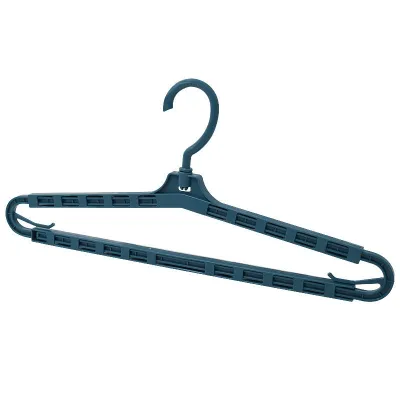
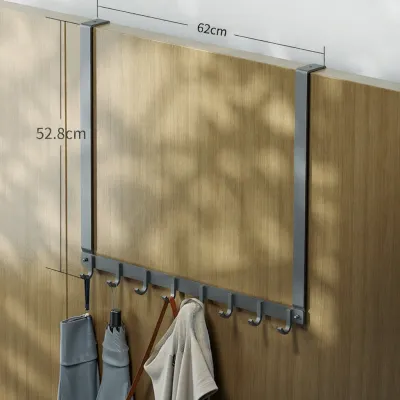
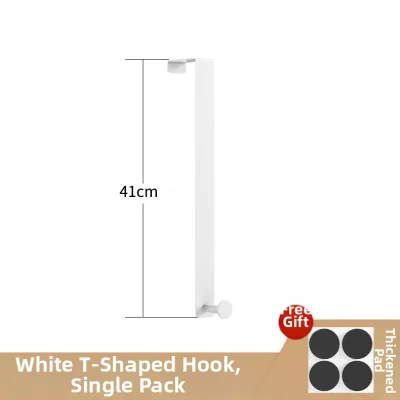
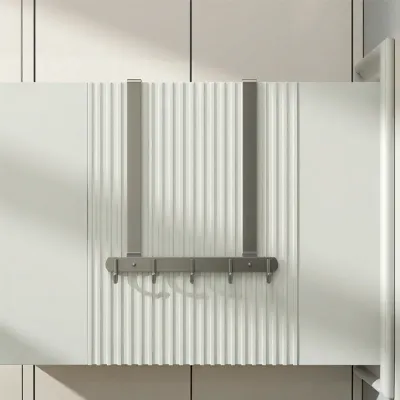
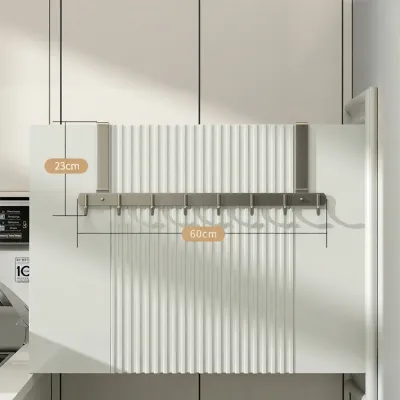
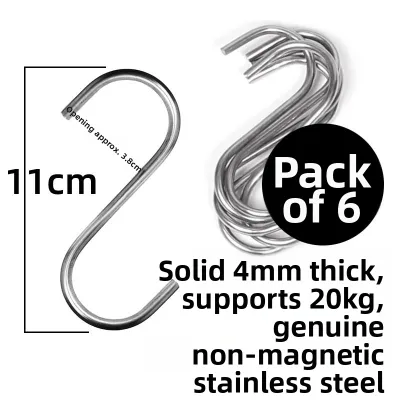
Prices are valid at publication and may change. Please refer to the product page for the latest price.
However, the physical length of a hook introduces a mechanical challenge. A longer hook acts as a lever; the further an item is hung from the wall or mounting point, the greater the downward torque exerted on the bracket. If you plan to hang heavy items like laptop bags or wet trench coats, you will need a heavy-duty model with reinforced brackets and deep-set screws rather than a lightweight decorative rack.
Spacing between individual hooks is another critical factor that affects both usability and garment care. When hooks are placed too close together—such as less than 8 cm apart—bulky items will overlap, compressing fabrics and trapping moisture. In Singapore’s humid environment, tightly packed damp clothes can quickly develop musty odors or mold, so choosing a hanger with generous spacing of 10 cm to 15 cm between hooks is highly recommended.
Finally, consider the primary installation environment to decide between a wall-mounted, over-the-door, or freestanding model. Wall-mounted units offer the highest weight capacity but require drilling into your walls. Over-the-door models are excellent for rental properties as they require no drilling, but they are limited by door frame clearances. Freestanding racks offer maximum flexibility but require dedicated floor space and a highly stable base.
Verifying Material Quality and Structural Integrity
To ensure your long hook hanger survives years of daily use, you must inspect the material quality and construction methods. Metal alloys are the most common choice for heavy-duty applications. When evaluating metal hangers, look for powder-coated steel or high-grade stainless steel, which offer excellent resistance to bending and moisture. Avoid cheap, thin sheet metals that can warp under moderate loads.

Inspect the surface finish closely for any signs of bubbling, uneven coating, or exposed metal. In local high-humidity areas, any break in a protective powder coating or chrome plating will allow moisture to reach the underlying iron, leading to rapid rust formation. A smooth, uniform, and thick finish is a reliable indicator of a well-manufactured metal hanger.
Solid wood hangers, made from hardwoods like rubberwood, oak, or beech, offer a classic aesthetic and natural structural rigidity. When choosing wood, verify that the surface is completely sealed with a water-resistant polyurethane or lacquer finish. Unsealed wood will absorb ambient moisture, causing the fibers to swell, warp, and eventually split under the weight of heavy items.
Engineered wood options, such as Medium-Density Fibreboard (MDF), are widely available and budget-friendly, but they require careful inspection. Ensure that all edges are completely sealed with thick edge banding to prevent moisture from entering the core. MDF is more prone to sagging over time under continuous heavy loads, making it better suited for lightweight accessories rather than heavy coats and bags.
Always check the manufacturer-stated weight limits, keeping in mind that total capacity does not equal individual hook capacity. A hanger rated for a total of 15 kg typically assumes the weight is distributed evenly across all hooks. Hanging a single 8 kg bag on one end of a five-hook rack can cause the unit to tilt, bend, or pull away from its mountings, so look for individual hook ratings which should ideally be at least 3 kg to 5 kg.
Examine the connection points where the hooks meet the backplate or frame. On metal racks, continuous, clean welds are far superior to small spot welds, which can easily snap under dynamic loading. For wooden models, look for hooks that are secured with recessed metal screws and dowels rather than simple glue joints, as mechanical fasteners provide the necessary shear strength to support hanging loads.
Space Planning and Installation Checks for Local Homes
Integrating a long hook hanger into a typical local apartment requires precise spatial planning. Because entryways and hallways in modern HDB flats can be narrow, a protruding hanger can easily become an obstruction. Measure the projection distance of the hooks and ensure that you still have at least 90 cm of clear walking space in front of the hanger to prevent accidental bumps.
For over-the-door hangers, measure the thickness of your door before purchasing. Standard bedroom doors are typically 35 mm to 40 mm thick, while main entrance doors can be significantly thicker. The top bracket of the hanger must match this thickness closely; if the bracket is too wide, the hanger will rattle and slide every time the door is moved, potentially scratching the paint or wood.
Additionally, check the clearance gap between the top of the door and the door frame. An over-the-door hanger requires a gap of at least 1.5 mm to 2 mm to allow the door to close smoothly. If the fit is too tight, the metal bracket will scrape against the frame, damaging your door frame and making it difficult to latch the door securely.
Wall-mounted installations require a clear understanding of your wall construction. Most internal walls in local residential units are made of solid concrete or brick, which provide excellent support but require a hammer drill, masonry drill bits, and high-quality plastic wall plugs to install. If you are mounting onto a drywall partition, you must use specialized hollow-wall anchors or locate the underlying metal studs to prevent the hanger from tearing out of the plaster.
Freestanding coat racks require a careful evaluation of their base footprint and center of gravity. A rack with a narrow base is highly susceptible to tipping, especially when heavy bags are hung on one side. Look for models with a heavy, wide base—ideally made of solid stone, cast iron, or weighted wood—to ensure the unit remains upright even when loaded unevenly in high-traffic areas.
Screening Brands and Sellers on E-Commerce Platforms
When shopping on local e-commerce platforms, you will encounter hundreds of generic and branded long hook hangers. To find a reliable product, you must look past promotional images and systematically analyze seller listings. Start by reading customer reviews, focusing specifically on the 2-star and 3-star ratings, which often provide the most honest feedback regarding material thickness and assembly issues.
Look for recurring complaints in the reviews, such as hooks that arrived bent, soft metal screws that stripped during installation, or misaligned pre-drilled holes. If multiple buyers note that the product feels flimsy or that the finish began to peel within a few weeks, it is a clear sign that the brand has compromised on material quality.
Verify the seller’s profile and shipping origin. Sellers with local warehouses or physical showrooms in Singapore are generally more reliable because they must comply with local consumer protection standards. Local shipping also reduces the transit time, minimizing the risk of the product being bent or damaged during long-distance international shipping.
Check the seller’s return policy and customer service responsiveness. A reputable brand or authorized distributor will typically offer a clear return window for manufacturing defects and respond promptly to technical questions about weight capacities and installation. Avoid purchasing from sellers with vague product descriptions, zero customer feedback, or unresponsive communication channels.
Be cautious of listings that offer extremely low prices, such as complete multi-hook racks for under S$5. High-quality metals, solid wood, and durable protective coatings have baseline manufacturing costs. Extremely cheap products almost always utilize thin-walled metals, low-density plastics, or weak adhesive backings that will fail quickly under normal daily use, costing you more in replacements and wall repairs.
Routine Maintenance and Safety Inspections
To extend the lifespan of your long hook hanger and prevent sudden failures, establish a simple routine maintenance schedule. Over time, the physical action of hanging and removing items creates continuous micro-vibrations. These vibrations can gradually loosen the screws, bolts, and wall anchors holding the hanger in place.
Every six months, use a screwdriver or wrench to check and tighten all connection points on your hanger. For wall-mounted units, gently wiggle the rack to ensure it remains flush against the wall. If you notice any play or if fine white plaster dust is falling from behind the mounting plate, the wall anchors may be slipping, and the unit should be re-secured immediately.
Inspect the physical structure of the hanger for signs of material fatigue. Look for hairline cracks in wooden joints, rust spots near metal welds, or any visible bending in the hooks. If a hook has begun to bend downward, its structural integrity has been compromised, and you should avoid hanging heavy items on that specific hook to prevent a sudden break.
Finally, practice proper weight distribution. Avoid hanging all your heaviest bags and coats on a single side of a freestanding rack or on one end of a wall-mounted hanger. Distributing the weight evenly across the entire length of the unit minimizes structural stress, prevents tipping hazards, and ensures that your hanger remains a safe and reliable storage solution for years to come.
Frequently Asked Questions (FAQ)
Are adhesive mounts safe for heavy long hook hangers?
Adhesive mounts are generally unsuitable for heavy long hook hangers or dynamic loads. Because a long hook extends far from the wall, any weight placed on it exerts a strong leverage force that pulls outward on the adhesive pad. This constant tension, combined with Singapore’s humid climate which can degrade adhesive bonds over time, often leads to sudden failure, potentially damaging your walls and the hung items. Reserve adhesive options strictly for lightweight accessories like keys or hand towels, and always mount heavy-duty hangers using mechanical screws and wall anchors.
How can I stabilize a freestanding rack on smooth tiles?
To stabilize a freestanding rack on smooth ceramic or homogenous tiles, apply non-slip rubber pads or silicone grips to the bottom of the base feet. These pads increase friction, preventing the rack from sliding when you hang items, while also protecting your tiled floor from scratches. Additionally, always place your heaviest items, such as heavy bags or storage boxes, on the lowest hooks or the base shelf of the rack to lower the overall center of gravity and significantly reduce the risk of tipping.

Community discussion
Share your experience or ask a question. Comments are reviewed before publication.