
Determining the right shoe organiser capacity for your home requires a systematic approach that balances your household’s actual footwear volume with the physical constraints of your living space. To find the perfect fit, you must audit your current collection, account for future purchases, and measure your entryway or storage area with precision. Matching the physical dimensions of your shoes to the internal shelf specifications of a potential organiser ensures that every pair has a dedicated spot without causing clutter or obstructing daily foot traffic.
Selecting storage based solely on a manufacturer’s estimated pair count often leads to frustration, as these estimates typically assume standard, low-profile shoes. By taking the time to calculate your specific storage needs and spatial limits before buying, you can invest in a functional piece of furniture that keeps your home tidy and organized.
Audit Your Shoe Collection to Establish Baseline Capacity
To establish a realistic baseline capacity, begin by gathering every pair of shoes currently owned by your household. Grouping these items by family member and shoe type provides a clear visual representation of your storage requirements. Categorise the collection into distinct groups, such as daily sneakers, formal dress shoes, high heels, sandals, and boots, as each category demands different storage volumes and shelf heights.
Products mentioned in this guide
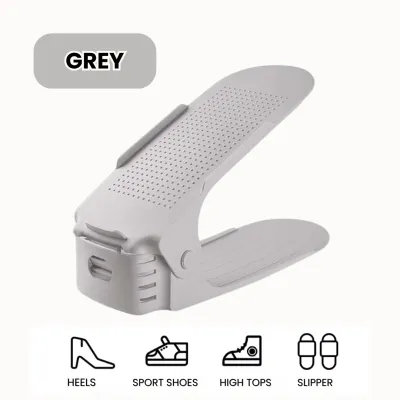
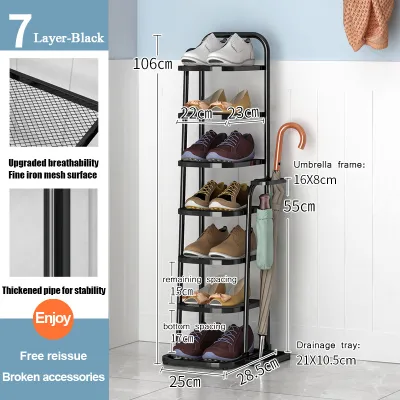
![[SG Stock] Algo 5/7/9 Shoe Organizer Shoe Rack with Umbrella Holder](https://img.lazcdn.com/g/p/37eeb610f3ec8f550b3bc2f2a7277767.jpg_400x400q80.jpg_.webp)
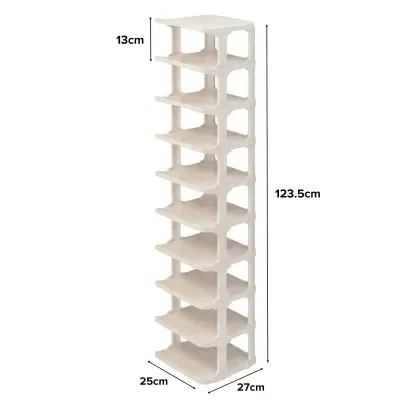
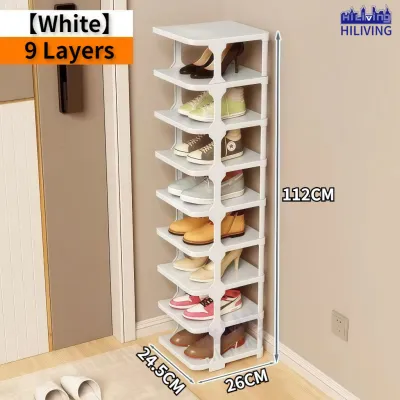
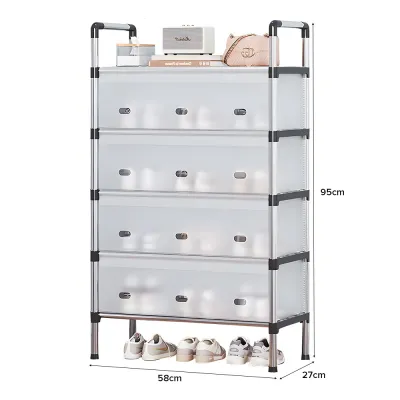
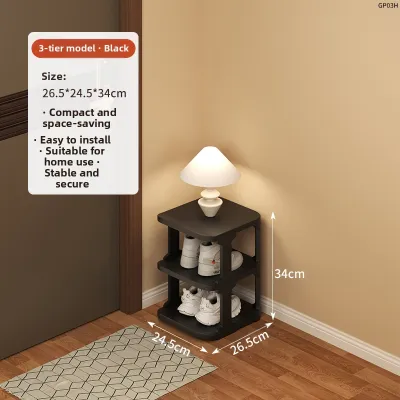
Prices are valid at publication and may change. Please refer to the product page for the latest price.
When calculating your target capacity, plan for future lifestyle changes and household growth. Families with young children should anticipate rapidly increasing shoe sizes, while active individuals may need to accommodate specialized footwear for sports. Factoring in a buffer of roughly ten to twenty percent above your current count will prevent your new organiser from becoming instantly overcrowded.
Another critical step is separating your daily-use footwear from pairs worn only on special occasions. Keeping your entire collection at the main entrance is rarely practical, especially in compact homes. Designate a high-traffic zone near the door for frequently worn shoes, and plan to store seasonal or formal footwear in secondary locations like bedroom wardrobes or under-bed storage containers.
Measure Your Space to Define Physical Limits
Before browsing online marketplaces or visiting furniture showrooms, you must define the physical boundaries of your designated storage area. Use a reliable measuring tape to record the maximum width, height, and depth available for the organiser. Be sure to note any architectural features that could interfere with the installation, such as skirting boards, electrical outlets, light switches, door frames, or wall-mounted distribution boards.

In many modern apartments and condominiums, entryways are narrow corridors where every centimetre of floor space matters. You must measure the swing radius of your front door, safety gates, and any adjacent room doors to ensure the cabinet will not block pathways when opened. If your entryway is particularly tight, a slim shoe cabinet with tipping buckets might be more appropriate than a traditional hinged-door unit.
When deciding on the shape of your organiser, weigh the visual and physical trade-offs between vertical and horizontal designs. Tall, vertical cabinets maximise storage capacity on a minimal footprint, making them excellent for high-ceilinged spaces, though they can sometimes feel visually heavy in small foyers. Low consoles or bench-style organisers offer a lower profile and double as seating or a surface for keys, but they provide significantly less storage capacity per square metre of floor space.
Match Shoe Profiles to Internal Organiser Dimensions
The physical dimensions of your shoes—not just the number of pairs—should dictate the internal configuration of your chosen organiser. High-top sneakers, ankle boots, and high heels require significantly more vertical clearance than flat sandals or loafers. If you have family members with larger shoe sizes, you must verify that the internal shelf depth can accommodate these longer soles without forcing you to store them sideways.
To ensure long-term flexibility, look for organisers that feature adjustable or removable shelves. This design allows you to customise the height of individual tiers to match your changing footwear collection, such as creating a taller bottom shelf for boots and narrower top shelves for flat shoes. Slanted shelves are another space-saving option, as they reduce the overall depth required by the cabinet while still keeping shoes easily accessible.
Always approach manufacturer capacity claims with caution, as these figures are often based on small, uniform shoe sizes. A cabinet advertised as holding twenty pairs may only fit twelve to fifteen pairs if your collection consists of chunky running shoes, wide men’s dress shoes, or platform heels. Checking the exact internal shelf width and dividing it by the average width of your shoes is the most reliable way to calculate true capacity.
Verify Clearance, Delivery, and Safety Requirements
Safety and practical installation should never be overlooked when selecting a shoe organiser. Tall, narrow, or top-heavy cabinets pose a significant tip-over risk, particularly in households with young children or active pets. Verify whether the product includes wall-anchoring hardware and check if your walls—whether concrete, drywall, or brick—can support secure mounting before finalizing your purchase.
Proper ventilation is another crucial factor, especially in humid climates where enclosed cabinets can trap moisture and lead to unpleasant odours or mould growth. If you prefer an enclosed look to hide visual clutter, opt for cabinets with louvred doors, mesh panels, or built-in ventilation holes at the back. These features promote continuous airflow, keeping your footwear dry and fresh.
Finally, confirm that the packaged furniture can actually reach its destination inside your home. Measure the dimensions of your building’s lift, stairwells, apartment corridors, and front doorway to ensure the delivery team can navigate the boxes safely. For flat-packed items, ensure you have sufficient floor space in your living room to assemble the unit comfortably without damaging your existing furniture or walls.
Avoid Common Capacity and Space Planning Mistakes
One of the most common mistakes in space planning is relying solely on nominal pair counts without considering the physical volume of your shoes. A family of four with bulky athletic shoes and boots will quickly overflow a cabinet designed for twenty pairs of flat dress shoes. Always measure the height and width of your bulkiest pairs to ensure they will fit comfortably side-by-side on the shelves.
Another frequent error is choosing an organiser that is too deep or tall for a narrow hallway, which can make the entrance to your home feel cramped and uninviting. A cabinet that protrudes too far into a walkway creates a physical bottleneck and disrupts the natural flow of traffic. Aim to maintain a clear walkway of at least eighty to ninety centimetres in high-traffic entryways.
Lastly, do not forget to allocate dedicated space for daily “drop zones” and quick-access storage. A shoe organiser that requires you to open doors and align shoes perfectly every time you enter the house can lead to shoes piling up on the floor. Choosing a unit with an open bottom gap allows you to slide off daily slippers or wet shoes instantly, keeping the entryway tidy with minimal effort.
Frequently Asked Questions (FAQ)
How much depth does a standard shoe organiser need?
A standard shoe organiser typically requires an internal shelf depth of at least 30 to 35 centimetres to accommodate most adult shoe sizes comfortably. If you have family members with larger shoe sizes (such as US men’s size 12 or above), or if you prefer to store your shoes inside their original boxes, you should look for a cabinet with an internal depth of 38 to 40 centimetres. Always check the product specifications carefully, as external cabinet depth includes the back panel and doors, which can reduce the actual usable internal space by several centimetres.
Is it better to buy one large shoe cabinet or multiple smaller ones?
Deciding between a single large cabinet and multiple smaller units depends on your entryway layout and aesthetic preferences. A single large cabinet offers a cohesive, streamlined look and maximises vertical storage, making it ideal if you have a dedicated alcove or a spacious foyer. However, multiple smaller, modular organisers offer greater spatial flexibility, allowing you to place a slim console near the front door for daily wear and a separate cabinet in a hallway or bedroom for occasional shoes, which helps maintain a smooth traffic flow in smaller homes.

Community discussion
Share your experience or ask a question. Comments are reviewed before publication.