
To determine the right shoe bench capacity for your home, calculate the number of active, daily-wear shoes for each family member—typically two to three pairs per person—and add a buffer of two pairs for guests. Translate this total into physical bench dimensions by allowing 20 to 25 cm of width per adult pair. For example, a household of three needs a bench that can store at least six to eight pairs of shoes, requiring a width of roughly 80 to 100 cm.
In Singapore’s high-density housing, such as HDB flats and condominiums, entryway space is highly optimized. A shoe bench serves a vital dual purpose: it offers a stable seat for safety and comfort while keeping daily footwear organized and off the floor. Balancing storage capacity with the physical footprint of your foyer is key to maintaining an open, welcoming, and safe entrance.
Audit Your Household's Daily Shoe Rotation
An entryway shoe bench is not designed to house your entire footwear collection. Attempting to store every pair you own in the foyer quickly leads to visual clutter and physical obstruction. Instead, begin your planning by separating your active daily rotation from long-term storage.
Products mentioned in this guide
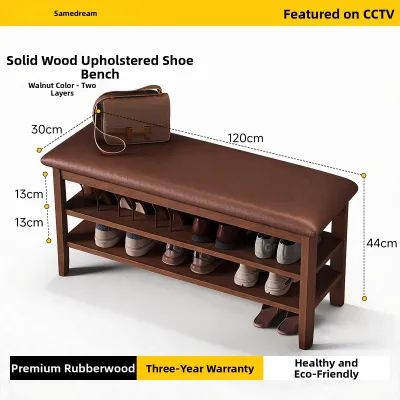
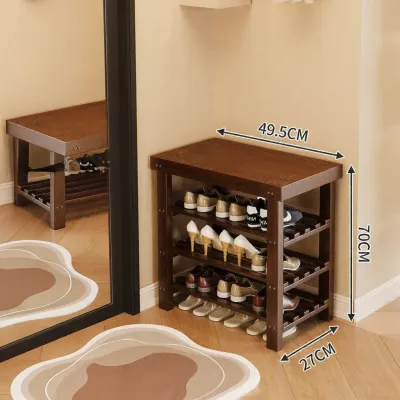
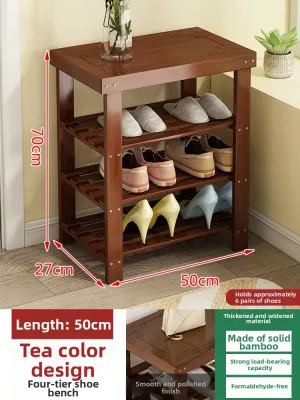
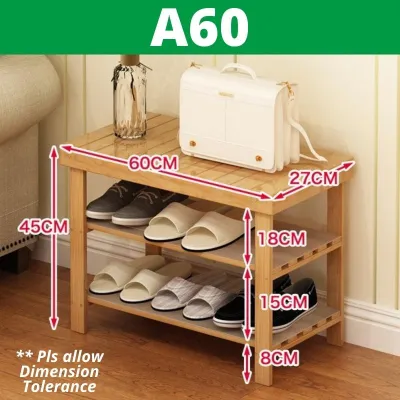
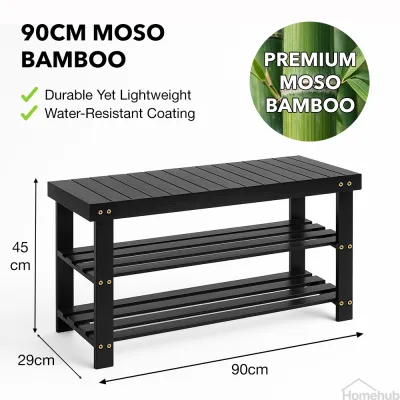
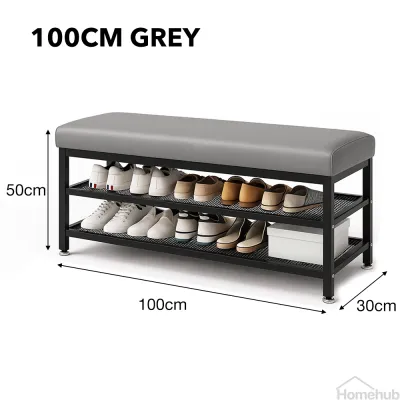
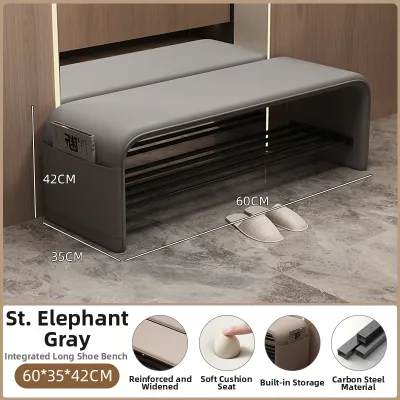
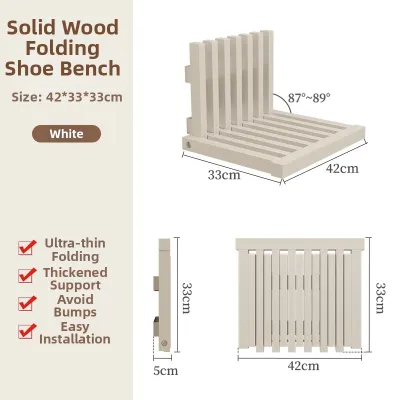
Prices are valid at publication and may change. Please refer to the product page for the latest price.
Count the number of shoes each household member actually wears on a weekly basis. For most residents, this includes one pair of work or school shoes, one pair of casual sneakers or sandals, and perhaps a pair of athletic shoes. This usually averages out to two or three active pairs per person. If you have a household of four, your baseline active storage requirement is eight to twelve pairs.
Next, assess the specific types of footwear your family uses. Flat sandals, slides, and flip-flops—which are common in Singapore’s warm, humid climate—take up minimal vertical and horizontal space. On the other hand, bulky running shoes, high-top sneakers, or formal heels occupy significantly more physical volume. If your family’s collection consists primarily of structured, wide-profile shoes, you must plan for more generous spacing.
Do not forget to account for lifestyle factors such as frequent guests or future household growth. If you regularly host extended family or friends, leaving a designated empty slot or two prevents visitors’ shoes from piling up chaotically outside your front door. A small buffer ensures your entryway remains tidy even during weekend gatherings.
Once you have established your active shoe count, relegate the remaining collection to secondary storage. Formal shoes, seasonal footwear, and rarely worn pairs should be placed in bedroom wardrobes or tall, closed shoe cabinets deeper inside the home. This disciplined split keeps your entryway bench highly functional and easy to manage.
Translate Shoe Counts into Bench Dimensions
Converting your audited shoe count into physical bench dimensions requires looking at three key measurements: width, height, and depth. Understanding how these dimensions interact with shoe sizes will help you select a bench that fits both your footwear and your space.

Width is the most direct indicator of horizontal capacity. On average, a standard pair of adult shoes requires a linear width of 20 to 25 cm. If you select a bench with a width of 60 cm, you can expect to fit two to three pairs of adult shoes per shelf. Stepping up to an 80 cm bench increases that capacity to three or four pairs per shelf, while a 100 cm bench comfortably accommodates four to five pairs.
The number of tiers determines the vertical capacity and directly impacts the seating height. Most standard entryway benches feature either two or three tiers. A two-tier bench typically sits at a highly ergonomic height of 40 to 48 cm, allowing you to sit comfortably with your feet flat on the floor. A three-tier design increases storage capacity but can raise the seating surface to an awkward height of over 50 cm, or it may compress the vertical clearance of each shelf so much that only flat slippers can fit.
Depth is critical for ensuring that shoes do not overhang the front or back of the shelves. A standard bench depth of 30 to 35 cm is sufficient for most shoe sizes. However, if household members wear larger sizes (such as EU 44 and above), measure the shoes from heel to toe before buying. Ensure the internal shelf depth can fully support the soles to prevent heels from sticking out into the walkway.
To maximize versatility, look for benches that feature adjustable or removable shelves. Footwear collections change over time, and having the ability to adjust shelf heights allows you to accommodate low-profile flats on one level while clearing out a partition to fit taller boots or high-tops on another. This adaptability prevents wasted vertical space.
Measure Your Entryway and Check Clearances
Before committing to a specific bench capacity, you must verify that the physical unit fits harmoniously within your entryway. In compact Singaporean homes, a bench that is even slightly too large can disrupt the flow of the entire household.
Start by measuring the exact floor space available next to your main entrance. Use a measuring tape to map out the maximum length and depth the bench can occupy. If your entryway features built-in utility meters, a household shelter door, or DB box cabinets, ensure the bench will not block access to these essential features.
Pay close attention to door swings and opening paths. The main wooden door, the metal gate, and any adjacent cabinet doors must be able to swing open fully without colliding with the bench. A collision hazard not only damages your furniture and doors over time but also creates a frustrating bottleneck during busy morning rushes.
Maintain a safe and comfortable walkway clearance. As a general rule, try to keep a clear passage width of at least 90 cm to 100 cm in your main hallway. This clearance ensures that family members can walk past the bench easily, even when carrying groceries, handling school bags, or maneuvering a baby stroller or wheelchair.
Finally, evaluate the structural stability and weight capacity of the bench. Because this piece of furniture is designed to be sat upon, it must safely support the dynamic weight of an adult sitting down. Look for benches with a specified weight capacity of at least 100 to 120 kg. Verify that the frame, joints, and legs are robust and do not wobble. If you have young children or elderly family members, choosing a highly stable bench with rounded corners is a crucial safety precaution to prevent accidental tips or painful bumps.
Common Capacity and Sizing Mistakes to Avoid
Selecting the perfect shoe bench involves avoiding several common pitfalls that buyers frequently encounter. Being aware of these mistakes beforehand can save you from the hassle of returns or living with an impractical piece of furniture.
One of the most frequent errors is overestimating capacity by assuming all stored shoes are uniform and low-profile. Manufacturers often calculate storage capacity using small, flat shoes like slippers or children’s footwear. If your household primarily wears chunky athletic sneakers or high heels, the actual capacity of the bench may be up to 30% lower than advertised.
Another mistake is ignoring seating ergonomics in favor of maximum storage. It is tempting to buy a very tall, multi-tiered bench to maximize shoe space, but if the seat is too high, it becomes highly uncomfortable to use. Ensure the bench height allows your knees to bend at a comfortable 90-degree angle when your feet are flat on the floor, making it easy to tie laces or slip on shoes.
Do not forget to measure the delivery path before making a purchase, especially if you are buying a pre-assembled solid wood bench. Ensure the unit can fit through your HDB lift doors, navigate narrow corridor corners, and pass through your front doorway. A bench that cannot make it into your home is a major logistical headache.
Lastly, avoid buying a bench that matches your current shoe count with absolutely zero room to spare. Your footwear collection is dynamic, and new purchases or seasonal changes will inevitably occur. Choosing a bench with a small amount of buffer capacity—or pairing it with a nearby vertical cabinet—ensures your entryway remains organized over the long term.
Frequently Asked Questions (FAQ)
How many pairs of shoes can a standard 2-tier shoe bench hold?
The capacity of a standard two-tier shoe bench depends primarily on its width. A compact 60 cm wide bench typically holds four to six pairs of adult shoes. An 80 cm wide bench can accommodate six to eight pairs, while a larger 100 cm wide bench easily stores eight to ten pairs. Keep in mind that slim sandals, slippers, or children’s shoes can be nested closer together to increase this count, whereas wide running shoes or bulky boots will reduce the total capacity.
Should I choose open shelves or closed cabinets for better shoe bench capacity?
The choice between open shelves and closed cabinets depends on your household’s daily habits and storage priorities. Open shelves provide immediate, grab-and-go access and offer excellent natural ventilation, which is highly beneficial in Singapore’s humid climate to prevent moisture build-up and odors. Closed cabinets, such as those with drop-down doors or drawers, excel at hiding visual clutter and protecting shoes from dust. However, closed designs have rigid physical boundaries that can restrict bulkier footwear and may require extra care to ensure proper airflow.

Community discussion
Share your experience or ask a question. Comments are reviewed before publication.