
Determining the right capacity for a plastic shoe rack cabinet requires counting your household’s current footwear, anticipating growth, and translating that total into specific tier and compartment configurations. Matching the cabinet’s physical dimensions to your available space and checking manufacturer specifications ensures a practical, unobtrusive, and structurally sound storage solution for your home.
Assess Your Household's Current Shoe Inventory
Gather every pair of shoes currently used by household members to establish an accurate baseline. Separate these shoes into distinct categories based on how often they are worn. Everyday shoes—such as work heels, school sneakers, or daily walking flats—need to be easily accessible, while seasonal, formal, or occasional footwear can be allocated to higher or less accessible tiers.
Next, group the shoes by their physical shape and height. Flat sandals, flip-flops, and canvas slip-ons take up minimal vertical space and can often be nested or placed closely together. In contrast, bulky items like high-top sneakers, running shoes, and boots require significantly more vertical clearance and horizontal width. Note down the number of high-profile shoes versus low-profile ones, as this ratio directly dictates the type of shelving configuration you will need.
Products mentioned in this guide
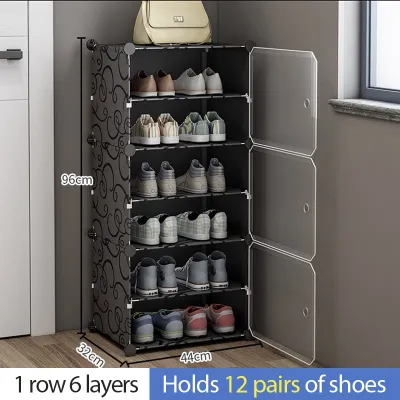
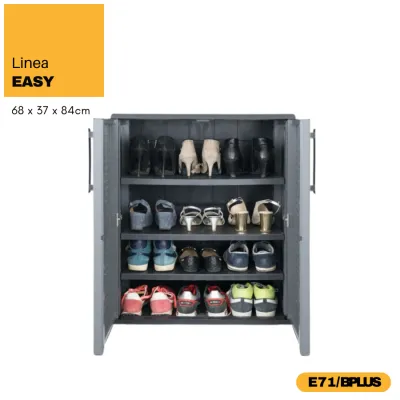
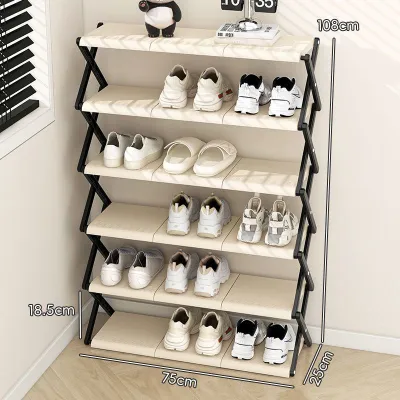
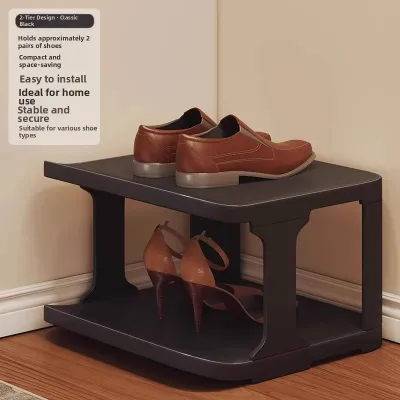
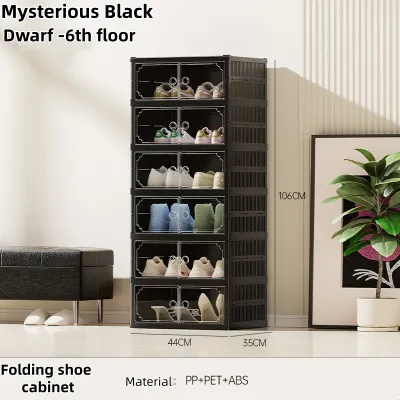
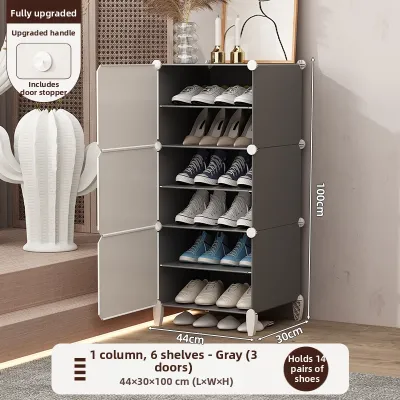
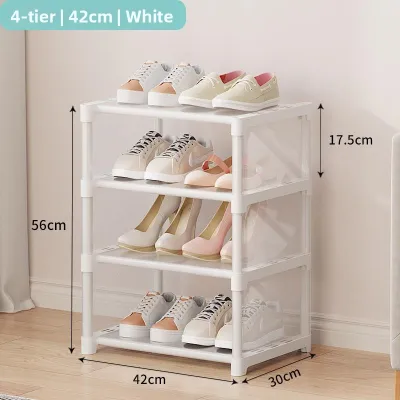
Prices are valid at publication and may change. Please refer to the product page for the latest price.
Finally, analyze your current storage bottlenecks to pinpoint exactly where your existing setup is failing. Are shoes piling up on the floor because there are not enough shelves? Are taller shoes bent or squeezed into tight spaces, risking damage to the material? Identifying these specific pain points helps you understand whether you need a cabinet with more overall tiers, wider compartments, or specialized vertical clearance.
Calculate Future Storage Needs and Household Growth
A shoe cabinet is a long-term organizational investment, meaning your calculation must account for how your household might evolve over the next few years. If you have young children, remember that their shoe sizes will increase rapidly. Larger shoes not only take up more physical space on a shelf but also tend to be bulkier, meaning a tier that once held several pairs of toddler shoes might only fit two pairs of teenage sneakers in the future.

Changes in household composition also play a major role in storage planning. Anticipate potential life transitions, such as welcoming a new family member, hosting long-term guests, or having a partner or roommate move in. Even a single additional person can add multiple pairs of shoes to your daily entryway storage, quickly overwhelming a cabinet that was purchased to fit only your current household size.
Additionally, reflect honestly on your household’s purchasing habits. If you or your family members are footwear enthusiasts who regularly buy new styles, your collection will naturally expand. Conversely, if you follow a strict “one-in, one-out” rule, your storage needs will remain relatively stable. If you expect your collection to grow, it is wise to add a buffer of at least twenty percent to your calculated capacity to avoid needing a second cabinet shortly after purchase.
Translate Shoe Count into Cabinet Tiers and Compartments
Once you have a target shoe count, you must translate this number into the physical dimensions of a plastic shoe rack cabinet. Do not rely solely on generic capacity claims like “holds 24 pairs,” as these estimates are often based on small, flat shoes. Instead, look closely at the manufacturer’s detailed specifications for internal compartment width, depth, and height.
To calculate how many pairs will fit on a single tier, measure the width of your widest everyday shoes. Divide the manufacturer’s stated internal tier width by the width of a single pair of shoes. For example, if a tier is 60 centimeters wide and your average shoe pair is 20 centimeters wide, that tier will comfortably hold three pairs. Be sure to perform this calculation using your largest household shoes to ensure they will actually fit side-by-side.
Plastic cabinets often feature molded panels, which have a specific structural thickness. This thickness can reduce the actual internal usable space compared to thin wire or wooden alternatives. Always check the product manual or specifications to confirm whether the listed dimensions refer to the external frame or the internal shelves.
Furthermore, look for plastic cabinets that offer adjustable or removable shelves. The ability to customize tier heights is crucial if your inventory includes a mix of flat sandals and high-top sneakers. Removing a single plastic divider can double the vertical clearance of a tier, allowing you to store taller footwear efficiently without wasting valuable horizontal space on other shelves.
Measure Your Available Space and Check Clearance
Determining the right capacity is pointless if the physical cabinet cannot fit into your home. Begin by measuring the exact floor footprint of your designated placement area, whether it is an entryway, a hallway, or a balcony. Remember to leave small gaps of a few centimeters to accommodate baseboards, wall unevenness, and proper ventilation to prevent moisture buildup behind the plastic frame.
In Singapore, residential layouts often feature tight corridors, cozy entryways, or specific lift access limits. Before finalizing your purchase, verify that the fully assembled cabinet—or its flat-packed packaging—can easily pass through your building’s elevators, stairwells, and main doors. A cabinet that is too bulky to transport up to your unit or maneuver through your front door will cause significant delivery headaches.
Additionally, pay close attention to operational clearance. Ensure that the cabinet doors, sliding panels, or pull-out drawers have enough space to open fully without hitting adjacent walls, main doors, or other furniture. If your entryway is narrow, a plastic shoe cabinet with sliding doors or open tiers might be a more practical choice than one with traditional swing doors that block the walkway when opened.
Common Capacity Mistakes to Avoid
One of the most common mistakes is assuming that every tier in a cabinet will hold the exact same number of shoes. In reality, a tier that easily accommodates four pairs of flat sandals might only fit two or three pairs of wide running shoes. Always calculate your capacity based on your bulkiest everyday footwear rather than your smallest flats.
Another frequent oversight is failing to allocate dedicated space for guest slippers or temporary footwear. When friends or family visit, their shoes will inevitably end up cluttered around your entryway if your cabinet is already filled to maximum capacity. Leaving at least one lower tier or an open bottom space free for guests helps maintain a tidy entrance.
Finally, do not overlook the weight limits of a fully loaded plastic cabinet. While plastic is lightweight and easy to clean, it can sag or warp under excessive weight. Always check the manufacturer’s maximum load specifications per tier. Distribute heavier shoes, like leather boots or heavy-soled sneakers, on the bottom shelves to maintain the cabinet’s stability and prevent tip-over risks.
Frequently Asked Questions (FAQ)
How many pairs of shoes fit in a standard tier?
To determine how many pairs of shoes will fit on a standard tier, you must check the manufacturer’s stated compartment width and depth for that specific model. Because shoe sizes and styles vary widely, there is no universal standard. Measure the width of your widest everyday shoes and compare them to the internal shelf dimensions to ensure an accurate fit before buying.
Should I buy a larger cabinet if I plan to store shoe boxes inside?
Yes, if you plan to store shoes inside their original boxes, you should select a larger cabinet. Shoe boxes significantly increase the physical volume and vertical height required for storage. Check the manufacturer’s specifications to ensure the tiers are deep and tall enough, or look for a model with adjustable shelves that can accommodate standard box dimensions without wasting space.

Community discussion
Share your experience or ask a question. Comments are reviewed before publication.