
Selecting the right kitchen shelf cabinet provider in Singapore requires balancing modular flexibility with precise spatial fit. While international modular brands offer highly adjustable, pre-drilled peg systems and standardized pull-out accessories, local bespoke carpentry provides millimeter-precise fits for irregular HDB or condominium layouts. The ideal choice is determined by evaluating your specific storage weight requirements, layout constraints, and how often you plan to reconfigure your shelving.
In Singapore’s compact housing landscape, maximizing vertical and horizontal space is essential. Kitchens must accommodate a wide variety of items, from heavy claypots and rice cookers to lightweight spice jars and plastic containers. Understanding how different cabinet systems handle these varied loads, resist high humidity, and adapt to changing household needs will ensure your kitchen remains functional and durable for years to come.
Defining Your Shelf Storage Needs Before Comparing Brands
Before evaluating different cabinet brands or carpentry options, you must establish a clear baseline of your kitchen storage requirements. This prevents overpaying for unnecessary customization or choosing a system that cannot support your daily cooking habits. Begin by categorizing your kitchen inventory by weight, size, and frequency of use.
Products mentioned in this guide
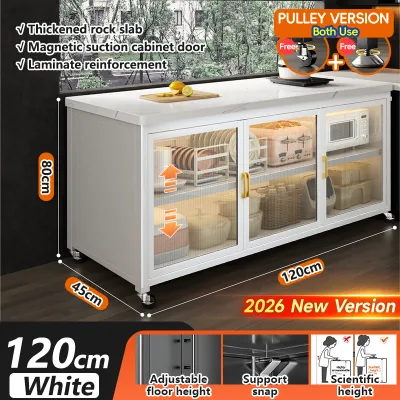
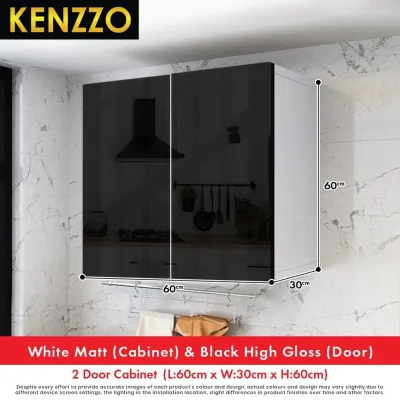
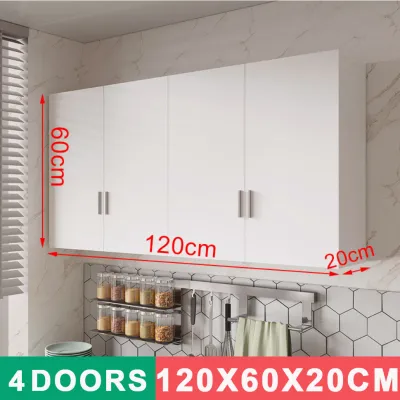
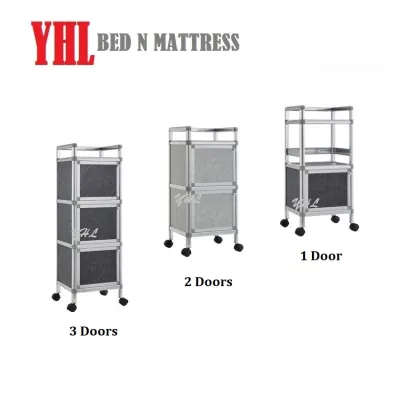
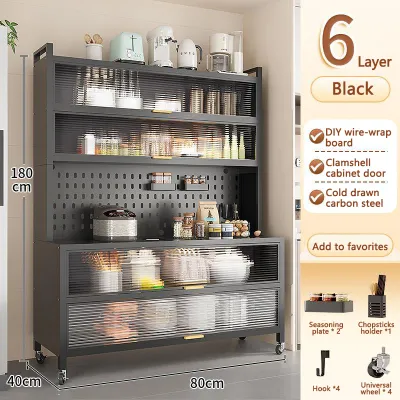
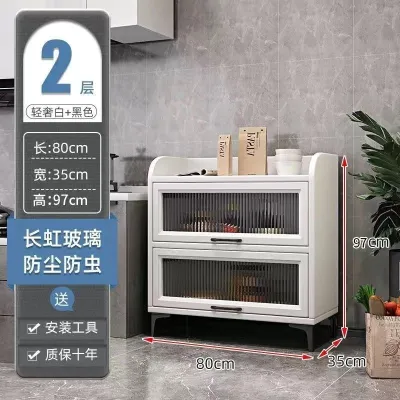
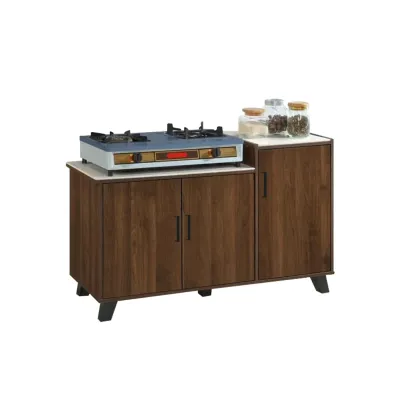
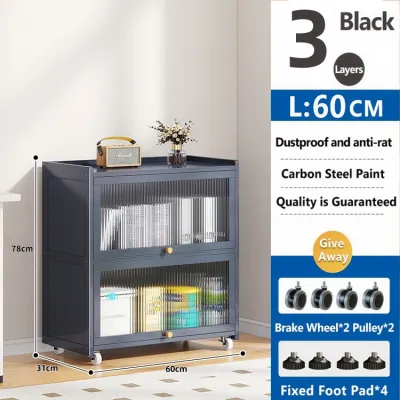
Prices are valid at publication and may change. Please refer to the product page for the latest price.
Heavy cookware, such as cast-iron skillets, Dutch ovens, and heavy-duty stand mixers, should ideally be stored in lower cabinets or on reinforced base shelves. These items require deep shelving with high load capacities. On the other hand, lightweight items like spices, dry goods, and daily tableware can be positioned on higher wall shelves where accessibility and visibility are the primary concerns. Grouping your items this way helps you determine how many heavy-duty shelves versus standard adjustable shelves you actually need.
Next, measure your available kitchen footprint with extreme precision. Singapore apartments, particularly HDB BTO flats and older condominiums, often feature structural pillars, exposed gas pipes, or awkward corner layouts that can restrict standard cabinet installations. Note any vertical gaps between the countertop and wall cabinets, as well as the height of your tallest appliances. If you have high ceilings, you may want to consider vertical extension units or open shelving that utilizes the upper wall space.
Finally, identify where specialized inserts would improve your daily workflow. Standard flat shelves are highly versatile, but they can make accessing items at the back of deep cabinets difficult. Consider whether you need pull-out tiers, lazy Susans for corner units, or dedicated appliance garages with roll-up doors. These specialized storage solutions require specific cabinet depths and structural support that must be planned before choosing a provider.
Core Customization Features to Look for in Kitchen Shelf Cabinets
True shelf customization goes beyond simply choosing the color of your cabinet doors. It relies on the engineering of the cabinet carcass and the flexibility of its internal hardware. When comparing brands, look closely at the adjustability, modularity, and dimensional options of their shelving systems.

Adjustability is primarily determined by the presence of pre-drilled peg holes along the interior walls of the cabinet carcass. Many high-quality modular brands utilize the standard “System 32” layout, which features vertical rows of holes spaced exactly 32mm apart. This tight grid allows you to adjust shelf heights in tiny increments, minimizing wasted vertical space above low-profile items like baking trays or canned goods. Avoid brands that only offer three or four fixed peg positions, as this severely limits your ability to optimize storage as your needs change.
Modularity refers to how easily the shelving system integrates with add-on organizers and hardware. A highly customizable brand will offer a comprehensive catalog of compatible accessories, such as vertical plate dividers, under-shelf wire baskets, and retrofittable pull-out drawers. These accessories should clip or screw directly into the existing peg holes without requiring professional tools or additional drilling. This allows you to convert a standard shelf into a pull-out pantry drawer or a spice rack later on.
Lastly, evaluate the depth and clearance options offered by the brand. Standard wall cabinets typically feature shelf depths of 300mm to 350mm, while base cabinets range from 550mm to 600mm. Ensure the brand you choose offers non-standard depth options if you plan to store oversized platters, commercial-grade blenders, or deep microwave ovens. The ability to customize shelf clearance is crucial for preventing tall appliances from being relegated to the countertop, keeping your workspace clutter-free.
Evaluating Structural and Material Limits for Heavy Kitchen Items
A highly customizable shelving system is of little use if the shelves sag or collapse under the weight of your cookware. In Singapore’s humid tropical climate, material selection and structural engineering are critical factors that determine the longevity of your kitchen cabinets.
Always check the manufacturer’s specifications for the maximum load capacity per shelf. This is typically rated in kilograms (e.g., 15kg, 25kg, or 30kg) and assumes the weight is distributed evenly across the shelf surface. If a brand cannot provide written load ratings for their shelving, it is a sign that the system may not be engineered for heavy-duty kitchen use.
The core material and thickness of the shelves play a major role in resisting deflection, commonly known as sagging. Standard modular cabinets often use melamine-faced chipboard (MFC) or medium-density fibreboard (MDF). While these materials are cost-effective and highly uniform, they must be sufficiently thick—ideally 18mm or 25mm rather than the cheaper 16mm options—to support heavy loads over long spans. For maximum moisture resistance and strength, plywood cores or high-pressure laminate (HPL) compact boards are highly recommended for Singapore kitchens, as they are far less prone to swelling and warping when exposed to humidity or minor water leaks.
Additionally, inspect the quality of the edge banding and the shelf support brackets. Edge banding must be applied seamlessly using laser or polyurethane (PUR) adhesives to seal the core material against moisture ingress. The shelf support brackets themselves should be made of metal rather than plastic. Look for brackets that lock the shelf in place or feature rubberized grips to prevent the shelf from sliding forward or tipping when you pull out heavy items.
Standard Modular Brands vs. Fully Bespoke Carpentry
When planning customized kitchen shelving in Singapore, you will generally choose between two main routes: purchasing a standard modular cabinet system or hiring a local carpenter for fully bespoke carpentry. Both approaches offer distinct advantages and trade-offs regarding flexibility, installation, and long-term maintenance.
Modular cabinet systems are manufactured in highly controlled factory environments, ensuring consistent quality, precise pre-drilled holes, and standardized hardware compatibility. These systems are typically faster to deliver and install, making them an attractive option for homeowners on tight renovation schedules. Because they rely on standardized dimensions (usually in widths of 30cm, 40cm, 60cm, or 80cm), they offer highly predictable adjustable grids and a wide range of ready-made accessories. However, their main limitation is spatial fit; if your kitchen wall measures 145cm, a modular system will require a 5cm filler panel, resulting in slightly wasted space.
Fully bespoke carpentry, on the other hand, is built from scratch to fit the exact dimensions of your kitchen. This is highly beneficial for irregular layouts, sloped ceilings, or when you want to maximize every single millimeter of storage around structural beams or plumbing pipes. A skilled carpenter can create custom shelf depths, integrated lighting channels, and unique corner storage solutions that modular brands cannot replicate. The trade-off is that bespoke carpentry relies heavily on the individual craftsman’s skill. You must actively verify the quality of the hardware they source (such as Blum or Hettich runners and hinges) and ensure they use high-quality, moisture-resistant plywood cores.
Furthermore, consider the long-term flexibility and warranty differences. Modular brands often provide extensive, multi-year warranties on their hardware and moving parts, and finding replacement shelves or pegs years down the road is relatively straightforward. Bespoke carpentry may only come with a limited structural warranty, and reconfiguring the shelf heights later can be difficult if the carpenter installed fixed panels or did not drill a continuous row of peg holes.
Decision Framework: Selecting the Right Kitchen Cabinet Provider
To choose the right kitchen cabinet provider for your home, use this conditional framework based on your verified space, load requirements, and desire for future flexibility.
First, choose a modular brand if you prioritize long-term adaptability, standardized warranties, and predictable quality. This route is ideal if your kitchen layout consists of straight, standard-sized walls and you want the freedom to easily purchase and install extra shelves, pull-out baskets, or drawer dividers yourself as your storage needs evolve over time.
Second, choose bespoke carpentry if your kitchen features irregular dimensions, non-standard ceiling heights, or structural obstacles that would result in significant wasted space with modular units. This is also the preferred choice if you require highly specific shelf depths or want a completely seamless, built-in aesthetic that integrates perfectly with your home’s architectural features.
Third, before signing any contract or making a deposit, verify that the provider offers clear, written documentation regarding shelf load limits, core board materials, and hardware warranties. Ensure that the materials chosen are rated for high-humidity environments to prevent premature warping or mold growth.
Finally, if a provider—whether a modular brand or a custom carpenter—cannot supply written specifications for their shelf support mechanisms, core board materials, or maximum weight capacities, it is best to look elsewhere. Investing in kitchen cabinetry without these assurances increases the risk of structural failure and costly repairs in the future.
Frequently Asked Questions (FAQ)
Can I retrofit existing kitchen cabinets with custom pull-out shelves?
Yes, retrofitting existing cabinets with pull-out shelves is highly feasible, but it requires careful measurement of your cabinet’s internal dimensions. Before purchasing any retrofit kits or sliding tracks, measure the clear opening width, taking into account any cabinet door hinges that might protrude and block the path of the sliding drawer. You must also verify that the sliding tracks are rated for the weight of the items you plan to store. Finally, ensure that the existing cabinet carcass is structurally sound and securely anchored to the wall or floor, as the shifting weight of a fully loaded pull-out shelf can cause unanchored cabinets to tip forward.
Do adjustable shelf pegs damage the cabinet interior over time?
Adjustable shelf pegs can cause wear to the cabinet interior if they are frequently moved or overloaded. In cheaper cabinet systems, plastic pegs can degrade and snap, while metal pegs inserted directly into bare particle board holes can gradually strip the wood fibers, leading to loose fits and sagging shelves. To prevent this damage, look for cabinet systems that utilize metal shelf pins paired with metal-threaded inserts (sleeves) pre-installed inside the peg holes. These metal sleeves distribute the weight of the shelf evenly and protect the surrounding wood core from crumbling, ensuring the holes remain secure even after years of reconfiguration.

Community discussion
Share your experience or ask a question. Comments are reviewed before publication.