
Combining a mobile book trolley with fixed modular shelving offers the ultimate balance of structural stability and dynamic flexibility for a modern home library. While fixed shelves anchor your collection and maximize vertical wall space, a mobile trolley brings your favorite reads directly to your workspace, bedside, or reading nook. This hybrid approach allows you to adapt your storage as your reading habits, living arrangements, and spatial constraints evolve over time.
Assessing Your Space and Storage Needs
Before purchasing any furniture, you must evaluate the physical boundaries of your room. Measure the available wall height and width for the modular shelving, ensuring you account for baseboards, light switches, and electrical outlets. Equally important is measuring the floor clearance pathways where the book trolley will travel. A tight corner or narrow hallway can quickly turn a mobile unit into an awkward obstacle if you do not plan for its movement.
Next, take inventory of your book collection. Group your books by size, weight, and how often you reference them. Heavy hardcovers, encyclopedias, and archival volumes are best suited for permanent, fixed shelving that can handle substantial loads. Conversely, paperbacks, current study materials, and children’s bedtime stories are ideal candidates for the mobile trolley, where they remain highly accessible.
Products mentioned in this guide
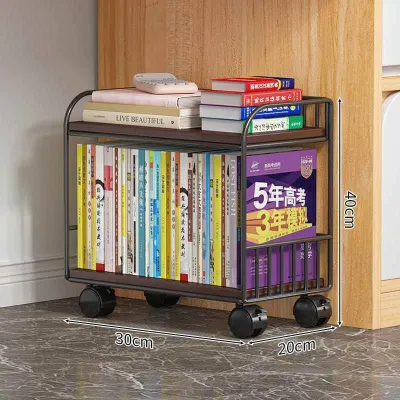
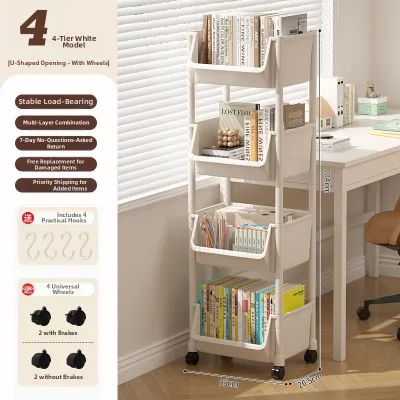
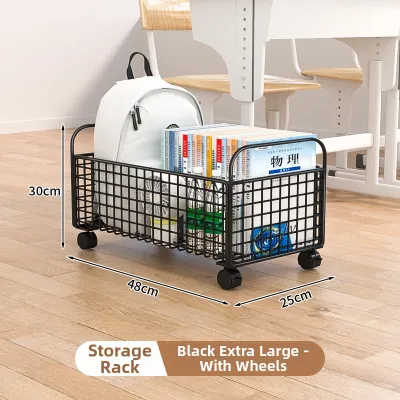
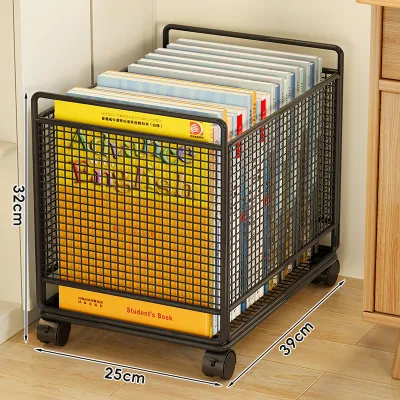
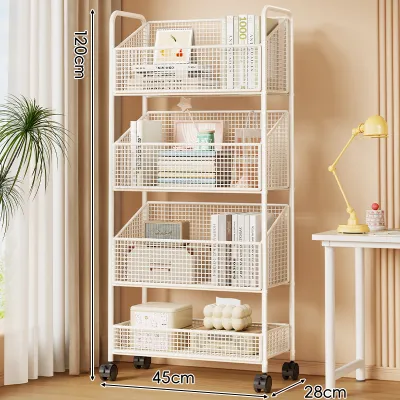
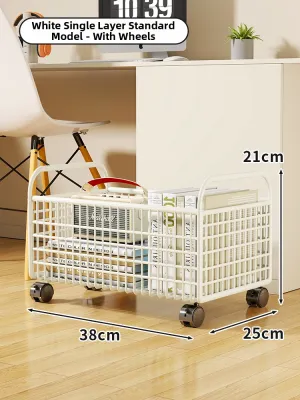
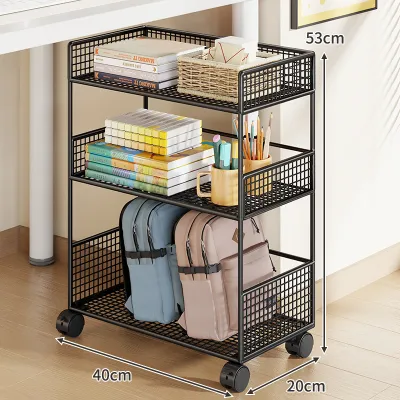
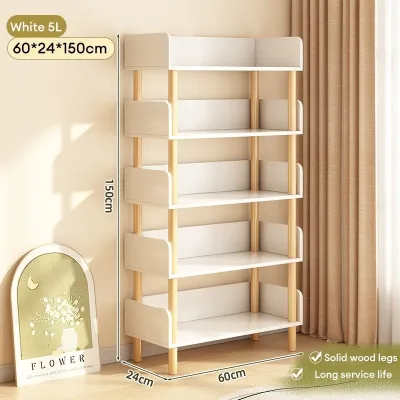
Prices are valid at publication and may change. Please refer to the product page for the latest price.
Consider how your room functions throughout the day. In multi-purpose spaces—such as a combined home office and living room—the demand for floor space changes constantly. Identifying high-traffic zones helps you determine where the trolley can park when not in use, ensuring it does not block walkways or access to built-in storage.
Designing the Hybrid Layout
A successful hybrid layout relies on clear zoning. Assign your fixed modular shelving to the perimeter of the room to serve as the structural backbone of your library. This keeps the heaviest portion of your collection secure and out of the main flow of traffic. The book trolley then acts as a satellite station, carrying a curated selection of books that changes based on your current projects or seasonal interests.

When planning the layout, map out the turning radius of your chosen trolley. Most utility carts require a clear path to turn smoothly without scraping against walls or other furniture. Look for “tuck-away” opportunities, such as an empty niche under a desk, a gap at the end of a modular shelving run, or an unused corner behind a door where the trolley can park flush when you need to clear the floor.
The beauty of a mobile trolley lies in its versatility as a temporary room divider or an extension of your main shelves. You can roll the trolley perpendicular to a wall to partition a quiet reading corner from a busy living area. When you host guests or need open space for activities, simply unlock the wheels and glide the unit back against the wall, instantly restoring the room’s original footprint.
Selecting Compatible Modular Shelving and Book Trolleys
Achieving a cohesive look and seamless function requires careful coordination of dimensions and materials. Check the depth of your modular shelving units; if you plan to tuck the trolley into a designated bay within the shelving system, the trolley’s depth must be slightly less than the shelf opening to avoid protruding into the room. Compare the height of the trolley’s top handle with the clearance of any low-hanging modular shelves or desk surfaces.
Structural integrity is paramount when dealing with the immense weight of paper. Always check the manufacturer’s specified weight capacities for both the modular shelves and the trolley. Look for robust connection structures in your modular shelving, such as steel brackets or solid wood dowels, and inspect the surface finishes. A durable, scratch-resistant finish on both units will prevent unsightly wear from the frequent movement and docking of the trolley.
Pay close attention to the caster wheels on the book trolley. The ideal wheel type depends heavily on your home’s flooring. Hard, plastic casters can scratch delicate hardwood or laminate floors, whereas softer rubber or polyurethane wheels glide quietly and protect smooth surfaces. Ensure the trolley features high-quality locking mechanisms on at least two wheels to keep the unit firmly in place when stationary.
Arranging and Reconfiguring Your Collection
Organizing a hybrid system is an ongoing process that changes with your reading habits. When loading your book trolley, always place the heaviest books, such as art volumes or textbooks, on the bottom shelf. This simple step maintains a low center of gravity, which drastically improves the trolley’s stability and makes it much easier to steer across the room.
Group your books by subject, project, or genre to make the most of the mobile system. For example, you can dedicate the trolley to a specific research project, a collection of cookbooks for kitchen use, or a selection of novels for your weekly book club. When the project ends or your interests shift, you can seamlessly swap these books back onto the fixed modular shelves and load the trolley with a fresh selection.
Modular shelving offers the advantage of adjustable shelf heights. Use this feature to accommodate oversized or oddly shaped books on your fixed walls, keeping the trolley reserved for standard-sized paperbacks and novels that fit neatly within its compact tiers. This division of labor keeps your wall storage looking clean and organized while maximizing the utility of your mobile cart.
Safety, Stability, and Maintenance
Safety must be your top priority when installing any tall shelving system. Always anchor your modular shelving units securely to the wall using the manufacturer’s supplied hardware or appropriate wall anchors for your specific wall type. This is especially critical in homes with active households, as tall, top-heavy shelves pose a serious tip-over hazard if climbed or bumped.
For the mobile portion of your library, make it a habit to engage the wheel locks every time the trolley is parked. Even a slight slope in your flooring or an accidental nudge can cause an unlocked trolley to roll, potentially damaging walls, other furniture, or causing injury. Never overload the trolley beyond its rated capacity, and avoid pushing it over thresholds or uneven transitions too quickly.
Regular maintenance ensures your hybrid library remains safe and functional for years to come. Periodically inspect the hardware on your modular shelving to ensure brackets and screws remain tight. For the trolley, check the casters regularly to clear away hair, dust, or carpet fibers that can jam the wheels, and verify that the locking mechanisms still engage securely.
Frequently Asked Questions (FAQ)
Can I use a book trolley on carpeted floors?
Yes, you can use a book trolley on carpeted floors, but it requires careful selection of the wheel design. Small, hard plastic wheels tend to sink into carpet piles, making the trolley difficult to push and potentially leaving permanent indentations. For carpeted areas, choose a trolley equipped with larger caster wheels—ideally three inches or more in diameter—made of a firmer material that can roll over the fibers with less resistance. Keep in mind that moving a fully loaded trolley on carpet will always require more physical effort than on hard flooring.
How do I prevent a loaded book trolley from tipping over?
Preventing a book trolley from tipping over relies on smart weight distribution and proper handling. Always load the heaviest items on the bottom shelf first to establish a low center of gravity, and avoid stacking books higher than the trolley’s side rails. When moving the unit, push it slowly from the middle frame rather than pulling it from the top, especially when crossing transitions between different flooring types. Always engage the wheel locks immediately once the trolley is in its resting position.

Community discussion
Share your experience or ask a question. Comments are reviewed before publication.