
Choosing the right firmness for a Zinus foldable mattress depends on matching your primary sleeping position and body weight with the mattress’s thickness and foam composition. Because foldable mattresses are designed for portability, they distribute weight differently than standard stationary mattresses. Finding the correct balance ensures your spine remains aligned and your joints are cushioned, whether you use the mattress for overnight guests, travel, or daily lounging.
Identify Your Primary Sleeping Position and Body Type
Your sleeping posture dictates where your body exerts the most pressure on a mattress. Side sleepers typically require a surface that offers deep pressure relief at the shoulders and hips. Without sufficient cushioning in these areas, the spine can curve unnaturally, leading to morning stiffness and joint discomfort. For these sleepers, a foldable mattress with a contouring top layer is often necessary to cradle the body’s wider points.
Back sleepers need a more balanced surface that supports the natural curve of the lower back while offering enough cushioning for the shoulders and buttocks. If the mattress is too soft, the pelvis sinks too deeply, straining the lumbar region. Conversely, an overly firm surface leaves a gap under the lower back, forcing the muscles to remain tense throughout the night.
Products mentioned in this guide
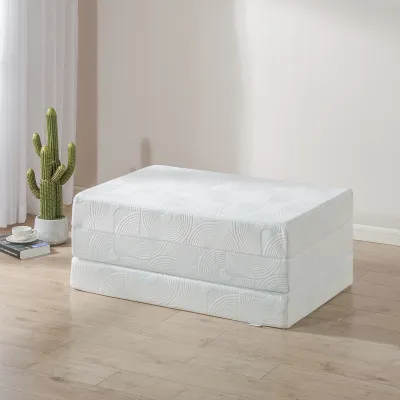
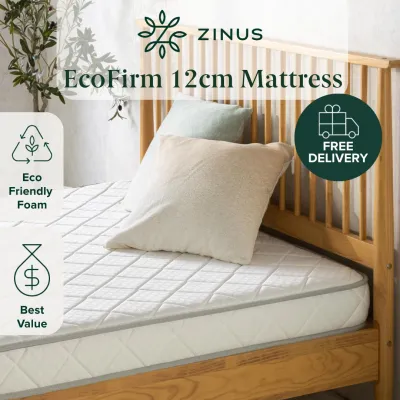

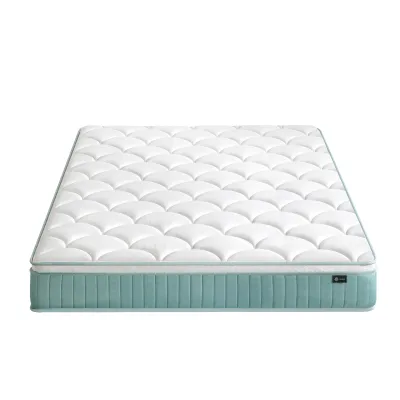
Prices are valid at publication and may change. Please refer to the product page for the latest price.
Stomach sleepers require the firmest support of all to keep the body in a neutral alignment. When sleeping on the stomach, the midsection carries the majority of the body weight. A soft mattress allows the hips to sink, which arches the spine backward and puts significant strain on the lower back. A flat, highly supportive surface is essential to keep the hips level with the shoulders.
Your body weight also plays a critical role in how you experience mattress firmness. Lighter individuals exert less force and may find standard medium mattresses feel quite firm, as they do not compress the foam layers deeply. Heavier individuals compress the foam more significantly and typically require a thicker, firmer mattress to prevent bottoming out against the hard floor beneath.
Decode Mattress Firmness and Support Levels
It is important to distinguish between mattress firmness and mattress support, as they refer to two different aspects of comfort. Firmness describes the initial feel of the mattress surface when you first lie down, ranging from soft and plush to stiff and rigid. Support, on the other hand, refers to how well the mattress keeps your spine in a healthy, neutral alignment over several hours of rest.

Foam density and layer thickness are the primary drivers of both feel and longevity in a foldable mattress. High-density foams provide a solid structural foundation that resists sagging under weight, while lower-density foams offer a softer, more immediate contouring sensation. A mattress can have a soft surface feel but still offer excellent underlying support if it features a robust base layer.
Because there is no universal numerical scale for firmness, manufacturers use descriptive categories like plush, medium, and firm. These descriptions are subjective and can vary between brands and product lines. When evaluating a foldable mattress, looking at the specific arrangement of the foam layers provides a more reliable indicator of how the mattress will perform under pressure.
Match Your Profile to Zinus Foldable Specifications
When browsing Zinus foldable mattresses, pay close attention to the manufacturer’s terminology on product pages and tags. Models described as plush or memory foam-focused are engineered for contouring comfort, making them highly suitable for side sleepers. Descriptions highlighting medium-firm or high-density support foam indicate a stiffer surface designed for back and stomach sleepers who need stable resistance.
Examine the product specifications to identify the types of foam used in the construction. Many models combine a top layer of memory foam, which adapts to your body heat and shape, with a thicker base of high-density support foam. If you prefer a traditional, highly responsive feel with minimal sinkage, look for models that rely primarily on high-density support foam rather than thick memory foam layers.
The total thickness of the mattress is a major indicator of its support capacity and intended use. Foldable mattresses typically range from 3 inches to 6 inches in thickness. A 3-inch or 4-inch model is highly portable and works well for children or occasional light use, but adults—especially side sleepers—will generally require a 6-inch model to prevent their hips and shoulders from pressing through to the floor.
Additionally, evaluate the folding design, such as bi-fold or tri-fold configurations, and verify the manufacturer’s stated weight limits. Tri-fold designs are highly popular for their balance of portability and structural integrity, but they still have limits. Always check the official product specifications to ensure the mattress is rated to safely support your body weight without compromising the foam structure.
Verify Space, Dimensions, and Setup Requirements
Before finalizing your choice, measure the available floor space in the room where you plan to use the mattress. Foldable mattresses come in standard sizes like Single, Super Single, or Queen, but their exact dimensions can vary slightly by model. Ensuring you have enough clear floor area allows the mattress to lie completely flat without bending against walls or furniture.
Equally important is checking the folded dimensions of the mattress to confirm it fits into your designated storage areas. Measure your closets, utility rooms, or the clearance space under your bed frames to ensure the folded unit can be tucked away easily when not in use. A mattress that is too bulky to store defeats the primary purpose of a foldable design.
Finally, assess the floor surface where the mattress will be placed. Foldable mattresses are often used directly on the floor without a traditional bed frame, which means they require a clean, dry, and stable base. A non-slip mat or a carpeted floor can help keep the mattress sections from sliding apart during the night, ensuring a safe and uninterrupted sleep.
Frequently Asked Questions (FAQ)
Can a foldable mattress provide enough support for daily sleeping?
While foldable mattresses are highly convenient, they are generally designed for temporary or occasional use rather than as a permanent daily bed. Over extended periods of continuous daily use, the joints between the folding sections and the foam layers can wear down more quickly than those of a standard mattress. To ensure long-term comfort and safety, check the manufacturer’s guidelines regarding continuous use, expected lifespan, and warranty conditions before using a foldable mattress as your primary sleeping surface.
How should I store my Zinus foldable mattress when not in use?
To preserve the integrity and hygiene of the foam, always follow the manufacturer’s specific folding and storage instructions. Store the mattress in a cool, dry place inside a protective carry bag or cover to shield it from dust and moisture. Avoid placing heavy objects on top of the folded mattress during storage, as prolonged compression can permanently deform the internal foam structure. Additionally, ensure the mattress is completely dry before folding it to prevent the growth of mold or mildew.

Community discussion
Share your experience or ask a question. Comments are reviewed before publication.