
Selecting the right YHL shoe cabinet capacity requires balancing your household’s current footwear inventory with the physical constraints of your entryway. To find the perfect fit, you must look beyond generic capacity labels and evaluate internal shelf dimensions, adjustable shelving options, and the specific silhouettes of your shoes. By aligning these factors with your household size and future purchasing habits, you can keep your home organized and protect your footwear investment.
Assess Your Household's Shoe Storage Needs
Start with a physical audit. Gather every pair of shoes currently in use across your household. This includes daily work shoes, casual sneakers, school shoes, sports footwear, and formal pairs. Do not forget seasonal items or specialty shoes that might be stored elsewhere temporarily.
Once you have a total count, add a realistic buffer for future acquisitions. A good rule of thumb is to plan for a 15% to 20% increase in your collection size, especially if you have growing children or a keen interest in fashion. Relying solely on static per-person averages often leads to an underestimation of your actual storage needs over time.
Products mentioned in this guide
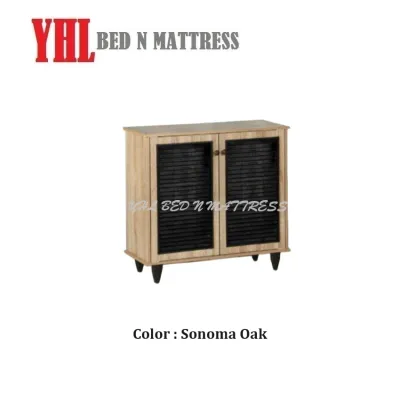
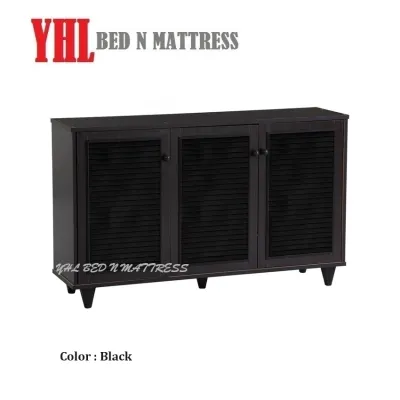
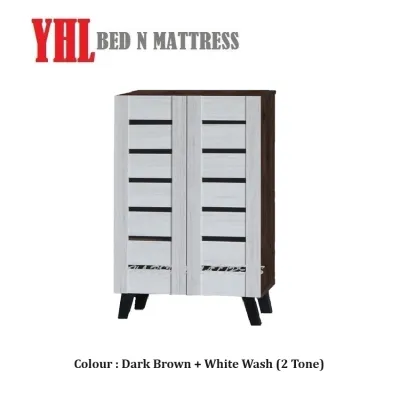
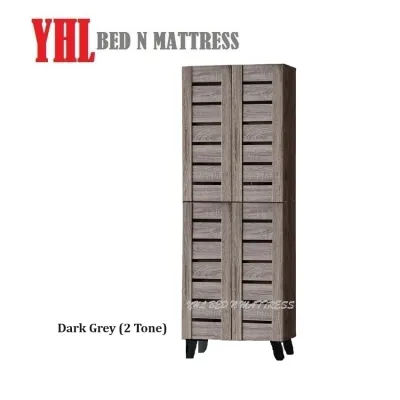
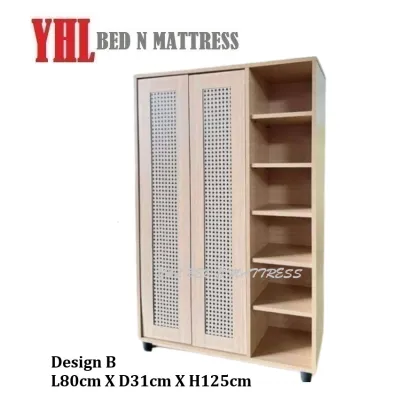
Prices are valid at publication and may change. Please refer to the product page for the latest price.
Next, group your shoes by category. Flats, sandals, and slim sneakers require minimal vertical clearance, allowing you to stack shelves closer together. Conversely, high heels, platform shoes, and bulky athletic trainers demand more vertical and horizontal space. Understanding this distribution helps you determine whether you need a cabinet with uniform shelving or one with highly customizable configurations.
Understand YHL Shoe Cabinet Capacity Specifications
When browsing YHL shoe cabinets, pay close attention to the manufacturer’s stated pair capacity. This number is typically an estimate based on standard-sized, low-profile shoes. To ensure accuracy, always cross-reference this estimate with the actual internal depth, width, and height measurements provided in the product specifications.

Internal shelf flexibility is a crucial factor in maximizing usable space. Many YHL models feature adjustable or removable shelves, which allow you to reconfigure the interior layout. Removing a shelf can accommodate taller footwear like boots, while adding a shelf can double the capacity for flat sandals or slippers, making the cabinet highly adaptable to your changing collection.
Keep in mind that your personal shoe sizes will directly affect how many pairs fit on each shelf. Standard capacities are often calculated using average shoe sizes. If members of your household wear larger sizes, such as men’s US 10 or above, the shoes may need to be placed at an angle or may take up more horizontal space, reducing the total number of pairs you can fit per row.
Measure Your Available Space and Clearance
Before finalizing your purchase, measure the exact floor footprint of your intended installation area. Be sure to account for baseboard or wall skirting thickness, as these architectural details can prevent the cabinet from sitting completely flush against the wall. If you plan to anchor the cabinet for safety, a flush fit is essential for stability.
Consider the functional clearance around the cabinet. Measure the door swing radius of the cabinet doors to ensure they can open fully without hitting nearby walls, entry doors, or other furniture. There should be enough remaining walkway space for household members to comfortably stand and retrieve their shoes without blocking the main corridor.
Do not overlook the delivery and installation path. Measure the dimensions of your building’s elevator, stairwell turns, and corridor widths to guarantee the packaged or pre-assembled cabinet can safely reach your home. This is particularly important in high-rise apartments or condominiums where tight corners and low ceilings can restrict the movement of larger furniture pieces.
Match Capacity to Household Size and Shoe Types
For small households, such as singles or couples, a compact cabinet holding 12 to 18 pairs is often sufficient. However, if you have a larger family, you will need to prioritize vertical space utilization. Multi-tier designs or tall, slim cabinets maximize storage capacity without consuming valuable floor space in a busy entryway.
If your household frequently wears bulky footwear, such as high-top sneakers, work boots, or thick-soled running shoes, standard flat shelves may not suffice. Look for cabinets that offer dedicated tall compartments or modular shelving systems. This prevents you from having to squeeze or bend your shoes, preserving their shape and structural integrity.
Balancing high capacity with physical space constraints requires strategic planning. If your entryway is narrow, a slim-profile cabinet with tilting drawers might be the best option, even if it holds slightly fewer pairs than a traditional deep cabinet. If floor space is abundant, a wider, low-profile cabinet can double as an entryway console table, offering both storage and a decorative surface.
Common Capacity Selection Mistakes to Avoid
One common mistake is assuming that every shelf in a cabinet will accommodate the exact same number of shoes. In reality, the varying silhouettes of your footwear—such as wide-soled sneakers versus narrow loafers—mean that some shelves will naturally hold fewer pairs. Always allow for some spatial variance when planning your layout.
Another frequent oversight is ignoring the difference between external dimensions and internal usable space. The thickness of the cabinet frame, back panel, and door hinges all subtract from the actual storage volume. Always base your capacity calculations on the internal shelf dimensions rather than the overall external width and depth.
Finally, avoid the temptation to overcrowd your shoe cabinet. Forcing too many pairs onto a single shelf can scratch delicate leather, deform shoe structures, and put unnecessary strain on the cabinet doors and hinges. Maintaining a small amount of breathing room between pairs also promotes air circulation, which is vital for keeping your footwear fresh and dry.
Frequently Asked Questions (FAQ)
How do I store tall boots in a standard shoe cabinet?
To store tall boots without damaging them, adjust or remove one of the internal shelves to create a taller compartment. If the shelves are fixed, you can lay the boots horizontally on a lower shelf. Use boot shapers, rolled-up magazines, or pool noodles inside the shafts to keep them upright and prevent creasing or cracking over time.
What if my shoe collection exceeds the cabinet's stated capacity?
If your collection outgrows your primary cabinet, implement a seasonal rotation system. Store infrequently worn or out-of-season shoes in under-bed storage boxes or bedroom closets, keeping only daily essentials in the entryway. You can also supplement your setup with a slim, open shoe rack or vertical wall-mounted organizers to handle the overflow safely.

Community discussion
Share your experience or ask a question. Comments are reviewed before publication.