
Finding the perfect slim trolley rack for a tight HDB kitchen or bathroom gap requires balancing storage needs with precise spatial realities. In typical Singapore apartments, every centimeter counts, especially in narrow service yards, compact bathrooms, or tight kitchen layouts. To choose the right width, you must measure the narrowest point of your target gap and subtract a clearance margin of at least 1.5 cm to 2 cm. This buffer ensures the trolley can slide in and out smoothly without scraping your walls, cabinetry, or appliances.
Most slim trolley racks on the market fall into two main categories: ultra-narrow models measuring under 15 cm in width, and standard slim models ranging from 15 cm to 25 cm. Selecting the right one depends on the specific gap you are targeting, the items you plan to store, and the surrounding fixtures. By taking accurate measurements and accounting for appliance ventilation, you can transform an underutilized gap into a highly functional storage zone.
How to Measure Your Gap Accurately Before Buying
Measuring a gap for a slim trolley rack is more complex than simply running a tape measure across the floor. In many HDB flats, walls are not perfectly plumb, and tiled surfaces in bathrooms can have slight variations in thickness. To avoid buying a trolley that gets wedged halfway in, always measure the width of the gap at three distinct heights: the top, the middle, and the bottom near the floor. Use the smallest of these three measurements as your maximum allowable width.
Products mentioned in this guide
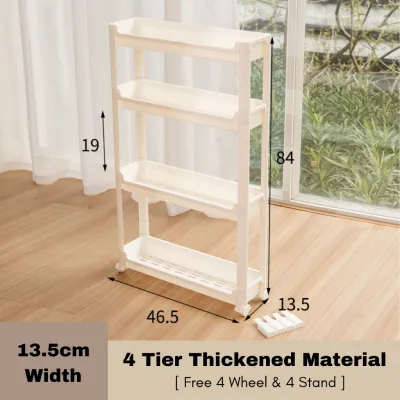
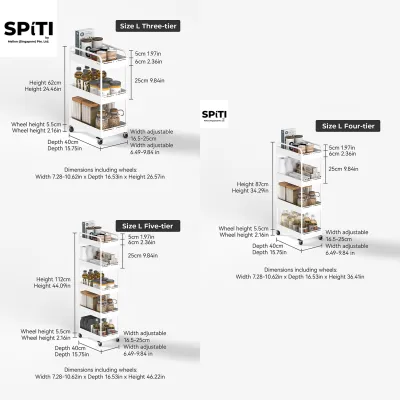

![[Japan] Fudo Giken 3 Tier Slim Wagon with Wheels | Multi-function Movable Space Saving Rack Shelf Kitchen Storage Organizer Stocker Cart | Made in Japan](https://img.lazcdn.com/g/p/b919cfd449920070af2fa89ad21487d1.jpg_400x400q80.jpg_.webp)
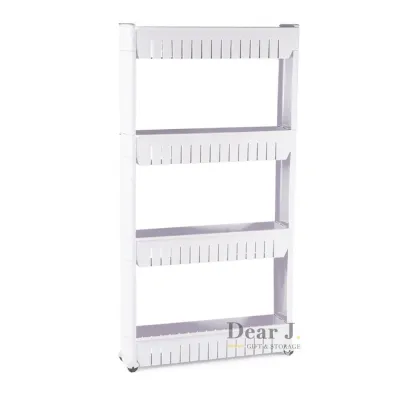
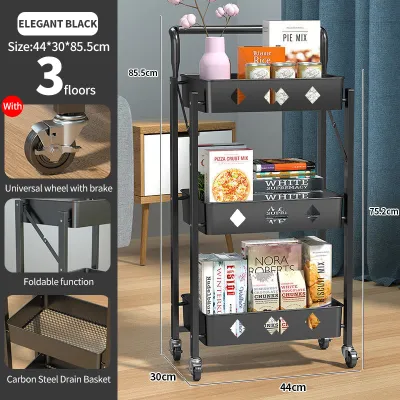
Prices are valid at publication and may change. Please refer to the product page for the latest price.
Next, inspect the gap for any hidden protrusions that could obstruct the trolley’s path. In HDB kitchens and bathrooms, you will often find exposed copper pipes, PVC drainage lines, electrical sockets, plastic wire trunking, or skirting boards. Cabinet handles, hinges, and countertop overhangs can also narrow the usable space. Be sure to measure the distance between the most prominent protrusion and the opposite surface, rather than wall-to-wall.
Finally, consider the operational clearance required for daily use. A trolley needs a small amount of wiggle room on either side so it does not scrape against adjacent surfaces when pulled out. You must also factor in the depth of the trolley’s handle and whether it will block nearby pathways. If the trolley is placed next to an appliance, ensure its position does not interfere with the door swings of your refrigerator, washing machine, or under-counter cabinets.
Matching Standard Trolley Widths to Common HDB Gaps
Once you have your precise measurements, you can match them to standard trolley sizes. Ultra-narrow trolley racks, which typically measure between 10 cm and 14 cm in width, are designed specifically for the tightest gaps in the home. These are ideal for the narrow spaces frequently found between a refrigerator and a kitchen counter, or between a washing machine and a service yard wall. While highly space-efficient, these ultra-narrow models are best suited for slender items like spice jars, canned goods, or slim cleaning bottles.

For slightly larger gaps, standard slim trolley racks measuring between 15 cm and 25 cm offer significantly more storage capacity and stability. These units are perfect for the space beside a toilet bowl, next to a bathroom vanity, or in a kitchen corner. The extra width allows you to store bulkier items such as toilet paper rolls, folded hand towels, laundry detergent bottles, or larger cooking oil containers.
Before making a purchase, always verify the actual physical dimensions of the product rather than relying solely on the “slim” label or the primary product title. Some manufacturers list the width of the storage baskets but omit the extra width added by protruding wheels, structural frames, or side handles. Check the detailed specification sheet or product manual to ensure the absolute widest point of the assembled trolley fits comfortably within your measured gap.
Essential Clearance and Safety Checks for Appliances
Placing a slim trolley rack next to household appliances requires careful attention to safety and appliance performance. Major appliances like refrigerators, freezers, and dryers generate heat during operation and rely on surrounding air circulation to cool down. Placing a trolley too close can restrict this airflow, causing the appliance to work harder, consume more electricity, and potentially shorten its lifespan. Always consult your appliance manuals to verify the manufacturer-recommended ventilation clearances before filling the gap.
In addition to heat management, you must ensure there is enough lateral space to pull the trolley out safely. If the fit is too tight, repeated friction can scratch the delicate finish of stainless steel refrigerators, wear down laminate cabinet doors, or snag on power cords and water hoses. Ensure that any cords or hoses behind the appliances are neatly secured and cannot become entangled in the trolley’s wheels or frame.
In HDB bathrooms, moisture management is another critical factor to consider. Placing a trolley in a tight gap within a wet zone can trap water droplets and humid air against the wall. This lack of ventilation creates an ideal breeding ground for mold, mildew, and grime. To prevent this, choose rust-resistant materials and ensure there is sufficient space around the trolley to allow air to circulate and dry the area after showers.
Design Features That Maximize Usability in Tight Spaces
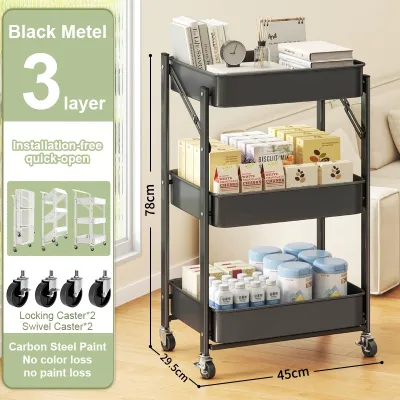
The usability of a slim trolley rack in a tight space depends heavily on its structural design and mobility features. Because these racks are tall and narrow, they can easily tip over if they are not balanced or if the wheels do not glide smoothly. Look for high-quality caster wheels that offer 360-degree swivel capabilities, allowing you to maneuver the trolley in multi-directional paths. Locking mechanisms on at least two of the wheels are also beneficial for keeping the trolley stationary when it is parked in its gap.
Another design element to prioritize is the handle configuration. In extremely tight gaps, a protruding handle can prevent the trolley from sliding fully into the space or can catch on your clothing as you walk past. Opt for models with integrated, recessed, or flush-mount handles that do not add unnecessary width or depth to the unit’s footprint.
Finally, evaluate the storage configuration of the shelves. Since slim trolleys have limited width, maximizing vertical space is essential. Look for racks with tiered shelves that feature high side rails to prevent tall bottles from tipping over when the trolley is in motion. Adjustable or removable shelves are particularly useful, as they allow you to customize the height of each tier to accommodate tall laundry detergents, spray bottles, or shampoo dispensers.
Frequently Asked Questions (FAQ)
Can I use a slim trolley rack next to a gas stove?
Placing a storage unit next to a gas stove requires strict adherence to fire safety and heat clearance guidelines. Most slim trolley racks are made of plastic or lightweight metals, which can warp, melt, or degrade when exposed to high temperatures. To prevent fire hazards, maintain a safe distance from the stove burners as specified in your stove’s installation manual. If you must place a trolley nearby, choose a heat-resistant metal model, avoid storing flammable items on it, and ensure it does not block access to the gas shut-off valve.
How do I clean the gap if the trolley gets stuck?
If a slim trolley becomes jammed in a narrow gap, do not force or yank it, as this can damage your cabinetry, walls, or the trolley itself. First, check if a fallen item or a misaligned wheel is causing the obstruction. Gently clear any visible debris using a long, thin tool like a broom handle or a duster. If a wheel has turned sideways and locked, try lifting the trolley slightly from the front to realign the casters before carefully rolling it out. Regular cleaning of the floor gap will prevent dust and debris from jamming the wheels in the future.

Community discussion
Share your experience or ask a question. Comments are reviewed before publication.