
The best folding clothes drying rack for a small HDB balcony is one that maximizes your available vertical space and folds completely flat when not in use, matching your specific balcony dimensions, mounting restrictions, and daily laundry volume. Because Singapore’s HDB balconies are highly compact and exposed to tropical weather, the ideal choice depends on whether you can drill into your walls, have a suitable railing, or require a highly stable freestanding unit that can be easily tucked away.
Selecting the right rack involves balancing space efficiency with structural safety. By evaluating your balcony’s physical layout, understanding the structural limitations of your walls, and comparing the functional designs of different folding racks, you can keep your walkway clear while ensuring your laundry dries efficiently.
Assessing Your HDB Balcony Space and Constraints
Before purchasing any drying rack, you must take precise measurements of your balcony to ensure the unit fits both when fully deployed and when folded for storage. A rack that is too large will block your walkway, restrict access to sliding doors, or interfere with your view.
Products mentioned in this guide
![[Singapore in stock ] KESOL clothes drying rack Thickened stainless steel material Outdoor /Indoor Drying Rack Clothing Collapsible Foldable Laundry Drying Rack Heavy Duty Stainless Steel](https://img.lazcdn.com/g/p/ed5f98c68106156c36a15f8fa4612d10.jpg_400x400q80.jpg_.webp)
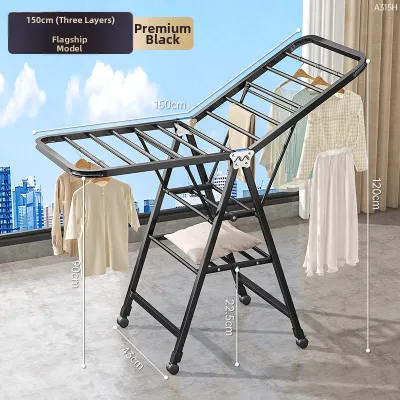
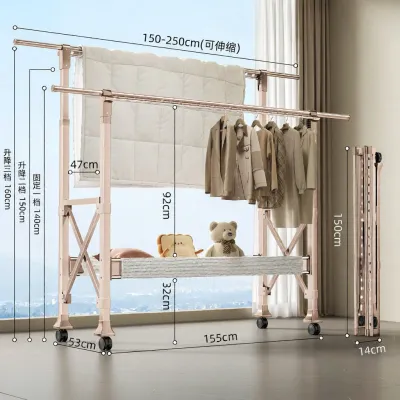
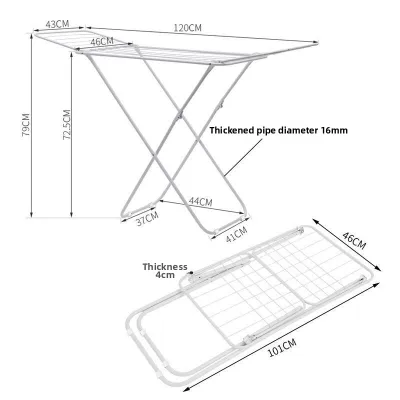
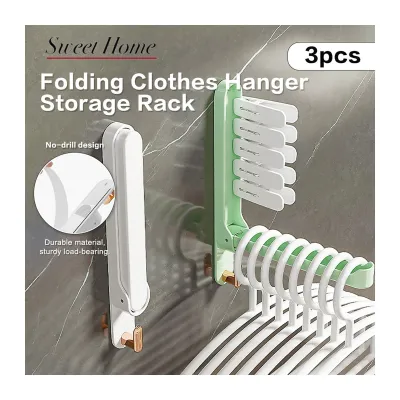
Prices are valid at publication and may change. Please refer to the product page for the latest price.
Measuring Usable Floor Space Start by measuring the length and width of your balcony floor. You need to maintain a clear walkway of at least 60 to 70 centimeters to move around comfortably while hanging clothes. Mark out the footprint of any prospective freestanding rack on the floor using masking tape to visualize how much physical space remains.
Identifying Physical Obstructions Look upward and outward to identify potential obstacles. Air conditioning compressors, drainage pipes, overhead light fixtures, and the swing path of balcony doors can all restrict where a drying rack can be placed. For example, placing a rack directly under an air conditioning compressor can speed up drying times due to the warm exhaust air, but you must ensure the rack does not block access to the unit for servicing.
Evaluating the Wall Structure If you are considering a wall-mounted folding rack, you must inspect the mounting surface. Tap the wall to determine if it is solid concrete or a hollow partition. External balcony walls in HDB flats are typically structural concrete, which can support heavy loads but requires a masonry drill and appropriate wall plugs. Never attempt to mount a heavy laundry rack onto lightweight panels or decorative cladding without verifying the structural backing.
Comparing Types of Folding Drying Racks for Small Balconies
Different balcony layouts suit different rack configurations. Choosing the right type depends on your willingness to drill, the design of your balcony railing, and how much floor space you can afford to dedicate to laundry.

Wall-Mounted Folding Racks These racks are permanently fixed to the wall and extend outward when needed, using an accordion or telescopic mechanism. They are excellent for keeping the balcony floor completely clear, making them ideal for exceptionally narrow balconies. However, they require permanent drilling and must be mounted onto solid concrete. When shopping, check the maximum projection distance when fully extended to ensure the rack does not protrude past your balcony boundary.
Railing-Mounted and Parapet Hooks These compact racks hang directly over the balcony railing or parapet wall using adjustable brackets. They require zero floor space and no drilling, making them highly convenient for renters. Before choosing this option, measure the exact thickness of your railing or parapet wall to ensure the brackets can hook over securely. You must also verify that the rack has protective rubber padding to prevent scratching the building’s exterior finish.
Freestanding Foldable Racks Freestanding racks, such as classic X-frames or multi-tier tower racks, offer the greatest flexibility. They require no installation and can be moved indoors if it starts to rain. The key to choosing a freestanding model for a small balcony is checking its folded thickness. Look for models that fold down to under 10 centimeters so they can easily slide into the gap beside your washing machine or behind a door when not in use.
Key Features to Check for Durability and Safety
Because balcony racks are exposed to high humidity, direct sunlight, and strong winds, you must evaluate their build quality and safety features before buying. A flimsy rack can collapse under the weight of wet laundry or degrade rapidly outdoors.
Verifying Load Capacity and Weight Distribution Wet clothes are significantly heavier than dry ones; a single wet bath towel can weigh over one kilogram. Check the manufacturer’s specifications for the maximum weight limit, which typically ranges from 10 to 25 kilograms. Ensure the design allows you to distribute the weight evenly across the rods rather than concentrating it on a single section, which can cause the frame to bend or tip.
Checking Material Finishes and Weather Resistance Do not rely solely on a material name like “metal” or “steel” to guarantee durability. Look for specific product labels indicating rust-resistant treatments, such as grade 304 stainless steel or powder-coated aluminum. Inspect the weld points and joints; these are the areas most susceptible to rust. Avoid racks with exposed, untreated steel joints that will quickly corrode when exposed to Singapore’s humid air.
Inspecting Joints and Locking Mechanisms Examine the hinges, folding joints, and locking pins of the rack. A high-quality folding rack should have a positive locking mechanism—such as a safety pin or a click-lock joint—that prevents the rack from accidentally collapsing when loaded. Avoid models with loose joints or plastic hinges that feel brittle, as these components degrade quickly under direct ultraviolet light.
Installation Rules and HDB Guidelines
Living in an HDB flat means adhering to community safety standards and building regulations. Improperly installed drying racks can pose serious safety hazards to residents and the public.
Understanding Drilling and Facade Restrictions According to HDB guidelines, residents must not alter or drill into the external facade of the building, as this can damage the building’s waterproofing and structural integrity. Any wall-mounted rack must be installed within the inner boundaries of your balcony wall. You should never drill into common property or the exterior face of the parapet wall.
Preventing Falling Hazards Safety is paramount when drying clothes in high-rise buildings. Any drying rack you install or place on your balcony must not protrude beyond the balcony edge or building facade. Items hanging on the rack must be secure, and the rack itself must be stable enough to withstand sudden gusts of wind. High-rise littering is a serious offense, and unsecured racks pose a severe risk to those below.
When to Seek Professional Help If you are installing a wall-mounted rack that requires heavy drilling into concrete, consider hiring a qualified handyman. A professional installer can ensure the rack is level, anchored with the correct heavy-duty wall plugs, and positioned safely within your balcony’s structural limits. If you are unsure whether a specific installation complies with estate rules, consult your local town council before proceeding.
Frequently Asked Questions (FAQ)
Can I install a drying rack on the HDB parapet wall?
Drilling into or modifying the concrete parapet wall of an HDB balcony is generally restricted because it can compromise the building’s external waterproofing and structural integrity. If you want to use a wall-mounted rack, it should be anchored to the solid structural walls inside your balcony area rather than the parapet itself. For non-permanent options, use adjustable hanging racks that hook over the parapet without drilling, ensuring they fit snugly and do not overhang the exterior facade.
How do I prevent a freestanding folding rack from blowing over?
High-floor HDB balconies often experience strong wind drafts that can easily tip over lightweight freestanding racks. To prevent this, choose a rack with a wide, stable base and a low center of gravity. When hanging laundry, place heavier items like jeans and wet towels on the lower rungs and closer to the center of the rack to stabilize it. Avoid using lightweight plastic racks on windy days, and look for models with lockable wheels or built-in anchor points that allow you to secure the frame to a heavy object on your balcony.
Community discussion
Share your experience or ask a question. Comments are reviewed before publication.