
Choosing the right wall shelf size for your Singapore home requires balancing your storage needs with the physical realities of compact apartment living. Whether you are furnishing a newly renovated HDB flat or a cozy condominium unit, the ideal shelf dimensions depend on your available wall area, the items you plan to display, and the structural limits of your walls. By taking precise measurements and planning for clearance, you can maximize your vertical storage without making your living space feel cramped or cluttered.
Measure Your Wall Space and Clearance Limits
Before browsing online marketplaces or visiting furniture showrooms, you must establish the absolute physical boundaries of your target wall. Start by measuring the total width and height of the wall section where you intend to mount the shelf. Do not rely on visual estimation; even a few centimeters of error can prevent a shelf from fitting or cause it to overlap awkwardly with adjacent architectural features.
In Singapore apartments, walls are rarely completely blank canvases. You must carefully map out and account for existing fixtures such as door frames, window casings, electrical sockets, light switches, and air conditioning trunking. Ensure your proposed shelf dimensions leave a comfortable buffer zone around these elements to maintain easy access to switches and prevent the shelf from blocking airflow or natural light.
Products mentioned in this guide
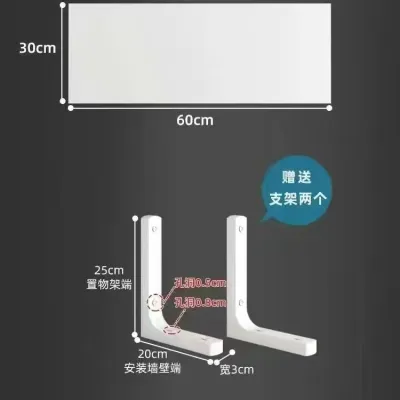
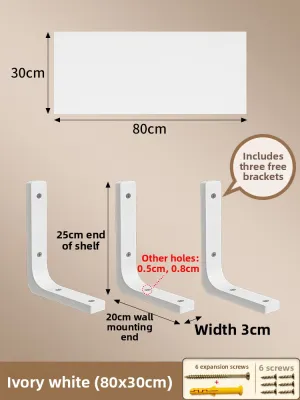
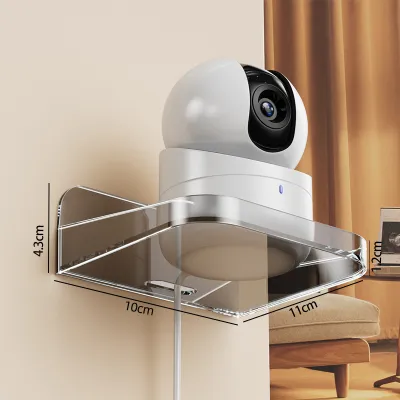
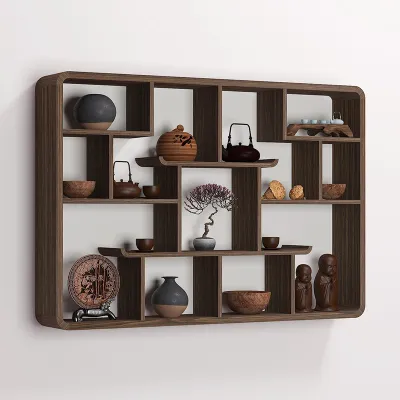
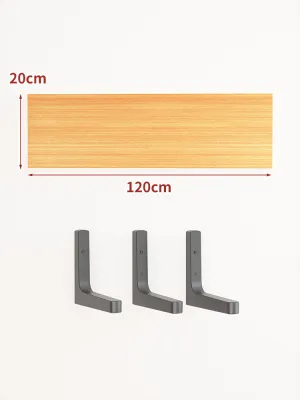
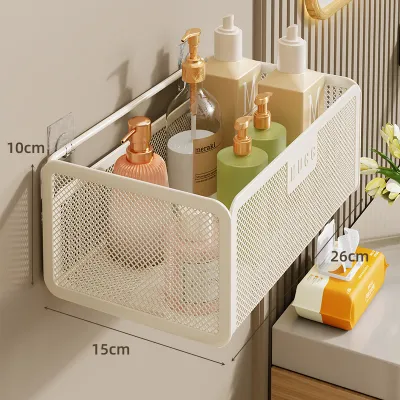
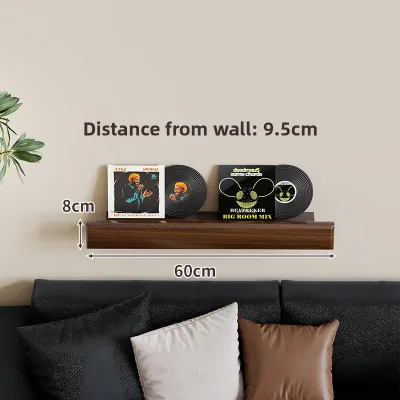
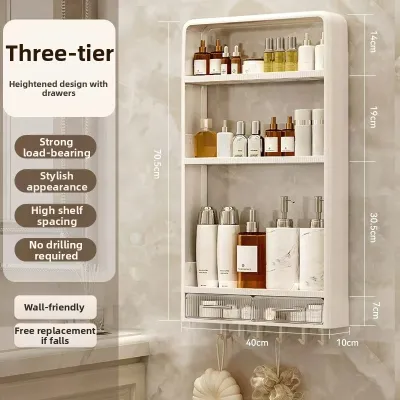
Prices are valid at publication and may change. Please refer to the product page for the latest price.
Vertical clearance is equally critical, especially if the wall shelf will hang above existing furniture like a sofa, dining table, or study desk. Measure the height of the underlying furniture and reserve at least 60 to 80 centimeters of open space above it to prevent users from bumping their heads when sitting or standing up. If the shelf is positioned along a high-traffic hallway or walkway, ensure the mounting height is well above head level, or choose a shallow depth to keep the pathway completely unobstructed.
Match Shelf Dimensions to Your Storage Items
The physical dimensions of the items you plan to store or display will dictate the minimum depth and vertical spacing of your wall shelf. For instance, standard novels and paperbacks typically require a shelf depth of 15 to 20 centimeters, while larger art books, photo albums, and decorative storage bins may require 25 to 30 centimeters. Measuring your largest items beforehand prevents the frustration of books protruding past the shelf edge.

Vertical spacing, or the distance between multiple shelf tiers, should also be tailored to your specific inventory. If you are displaying small collectibles or framed photos, a vertical clearance of 20 to 25 centimeters is often sufficient. For larger decorative vases, potted plants, or standard file folders, you will need to plan for a clearance of 30 to 35 centimeters or more.
Beyond physical dimensions, you must evaluate the total weight of your items and compare it to the load capacity of the shelf material and bracket system. Heavy items like ceramic pots, thick hardcovers, and glass ornaments require robust shelves with sturdy support brackets. To maintain a clean and organized aesthetic, avoid packing the shelf to its absolute physical limit; leaving about 20% to 30% of the shelf surface empty provides visual breathing room and makes retrieving items much easier.
Optimize Shelf Layouts for Compact HDB and Condo Spaces
Singapore’s compact residential layouts demand strategic spatial planning to maximize utility without overwhelming a room. When dealing with narrow walls or high ceilings, vertical stacking of shorter, narrower shelves is highly effective. This approach draws the eye upward, making the room feel taller while preserving valuable floor space.
Conversely, on long, expansive walls—such as those in living rooms or dining areas—horizontal configurations work best. A single, long shelf or a series of shelves aligned horizontally can make a room feel wider and more cohesive. For awkward corners, alcoves, or the dead space above a bed or television, custom-configured corner shelves or staggered layouts can turn underutilized zones into functional storage hubs.
The visual weight of the shelf design also plays a significant role in how spacious your room feels. Floating shelves, which feature hidden internal mounting brackets, offer a clean, minimalist look that is ideal for tight spaces because they eliminate visual clutter below the shelf. Bracket-supported units, while visually heavier, often provide greater structural stability and can serve as a deliberate design statement if the brackets complement your interior decor.
Verify Wall Compatibility and Installation Safety
The structural integrity of your installation depends entirely on matching your shelf size and weight load to the specific wall type in your Singapore home. Most HDB flats and older apartments feature solid concrete walls or structural columns, which offer excellent load-bearing capacity when paired with the correct masonry wall plugs and screws. However, drilling into concrete requires a hammer drill and appropriate safety gear.
Many modern condominiums and renovated HDB flats utilize drywall partitions or hollow block walls to divide internal rooms. These walls have significantly lower weight limits and require specialized toggle bolts or hollow-wall anchors. Mounting a heavy, deep shelf on a drywall partition without locating the internal timber or metal studs can lead to catastrophic wall damage and sagging.
Always cross-reference the manufacturer’s maximum load specifications with the provided installation hardware before proceeding. If the product manual does not specify a weight limit, or if you are uncertain about your wall’s composition, do not attempt a DIY installation. Stop and consult a professional contractor or handyman who can assess the wall structure and ensure the shelf is anchored safely and securely.
Avoid Common Sizing and Placement Mistakes
One of the most frequent errors is selecting a wall shelf with excessive depth for a narrow room or corridor. A shelf that protrudes too far into a walkway not only disrupts the flow of movement but also poses a constant safety hazard for head bumps and shoulder knocks. Keep shelf depths in high-traffic areas to a minimum, ideally under 15 centimeters.
Another common mistake is mounting shelves at awkward heights that compromise both accessibility and visual balance. Placing a shelf too high makes daily retrieval difficult and leaves the items gathering dust, while mounting it too low can make the wall look bottom-heavy and disjointed. Aim to position primary display shelves at eye level—approximately 1.5 meters from the floor—for the best visual impact.
Finally, never ignore the structural risks of overloading your shelves. Even a high-quality shelf can sag, warp, or pull away from the wall if the weight is concentrated in one spot or exceeds the rated capacity. Distribute heavier items evenly across the shelf surface, placing them closer to the wall brackets where the support is strongest, and regularly inspect the brackets for any signs of loosening or tilting.
Frequently Asked Questions (FAQ)
How much weight can a standard wall shelf hold?
There is no universal weight limit for wall shelves, as the actual capacity depends on a combination of the wall material, the bracket design, and the shelf’s construction. A shelf mounted on a solid concrete wall with heavy-duty brackets will support significantly more weight than the same shelf installed on drywall with standard plugs. Always check the product label or manufacturer’s manual for the exact maximum load rating, and ensure you distribute the weight evenly across the surface rather than stacking heavy items in the center.
What is the ideal depth for a bookshelf wall shelf?
To determine the ideal depth for a bookshelf, measure the depth of the largest books or storage bins in your collection. For standard paperbacks and novels, a shelf depth of 20 centimeters is usually perfect, while larger textbooks or art books may require a depth of 25 to 30 centimeters. Remember to factor in a small amount of extra clearance for bookends or angled displays, and ensure the chosen depth does not protrude into walkways or interfere with nearby furniture doors and drawers.

Community discussion
Share your experience or ask a question. Comments are reviewed before publication.