
Sleeping on a tatami mattress (榻榻米床垫) offers a minimalist, space-saving alternative for modern homes, especially in space-constrained Singapore apartments. However, finding the right firmness is not the same as buying a standard bed. The ideal firmness depends on your sleeping position and body weight: side sleepers and lighter builds require a medium-soft to medium feel (4 to 6 out of 10 on the firmness scale) to cushion joints, while back/stomach sleepers and heavier builds need a medium-firm to firm support profile (7 to 9 out of 10). Because floor sleeping eliminates the shock absorption of a bed frame, choosing the wrong firmness can lead to severe back pain or joint stiffness.
To make an informed decision, you must understand how your body interacts with a solid floor base. A mattress that feels perfectly balanced on a sprung showroom bed can feel like a concrete slab when laid directly on the ground. By analyzing your sleep posture, calculating your body’s compression force, and selecting the correct material thickness, you can design a floor-sleeping setup that promotes deep, restorative sleep without compromising your spinal health.
Why Tatami Mattress Firmness Feels Different on the Floor
When you place a tatami mattress directly on a solid surface—whether it is authentic woven rush-grass tatami mats, hardwood parquet, or ceramic tiles—the physics of sleep support change entirely. Standard bed setups rely on a mattress-and-base system. Slatted bed frames, box springs, and flex-bases yield under weight, absorbing a portion of the downward force you exert during the night. On the floor, there is zero deflection. The solid ground acts as an unyielding boundary, meaning all shock absorption must be handled solely by the mattress itself.
Products mentioned in this guide
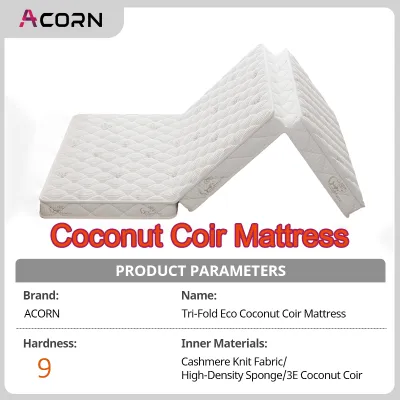
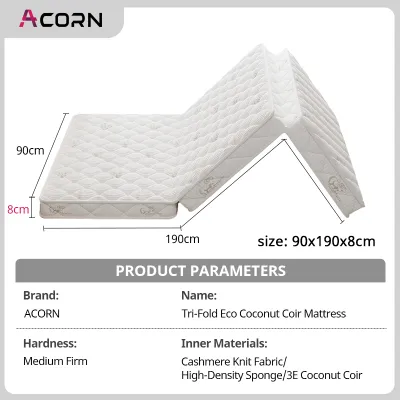

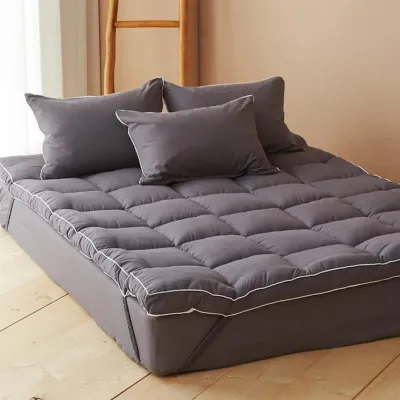
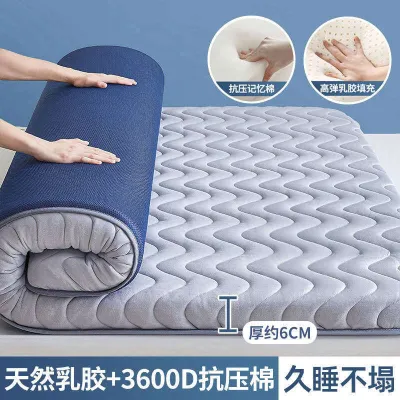
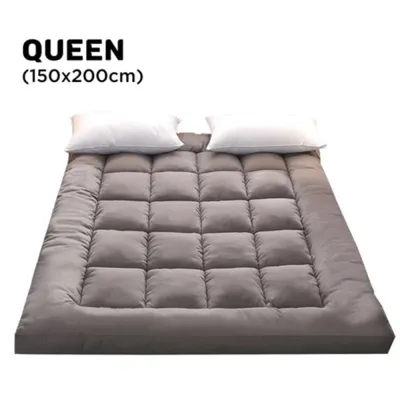
Prices are valid at publication and may change. Please refer to the product page for the latest price.
This lack of structural flex creates what sleep ergonomists call the “hard base effect.” A mattress that feels plush or medium-soft on a showroom slatted frame will feel noticeably firmer when laid flat on the floor. Without the supportive give of a base, the comfort layers compress much faster. If the mattress is too thin or lacks a high-density support core, your heaviest body parts will sink completely through the comfort layers. This is known as “bottoming out,” a state where your shoulders, hips, or tailbone press directly against the hard floor. Over time, this concentrated pressure restricts blood flow and misaligns the spine, turning a minimalist sleep setup into a source of chronic discomfort.
Furthermore, the perceived firmness of a tatami mattress shifts as the materials adapt to the flat surface. On a raised bed frame, air flows through the bottom, allowing materials like memory foam or latex to compress and rebound dynamically. On the floor, trapped air and heat can alter the compression rate of temperature-sensitive foams, making them feel softer initially but firmer as they fully compress against the solid ground. Therefore, when shopping for a floor mattress, you must adjust your expectations: a “medium” mattress on the floor will perform like a “medium-firm” mattress on a standard bed frame.
Step 1: Identify Your Primary Sleeping Position
Your sleeping posture dictates how your body weight is distributed across the mattress surface and where pressure points develop. To maintain neutral spinal alignment, different sleep positions require distinct levels of mattress yield and support.

Side Sleepers
Side sleepers present the most challenging alignment puzzle because their body weight is concentrated over a relatively small surface area: the shoulders and the hips. To keep the spine straight, these two prominent bony areas must sink into the mattress, while the waist and neck remain supported. On a hard floor, this requires a tatami mattress with a medium-soft to medium feel (around 4 to 6 on the firmness scale).
If a side sleeper uses a mattress that is too firm, the floor’s unyielding resistance pushes back against the shoulder and hip joints. This excessive pushback distorts the natural horizontal alignment of the spine, forcing the neck and lower back to bend awkwardly. The immediate consequence is localized joint pain, restricted circulation, and the familiar “pins and needles” sensation that forces you to toss and turn throughout the night. To prevent this, side sleepers should look for floor mattresses with thick, pressure-relieving comfort layers—such as memory foam or soft natural latex—that cushion these high-pressure zones before they encounter the hard floor base.
Back and Stomach Sleepers
Back and stomach sleepers require a completely different support profile. For these positions, the primary goal is to prevent the heavier midsection of the body—the pelvis and abdomen—from sagging too deeply. When sleeping on your back or stomach, a medium-firm to firm mattress (7 to 9 on the firmness scale) is essential to maintain the spine’s natural curves.
When a back sleeper lies down, the mattress must support the lumbar curve while allowing the shoulder blades and buttocks to sink slightly. If the mattress is too soft, the pelvis sinks too far, flattening the lower back and straining the surrounding muscles and ligaments. For stomach sleepers, the risk is even higher. A soft mattress causes the hips to dip, hyperextending the lumbar spine into an unnatural arch (often referred to as the “hammocking” effect). Because a floor base offers zero flex, a firm tatami mattress ensures that the heavier torso remains elevated on a flat, supportive plane, preventing chronic lower back strain and morning stiffness.
Step 2: Adjust for Your Body Weight and Build
While your sleeping position determines the type of support you need, your body weight dictates the intensity of that support. The heavier you are, the more force you exert, and the deeper you will compress the mattress layers.
Lighter Build
Individuals with a lighter build—typically defined as weighing under 60 kg—exert very little downward force on a mattress. Because their body mass is insufficient to compress firm foam or dense fibers, a firm mattress will feel incredibly stiff, almost like sleeping directly on the bare floor.
For lighter sleepers, a softer mattress with a responsive top layer is highly recommended. Materials like low-density memory foam or plush natural latex allow lighter individuals to experience contouring and pressure relief without needing substantial body weight to sink in. If a lighter sleeper chooses a traditional, highly dense tatami mattress, they may suffer from shoulder and hip pain even if they sleep on their back, simply because the mattress surface does not yield to their natural curves. A medium-soft profile ensures they get the cushioning they need while the solid floor beneath provides the ultimate structural support.
Average to Heavier Build
Those with an average to heavier build—weighing 60 kg to 80 kg, and especially those over 80 kg—exert significant force on a floor mattress. For this group, the primary structural risk is compressing the mattress entirely and hitting the hard floor beneath, which completely invalidates the comfort layers.
Heavier sleepers require a firm to extra-firm mattress paired with a high-density support core. When shopping, focus on density ratings rather than just firmness labels. High-density polyurethane foam, natural Dunlop latex, or compressed coconut coir provide the structural integrity needed to distribute heavy loads evenly. A firmer mattress prevents the pelvis from sinking too deep, keeping the spine in a neutral position. If you have a heavier build, avoid thin, soft futons or low-density memory foam mattresses; these will flatten under your weight within weeks, leaving you sleeping directly on the hard floor and causing severe joint and back pain.
Step 3: Find Your Ideal Firmness Match
To simplify your decision, you can cross-reference your primary sleeping position with your body build. This matrix provides a clear starting point for selecting the right firmness level for your floor-sleeping setup.
| Sleep Position | Lighter Build (<60 kg) | Average Build (60–80 kg) | Heavier Build (>80 kg) |
|---|---|---|---|
| Side Sleeper | Medium-Soft (4/10) | Medium (5–6/10) | Medium-Firm (6–7/10) with High Density |
| Back Sleeper | Medium (5–6/10) | Medium-Firm (7/10) | Firm (8/10) with Dense Core |
| Stomach Sleeper | Medium-Firm (7/10) | Firm (8/10) | Extra-Firm (9/10) or Coconut Coir |
When buying a tatami mattress, do not rely solely on online descriptions, as firmness scales are subjective and vary between brands. If you are testing a mattress in a local Singapore showroom, ask the staff if you can place the mattress directly on the floor rather than testing it on a premium slatted bed frame. Lie down in your primary sleeping position for at least 15 minutes. Pay close attention to your shoulders and hips: if you feel even a hint of the hard floor beneath, or if your lower back feels strained, the mattress is either too thin or the density is insufficient.
If you are purchasing online, look for retailers that offer a risk-free sleep trial (typically 30 to 100 nights). This is particularly valuable for floor mattresses, as it takes your body about two to three weeks to adjust to the unique ergonomics of sleeping close to the ground. Ensure the trial policy covers return shipping and allows you to test the mattress in your actual home environment.
Crucial Adjustments: Thickness and Material for Floor Sleeping
Selecting the correct firmness is only half the battle; you must also match that firmness with the appropriate mattress thickness and material composition to suit the physical constraints of floor sleeping.
There is an inverse relationship between mattress firmness and required thickness. A very firm mattress, such as one made with compressed coconut coir or high-density latex, can be relatively thin (around 5 cm to 8 cm) and still provide excellent support without bottoming out. Conversely, if you prefer a softer, cloud-like feel, the mattress must be significantly thicker (at least 10 cm to 15 cm) to provide enough material buffer to keep your body suspended above the hard floor.
Material behavior also changes over time, which affects long-term firmness:
- Traditional Cotton Futons: These compress naturally with use. While they may feel soft and fluffy when brand new, the cotton fibers pack down tightly within a few months, becoming significantly firmer. They require regular sunning and beating to restore loft.
- Natural Latex: Retains its elasticity and firmness profile for years. It offers excellent pushback and contouring, making it highly durable for floor use, though it is heavier to roll up and store.
- Memory Foam: Offers excellent pressure relief but tends to trap heat. Under body heat, it softens, which can increase the risk of bottoming out on a solid floor if the support core is too thin.
In Singapore’s hot and humid tropical climate, sleeping close to the floor introduces unique environmental challenges. The temperature differential between a cool, air-conditioned tiled floor and your warm body can cause condensation to accumulate directly under the mattress. Without proper ventilation, this trapped moisture quickly leads to mold, mildew, and musty odors, damaging both your mattress and your flooring.
To prevent this, prioritize highly breathable materials. Look for tatami mattresses with open-cell foam structures, natural latex cores, or breathable bamboo and cotton covers. More importantly, avoid placing your mattress directly on a sealed floor for extended periods. Use a low-profile, slatted wooden tatami base or a woven rush-grass tatami mat underneath the mattress to create a small air gap. This gap allows air to circulate freely, keeping the mattress dry and hygienic. Additionally, make it a habit to prop your mattress up against a wall or hang it in a well-ventilated area at least once a week to let any trapped moisture evaporate.
Frequently Asked Questions (FAQ)
Can I use a soft mattress directly on the floor?
Using a soft, thin mattress directly on the floor is highly discouraged. Because a soft mattress compresses easily under your body weight, you will quickly sink through the comfort layers and bottom out against the hard floor, resulting in severe shoulder, hip, and back pain. Furthermore, soft mattresses tend to have denser, less breathable structures that trap heat and moisture against the cold floor, significantly increasing the risk of mold and mildew growth in Singapore’s humid climate. If you prefer a soft feel, you must choose a mattress that is at least 12 to 15 centimeters thick with a high-density base foam layer to prevent floor contact.
How do I know if my current tatami mattress is the wrong firmness?
Your body will give you clear physical signals if your mattress firmness is incorrect. If your mattress is too firm, you will likely wake up with localized soreness, numbness, or stiffness in your shoulders, hips, and neck, caused by poor circulation and excessive pressure point resistance. If your mattress is too soft, you will typically experience a dull, aching pain in your lower back upon waking, which is a classic sign that your pelvis sank too deep during the night, straining your lumbar spine. Finally, if you can physically feel the coldness or hardness of the floor beneath you when you roll over, your mattress is either too soft or too thin for your body weight.

Community discussion
Share your experience or ask a question. Comments are reviewed before publication.