
Choosing the right super single mattress firmness requires balancing your primary sleeping position with your body weight to ensure proper spinal alignment and pressure relief. Because a super single mattress offers a compact footprint—ideal for cozy bedrooms, guest rooms, or growing teenagers in Singapore—maximizing the comfort of its surface area is essential. By understanding how your body interacts with the mattress layers, you can select a firmness level that prevents morning aches and extends the lifespan of your bed.
Assess Your Primary Sleeping Position
Your sleeping posture dictates where your body exerts the most pressure on a mattress and how much support your spine requires to stay neutral. Each position has distinct physical demands that directly influence whether you need a soft, medium, or firm sleeping surface.
Side sleeping is the most common posture, but it places concentrated pressure on the shoulders and hips. If a mattress is too firm, these pressure points can become sore, leading to tossing and turning. Side sleepers generally require a mattress with sufficient contouring—often in the soft to medium range—to allow the shoulders and hips to sink in just enough to keep the spine straight.
Products mentioned in this guide
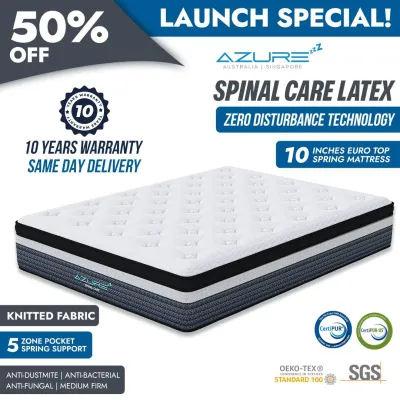
![[SG] NEXT DAY DELIVERY + FREE PILLOWS. Pocket Spring FIRM Mattress Luxury Memory Foam Single Super Single Queen King High Quality. Euro Design and High Quality. Comes in King Size Queen Super Single and Single Size Mattress. Free & Fast Delivery](https://img.lazcdn.com/g/p/258c3c41f5f9f95db42d53fe6dd511a5.jpg_400x400q80.jpg_.webp)
![[INNDESIGN.SG] High Density Foam Single Mattress 4 Inch 5 Inch Single Mattress (Fully Assembled and Free Delivery)(Single/Super Single/Queen/King)](https://img.lazcdn.com/g/p/075aaa1466807dde322bbe9d7e9f034f.jpg_400x400q80.jpg_.webp)
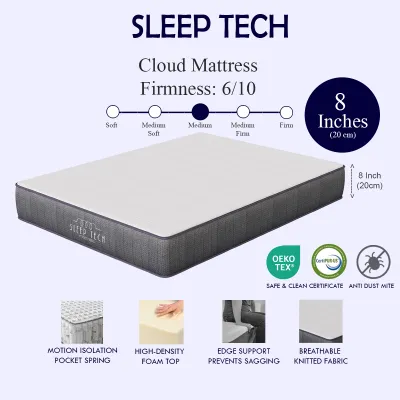
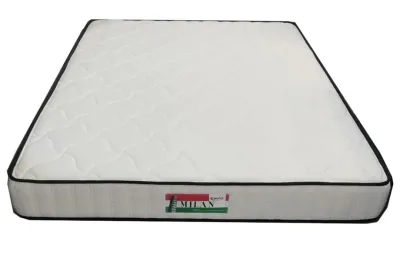
Prices are valid at publication and may change. Please refer to the product page for the latest price.
Back sleeping requires a delicate balance between contouring and robust support. The mattress must fill the gap at the lumbar curve without letting the pelvis sink too deeply. A medium to medium-firm mattress typically works best for back sleepers, offering enough surface cushioning to cradle the lower back while maintaining a stable foundation that keeps the body level.
Stomach sleeping is highly sensitive to mattress firmness because gravity naturally pulls the midsection downward. If a mattress is too soft, the hips sink, arching the lower back into an unnatural position that can cause chronic strain. To prevent this “hammocking” effect, stomach sleepers need a firmer surface that keeps the hips elevated and aligned with the shoulders.
Factor in Your Body Weight
Body weight is the primary force that determines how deeply you sink into a mattress, which directly alters how firm or soft the bed actually feels to you. A mattress rated as “medium” by a manufacturer can feel incredibly firm to a lighter individual and overly soft to a heavier person.

Lighter individuals (typically under 60 kg) exert less downward force on the mattress comfort layers. Because they do not sink deeply, they may perceive standard mattresses as much firmer than advertised. To achieve adequate pressure relief and contouring, lighter sleepers often need to choose a softer firmness level than their sleeping position would otherwise suggest.
Average-weight individuals (typically between 60 kg and 80 kg) generally experience mattresses close to the manufacturer’s intended rating. A medium or medium-firm mattress will provide them with the expected balance of surface comfort and deep support, making it a reliable starting point for most standard sleepers.
Heavier individuals (typically over 80 kg) exert more pressure on the mattress, causing them to sink past the initial comfort layers and into the support core. To prevent excessive sinkage, maintain proper spinal alignment, and ensure the mattress edges do not collapse under weight, heavier sleepers usually require firmer support systems and denser materials.
Combine Sleep Position and Weight for Your Ideal Firmness
To find your ideal starting point, you must cross-reference your sleeping position with your weight category. This combination creates a personalized framework that narrows down the standard 1-to-10 mattress firmness scale (where 1 is extremely soft and 10 is extremely firm).
For instance, a lighter side sleeper will likely find their sweet spot in the soft to medium-soft range (around 3 to 4 on the scale) to ensure their shoulders and hips get enough cushioning. Conversely, an average-weight side sleeper might prefer a true medium (5 on the scale), while a heavier side sleeper will need a medium-firm mattress (6 to 7 on the scale) to prevent bottoming out against the support core.
Back sleepers need to shift slightly firmer across the board. A lighter back sleeper can comfortably use a medium mattress (5 on the scale), whereas an average-weight back sleeper will benefit from a medium-firm feel (6 on the scale). A heavier back sleeper should look for a firm mattress (7 to 8 on the scale) to keep their spine properly aligned without sacrificing comfort.
Stomach sleepers require the firmest options to protect their lower back. A lighter stomach sleeper might get by on a medium-firm mattress (6 on the scale), but average-weight and heavier stomach sleepers should strictly target firm to extra-firm options (7 to 9 on the scale). This prevents the pelvis from dipping and keeps the body in a healthy, flat posture throughout the night.
Keep in mind that these recommendations serve as baseline indicators rather than absolute rules. Personal preferences, existing joint pain, and the specific materials used in the mattress—such as pocket springs, natural latex, or memory foam—will also influence how the bed feels and supports your body over time.
Verify the Fit Before You Buy
Once you have determined your target firmness level, the final step is to verify the mattress in real-world conditions before making a financial commitment. This involves assessing physical comfort, understanding retailer policies, and checking spatial compatibility.
When testing a mattress in-store, avoid the common mistake of simply sitting on the edge or lying down for a few seconds. Spend at least 10 to 15 minutes resting in your actual, dominant sleeping position. Pay close attention to whether your spine feels aligned and if you feel any immediate pressure build-up in your shoulders, hips, or lower back.
If you are purchasing a super single mattress online, rely heavily on sleep trials rather than just product descriptions. Look for brands that offer a risk-free trial period—often ranging from 100 to 120 nights—which allows your body to fully adjust to the new support system. Carefully read the return and exchange policies to ensure there are no hidden collection fees or restrictive terms.
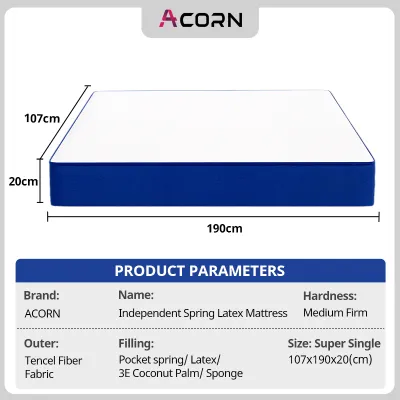
Finally, perform a physical size and space check. A standard super single mattress in Singapore typically measures 107cm x 190cm. Ensure your bedroom layout allows for comfortable movement around the bed frame, and verify that your doorways, hallways, and lift access can accommodate the delivery of the mattress. If you tend to move around a lot during sleep, confirm that the 107cm width provides sufficient space for your movements without making you feel restricted or close to rolling off the edge.
Frequently Asked Questions (FAQ)
Does a super single mattress feel different from larger sizes in terms of firmness?
The actual firmness of a mattress is determined by its internal comfort layers and support core, meaning a super single mattress will have the same structural firmness as a queen or king model of the same line. However, because a super single is narrower (107cm wide), you sleep closer to the edges. If the mattress lacks robust edge support, it may feel slightly softer or less stable near the sides compared to a larger bed where you can sleep directly in the center.
Can I adjust the firmness of my current super single mattress without replacing it?
Yes, you can modify the feel of your existing mattress using a high-quality mattress topper. A soft memory foam or latex topper can add cushioning to a bed that feels too firm, while a firm topper can provide a temporary boost in support for a sagging mattress. Additionally, check your bed base; a solid wooden platform or a sturdy slatted frame with close slats will make a mattress feel firmer and more supportive than an old, sagging foundation.

Community discussion
Share your experience or ask a question. Comments are reviewed before publication.