
Finding the perfect store room organizer for a Housing & Development Board (HDB) bomb shelter requires a precise balance of space optimization and regulatory compliance. Because these household shelters double as emergency bunkers, their reinforced concrete walls cannot be drilled, and critical fixtures like the ventilation sleeve and electrical distribution board (DB) box must remain completely unobstructed.
To select the ideal organizer size, you must map out your shelter’s exact footprint. For most typical HDB flats, a freestanding, boltless rack system with a shallow-to-medium depth of 30cm to 45cm, modular widths ranging from 60cm to 120cm, and a height that stops at least 30cm below the ceiling offers the safest and most efficient storage solution. This setup maximizes vertical capacity while preserving a comfortable walkway and ensuring full access to all safety features.
How to Measure Your HDB Bomb Shelter for Storage
Before purchasing any store room organizer, conduct a thorough physical survey of your bomb shelter. Clear the floor area completely to get an accurate reading of the usable length and width. Use a rigid metal measuring tape to measure the floor dimensions along all four walls, as bomb shelter corners are not always perfectly square.
Products mentioned in this guide
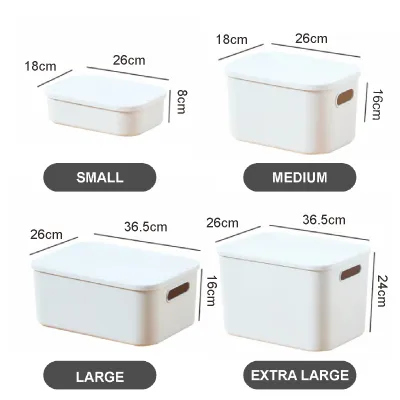
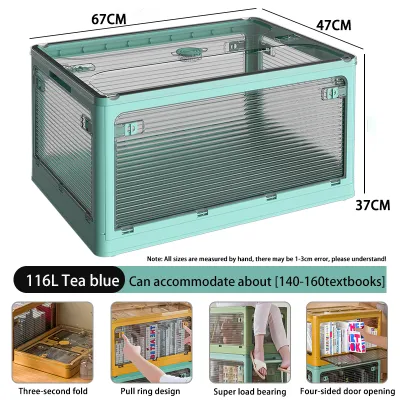
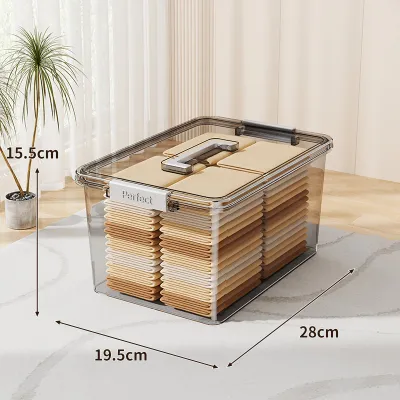
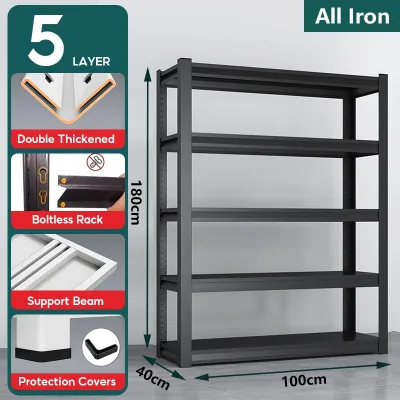
Prices are valid at publication and may change. Please refer to the product page for the latest price.
Next, measure the vertical distance from the floor to the lowest point of the ceiling. Note any overhead obstructions, such as light fixtures, conduits, or structural beams, which can reduce your usable height. Write these dimensions down on a rough sketch of the room’s layout to help you visualize different configurations.
The most critical step is identifying fixed structural elements that cannot be blocked. Locate the electrical DB box and measure the clearance required to swing its door open to a full 90-degree angle. Additionally, note the position of the mandatory ventilation sleeve, which must never be covered or restricted by shelving units.
Finally, calculate the door swing radius. While modern HDB bomb shelter doors swing outwards, you must ensure that the inner doorway clearance remains completely open. Measure the exact width of the door frame opening; this is the maximum width of any pre-assembled organizer you plan to bring into the room. Because the walls are made of heavily reinforced concrete, every millimeter of your freestanding organizer must fit comfortably within the existing structural envelope.
Recommended Store Room Organizer Dimensions
Standard off-the-shelf shelving units are rarely designed with the unique constraints of Singaporean public housing in mind. A typical retail shelf might be too deep, blocking your walkway, or too wide, leaving awkward, unusable gaps along your walls. Understanding how depth, width, and height interact within a compact, enclosed space is key to choosing a store room organizer that fits seamlessly.

Ideal Depth for Walkways and Door Clearance
The depth of your shelving determines whether your storeroom remains walkable or becomes a cramped, inaccessible space. For the vast majority of HDB bomb shelters, the ideal shelf depth ranges from 30cm to 45cm. A 30cm shelf is perfect for smaller household items and shoe boxes, while a 45cm shelf comfortably accommodates larger luggage pieces and bulky home appliances.
Choosing a depth greater than 45cm is generally not recommended unless you have an exceptionally wide shelter. Deep shelves quickly eat into the central floor space, leaving you with a narrow walkway. Furthermore, if your specific shelter configuration includes an inner security gate or a door that opens inward, a shelf that is too deep will physically block access, creating a severe safety hazard.
Width Configurations for Narrow Walls
To make the most of your wall space, utilize modular widths that can be combined to fit your specific wall segments. Common modular widths for store room organizers include 60cm, 90cm, 100cm, and 120cm. By mixing and matching these sizes, you can create a continuous run of shelving that spans the length of your wall without leaving wasted space.
When planning your width configurations, always leave a small clearance gap of 1cm to 2cm on each side of the rack. Do not try to wedge a 120cm rack into a space that is exactly 120cm wide. Freestanding metal racks require a small amount of wiggle room during the assembly process, especially when building them inside the tight confines of a storeroom. This gap also prevents the metal frame from scraping against the walls during installation.
Maximizing Height Without Blocking Vents
Vertical space is the most valuable storage real estate in a small home. To maximize this space, select a tall store room organizer that reaches near the ceiling, typically between 180cm and 210cm in height. Opt for units with adjustable shelving heights so you can customize the distance between levels to match your storage containers.
However, you must strictly adhere to safety boundaries when planning your vertical storage. Never stack items all the way to the ceiling. Maintain a clear gap of at least 30cm below the ceiling to ensure adequate air circulation and to prevent blocking the mandatory ventilation sleeve. Obstructing this vent violates HDB regulations and restricts airflow, which can accelerate humidity buildup and mold growth.
Choosing the Right Store Room Organizer Type for Restricted Spaces
Because HDB bomb shelters are designed as protective structural units, selecting the right type of organizer involves unique material and installation considerations. The absolute rule of bomb shelter storage is that you cannot drill into, nail, or otherwise alter the reinforced concrete walls. Doing so compromises the structural integrity of the shelter and is strictly prohibited by local housing authorities.
Consequently, freestanding, heavy-duty metal shelving units—specifically boltless racks—are the gold standard for HDB storerooms. These units rely on a sturdy interlocking frame that stands completely independent of the walls. Boltless designs are highly recommended because they can be assembled using only a rubber mallet, eliminating the need for complex tools in a tight space. They also offer exceptional load capacity, though you must always verify the manufacturer’s exact weight specifications for your specific model.
For homeowners who require maximum flexibility, modular folding organizers or units equipped with lockable casters are excellent alternatives. A mobile organizer allows you to roll the entire unit out of the way to access utility meters, the DB box, or items stored deep in the corners. If you choose a wheeled unit, ensure it features high-quality, heavy-duty lockable casters to keep the rack securely in place.
Environmental conditions inside a bomb shelter also dictate your material choices. Because these rooms are tightly sealed with heavy steel doors and lack active ventilation, they are highly prone to trapping humidity. Standard untreated steel or low-grade particle board shelves will quickly succumb to rust, warping, and mold. Instead, look for store room organizers constructed from high-grade galvanized steel or those treated with a durable, industrial powder-coated finish. Always check the manufacturer’s care instructions and material specifications rather than assuming a metal rack is inherently rust-proof. Quality boltless racks in Singapore typically fall into accessible price bands, ranging from S$80 to S$250 depending on dimensions and load ratings.
Common Sizing and Placement Mistakes
Avoiding common pitfalls during the planning and purchasing phases will save you from the frustration of owning an organizer that does not fit or function properly. One of the most frequent mistakes is buying a shelving unit that is too deep, which restricts the door from opening fully or blocks access to the electrical DB box. If an emergency occurs or a circuit breaker trips, you must be able to access these areas instantly without having to dismantle or move heavy storage racks.
Another common error is ignoring the physical dimensions of the entry pathway. Homeowners often measure the interior of the bomb shelter perfectly but forget to measure the width of the main doorway frame or the narrow hallway leading to the storeroom. If you purchase a pre-assembled or non-modular organizer, you may find it physically impossible to maneuver the unit through the doorway and into the room. Always ensure that the individual components of your chosen organizer can be easily carried through your home’s entryways.
Lastly, poor weight distribution and overloading represent significant safety hazards in a narrow, enclosed space. Placing heavy items, such as large water bottles, toolboxes, or heavy kitchen appliances, on the upper shelves makes the organizer top-heavy and increases the risk of tipping. Even though freestanding racks are highly stable, an unevenly distributed load can cause structural bowing or failure over time. Always verify the load capacity of each shelf tier and plan to place your heaviest items at the very bottom.
Planning Your Store Room Layout
To unlock the full potential of your HDB storeroom, you must carefully plan the layout of your organizers based on the shape of the room and the position of the doorway. There are three primary layout configurations to consider:
Single-Wall Layout: This is the most straightforward arrangement, where a single line of shelving runs along the longest wall opposite or adjacent to the door. This layout is ideal for exceptionally narrow bomb shelters, as it preserves a wide, unobstructed walkway and guarantees easy access to every shelf.
L-Shape Layout: Perfect for square or slightly wider shelters, the L-shape utilizes two adjacent walls. This configuration maximizes corner space, which is often wasted in standard setups. When planning an L-shape layout, ensure that the corner joint is easily accessible and that you do not place deep shelves on both sides, which can create a tight, unreachable corner pocket.
U-Shape Layout: This layout places shelving along three walls, leaving only the doorway wall clear. While the U-shape offers the absolute maximum storage capacity, it is only suitable for larger bomb shelters. You must ensure that the central walkway remains at least 60cm wide so you can comfortably stand, turn, and retrieve items without feeling trapped.
Regardless of the layout you choose, always prioritize a clear central walkway. Place your heaviest, bulkiest items on the bottom shelves of your organizers to lower the center of gravity and enhance overall stability. Store frequently used items at eye level, and reserve the highest shelves for lightweight, seasonal, or rarely accessed belongings. By combining precise measurements with the right modular organizer, you can transform your HDB bomb shelter into a highly efficient, safe, and organized storage hub.
Frequently Asked Questions (FAQ)
Here are answers to some of the most common questions Singaporean homeowners ask when setting up storage in their HDB bomb shelters.
Can I drill into HDB bomb shelter walls to mount shelves?
No, drilling into the reinforced concrete walls of an HDB bomb shelter is strictly prohibited. These walls are structural safety barriers designed to protect occupants during emergencies, and any drilling compromises their integrity. Instead, you must use freestanding organizers, such as boltless metal racks or tension-pole shelving systems, which do not require wall mounting.
How do I prevent my store room organizer from rusting?
To prevent rust in a humid HDB bomb shelter, choose organizers made of high-quality galvanized steel or powder-coated metal. Additionally, place disposable moisture absorbers on your shelves, replace them regularly, and ensure the shelter’s ventilation sleeve remains completely unblocked to promote natural airflow. Periodically wipe down the metal frames with a dry microfiber cloth to remove any accumulated surface moisture.

Community discussion
Share your experience or ask a question. Comments are reviewed before publication.