
Choosing the right size rotating bookshelf requires balancing its static footprint with its active rotational path. Unlike traditional stationary bookcases that sit flush against a wall, revolving models need a clear, circular zone to spin freely without scraping walls, striking adjacent furniture, or blocking walkways. By measuring your room’s physical boundaries, accounting for the maximum swing radius, and checking your home’s entryways, you can select a rotating bookshelf that maximizes vertical storage while keeping your living space open and functional.
To find the perfect fit, you must look beyond the basic width and depth numbers listed on a product page. A rotating bookshelf is a dynamic piece of furniture, meaning its spatial requirements change the moment you begin to spin it. Understanding how to calculate these clearances and integrate the unit into your room layout ensures a seamless addition to your home.
Understanding Rotating Bookshelf Dimensions and Clearance
When shopping for rotating book shelves, you will typically encounter two primary sets of measurements: the static base dimensions and the active rotational clearance. The static base refers to the physical footprint of the bottom platform when the unit is completely still. This is often a square or a circle, representing the actual contact area on your floor.
Products mentioned in this guide
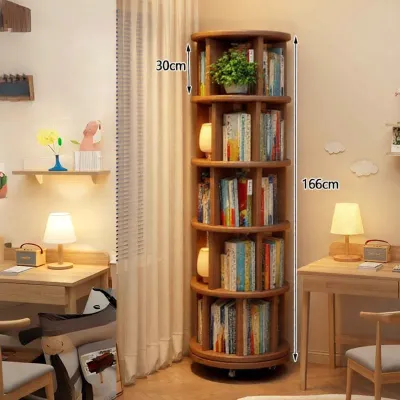
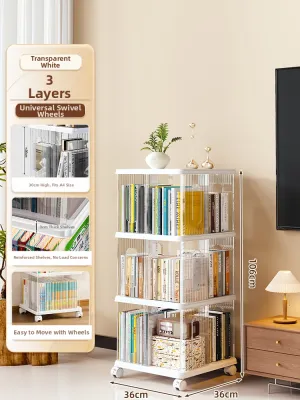
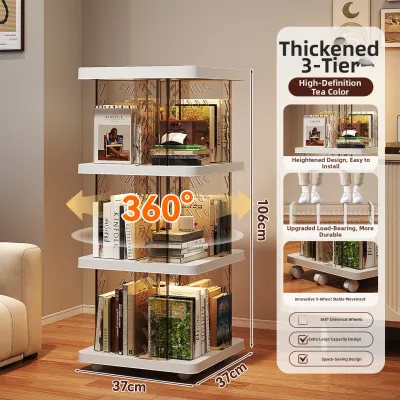
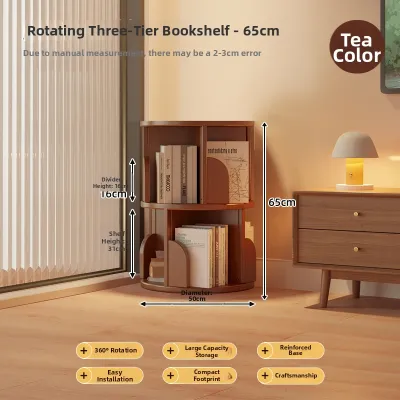
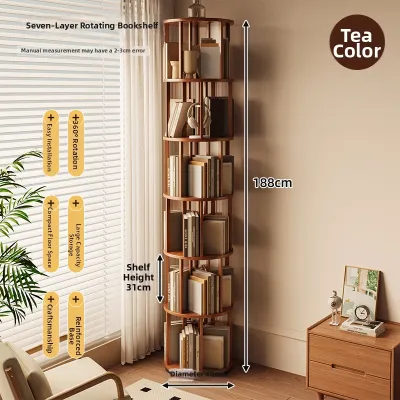
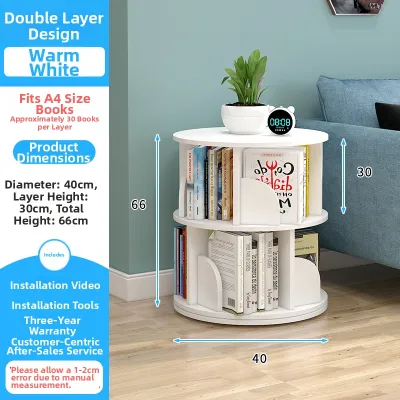
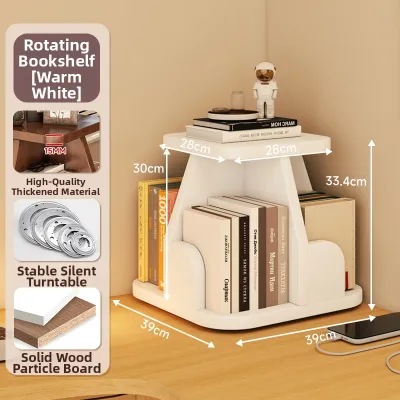
Prices are valid at publication and may change. Please refer to the product page for the latest price.
However, the most critical measurement for placement is the maximum swing radius, also known as the rotational diameter. As the square corners of the shelves rotate, they extend further outward than the flat edges of the static base. This diagonal distance represents the widest path the unit takes during a full rotation.
To visualize this, imagine a square shelf with a base of 40 centimeters by 40 centimeters. When that shelf rotates, the corners swing out to a diagonal width of approximately 56 centimeters. If you place this unit in a tight 42-centimeter alcove, the corners will scrape against the walls, preventing the unit from spinning.
Always check the manufacturer’s specifications for the total operational depth and width. Reliable brands will list both the base dimensions and the minimum clearance circle required for operation. If this information is missing, you can calculate the diagonal of a square shelf using basic geometry or simply add at least 15 to 20 centimeters of buffer space to the static width.
In addition to the physical rotation path, you must account for user clearance. You need enough space to stand comfortably next to the unit, read the book spines, and pull volumes from the shelves without feeling squeezed against a wall or another piece of furniture. A buffer of 10 to 15 centimeters beyond the maximum swing radius is highly recommended for comfortable daily use.
How to Measure Your Available Space
To ensure your new bookshelf fits perfectly, start by measuring the exact floor area of your intended location. Use a metal measuring tape for accuracy, and measure the distance from the wall out into the room. Do not rely on visual estimates, as even a few millimeters of error can cause the rotating mechanism to bind against nearby surfaces.

When measuring the floor, always account for baseboards, skirting boards, and wall trim. These architectural details project slightly from the wall, reducing the actual usable floor space. If your baseboards are 2 centimeters thick, your bookshelf base must sit at least 2 centimeters away from the plaster wall, which shifts the entire rotational circle forward into the room.
Next, map out the full rotational zone on your floor using painter’s tape or a cardboard cutout. Cut a piece of cardboard to match the maximum diagonal swing diameter of the bookshelf you are considering. Place this template on the floor and rotate it to see exactly where the edges will pass during operation.
While rotating the template, check for potential conflicts with nearby architectural features and furniture. Ensure the swing path does not overlap with the swing of room doors, wardrobe doors, or cabinet drawers. A bookshelf that blocks a closet door or gets hit every time someone enters the room will quickly become a source of frustration.
Do not forget to verify the vertical clearance of your room. While rotating bookshelves are excellent for utilizing vertical space, tall multi-tier models can interfere with ceiling fixtures. Measure the height from the floor to the lowest point of any ceiling fans, pendant lights, or sloped ceilings in the area to ensure the top of the unit has ample clearance.
Finally, check the levelness of your floor. Older homes or rooms with uneven flooring can cause tall, rotating units to lean slightly. A lean of just a few degrees can shift the top of a tall bookshelf significantly, causing it to wobble or scrape against the wall even if the base measurements seem correct.
Matching Bookshelf Proportions to Your Room Layout
The way you position your rotating bookshelf heavily influences how much space it requires. Corner placements are highly popular because they utilize underused areas, but they require careful calculation. Because the unit must spin freely, it cannot sit flush against both corner walls; it must be pulled forward so the diagonal corners do not strike the walls during rotation.
If you choose a freestanding position, such as placing the bookshelf next to a sofa or using it as a low-profile room divider, the swing radius is less restricted by walls. However, this setup increases the risk of creating bottlenecks in high-movement areas. Ensure there is still a clear walkway of at least 70 to 80 centimeters around the unit for comfortable foot traffic.
Visual weight is another crucial factor when matching proportions to your room layout. A tall, dark wood rotating bookshelf can dominate a small study or bedroom, making the space feel cramped even if it technically fits. For smaller rooms, consider lower three-tier or four-tier models, or units with open-back shelves that let light pass through.
In larger living rooms or open-plan spaces, a taller five-tier or six-tier revolving bookcase can serve as an elegant focal point. These taller units offer substantial storage capacity, often holding as many books as a traditional wide bookcase while occupying a fraction of the floor space. Just ensure the height of the unit aligns visually with your other tall furniture, such as wardrobes or display cabinets.
Consider how the bookshelf integrates with your existing furniture layout. If placed next to an armchair, ensure the height of the shelves allows you to reach your favorite books easily while seated. For children’s rooms or play areas, opt for shorter, wider rotating models that keep books within safe, easy reach of younger family members.
Common Sizing Mistakes and Stability Checks
One of the most common mistakes buyers make is measuring only the static base of the bookshelf and assuming it will fit. This oversight often leads to units that cannot rotate fully or must be placed awkwardly far from the wall, disrupting the room’s flow. Always prioritize the maximum swing diameter over the base width during your planning phase.
Another frequent error is ignoring the impact of flooring materials on the stability of the rotating mechanism. Placing a heavy, rotating unit on a thick, plush rug or carpet can cause the base to sink unevenly. This uneven sinking can strain the ball-bearing swivel joint, making the bookshelf difficult to turn and increasing the risk of tipping.
For carpeted floors, look for rotating bookshelves with wide, solid flat bases that distribute weight evenly, rather than models with small feet. If you are placing the unit on hard flooring, such as tile or vinyl, ensure the base has non-slip pads to prevent the entire unit from sliding or drifting across the floor as you spin it.
Before finalizing your purchase, verify the delivery access routes to your home. Rotating bookshelves are often shipped flat-packed, but some high-end models arrive fully assembled. Measure your front door frame, hallway widths, stairwells, and elevator doors to guarantee the packaged box can safely reach your room of choice without getting stuck.
Finally, always perform a stability check once the unit is assembled and placed. Load the heaviest books, such as encyclopedias and hardcovers, on the bottom shelves to keep the center of gravity low. This simple loading strategy dramatically improves stability and ensures smooth, quiet rotation every time you search for a book.
Frequently Asked Questions (FAQ)
Can I place a rotating bookshelf in a narrow hallway or corridor?
Placing a rotating bookshelf in a narrow hallway is generally not recommended due to the space required for the swing radius. In tight corridors, the rotating corners are highly likely to strike the walls or block the primary walkway, creating a tripping hazard. If you have a narrow space, traditional shallow wall-mounted shelves or slim, stationary bookcases are usually safer and more practical alternatives.
Do I need extra space for assembling a rotating bookshelf?
Yes, you will need a clear floor area that is significantly larger than the final footprint of the bookshelf for assembly. Most rotating bookshelves require you to lay the central column and individual shelves flat on the floor during construction, or tilt the unit to secure the rotating base mechanism. It is best to clear a workspace of at least two square meters near the final location to assemble the unit safely and avoid scratching your floors.
How do I prevent a fully loaded rotating bookshelf from tipping?
To prevent tipping, always distribute the weight of your books evenly across all sides of the shelves and place the heaviest items on the bottom tiers. This keeps the center of gravity low and stable. Additionally, check the manufacturer’s guidelines for maximum load capacities, and if you live in an area prone to movement or have young children, look for models that include specialized floor anchors or low-profile safety bases designed to prevent tipping while still allowing rotation.

Community discussion
Share your experience or ask a question. Comments are reviewed before publication.