
Selecting the right size rotatable shoe rack requires balancing the unit’s physical footprint, its full swing radius, and the specific spatial constraints of your home. Whether you are optimizing a compact HDB entryway or organizing a walk-in closet, the ideal size depends on accurate spatial measurements, your footwear capacity needs, and the clearance required for smooth 360-degree rotation without obstructing daily traffic. To find the perfect fit, you must measure both the static space the rack occupies and the dynamic clearance zone it requires when spinning.
Assessing Your Space and Clearance Requirements
Before purchasing a rotatable shoe rack, you must measure the exact floor area where the unit will stand. Start by measuring the available width and depth of the floor space using a standard measuring tape. Because these racks rotate on a central axis, their operational footprint is circular. A rack with a static diameter of 40 cm actually requires a clear circular zone of at least 45 cm to 50 cm to rotate freely without scraping against walls or adjacent furniture.
To calculate the full swing radius, identify the center point of where the rack will be placed. Measure outward from this point in all directions to ensure there are no obstructions within the rotation path. If you select a square or polygonal rotating rack rather than a perfect cylinder, the diagonal corners will extend further during rotation. For these designs, calculate the clearance based on the diagonal measurement of the shelves rather than the flat width of the base.
Products mentioned in this guide
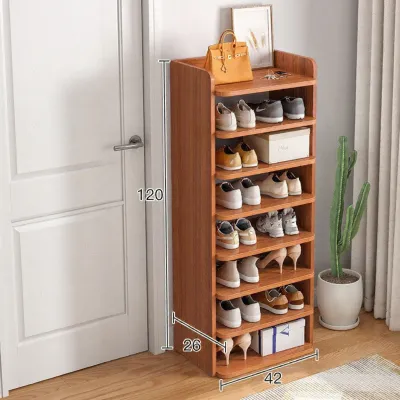
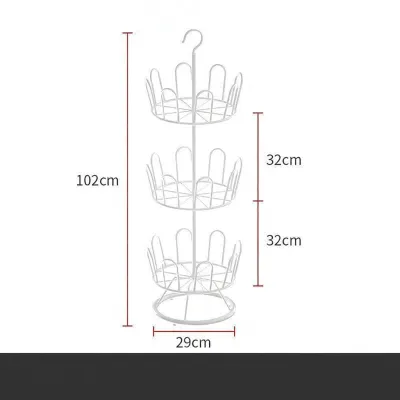
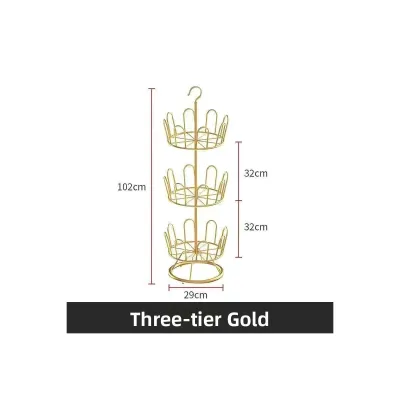
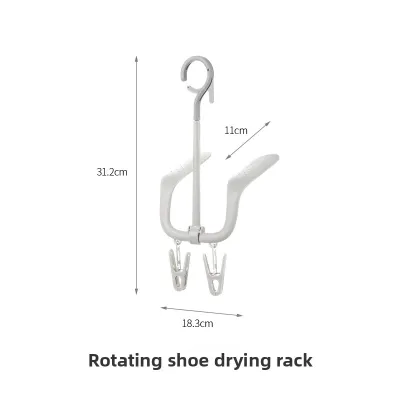
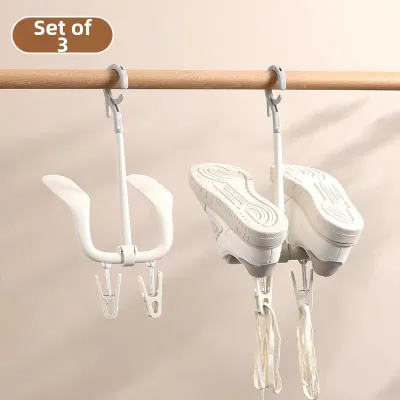
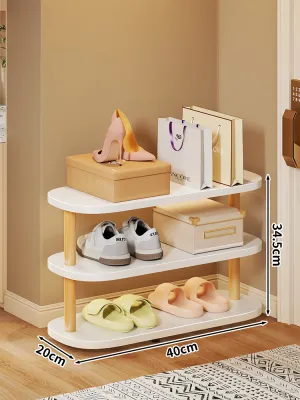
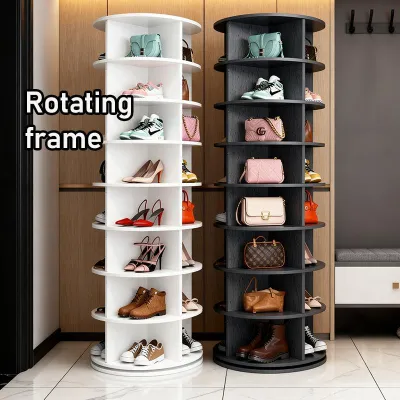
Prices are valid at publication and may change. Please refer to the product page for the latest price.
Physical obstacles along the floor and walls can easily disrupt the placement of a rotating organizer. Check for skirting boards, which can prevent the base of the rack from sitting flush against the wall, effectively pushing the entire unit forward into your walking path. Additionally, inspect the floor for uneven tiles or slopes, which can cause a tall, narrow rack to wobble or lean during rotation. Finally, look upward to identify any low-hanging light fixtures, wall-mounted distribution boards, or switches that might interfere with a taller vertical unit.
Matching Rack Footprint to Shoe Capacity
Balancing the physical dimensions of a rotatable shoe rack with your household’s footwear storage needs is essential for long-term organization. The storage capacity of a rotating rack is determined by its height, the number of tiers, and the diameter of each tier. Generally, a standard pair of adult shoes requires a shelf width of approximately 20 cm to 25 cm. By checking the outer circumference of the rotating shelves, you can estimate how many pairs of shoes can fit on a single tier.

Footwear profiles vary significantly, and this directly impacts how much usable space you have. Flat shoes, sandals, and low-profile sneakers fit easily into standard, fixed-tier heights. However, high heels, ankle boots, and high-top sneakers require greater vertical clearance. When selecting a rack size, check if the unit features adjustable or removable shelves. Opting for a slightly larger diameter or a taller unit with customizable tier heights ensures you can accommodate diverse shoe styles without crushing the uppers or bending the shafts of your boots.
If floor space is limited, you must evaluate the trade-off between a compact base footprint and vertical height. A narrow, tall rotatable shoe rack maximizes vertical storage, allowing you to store dozens of pairs of shoes on a minimal footprint. However, taller units require a highly stable base and careful weight distribution to prevent tipping. Conversely, a shorter, wider rotating rack offers excellent stability and can double as an entryway console table, but it will occupy more precious floor space.
Navigating HDB Entryway vs. Walk-In Closet Constraints
In a typical HDB flat, the entryway is a high-traffic zone that requires careful spatial planning. If you plan to place your rotatable shoe rack near the main entrance, you must ensure it does not obstruct the 90-degree swing of your main door or gate. Additionally, maintain a clear evacuation route in compliance with local safety standards. If you are placing the rack in a common corridor, verify that you maintain the required clear escape passage of 1.2 meters to ensure safe passage for neighbors and emergency personnel.
Inside the home, the entryway rack must not interfere with daily household movement. Avoid placing a wide-diameter rotating rack directly in the path of the main walkway where family members might bump into it. If your entryway features built-in cabinetry or a distribution board closet, ensure the rotating mechanism has enough clearance to spin without blocking access to these essential areas. Choosing a compact, cylindrical model with a diameter of 35 cm to 40 cm often provides the best balance of storage and clearance in tight HDB foyers.
For a walk-in closet, the spatial dynamics are entirely different. Here, the primary goal is to integrate the rotatable shoe rack seamlessly with your existing wardrobe systems. Measure the depth of your wardrobe frames; many standard wardrobes are 60 cm deep, meaning a 40 cm or 50 cm rotating rack can sit comfortably alongside or inside an open wardrobe section. Ensure the rack’s rotation path does not collide with sliding wardrobe doors, hinged doors, or pull-out drawers. Additionally, verify that the closet has adequate lighting so you can easily view the shoes on the back tiers of the rotating unit.
Common Sizing Mistakes to Avoid
One of the most frequent errors when choosing a rotatable shoe rack is measuring only the static base of the unit and forgetting the dynamic rotation path. A rack might fit perfectly into a corner when stationary, but the moment you attempt to spin it, the corners or the shoes themselves may scrape against the drywall. Always allow a buffer of at least 5 cm around the entire circumference of the rack to accommodate the physical movement of the unit.
Another common oversight is failing to account for the extra depth added by protruding shoes. Men’s formal shoes, athletic sneakers, and larger footwear sizes often extend slightly beyond the outer edge of the rotating shelves. If your shoes overhang the shelves by even 2 cm or 3 cm, this increases the overall rotating diameter of the unit. To prevent the shoes from scraping against the wall or blocking nearby doors, select a rack with a shelf depth that fully accommodates your largest pair of shoes, or add an extra margin to your clearance calculations.
Finally, do not ignore the stability requirements of taller rotating structures. A tall, narrow rack loaded with heavy footwear can become top-heavy and unstable, especially when spun quickly. When evaluating sizes, check the manufacturer’s specifications regarding the base weight and stability features. For taller units, look for models that include adjustable leveling feet to compensate for minor floor unevenness, or plan to place heavier shoes on the lowest tiers to maintain a low center of gravity.
Frequently Asked Questions (FAQ)
Can a rotatable shoe rack fit in a narrow HDB corridor?
A rotatable shoe rack can fit in a narrow HDB corridor only if the corridor’s width allows for both the rack’s full rotating diameter and the legally required walking clearance. Local fire safety guidelines require a minimum clear escape passage of 1.2 meters in common corridors. If your corridor is narrow, you must measure carefully to ensure the rack does not violate these safety regulations or obstruct emergency evacuation routes.
How do I prevent a tall rotatable rack from tipping over?
To prevent a tall rotatable shoe rack from tipping, always place your heaviest footwear, such as boots and leather dress shoes, on the bottom tiers to lower the center of gravity. When purchasing, check the manufacturer’s weight distribution guidelines and verify that the base is wide and heavy enough to support the unit’s height. If the rack is placed on a smooth or slightly uneven surface, use adjustable leveling feet or anti-slip pads to secure the base.
What is the minimum ceiling height required for a full-size rotating rack?
The minimum ceiling height required depends on the specific height of the product, but you should generally allow at least 10 cm of clearance between the top of the rack and your ceiling or any overhead fixtures. Measure from the floor to the lowest point of your ceiling, taking into account false ceilings, plaster cornices, or low-hanging light fixtures. This extra clearance is necessary for assembling, positioning, and safely operating the vertical rotating mechanism.

Community discussion
Share your experience or ask a question. Comments are reviewed before publication.