
Finding the right metal rack for your book collection requires balancing the physical dimensions of your literature with the spatial realities of your home. To make the right choice, you must evaluate the weight and size of your books, measure your available floor and wall space, and select a rack that offers both structural stability and adequate clearance. A well-chosen metal rack not only organizes your library but also preserves the structural integrity of your walls and floors while keeping your living space comfortable and accessible.
In typical residential layouts, such as a cozy Singapore HDB bedroom or study, space is at a premium. Opting for a metal rack offers a sleek, industrial aesthetic and exceptional durability, but an incorrect size can quickly make a room feel cramped or leave you with sagging shelves. By systematically assessing your collection, measuring your room’s unique architectural features, and understanding how to read rack specifications, you can find a storage solution that fits your home seamlessly.
Assessing Your Book Collection's Volume and Weight
Before browsing online marketplaces or visiting local furniture showrooms, you must audit your current book collection. Books vary significantly in size and weight, which directly dictates the physical specifications of the metal rack you need. Start by categorizing your library into standard paperbacks, hardcovers, and oversized volumes like art books or textbooks. Standard paperbacks generally require a shelf depth of at least 15 to 18 centimeters, while larger hardcovers and reference books need 25 to 30 centimeters of depth to sit securely without protruding.
Products mentioned in this guide
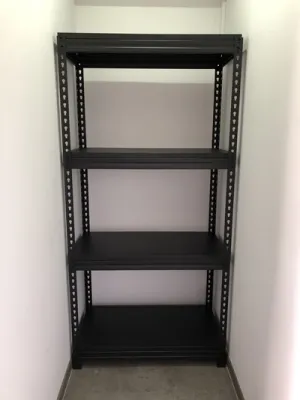
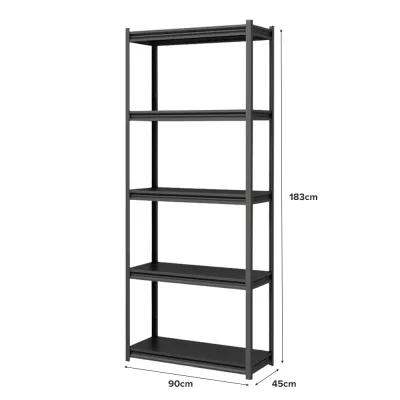
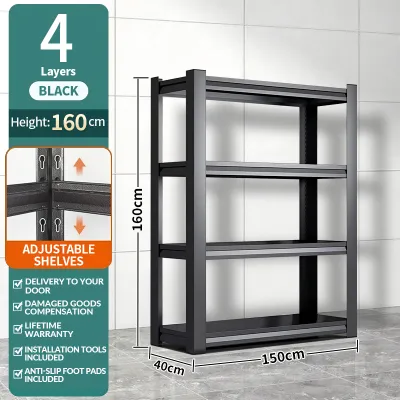
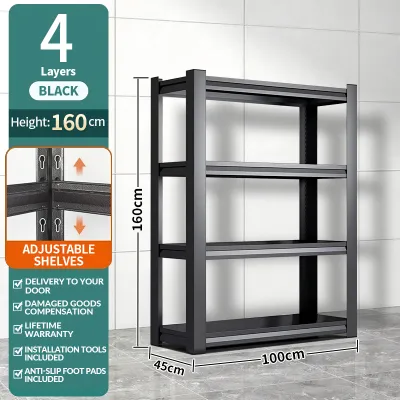
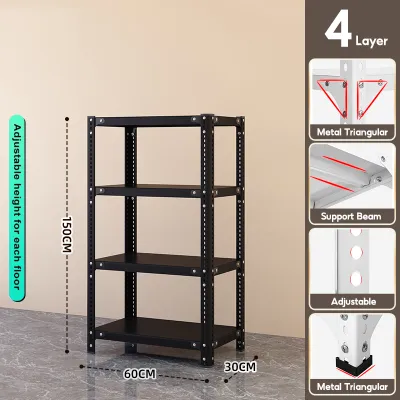
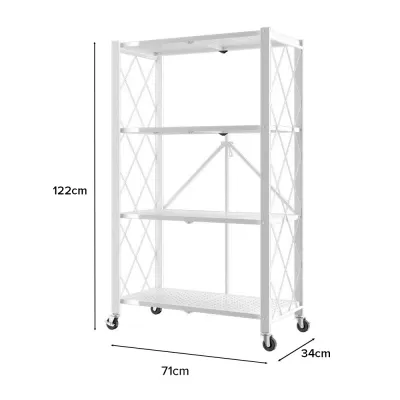
Prices are valid at publication and may change. Please refer to the product page for the latest price.
Weight is the next critical factor, as books are deceptively heavy when packed tightly together. A single shelf filled with dense hardcovers can easily weigh 20 to 30 kilograms. When choosing a metal rack, check the manufacturer’s specified load capacity per tier rather than just the overall weight limit. Opting for reinforced metal shelves or industrial-grade steel wire shelving prevents the unsightly bowing that occurs when thin metal sheets are subjected to excessive weight.
Finally, calculate the total linear shelf space you currently require by measuring your books lined up side-by-side. Add a buffer of at least 15 to 20 percent to accommodate future acquisitions. This total length will help you determine how many tiers or individual rack units you need to house your entire collection comfortably without overcrowding.
Measuring Your Room Layout and Clearance
A metal rack must fit harmoniously within your room without obstructing daily movement or architectural features. Begin by measuring the exact floor area where you plan to position the rack. Do not rely solely on wall-to-wall measurements; you must account for skirting boards, baseboards, and any wall trim that might prevent the rack from sitting completely flush against the wall. Even a small gap caused by a skirting board can tilt a tall rack forward, creating a safety hazard.

Next, map out the operational clearances around the proposed site. Ensure the rack does not block walking paths, door swings, or wardrobe doors. If you are placing the rack near a window, verify that it will not interfere with window openings, curtain tracks, or natural light. In Singapore’s humid climate, air circulation is vital; avoid placing a large, solid metal rack directly in the path of air conditioning vents or blocking wall-mounted units, as this can disrupt airflow and promote localized condensation.
Vertical constraints are equally important, especially if you are considering a tall unit to maximize storage. Measure the height from the floor to the ceiling, keeping an eye out for ceiling fans, light fixtures, structural beams, and overhead cabinets. Ensure there is sufficient clearance at the top to safely lift and place books on the highest shelf without hitting the ceiling or interfering with electrical fixtures.
Matching Rack Dimensions: Height, Width, and Depth
Once you have your collection’s requirements and room measurements, you can match them to standard metal rack dimensions. Width is the first major external dimension to consider. Standard metal racks often come in widths ranging from 60 to 120 centimeters. While a wider rack holds more books per shelf, it can easily overwhelm a small room visually. If you have limited wall space, choosing two narrower racks placed side-by-side or in different corners can offer better visual balance than one massive unit.
Depth is crucial for both book safety and floor space preservation. A rack that is too shallow will cause your books to overhang, making them prone to falling and damage. Conversely, a rack that is too deep wastes valuable floor space and allows books to slide to the back, making them hard to see and reach. For a general book collection, a rack depth of 30 centimeters is usually suitable, accommodating almost all standard reading materials while maintaining a slim profile in the room.
Height selection depends on your storage goals and the room’s aesthetic. Tall racks, standing 180 centimeters or higher, are excellent for maximizing vertical space in compact rooms, but they can make a small space feel enclosed. If you prefer an open, airy atmosphere, consider a medium-height rack that sits below eye level or matches the height of your window sills. This keeps the sightlines clear while still providing functional storage on top of the unit for decorative items or plants.
Evaluating Tier Count and Adjustability
The internal configuration of your metal rack determines how efficiently you can use the available space. Fixed-tier racks offer excellent structural rigidity but force you to conform to pre-set shelf heights, which can lead to wasted vertical space if you have many small paperbacks. For a diverse book collection, adjustable shelves are highly recommended. Look for metal racks that utilize a clip, keyhole, or boltless system, allowing you to adjust the height of individual shelves in small increments.
When adjusting shelf heights, pay close attention to the spacing mechanism. High-quality metal racks allow adjustments in increments of 2.5 to 5 centimeters, giving you the flexibility to customize the clearance for each tier. This ensures you can create tight shelves for paperbacks and taller openings for heavy reference books without leaving large, unusable gaps.
Be mindful of how shelf placement affects the overall stability of the metal frame. Distributing the shelves evenly throughout the height of the rack helps maintain structural balance. If you must place shelves at extreme intervals—such as leaving a very tall space at the bottom and clustering shelves tightly at the top—ensure the heaviest items are kept on the lowest tiers to prevent the rack from becoming top-heavy.
Common Sizing Mistakes to Avoid
One of the most common mistakes when buying a metal rack is ignoring the design of the base and legs. Some industrial metal racks feature wide, flared feet or corner brackets that extend beyond the nominal width of the shelves. If you do not account for these protrusions, the rack may not fit into your designated alcove or tight corner. Always check the maximum outer dimensions, including the feet, rather than just the shelf dimensions.
Another frequent error is overestimating the usable shelf width. The advertised width of a metal rack usually refers to the outermost edges of the frame. The actual usable shelf space is often several centimeters narrower due to the thickness of the vertical support posts and side panels. If you have a precise number of books to fit, subtract the frame thickness from the total width to ensure your collection will actually fit.
Finally, never forget to measure the delivery pathway. A large, pre-assembled metal rack might fit seamlessly in your study but fail to clear narrow apartment corridors, tight stairwells, or the elevator doors of your building. If you live in a high-rise apartment, verify the lift dimensions and entryways beforehand, or opt for a flat-packed, boltless metal rack that you can easily assemble directly inside the target room.
Frequently Asked Questions (FAQ)
Do I need to anchor a tall metal book rack to the wall?
Yes, anchoring is highly recommended for any metal rack that is tall, narrow, or loaded with heavy books. Books add significant weight to the upper portions of a rack, shifting its center of gravity upward and increasing the risk of tipping. This hazard is amplified in households with active pets or young children who might attempt to climb the shelves. To ensure safety, always use the anti-tip wall anchors or brackets provided by the manufacturer. Before drilling, check your local housing guidelines and use appropriate wall plugs suitable for your wall type, whether concrete, brick, or drywall.
How much extra space should I leave around the metal rack?
It is advisable to leave a clearance of at least 2 to 5 centimeters on either side of the metal rack to allow for easy positioning, cleaning, and to prevent the metal frame from scratching adjacent walls or furniture. Additionally, maintain a gap of 3 to 5 centimeters between the back of the rack and the wall. This rear gap is crucial for air circulation, which helps prevent moisture buildup and mold growth on your books, particularly in humid environments or when the rack is placed against an exterior wall.

Community discussion
Share your experience or ask a question. Comments are reviewed before publication.