
Choosing the right size iron frame bookcase requires balancing your room’s physical limits—specifically floor area, ceiling height, and access pathways—with the structural characteristics of metal furniture. Unlike bulky wooden cabinets, iron frame bookcases offer a visually light profile, but their rigid structures demand precise planning. To find the perfect fit, you must measure your space accurately, account for clearance and delivery routes, and verify the manufacturer’s load specifications to ensure the unit remains stable and functional in your home.
Measure Your Available Floor and Wall Space
Before browsing online catalogs or visiting showrooms, you must gather precise measurements of the physical space where the bookcase will stand. Start by measuring the floor width and depth of the designated area. When measuring the floor, do not simply measure from wall to wall; you must account for baseboards, skirting boards, and any unevenness in the flooring. Skirting boards can push the bottom of a metal frame several centimeters away from the wall, creating a gap that affects how the unit sits. If your floor is slightly uneven, which is common in older buildings or tiled areas, look for iron frames that feature adjustable leveling feet to prevent the unit from wobbling.
Next, measure the vertical distance from the floor to the ceiling. Take note of any overhead obstacles that could restrict the height of your bookcase. In many residential layouts, ceiling fans, pendant lights, wall-mounted air conditioning units, or structural beams can significantly reduce the usable vertical space. Ensure that the top of the bookcase sits well below these fixtures to maintain safe clearance and allow for proper air circulation around appliances.
Products mentioned in this guide
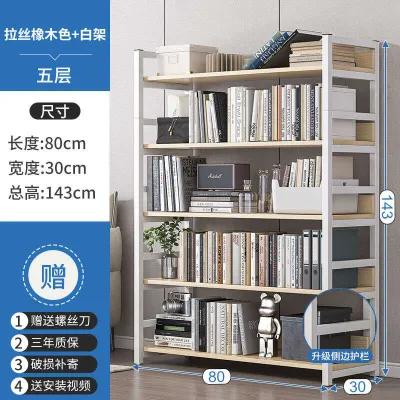
Prices are valid at publication and may change. Please refer to the product page for the latest price.
Finally, document the details of the wall behind the intended bookcase location. Mark the exact positions of electrical outlets, light switches, and data ports. While the open-back design of many iron frame bookcases allows for relatively easy access to wall outlets, the solid metal uprights or diagonal cross-braces must not block these essential utility points. Planning around these fixtures ensures you can plug in lamps, chargers, or media devices without having to position the bookcase in an awkward, off-center location.
Match Bookcase Dimensions to Your Room Layout
Translating your raw room measurements into the ideal bookcase dimensions is key to maintaining visual balance and physical flow. The height-to-width ratio of the bookcase should complement the scale of your room. In rooms with high ceilings, a tall and narrow iron frame bookcase can draw the eye upward, making the space feel loftier while maximizing vertical storage on a minimal footprint. Conversely, in rooms with lower ceilings, a wide and low shelving unit prevents the space from feeling cramped and can double as a console table or media display surface.

Consider the visual weight of the furniture in relation to your existing layout. Iron frame bookcases are highly favored for their open shelving design, which allows light to pass through and makes small rooms feel more spacious. However, this visual openness means the items stored on the shelves will be highly visible. If you plan to store dense, heavy items like thick reference books or storage boxes, a wider unit with fewer, more spaced-out shelves may look cleaner than a narrow, tightly packed unit.
When planning your layout, decide whether a single large unit or multiple modular units will work best. Modular iron frame systems allow you to place two or more identical units side-by-side to create the look of a custom built-in library. This approach offers greater flexibility, as smaller individual frames are much easier to position, rearrange, and transport than one massive, heavy metal structure.
Check Clearance, Pathways, and Structural Limits
An iron frame bookcase must not only fit its designated spot but also allow for comfortable movement throughout the room. Maintain adequate walking clearance in front of the shelves, especially in high-traffic zones like hallways or living rooms. If the bookcase is positioned near doors, wardrobes, or cabinets, verify that all doors and drawers can swing open fully without striking the metal frame. A collision can scratch the powder-coated finish of the iron or damage your other furniture.
In humid climates like Singapore, maintaining proper airflow behind large furniture pieces is essential to prevent moisture buildup and mold growth. Avoid pushing the bookcase completely flush against the wall. Leaving a small gap of a few centimeters between the back of the frame and the wall promotes healthy air circulation, protecting both your books and your walls from dampness. The open structure of an iron frame naturally aids this airflow, but a small physical clearance is still necessary.
Before finalizing your purchase, you must plan the delivery and installation route. Rigid, fully welded iron frames cannot be disassembled or bent to fit around tight corners. Measure the height and width of your building’s elevator, stairwells, corridors, and your apartment’s front door frame. If the bookcase arrives fully assembled, it must be able to clear these entry points safely. For flat-packed units, ensure you have a clear, spacious area on the floor to assemble the frame safely before lifting it into its final position.
Evaluate Iron Frame Specifics and Load Requirements
The structural characteristics of iron frames directly influence their stability and the weight they can safely support. Examine the thickness and gauge of the metal tubing used in the frame. Heavier-duty iron frames provide superior stability, which is particularly important for tall units, but they also add to the overall weight of the furniture. Ensure your flooring material can support the concentrated weight of a fully loaded metal bookcase without denting or scratching.
Always review the manufacturer’s specified load capacity per shelf rather than guessing based on appearance. The physical dimensions of the shelf—especially its width—affect its weight tolerance. Long, wide shelves without central support brackets may sag over time if loaded with heavy books. If you plan to store heavy items, look for iron frames that feature reinforced under-shelf support bars or opt for narrower shelf widths that naturally resist bending.
Wall anchoring is a critical safety consideration for any tall shelving unit. Because iron frame bookcases are often tall and relatively shallow, they can become top-heavy when loaded, posing a tip-over risk. Check if the manufacturer provides wall-anchoring hardware and verify that the anchor style is compatible with your wall type. Securing a heavy metal frame to a solid concrete wall requires different plugs and screws than securing it to drywall or partition walls. Never skip this step, especially if the bookcase is tall or placed in a household with active movement.
Common Sizing Mistakes to Avoid
One of the most frequent mistakes when choosing an iron frame bookcase is ignoring the depth of the frame in relation to baseboards. If the base of the metal frame cannot sit flush against the wall due to a thick skirting board, the top of a tall bookcase may tilt forward slightly. This tilt compromises the unit’s stability and makes wall anchoring difficult. Always measure the depth of your skirting boards and compare it to the design of the bookcase legs to ensure a stable, upright fit.
Another common error is overestimating the usable shelf capacity by relying solely on the unit’s external dimensions. The total width specified by manufacturers includes the thickness of the outer iron uprights, corner joints, and any decorative metalwork. The actual usable shelf space between the metal bars is often several centimeters narrower than the advertised total width. If you have specific storage boxes or large binders that must fit, measure their dimensions and compare them to the internal clearance of the shelves rather than the external frame size.
Finally, do not forget to account for the diagonal clearance required during assembly. Many flat-packed iron frame bookcases must be assembled flat on the floor and then tilted upright. If the diagonal measurement of the bookcase is greater than your ceiling height, you will not be able to stand the assembled unit up. To avoid this issue, calculate the diagonal clearance of the frame or choose a modular design that can be assembled vertically in its final standing position.

Community discussion
Share your experience or ask a question. Comments are reviewed before publication.