
Finding the right IKEA shoe cabinet for a small Singapore HDB foyer requires balancing slim profiles with daily accessibility. In tight entryways, a cabinet depth of 15 to 30 centimeters is typically the sweet spot, allowing you to store footwear without blocking the main walkway. By measuring your available wall space, accounting for door swings, and understanding your household’s storage needs, you can select a unit that keeps your entryway organized and safe.
Measuring Your HDB Foyer for a Shoe Cabinet
Before browsing any catalog, grab a measuring tape to map out the exact footprint of your foyer. Measure the maximum width, height, and depth of the wall space where you plan to place the cabinet. Write these numbers down and keep them handy when comparing product specifications online or in-store. Having precise dimensions prevents the hassle of purchasing a unit that is even a few centimeters too wide for your entryway.
Pay close attention to the swing arcs of your main door, metal gate, and any nearby interior doors, such as a household shelter door. A cabinet that seems to fit perfectly on paper might block your door from opening fully or restrict the entry path. Ensure there is enough clearance for a person to walk past comfortably even when the cabinet doors or compartments are open.
Products mentioned in this guide
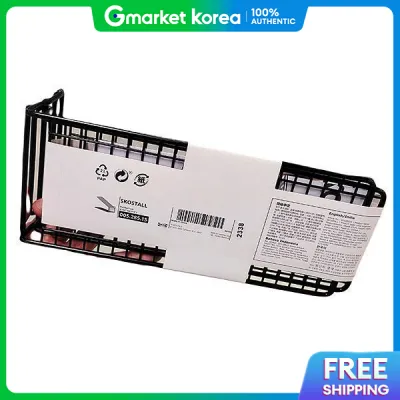
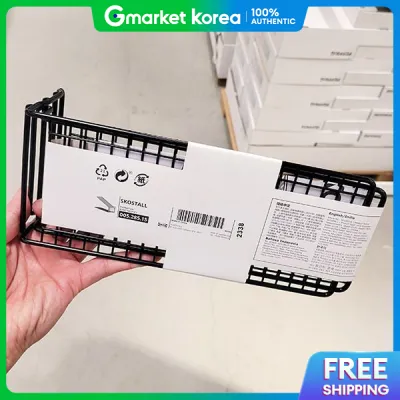
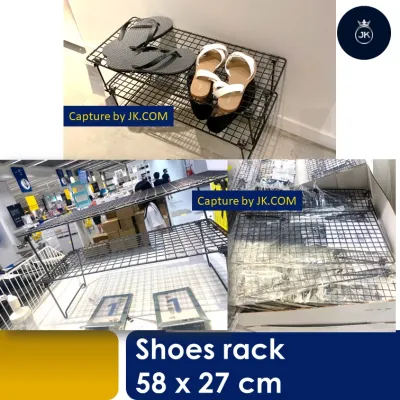
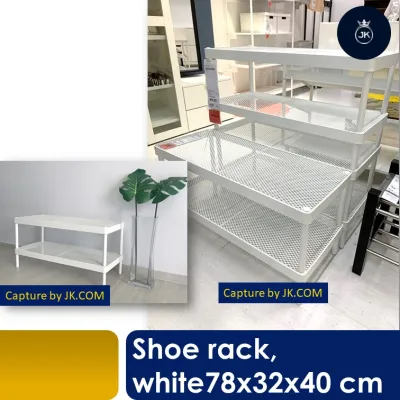
Prices are valid at publication and may change. Please refer to the product page for the latest price.
Look out for physical obstructions that are common in HDB flats. Electrical distribution boards (DB boxes), water meters, light switches, and wall sockets can easily interfere with a tall or wide cabinet. Measure the distance from the floor to the bottom of these fixtures to ensure your chosen furniture will not block access to essential utilities.
Matching IKEA Shoe Cabinet Dimensions to Your Space
IKEA offers several shoe storage profiles, primarily divided into ultra-slim tilt-out cabinets and standard-depth hinged cabinets. Ultra-slim models usually feature a depth of around 17 to 20 centimeters, making them excellent choices for narrow corridors or behind doors. These units use tilting compartments where shoes sit vertically, saving valuable floor space.

If your foyer has a deeper recess or niche, a standard-depth cabinet of 30 centimeters or more might be more suitable. These traditional designs allow shoes to sit flat on shelves, which generally accommodates a wider variety of shoe styles and larger sizes. Compare the depth of your longest pair of shoes against the internal shelf depth listed in the product specifications.
Width is another critical factor when configuring your entryway storage. Single-column units work well on narrow wall strips, while double or triple configurations utilize continuous wall space more efficiently. If your floor footprint is extremely limited, look upward; choosing taller units or stackable modular options allows you to maximize vertical storage without encroaching on the walkway.
Installation and Safety Checks for HDB Entryways
Securing your shoe cabinet to the wall is a crucial safety step, especially for tall, narrow, or tilt-out designs that can easily tip forward when loaded. Before drilling, identify your wall type. Most HDB foyer walls are solid concrete structural walls, which require a hammer drill and masonry wall plugs, while some internal partition walls may be drywall, requiring specialized hollow-wall anchors.
Always use the anti-tip safety brackets and hardware supplied with your cabinet. Because tilt-out shoe cabinets shift their center of gravity forward when opened, failing to anchor them securely poses a serious tipping hazard, particularly in high-traffic entryways. Check the manufacturer’s assembly instructions for the specific drill bit sizes and fastener types recommended for your wall material.
If you are considering placing storage outside your flat, you must verify local fire safety and estate rules. Singapore’s civil defence regulations require maintaining a minimum clear escape passage along common corridors. Blocking these pathways with furniture can create hazards during emergencies, so it is essential to consult your local Town Council guidelines before installing any external storage.
Common Sizing and Placement Mistakes to Avoid
One of the most frequent oversights is ignoring the thickness of skirting boards along the base of the wall. Skirting boards can prevent a flat-backed cabinet from sitting flush against the wall, creating an unstable gap or adding unexpected millimeters to the overall depth. Look for cabinet designs that feature a cut-out at the back to accommodate baseboards, or factor this gap into your measurements.
Another common mistake is forgetting to account for the operational clearance of the cabinet itself. A unit might fit perfectly when closed, but opening a tilt-out drawer or a hinged door can temporarily block the entire foyer. Ensure there is enough physical space for you to stand comfortably in front of the cabinet while retrieving your shoes.
Finally, avoid choosing a cabinet size that creates a bottleneck during busy times of the day. If your household frequently carries groceries, strollers, or bulky items through the front door, a cabinet that juts out too far will quickly become a daily frustration. Prioritize a clear, unobstructed path of travel over maximum storage capacity.
Frequently Asked Questions (FAQ)
Can I place an IKEA shoe cabinet outside my HDB main door?
Generally, placing large furniture in common corridors is highly restricted to ensure clear evacuation routes during emergencies. Singapore Civil Defence Force (SCDF) guidelines require a minimum clear pathway width along public corridors. Before placing any shoe cabinet outside your unit, you must check the specific bylaws of your local Town Council, as unauthorized items may be subject to removal.
Do standard IKEA shoe cabinets fit large footwear or boots?
Ultra-slim tilt-out cabinets are designed primarily for standard sneakers, flats, and low-profile shoes. High-top sneakers, boots, or large-sized footwear may not fit comfortably in shallow tilting compartments without being bent or squished. For larger footwear, look for cabinets with adjustable internal shelves, or consider open shelving units and storage benches that offer more flexible vertical clearance.

Community discussion
Share your experience or ask a question. Comments are reviewed before publication.