
Selecting the right size for a glass book display requires balancing your physical room dimensions, the volume of your reading collection, and the necessary structural safety clearances. Unlike solid wood bookcases, a glass display introduces visual transparency and delicate surfaces, meaning its physical footprint and visual impact must both be carefully calibrated. To find the perfect fit, you must measure your floor area, calculate the weight and height of your books, and ensure there is ample room for doors to swing open safely.
Assessing Your Available Space and Clearance
Before browsing designs, you must accurately measure the designated area in your room. Use a metal measuring tape to record the maximum height, width, and depth available for the cabinet. If you plan to place the display in a corner or next to other furniture, ensure you account for the surrounding layout so the room does not feel congested.
Equally important is mapping out the delivery pathway from the entrance of your home to the final room. In high-density residential buildings or apartments, tight corridors, low door frames, and small passenger lifts can present significant obstacles for large or pre-assembled furniture. Measure the height and width of every doorway, hallway turn, and lift entrance to guarantee the delivery team can safely transport the unit into your home.
Products mentioned in this guide

![[Cozy ]Bookcase Glass Door Dust-Proof Figurine Display Cabinet Wall Mounted Storage Cabinet Display Shelf Bookshelf](https://img.lazcdn.com/g/p/e1a9f82d1777b7c93fb62593f799f528.jpg_webp_400x400q80.jpg_.webp)
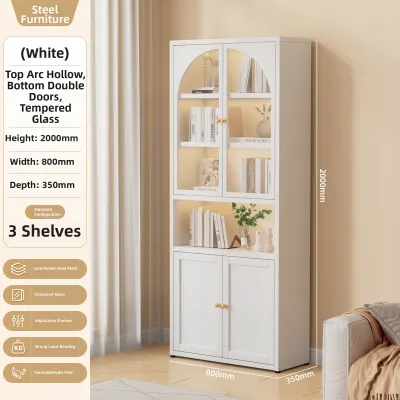


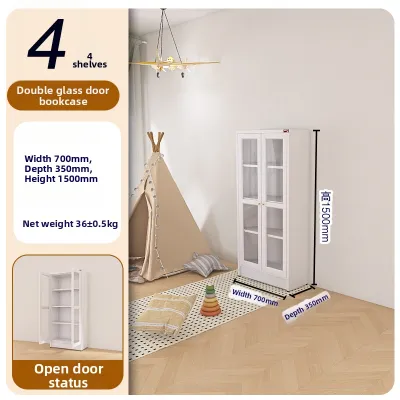


Prices are valid at publication and may change. Please refer to the product page for the latest price.
Once the cabinet is in place, it requires functional clearance to operate safely. Glass doors need a clear swing radius to open fully without striking nearby walls, coffee tables, or other furniture. If your space is limited, consider sliding glass doors, though these still require adequate side access. Additionally, leave a small gap of at least one to two centimeters between the back of the cabinet and the wall to allow for air circulation and to make routine cleaning easier.
Estimating Capacity Based on Your Book Collection
The dimensions of your glass display must align with the physical characteristics of your book collection. Group your books by size and measure the height and depth of your largest volumes, such as oversized art books, design portfolios, or heavy reference manuals. This step ensures you do not purchase a cabinet with shelves that are too shallow or spaced too closely together.

Next, evaluate the load-bearing limits of the glass shelves. Glass behaves differently under stress than wood or metal, and overloading can lead to sudden failure. Check the manufacturer’s specifications for the maximum weight capacity per shelf, which is determined by the glass thickness and the width of the shelf span. Heavy hardcovers should be distributed evenly and placed on lower shelves or closer to the structural support brackets to minimize tension in the center of the glass.
Finally, plan for the future growth of your library. A display that perfectly fits your current collection today may become overcrowded within a year. It is wise to select a unit that offers at least twenty to thirty percent more shelf space than you currently need. This extra capacity allows you to arrange your books beautifully, leaving room for decorative objects, small sculptures, or framed photos without creating a cluttered look.
Matching Display Dimensions to Room Layouts
The layout of your room should dictate the shape and proportions of your glass display cabinet. In compact apartments or smaller study rooms, vertical space is your most valuable asset. A tall, narrow vertical glass cabinet or a series of wall-mounted glass shelves can maximize storage capacity while occupying minimal floor space, keeping the room feeling open and airy.
For spacious living rooms, open-plan areas, or dedicated home libraries, wider configurations are highly effective. A wide, modular glass display case or a low-profile glass console can serve as an elegant focal point along a main wall. These wider units allow you to mix horizontal book stacks with vertical rows, creating a dynamic, museum-style presentation that draws the eye.
When selecting dimensions, consider how the visual weight of the furniture interacts with your room. Solid wooden frames with glass panels feel more substantial and traditional, whereas minimalist metal-framed or all-glass cabinets offer maximum transparency. Balancing this visual weight ensures that a large cabinet does not dominate a small room, nor does a delicate display get lost in a vast, open space.
Safety, Stability, and Installation Checks
Safety is a paramount consideration when choosing the dimensions of a glass display, particularly regarding stability. Tall, narrow cabinets have a higher center of gravity, making them susceptible to tipping if they are bumped or if multiple heavy glass doors are opened simultaneously. To prevent accidents, any tall glass display must be securely anchored to the wall using appropriate anti-tip hardware.
The structural integrity of the frame is another critical factor. The frame must be robust enough to support the weight of the glass panels, the doors, and the fully loaded shelves. Inspect the quality of the joints and the strength of the shelf support pegs. If the frame feels unstable or wobbles when empty, it is unlikely to safely support a heavy collection of books.
If you opt for wall-mounted glass shelving, you must assess the load-bearing capacity of your wall. Solid concrete, brick, or masonry walls are ideal for supporting heavy loads, whereas drywall or plasterboard walls require specialized anchors and must be mounted directly into the wall studs. Always verify that the mounting hardware and the wall itself can handle the combined weight of the shelves and your books before proceeding with installation.
Common Sizing Mistakes to Avoid
One of the most frequent errors when purchasing a glass display is overlooking the extra depth added by external hardware. Product specifications often list the dimensions of the cabinet frame only, omitting protruding door handles, decorative hinges, or overhanging top moldings. These small additions can prevent doors from opening fully or block narrow walkways if not accounted for during planning.
Another common oversight is ignoring wall obstructions that prevent the cabinet from sitting flush against the wall. Baseboards, electrical outlets, light switches, and wall-mounted radiators can all interfere with placement. If a cabinet cannot sit flush, it may be difficult to install anti-tip brackets securely, and access to essential power outlets could be blocked.
Lastly, do not assume that all glass shelves are adjustable. Many glass display cabinets utilize fixed glass shelves that are bonded to the frame to provide structural rigidity. Always check the product details to confirm whether the shelves can be adjusted to different heights. Purchasing a unit with fixed shelves can leave you unable to display your tallest books or decorative items.
Frequently Asked Questions (FAQ)
How much weight can a standard glass shelf hold?
The weight capacity of a glass shelf depends on several variables, including the thickness of the glass, whether it is tempered safety glass, the width of the shelf span, and the type of support brackets used. Typically, tempered glass shelves designed for furniture can support moderate loads, but limits vary widely by design. You must always consult the manufacturer’s official specifications for the exact load rating of your specific unit. To ensure safety, distribute the weight of your books evenly across the shelf and avoid placing exceptionally heavy items in the center of a wide glass span.
Do I need to leave extra space around a glass book display?
Yes, leaving adequate clearance around a glass display is highly recommended for safety, functionality, and maintenance. You should ensure there is enough clearance in front of the cabinet for the doors to swing open completely without hitting other objects. Additionally, leaving a small gap between the back of the cabinet and the wall promotes air circulation, which helps prevent moisture buildup that could damage your books. This gap also provides the necessary physical access for routine dusting and cleaning of the glass panels.

Community discussion
Share your experience or ask a question. Comments are reviewed before publication.