
Finding the ideal book shelf with wheels for a Singapore HDB flat or condominium apartment requires looking beyond static dimensions. Because these units are designed to move, you must account for both their stationary footprint and the dynamic clearance required to roll, turn, and park them safely. Balancing these spatial needs ensures your storage remains highly functional without obstructing daily foot traffic or damaging your home’s interior.
Measure Your Space and Clearance Requirements
To integrate a mobile shelving unit successfully, begin by measuring the exact floor area where you plan to park the bookshelf. In compact Singapore layouts, wall space is rarely a flat, unobstructed plane. You must account for the thickness of skirting boards, which can prevent a bookshelf from sitting completely flush against the wall. Additionally, take note of low-mounted power outlets, internet ports, and surface-mounted air-conditioner trunking. If the bookshelf blocks access to these utilities or collides with trunking, its mobility will be severely compromised.
Next, map out the entire transit route the bookshelf will take. Measure the narrowest doorways, corridors, and structural columns it must pass through, whether during initial delivery, assembly, or daily relocation. If you live in a high-rise condominium or HDB estate, do not forget to measure the entrance to the passenger lift and the clearance of your main front gate. A unit that is too tall or wide to turn a tight corner in your entryway will become a major headache before it even enters your living room.
Products mentioned in this guide
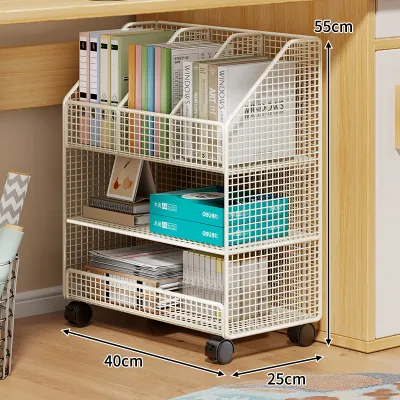
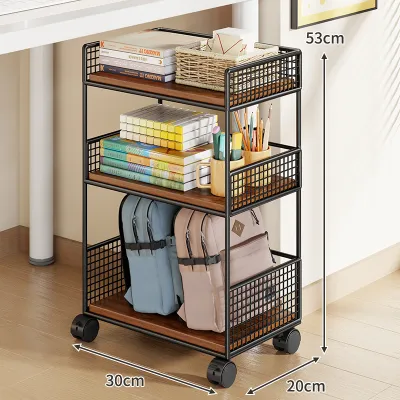
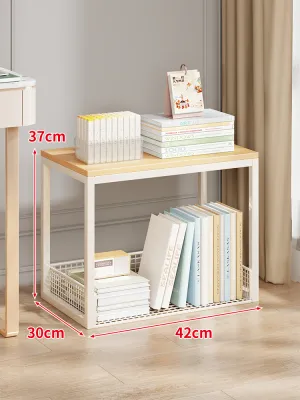
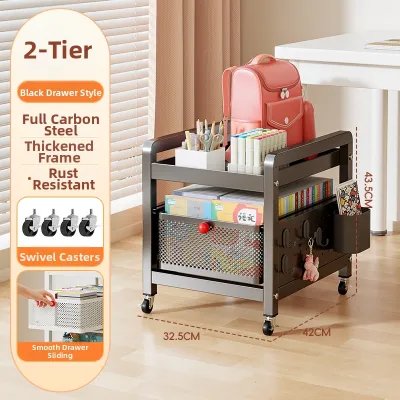
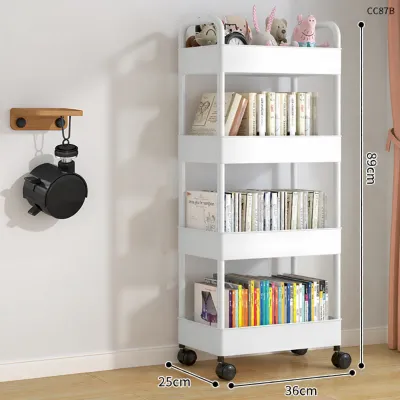
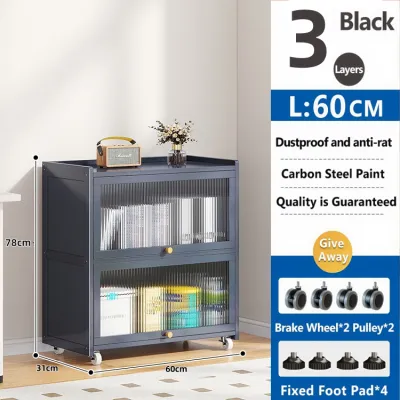
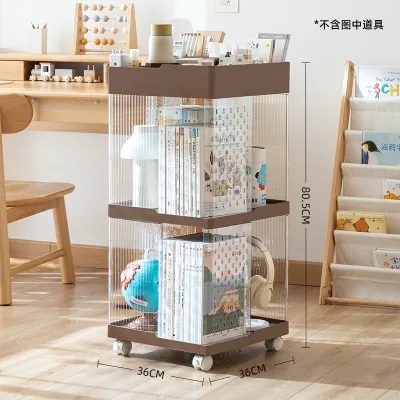

Prices are valid at publication and may change. Please refer to the product page for the latest price.
Finally, calculate the dynamic clearance required for the bookshelf’s movement. A book shelf with wheels needs a clear “swept path”—the actual floor area it occupies while being pulled out, rotated, or pushed back into place. Ensure that when the unit is fully extended or turned, it does not block primary walkways, collide with dining chairs, or prevent adjacent room doors from opening fully. Keeping a clear buffer zone around the unit’s path of motion is essential for maintaining a safe and comfortable home flow.
Match Bookshelf Dimensions to Your Room Layout
Selecting the right dimensions involves matching the physical scale of the bookshelf to the specific layout and traffic patterns of your room. A unit that is too deep will encroach on valuable floor space, while one that is too tall may feel visually overwhelming in a compact room.

Navigating Narrow Hallways and Doorways
When planning to move a book shelf with wheels between rooms, such as from a study to a living area, doorway clearance is your primary constraint. Standard internal doors in Singapore homes have fixed height and width limits that you must measure before purchasing. Evaluate the total height and depth of the bookshelf to ensure it can easily pass through these openings without needing to be tilted dangerously. Tilting a fully loaded or even an empty bookshelf increases the risk of dropping the unit or scraping the door frame.
If your home features tight transitional spaces or sharp 90-degree turns in hallways, a tall, single-piece bookshelf may be highly impractical. In these scenarios, consider lower-profile designs or modular systems. Lower units have a lower center of gravity, making them much easier to steer around tight corners. Modular options allow you to split the storage into smaller, highly maneuverable sections that can be rearranged or moved independently as your spatial needs evolve.
Optimizing Corner and Under-Window Spaces
Awkward alcoves, corners, and the spaces beneath windows are excellent locations for a mobile bookshelf, provided you select the dimensions carefully. Before choosing a unit for an under-window spot, measure the exact height from the floor to the bottom of the window sill. You must also check for any protruding window handles, window tracks, or nearby air-conditioner ledges that might restrict the unit’s placement. Choosing a low-profile wheeled shelf ensures you can utilize this often-wasted space without blocking natural light or ventilation.
For corner placements, mobility introduces unique challenges. While a static shelf can sit tightly in a corner, a wheeled shelf requires physical space for your hands to grip and pull the unit outward. Ensure there is sufficient clearance on at least one side of the shelf to access the handles or the frame comfortably. If the unit is wedged too tightly into a corner, you will struggle to roll it out for cleaning, retrieving fallen items, or reorganizing your books, defeating the purpose of having wheels.
Evaluate Mobility, Stability, and Weight Capacity
The functionality and safety of a book shelf with wheels depend heavily on its structural integrity and the quality of its moving parts. Before making a purchase, always check the manufacturer’s product specifications for the maximum weight capacity. Books are exceptionally heavy when packed together, and overloading a mobile unit can lead to structural failure or tipping. Pay close attention to how the manufacturer recommends distributing this weight; generally, heavier items must be placed on the lowest shelves to maintain a stable center of gravity.
The type of casters installed on the bookshelf is another critical factor to verify. Read the product specifications to identify the wheel material and assess whether it is compatible with your home’s flooring. Hard plastic wheels may slide or scratch delicate surfaces, while softer polyurethane or rubber-coated casters offer smoother rolling and better grip. Additionally, ensure the wheels are rated to support the combined weight of the shelving unit and your entire book collection without flattening or binding under pressure.
A reliable wheel-locking mechanism is non-negotiable for any mobile furniture. When the bookshelf is parked in its designated spot, it must remain completely stationary. Check that the unit features high-quality brakes on at least two of its casters—ideally those positioned at the front for easy access. Engaging these locks prevents the bookshelf from drifting when you pull books from the shelves, and keeps it secure if someone accidentally bumps into it in a high-traffic area.
Common Sizing and Placement Mistakes to Avoid
One of the most frequent mistakes homeowners make is ignoring the swept path of the bookshelf when pulling it out from a recessed alcove or a flush wall position. A unit might fit perfectly when stationary, but as soon as you attempt to pivot or roll it outward, the corners of the shelf can scrape against adjacent walls or furniture. Always visualize and measure the arc of movement the shelf will describe during transit to prevent cosmetic damage to your home’s paintwork.
Another common oversight is forgetting to add the height of the casters to the overall height of the bookshelf. Many product listings state the height of the wooden or metal shelving frame alone, omitting the extra centimeters contributed by the wheel assemblies. This minor discrepancy can lead to major issues if you are trying to fit the unit under a low window sill, beneath a wall-mounted study desk, or close to light switches and electrical sockets. Always verify whether the listed dimensions include the wheels, or calculate the total height yourself based on the detailed specification sheet.
Finally, do not assume that all mobile bookshelves are inherently stable when fully loaded. Tall, narrow units with a small base footprint are highly susceptible to tipping when rolled over minor floor transitions, such as the thresholds between rooms or the edges of area rugs. Before buying, check the ratio of the unit’s width to its height. A wider base provides a much safer foundation for a mobile unit, ensuring that the center of gravity remains low and stable even when the shelves are packed to capacity.
Frequently Asked Questions (FAQ)
Can a wheeled bookshelf damage HDB or condo flooring?
Yes, heavy mobile furniture can damage flooring if the wheels are unsuitable or dirty. To prevent scratches, dents, or scuff marks, read the product specifications to ensure the caster material is compatible with your specific floor type, whether you have parquet, vinyl, laminate, or polished tiles. You should also consult your flooring manufacturer’s care guide to understand the point-load limits and rolling friction tolerances of your floor. Regularly cleaning the wheels to remove trapped grit and dust will further protect your floors from abrasion.
Do I need to lock the wheels when the bookshelf is fully loaded?
Yes, engaging the wheel locks is a crucial safety step once the bookshelf is in position. A fully loaded bookshelf carries significant momentum; if left unlocked, it can easily roll on slightly uneven floors or drift when bumped, posing a hazard to residents. Before loading your books onto the shelves, test the brake mechanism’s holding power on your specific floor surface to ensure the locks grip firmly and prevent any unwanted movement.

Community discussion
Share your experience or ask a question. Comments are reviewed before publication.