
Finding a suitable bookshelf with doors for a Singapore apartment requires balancing storage needs with tight floor plans. Whether you live in a cozy HDB flat or a modern condominium, a closed-door cabinet helps keep dust at bay and maintains a clutter-free aesthetic. To choose the right size, you must evaluate your room’s physical dimensions, account for door swing clearances, and ensure the unit can physically pass through your building’s lifts and corridors.
Measure Your Available Space Accurately
Before browsing online marketplaces or visiting local showrooms, you must obtain precise measurements of your intended wall and floor area. Use a metal measuring tape rather than a soft fabric one to ensure accuracy.
Measure the wall width, floor depth, and ceiling height at three different points—left, center, and right. Singapore apartments can sometimes have minor structural variances, and measuring multiple points prevents you from purchasing a unit that is slightly too tall or wide for an uneven alcove.
Products mentioned in this guide
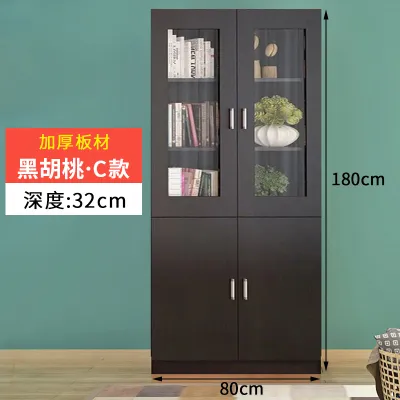
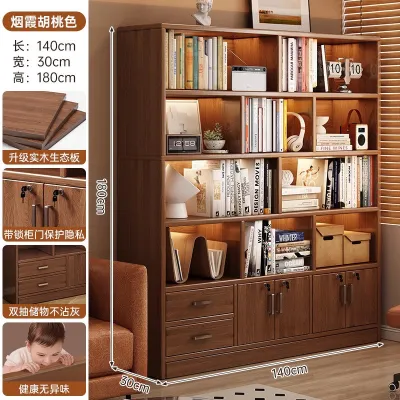
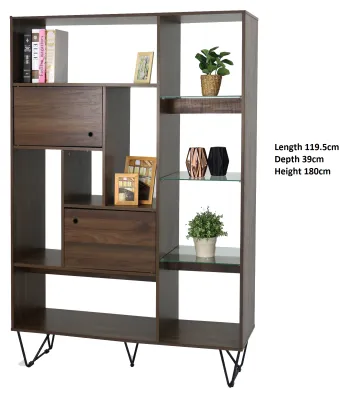
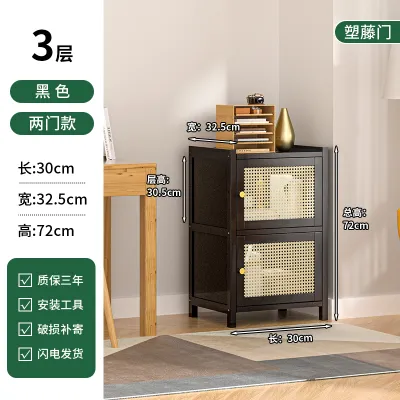

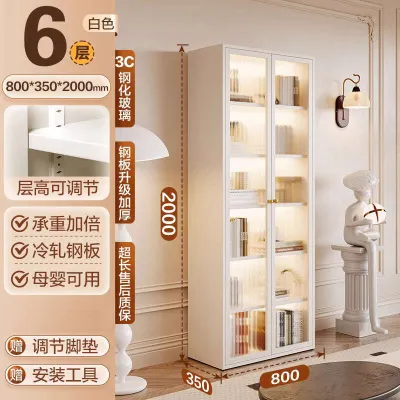

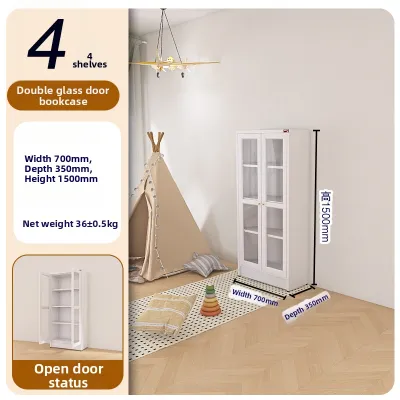
Prices are valid at publication and may change. Please refer to the product page for the latest price.
Next, identify and mark the locations of all wall fixtures. Take note of power outlets, light switches, internet data points, and air-conditioning trunking. Covering these fixtures can restrict access to essential utilities or block the path of cool air.
Do not forget to measure the height and depth of your floor skirting boards. Most standard bookshelves are designed with flat backs, meaning a thick skirting board will prevent the unit from sitting flush against the wall. This creates an awkward gap behind the bookshelf, which can collect dust and compromise the stability of the furniture.
Match Dimensions to Your Room Layout
Selecting the right bookshelf size is not just about finding a unit that physically fits; it is also about maintaining visual balance. A massive, dark cabinet can easily overwhelm a small room, making the entire space feel cramped and dark.

Evaluate the visual weight of the bookshelf relative to your room’s total floor area. In smaller rooms, vertical storage is almost always more practical than horizontal units, as it utilizes unused wall space while preserving precious floor area for walking and other furniture.
Tall and Narrow Profiles for Compact Bedrooms
For compact HDB bedrooms or study nooks, a tall and narrow bookshelf with doors is often the most efficient choice. These units prioritize height over width, allowing you to maximize your book storage without consuming valuable floor space.
When opting for a tall unit, check that the top of the bookshelf does not interfere with ceiling fans, light fixtures, or curtain tracks. A tall cabinet placed too close to a ceiling fan can create physical obstructions and disrupt the airflow in the room.
Stability is critical for tall furniture. Always verify the unit’s stability and check the manufacturer’s instructions for wall-anchoring requirements. In Singapore, concrete walls are standard, so you will need appropriate wall plugs and a masonry drill to secure the anti-tipping brackets safely.
Wide and Low Profiles for Living or Study Areas
In larger living rooms or dedicated study areas, a wide and low-profile bookshelf with doors can be a highly functional alternative. These units keep the upper half of the wall open, which maintains clear sightlines and makes the room feel much more spacious.
A low bookshelf also offers a practical top surface. You can utilize this horizontal space for displaying home decor, placing indoor plants, or even positioning a secondary monitor, provided you do not exceed the manufacturer’s specified weight capacity.
Before finalizing a wide unit, ensure its width does not block natural light from windows or obstruct the flow of movement between different zones of the room. Leave enough breathing room on either side so the space does not feel overly crowded.
Account for Door Clearance and Walkways
A common mistake when buying a bookshelf with doors is only measuring the unit when its doors are closed. Because closed storage relies on operable doors, you must account for the space required to open them fully.
Calculate the swing radius of the doors. Standard hinged doors swing outward, requiring a clear arc that must not collide with your bed, desk, dining chairs, or other nearby furniture. If a door cannot open past 90 degrees, accessing your books will be highly inconvenient.
Maintain a clear walkway in front of the bookshelf even when the doors are fully open. Ideally, you should have at least 60 to 70 centimeters of clearance in front of the open doors so you can stand, bend down, and browse the shelves comfortably and safely.
If your room layout is exceptionally tight and restricts the space needed for outward-swinging doors, consider alternative door mechanisms. Sliding glass or wooden doors are excellent space-saving options because they operate entirely within the footprint of the cabinet, requiring zero front clearance.
Verify Delivery and Assembly Access
A bookshelf that fits well in your room is of no use if it cannot be delivered to your apartment. Delivery failures are common in high-rise Singapore residences due to narrow communal spaces and tight entryways.
Start by measuring the dimensions of your building’s elevator. Check the height and width of the elevator doors, as well as the interior cabin depth and diagonal clearance. If the bookshelf is delivered fully assembled and cannot fit into the lift, you may face hefty stair-carrying fees or a rejected delivery.
Next, measure the width of your apartment’s main entrance door and any tight turns in your internal corridors. A long hallway with a sharp corner can easily trap a long, fully assembled furniture piece.
Review the product’s packaging dimensions and assembly requirements before purchasing. Many large bookshelves are delivered flat-packed and assembled in-room, which bypasses most delivery clearance issues. However, you must still ensure there is enough open floor space in the target room to lay out the parts and complete the assembly safely.
Avoid Common Sizing and Placement Mistakes
To ensure a seamless fit, watch out for minor architectural details that are easily overlooked during the planning phase. For instance, forgetting to account for the depth of window sills or door frames can cause a bookshelf to protrude awkwardly into a doorway or block a window pane.
Avoid placing the bookshelf too close to your air-conditioning unit. A tall cabinet positioned directly beneath or adjacent to an air conditioner can restrict the unit’s airflow, reduce cooling efficiency, and block access to the filters when it is time for regular servicing and maintenance.
Finally, never ignore the manufacturer’s specified clearance gaps. Some bookshelves require a small gap between the back of the unit and the wall for ventilation, while others need side clearance to allow the door hinges to pivot smoothly without scraping against adjacent walls.
Frequently Asked Questions (FAQ)
Can I place a bookshelf with doors over a floor skirting?
Standard bookshelves will not sit flush against the wall if placed directly over or against a floor skirting board. This creates an unstable gap behind the unit, which increases the risk of tipping and prevents secure wall anchoring. To solve this, look for bookshelves designed with a recessed base cutout at the back to accommodate standard skirting heights. Alternatively, you can consult a professional carpenter to customize the base or safely modify the skirting board behind the unit.
How much space should I leave between the bookshelf and the ceiling?
It is advisable to leave at least 10 to 15 centimeters of space between the top of the bookshelf and the ceiling. This gap allows for proper air circulation and makes dusting the top of the unit much easier. Additionally, many tall, flat-packed bookshelves require extra vertical clearance during assembly, as they are often built flat on the floor and need sufficient diagonal clearance to be stood upright without scraping the ceiling.

Community discussion
Share your experience or ask a question. Comments are reviewed before publication.