
Finding the perfect bookshelf with doors for a Singapore HDB flat requires balancing storage capacity with the physical realities of compact living. Unlike open shelving, a closed cabinet demands extra space for door clearance and must fit within tight floor plans without blocking walkways or architectural features. To choose the right size, you must measure your available wall area, calculate the door swing radius, and verify that the unit’s depth matches your storage needs without obstructing daily movement. Taking these steps beforehand prevents delivery headaches and ensures your furniture functions beautifully in your home.
Measure Your Available Wall and Floor Space
Before browsing online marketplaces or visiting showrooms, you need to establish the absolute maximum footprint for your new furniture. Start by measuring the width and height of the designated wall area using a reliable metal tape measure. Do not rely on your flat’s floor plan alone, as actual built dimensions can vary slightly from the blueprint.
When measuring the wall, pay close attention to fixed architectural features that can restrict placement. Look for skirting boards along the floor, which can push the back of the bookshelf away from the wall by several centimeters. Take note of electrical outlets, light switches, and internet ports that you need to access, ensuring the cabinet does not cover them permanently.
Products mentioned in this guide
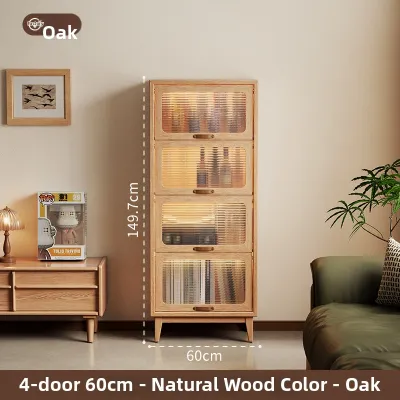
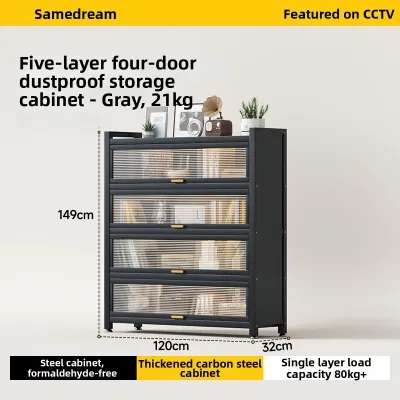
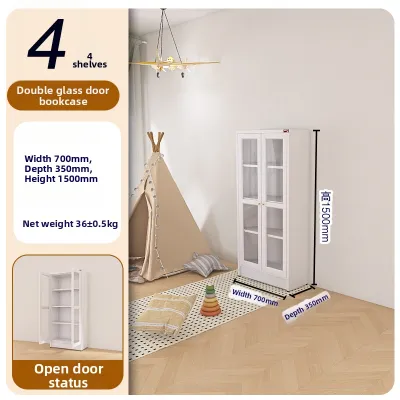
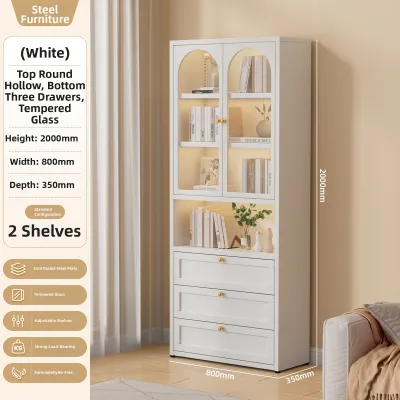
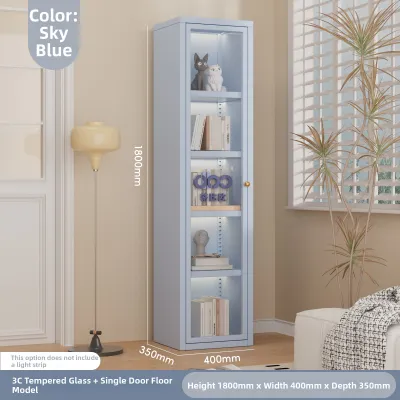
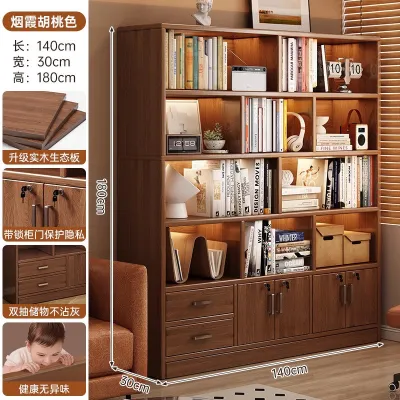
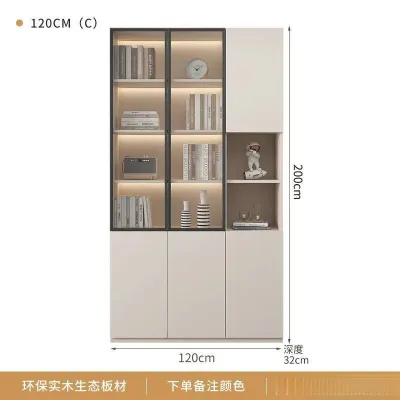
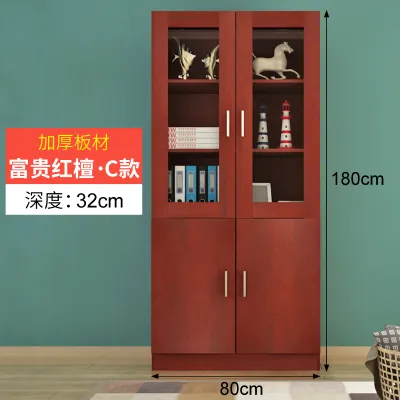
Prices are valid at publication and may change. Please refer to the product page for the latest price.
Vertical space is equally critical, especially if you are considering a tall unit. Check for overhead obstructions such as air-conditioning trunking, ceiling beams, or wall-mounted fans. If you plan to place the bookshelf near a window, ensure the cabinet’s depth and height will not block natural light or interfere with window grilles and curtain tracks.
Once you have identified these boundaries, record the maximum allowable width, depth, and height. This set of dimensions acts as your hard limit when filtering product listings. Keeping these measurements on hand prevents you from falling in love with a unit that is physically impossible to install in your room.
Account for Door Swing and Walkway Clearance
A common oversight when buying a book shelf with doors is failing to account for how the doors open. Traditional hinged doors require a clear, unobstructed arc in front of the cabinet to open fully. To calculate this door swing radius, look at the width of an individual door panel, which is typically half the total width of a two-door cabinet.

For example, if a bookshelf is 80 centimeters wide with two hinged doors, each door panel is approximately 40 centimeters wide. This means you need at least 40 centimeters of clear space directly in front of the cabinet just to open the doors. If you place a coffee table, sofa, or bed within this zone, you will struggle to access your books.
Beyond the door swing itself, you must maintain a comfortable walkway for daily movement. According to general ergonomic guidelines, a primary walkway should ideally be at least 90 centimeters wide, while a secondary path between furniture pieces can be around 75 centimeters. If opening the cabinet doors completely blocks a pathway, it can make the room feel cramped and create a safety hazard.
If your forward clearance is highly restricted, consider alternative door mechanisms. Sliding doors are excellent space-savers because they operate entirely within the cabinet’s footprint, requiring zero forward clearance. Bi-fold doors are another option, folding back on themselves to reduce the swing radius by half compared to standard hinged doors.
Match Bookshelf Dimensions to Your Storage Needs
The external dimensions of your bookshelf must align with the items you intend to store inside. Standard novels and paperbacks typically require an internal shelf depth of 20 to 25 centimeters. If you collect large art books, photo albums, or use decorative storage boxes to organize loose items, you will need a deeper unit of 30 to 35 centimeters.
Always check the manufacturer’s specifications for internal usable depth rather than relying solely on the external depth. The thickness of the front doors, the back panel, and any internal frame structures can reduce the usable depth by 2 to 5 centimeters. Choosing a unit that is too shallow means your doors may not close properly if items protrude even slightly.
Weight capacity is another critical factor that influences the longevity of your furniture. Books are incredibly heavy when packed together, often weighing up to 15 to 20 kilograms per shelf meter. Look for shelves made of thick, sturdy materials and check the manufacturer’s rated load capacity to prevent unsightly and dangerous structural sagging over time.
To maximize flexibility, prioritize bookshelves with adjustable internal shelves. This feature allows you to customize the height of each compartment to match your collection, preventing wasted vertical space. It also ensures you can accommodate taller items, like binders or vases, without needing a physically larger cabinet.
Evaluate Placement Options and Configurations
How you configure your bookshelf can dramatically affect the visual weight and flow of your room. In compact HDB living rooms or study rooms, a single massive cabinet can feel overwhelming and make the space appear smaller. Instead, consider modular freestanding units that can be placed side-by-side or separated if you decide to rearrange your layout in the future.
Utilizing vertical space is a smart way to maximize storage without sacrificing valuable floor area. If you opt for a tall bookshelf, ensure you check your ceiling height first, as standard HDB ceilings are typically around 2.6 meters high. Tall, narrow cabinets have a higher center of gravity and must be securely anchored to the wall to prevent accidental tip-over injuries.
Corner placements are highly effective for utilizing awkward, underused areas in a room. A dedicated corner bookshelf with doors can provide substantial storage while keeping the center of the room open and clear. Alternatively, integrating the unit into an existing alcove or placing it flush against a structural pillar can create a clean, built-in look.
When choosing a configuration, consider the visual impact of the door materials. Solid wooden or laminate doors hide clutter completely, creating a neat and uniform appearance. Glass doors, on the other hand, allow you to display your collection while protecting it from dust, but they require you to keep the interior organized to avoid visual chaos.
Common Sizing Mistakes to Avoid
One of the most frustrating experiences is purchasing a beautiful bookshelf only to find it cannot be delivered into your home. Always measure your delivery access route before finalizing your purchase. This includes checking the height and width of your building’s lift doors, the internal dimensions of the lift cabin, stairwell clearances, and your apartment’s main entrance door.
Another frequent mistake is overlooking the thickness of skirting boards when planning a flush wall placement. If your bookshelf does not have a base cutout to accommodate skirting boards, it will sit several centimeters away from the wall. This creates an unsightly gap where dust accumulates and can make tall units unstable unless you use spacers for wall anchoring.
Finally, avoid the temptation to buy the largest unit that can physically fit into the space. An oversized bookshelf can visually crowd a room, blocking natural light paths and making daily movement feel restricted. Leave some breathing room around the furniture to maintain an airy, comfortable atmosphere in your home.
Frequently Asked Questions (FAQ)
Can I use a sliding door bookshelf to save space?
Yes, a sliding door bookshelf is an excellent choice for tight spaces and narrow walkways. Because the doors slide horizontally within the frame, they do not require any forward clearance to open, allowing you to place other furniture close by. This makes them highly practical for compact study rooms or narrow corridors where a hinged door would block traffic.
However, sliding doors do come with a few trade-offs that you should consider. They only allow you to access one side of the cabinet at a time, as one door panel must always slide behind or in front of the other. Additionally, the sliding tracks require regular cleaning to prevent dust and debris from obstructing the smooth movement of the doors.
How do I check if the bookshelf will fit through my main door?
To ensure a smooth delivery, measure the clear opening width and height of your main entrance door, taking into account the door frame and any protruding handles or security gates. Compare these measurements against the packaging dimensions provided by the retailer, which are often larger than the assembled furniture itself.
If you are purchasing a flat-packed unit, delivery is usually straightforward as the individual boxes are relatively slim and easy to maneuver. For fully assembled or semi-assembled cabinets, verify if the delivery team can disassemble parts of the unit if needed. Always communicate any tight corners or narrow corridors in your home to the retailer prior to delivery.

Community discussion
Share your experience or ask a question. Comments are reviewed before publication.