
Choosing the right size for a book cabinet with doors in a small space requires balancing storage capacity with the physical limits of your room. In compact living environments, such as modern apartments or cozy study rooms, every centimeter counts. To find the perfect fit, you must measure your available floor area, calculate the volume of your reading collection, and account for the clearance required to open the cabinet doors. A well-chosen book cabinet with doors protects your books from dust and humidity while keeping your home looking organized and spacious. By focusing on precise measurements, smart door configurations, and vertical storage, you can maximize your floor plan without making the room feel cramped.
Measure Your Available Space and Clearances
Before browsing online marketplaces or visiting local showrooms, you must establish the exact boundaries of your room. Start by measuring the physical wall space where you plan to place the cabinet. Use a metal measuring tape to record the width, height, and depth of the designated area. Do not rely on visual estimates, as even a minor discrepancy can prevent a cabinet from fitting into its intended spot.
When measuring, look out for architectural details that might obstruct the cabinet. Baseboards along the bottom of the wall often prevent furniture from sitting completely flush, which can add a few centimeters to the overall depth. Note the locations of power outlets, light switches, internet ports, and air conditioning vents. Blocking these utilities can make daily life inconvenient or restrict access to essential controls. If your room has crown molding or low-hanging ceiling beams, measure the height from the floor to the lowest point of these features to ensure a tall cabinet will fit.
Products mentioned in this guide
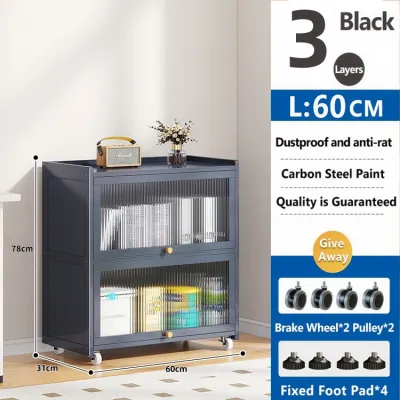
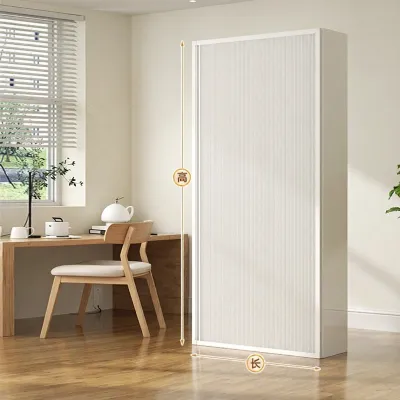
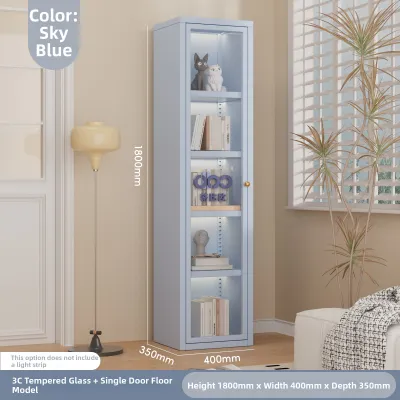
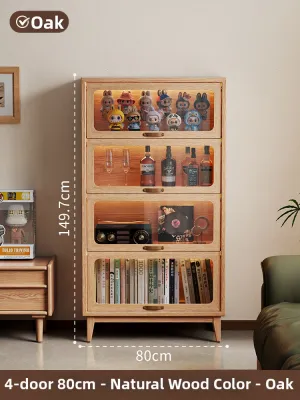
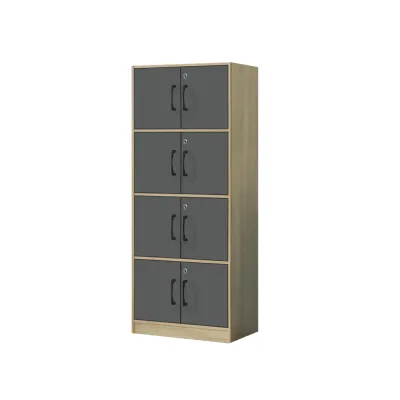
![[A-STAR] 2 + 1 Door Display Bookcase cabinet Storage shelves (FREE INSTALL)](https://img.lazcdn.com/g/p/1df4088b89e8e18be5053c22636e398b.jpg_400x400q80.jpg_.webp)
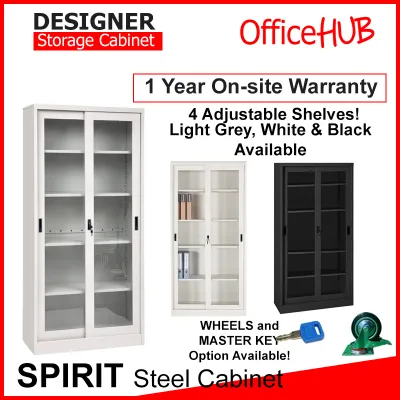
![[FREE INSTALLATION] KENZZO :Belly Glass Door Display Cabinet /book shelf/ filing cabinet/ wardrobe](https://img.lazcdn.com/g/p/ef0152d394d3bae692e449cb326dcb39.jpg_400x400q80.jpg_.webp)
Prices are valid at publication and may change. Please refer to the product page for the latest price.
Clearance is another critical factor when placing a book cabinet with doors. Unlike open bookshelves, closed cabinets require extra space in front of them to function. You must plan for the door swing radius or drawer pull-out distance. Measure the distance from the front of the cabinet to nearby furniture, such as a bed, desk, or sofa. Ensure there is enough room for a person to stand comfortably in front of the cabinet while the doors are fully open. If the cabinet is placed in a high-traffic hallway or walkway, the open doors should not block the path entirely.
Finally, consider the logistics of getting the cabinet into your home. Measure the clearance dimensions of your entry doors, elevator cabins, stairwells, and narrow corridors. Many delivery failures occur because a fully assembled cabinet cannot clear a tight corner in a hallway or fit inside a standard residential lift. If you live in a high-rise apartment, check these dimensions carefully or opt for flat-packed furniture that can be assembled directly inside the room.
Determine the Ideal Dimensions for Your Storage Needs
Once you know the limits of your physical space, you can determine the ideal dimensions of the cabinet based on what you plan to store. The external dimensions of the cabinet must fit your room, while the internal dimensions must accommodate your books, files, or decorative items.

To determine the appropriate width, start with the external wall space you have allocated. Subtract the thickness of the cabinet’s side panels—typically around 1.5 to 2.5 centimeters per side—to estimate the usable internal width. If you have a large collection of heavy books, consider the shelf span. Long shelves without central support can sag over time under the weight of heavy volumes. For optimal stability, look for cabinets with sturdy shelf supports or choose modular units with shorter, individual shelf widths.
The height of the cabinet offers an opportunity to utilize vertical space, which is highly beneficial in small rooms. A tall, floor-to-ceiling book cabinet maximizes storage capacity on a minimal footprint. However, tall cabinets can feel visually heavy in a small room. If you choose a high cabinet, consider light-colored finishes or glass-front doors to reduce the visual weight. Alternatively, a mid-height cabinet keeps the top surface free for plants, lamps, or artwork, which can make the room feel more open and airy. Always leave at least 5 to 10 centimeters of clearance between the top of a tall cabinet and the ceiling to allow for assembly and ventilation.
The depth of the cabinet is crucial for both storage efficiency and room flow. Standard paperbacks and novels typically require an internal shelf depth of only 20 to 22 centimeters. Larger items, such as binders, art books, or photo albums, may need 30 centimeters or more. Choosing a cabinet that is too deep for your needs wastes valuable floor space and makes the room feel smaller. Measure your largest books before purchasing, and select a cabinet depth that matches those items without protruding unnecessarily into the room.
Evaluate Door Types and Their Spatial Impact
The mechanism of the cabinet doors plays a significant role in how much space the furniture occupies during use. Different door types offer distinct advantages and trade-offs for compact rooms.
Hinged doors are the most common option, offering full access to the cabinet’s contents when opened. They seal tightly, providing excellent protection against dust and moisture. However, hinged doors swing outward, requiring a clear radius in front of the cabinet equal to the width of the door panel. In a narrow room or a tight study, this outward swing can collide with desks, chairs, or beds. If you prefer hinged doors, look for multi-door designs with narrower individual door panels, as they require less forward clearance to open.
Sliding doors are an excellent space-saving alternative for tight spaces. Because the doors slide horizontally within the cabinet frame, they require zero forward clearance to open. This allows you to place the cabinet close to other furniture, such as right next to a bed or behind a desk chair. The main trade-off with sliding doors is that they consume a portion of the cabinet’s internal depth to accommodate the sliding tracks. Additionally, you can only access one side of the cabinet at a time, as one door always overlaps the other.
Folding or louvered doors offer a middle ground. Folding doors fold back on themselves, requiring less forward clearance than standard hinged doors while still allowing wide access to the interior. Louvered doors feature angled slats that provide continuous ventilation, which is highly beneficial in humid climates to prevent mold and musty odors on paper pages. However, louvered doors do not seal completely, meaning dust can still enter the cabinet over time. Weigh these factors against your local climate and cleaning preferences before making a choice.
Avoid Common Sizing and Placement Mistakes
When selecting a book cabinet with doors for a small space, several easily overlooked details can lead to frustration or safety hazards.
One common mistake is ignoring the protruding thickness of door handles, decorative moldings, or frame edges. Product specifications online often list the cabinet’s main body dimensions, excluding these protrusions. A handle that sticks out by 3 centimeters can prevent a door from opening fully if the cabinet is placed tight against an adjacent wall or behind a room door. Always check the detailed product diagrams or ask the manufacturer for the maximum external dimensions, including all hardware.
Another error is choosing solid, dark-colored doors for a tall, wide cabinet in a small room. This can create a ‘looming’ effect, making the space feel dark, boxed-in, and visually oppressive. To avoid this, look for cabinets with glass doors, which protect your books while maintaining a sense of depth and openness. Alternatively, choose a cabinet with a mix of open shelves at the top and closed doors at the bottom to balance storage with visual lightness.
Safety should never be compromised, especially in compact spaces where furniture is often placed near active walkways. Tall, narrow cabinets have a higher center of gravity and can tip over if overloaded or if someone pulls on the doors. This is a critical hazard in households with children or pets. Always secure tall book cabinets to the wall using anti-tip brackets or wall anchors. Before drilling, check the wall type (such as drywall or concrete) to ensure you use the correct wall plugs and screws for a secure hold.
Frequently Asked Questions (FAQ)
What is the standard depth for a book cabinet with doors?
Most standard book cabinets with doors have an external depth ranging from 30 to 40 centimeters. This external depth typically translates to an internal shelf depth of 28 to 35 centimeters, which is more than enough to accommodate standard novels, textbooks, and office binders. When choosing a cabinet, always verify the internal shelf depth listed in the product specifications, as the door thickness and back panel construction will reduce the usable space inside.
Can I use a book cabinet with doors as a room divider in a small apartment?
Yes, a book cabinet with doors can serve as an effective room divider to zone a studio apartment or a multi-functional living area. However, you must prioritize stability and safety. Most standard cabinets are designed to stand against a wall and have unfinished back panels. If you use one as a divider, look for a model with a finished back or cover the back with wallpaper or paneling. Most importantly, secure the cabinet to the floor or an adjacent wall, or choose a heavy, wide-base model to prevent any risk of tipping over.

Community discussion
Share your experience or ask a question. Comments are reviewed before publication.